



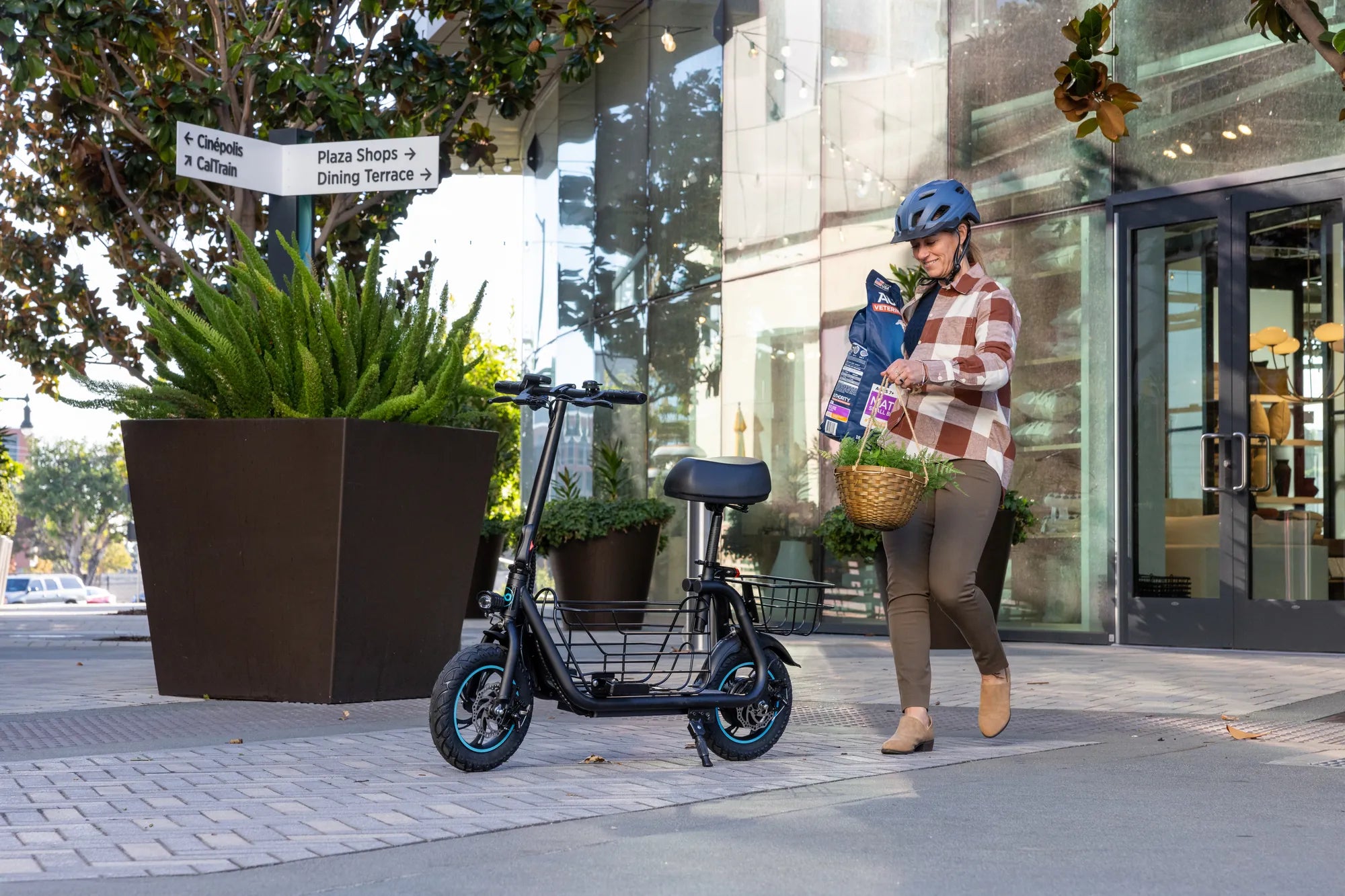
Introduction to Small Electric Scooters
Navigating dense city streets requires a smart mobility solution. Small electric scooters, typically defined by their lightweight frames (often under 30 lbs), compact folded size, and wheel diameters of 8 to 10 inches, have become the go-to for last-mile travel. They bridge the gap between public transit stops and final destinations, offering a swift, parking-free alternative to cars.
Their core appeal lies in seamless integration into multi-modal commutes. Students, urban professionals, and apartment dwellers value the ability to carry a scooter onto a bus, store it under a desk, or tuck it into a small closet. This practicality, combined with zero direct emissions, makes them a cornerstone of modern urban transport.
However, not all compact scooters are created equal. The best models balance diminutive size with reliable performance and, critically, built-in safety. As a leading brand, Gyroor engineers its scooters with this balance in mind, incorporating UL-certified batteries and robust construction to ensure that going small doesn't mean compromising on security or durability.
What Makes a Small E-Scooter "The Best"?
Selecting the top compact scooter isn't about finding a single "winner" but matching key engineering specs to your specific urban lifestyle. The best small electric scooters excel across several interconnected criteria, where gains in one area, like ultra-light weight, may involve trade-offs in another, such as range. Understanding these factors is crucial for an informed purchase.
Performance is measured not just by speed, but by how efficiently the scooter delivers a safe, comfortable ride over typical urban distances. Design encompasses the folding mechanism, deck ergonomics, and overall build quality that withstands daily use. The ideal model harmonizes these elements to become a reliable daily companion.
Portability & Weight: The Core of Compact Design
True portability hinges on two factors: total weight and folded dimensions. The sweet spot for lift-and-carry ease is generally between 26 and 33 pounds. Scooters in this range are light enough to carry up a flight of stairs or through a train station without becoming a burden. Weight directly impacts the scooter's utility as part of a multi-modal commute.
The folding mechanism must be intuitive, quick, and secure. A good design allows for one-step folding and locking, ensuring the scooter stays compact when carried. Folded dimensions should be slim enough to fit beside a desk or in a small storage area. This engineering focus is evident in brands like Gyroor, where designs prioritize a clean, secure fold without compromising structural integrity.
Range & Battery Efficiency: Maximizing Miles per Pound
For small scooters, range expectations must be realistic. Most premium compact models offer a real-world range of 10 to 18 miles per charge, depending on rider weight, terrain, and speed. The key is battery efficiency—how many miles you get per pound of scooter and per watt-hour of battery capacity.
Battery quality is paramount. High-density lithium-ion cells packed into a small frame must be safe and durable. This is where certifications like UL 2271 are non-negotiable, as they guarantee rigorous testing for electrical and fire safety. A battery from a reputable brand, like the UL-certified packs used in Gyroor scooters, ensures reliability over hundreds of charge cycles, maintaining range consistency for years.
Ride Quality & Stability on Smaller Wheels
The primary trade-off for portability is often wheel size. Smaller wheels (8"-8.5") make the scooter compact but are less forgiving on rough pavement. Ride quality, therefore, depends on other design elements that mitigate vibration and improve stability. A longer wheelbase and a wide, textured deck enhance rider confidence.
Suspension, even a simple spring or rubber cushioning system in the stem or deck, dramatically improves comfort on uneven surfaces. Tire choice is critical: air-filled (pneumatic) tires offer better shock absorption than solid tires but require maintenance. Some models use honeycomb or foam-filled tires as a maintenance-free compromise. The goal is to absorb urban imperfections without sacrificing the compact footprint.
Safety & Durability Features You Shouldn't Compromise On
Safety is the foundation of any good scooter. A reliable braking system is essential; a combination of electronic (regenerative) braking and a mechanical disc or drum brake provides confident stopping power in all conditions. Integrated lighting is not just for being seen—it's a legal requirement in many areas. A bright headlight, taillight with brake light functionality, and side reflectors are mandatory.
Durability is about weather and wear resistance. An IP54 or IPX5 water-resistance rating means the scooter can handle wet roads and light rain, protecting its electrical components. Robust construction with reinforced folding mechanisms prevents wobble and failure over time. A comprehensive warranty, like Gyroor's reliable 1-year coverage, signals a brand's confidence in its product's long-term durability.
Top Picks: Small Electric Scooters for Different Needs
The "best" scooter varies by user priority. Below, we categorize top-tier compact models based on primary use-case scenarios. Each pick represents a thoughtful balance of the core criteria, excelling in specific areas to meet distinct urban mobility challenges.
The Ultra-Portable Champion: For the Multi-Modal Commuter
This scooter category prioritizes minimal weight and the fastest, most seamless fold. It's designed for commuters who need to lift and carry their scooter multiple times a day—onto subways, up office building stairs, or into crowded cafes. Every ounce saved enhances daily convenience.
Exemplar Model Profile: The Featherweight Commuter
| Specification | Detail |
|---|---|
| Weight | ~27 lbs (12.2 kg) |
| Max Range | 12 miles (19 km) |
| Top Speed | 15.5 mph (25 km/h) |
| Key Feature | One-second magnetic folding mechanism |
Pros: Unmatched ease of carrying and storage. Folds incredibly flat. Perfect for combining with bus or train travel without hassle.
Cons: Range is limited for very long commutes. Smaller wheels may feel less stable on rough patches. Often has a simpler suspension system due to weight constraints.
The Balanced Performer: Best All-Around Compact Commuter
This is the "goldilocks" category—scooters that strike the ideal balance between portability, sufficient range for most city dwellers, and a comfortable, stable ride. They are versatile enough for a 5-mile daily commute while still being manageable to carry when needed.
Exemplar Model Profile: The Urban All-Rounder
| Specification | Detail |
|---|---|
| Weight | ~30 lbs (13.6 kg) |
| Max Range | 16 miles (25.7 km) |
| Top Speed | 18 mph (29 km/h) |
| Key Feature | Dual braking system & enhanced deck suspension |
Pros: Excellent blend of performance and portability. Offers a smoother ride with better braking power. Range covers typical urban commute distances comfortably.
Cons: Slightly heavier than ultra-portable models. May have a slightly bulkier fold, though still very manageable.
The Rugged Compact: For Rough Pavement and Light Off-Road
Not all city streets are smooth. This category is for riders who encounter cobblestones, brick paths, or poorly maintained roads. These scooters incorporate larger air-filled tires, more powerful motors for inclines, and advanced suspension to handle varied terrain without moving into heavy, non-portable scooter territory.
Exemplar Model Profile: The Compact Trailblazer
| Specification | Detail |
|---|---|
| Weight | ~35 lbs (15.9 kg) |
| Max Range | 15 miles (24 km) |
| Top Speed | 19 mph (30.5 km/h) |
| Key Feature | 8.5" pneumatic tires & front/rear shock absorption |
Pros: Superior ride comfort and traction on uneven surfaces. More power for hills. Generally has a sturdier, more durable frame construction.
Cons: Heaviest in the compact class. Pneumatic tires may require occasional maintenance (air checks, potential for flats). Folded size can be larger.
Data-Driven Comparison: Key Specs at a Glance
To facilitate a direct comparison, this table consolidates the critical specifications of archetypal models from each category. It highlights how design choices impact performance, helping you visualize the trade-offs between ultra-portability, balanced performance, and rugged capability.
| Feature / Model Type | Ultra-Portable Champion | Balanced Performer | Rugged Compact |
|---|---|---|---|
| Ideal Weight | 26 - 28 lbs | 29 - 32 lbs | 33 - 37 lbs |
| Max Real-World Range | 10 - 13 miles | 14 - 18 miles | 13 - 16 miles |
| Typical Top Speed | 15 - 16 mph | 17 - 19 mph | 18 - 20 mph |
| Motor Power (Nominal) | 250W - 300W | 300W - 350W | 350W - 500W |
| Tire Size & Type | 8" Solid / Honeycomb | 8.5" Honeycomb / Air-Filled | 8.5" - 10" Pneumatic |
| Brake System | E-brake + Foot / Regenerative | Dual (E-brake + Disc/Drum) | Dual (Disc + E-brake) |
| IP Rating (Weather Res.) | IPX4 | IPX5 | IPX5 or higher |
| Key Special Features | Magnetic folding, ultra-slim profile | App connectivity, integrated locking, UL-certified battery | Front & rear suspension, off-road mode, reinforced frame |
Practical Buying Guide & FAQs
Armed with knowledge of categories and specs, the final step is a personalized assessment. This guide helps you translate your daily routine and environment into a checklist for the perfect scooter match.
How to Choose Your Perfect Match: A Step-by-Step Guide
Step 1: Assess Your Commute. Map your total daily distance. If it's under 5 miles round-trip, an ultra-portable may suffice. For 5-10 miles, a balanced performer is ideal. Consider if your route has steep hills, which demand more motor power.
Step 2: Evaluate Portability Needs. Be honest: how many times will you lift it? If carrying onto transit is daily, prioritize weight under 30 lbs. If storage is only at home and destination, you can consider slightly heavier, more feature-rich models.
Step 3: Audit Your Terrain. Examine your regular paths. Smooth bike lanes? A basic model works. Cracked sidewalks and cobblestones? Prioritize suspension and pneumatic tires. This is crucial for ride comfort and safety.
Step 4: Set a Realistic Budget. The best small electric scooters are an investment in reliable, safe transportation. Allocate funds for safety features (good brakes, lights, UL battery) and a reputable brand with a warranty. It's better than a cheaper, unsafe alternative.
Frequently Asked Questions (FAQs)
Q: Are small-wheel scooters safe to ride in the rain?
A: Safety depends on the scooter's IP rating, not just wheel size. A rating of IPX5 (like many Gyroor models) means it can withstand water jets from any direction, making it safe for wet roads and light rain. However, avoid deep puddles, and always ride more cautiously in wet conditions as braking distances increase.
Q: How do I maintain my small e-scooter's battery for maximum lifespan?
A> For UL-certified batteries, avoid draining it to 0% regularly. Try to recharge when it hits 20-30%. Don't leave it fully charged at 100% for extended periods (weeks). Store in a cool, dry place. Using the manufacturer's provided charger is critical to prevent damage and maintain safety.
Q: Can I legally ride a small electric scooter on bike paths and sidewalks?
A> Laws vary significantly by city, state, and country. Generally, bike lanes are the safest and most legally accepted place. Sidewalk riding is often prohibited for adult riders due to pedestrian safety. Always check your local regulations regarding speed limits, helmet laws, and approved riding areas before you ride.
Q: What does a UL-certified battery mean for me as a rider?
A> A UL (Underwriters Laboratories) certification means the battery pack has passed rigorous independent testing for electrical, mechanical, and fire safety. It drastically reduces the risk of battery-related failures, such as thermal runaway or fire. This certification, a standard for brands like Gyroor, provides essential peace of mind, especially for a device you keep in your home or office.
Q: Is the advertised "max range" realistic for daily use?
A> The advertised range is usually a best-case scenario (light rider, flat terrain, ideal temperature, slow speed). For real-world planning, deduct 20-30% from the max figure. Factors like rider weight, hills, headwinds, frequent acceleration, and cold weather all reduce range. Choose a scooter whose real-world estimated range exceeds your daily needs by a comfortable margin.
Conclusion: Embracing Efficient Urban Mobility
The search for the best small electric scooters ultimately leads to a simple truth: the right model transforms your commute. It replaces traffic stress with an efficient, enjoyable glide through the city. The compact form factor solves the last-mile problem elegantly, integrating into a lifestyle rather than complicating it.
Your choice should be guided by data-driven priorities—weight for your carrying needs, range for your distance, and features for your terrain. Never compromise on the foundational elements of safety: certified batteries, reliable brakes, proper lighting, and solid construction. These are not luxuries but necessities for a vehicle that shares space with pedestrians and cars.
Brands that have earned trust, like Gyroor, build these principles into their engineering. With over 100,000 riders relying on their UL-certified batteries, IPX5 water-resistant designs, and comprehensive support, the focus is on delivering reliable, compact mobility you can count on day after day.
Ready to find your perfect compact commuting partner? Explore a range of thoughtfully engineered models that prioritize both portability and performance. Browse the full Gyroor collection at gyroorboard.com and take the first step toward a smarter, more efficient daily journey.
Does Seattle Have Electric Scooters? Exploring the City's Micromobility Options
Electric Scooters Are Safe and New: What You Need to Know