

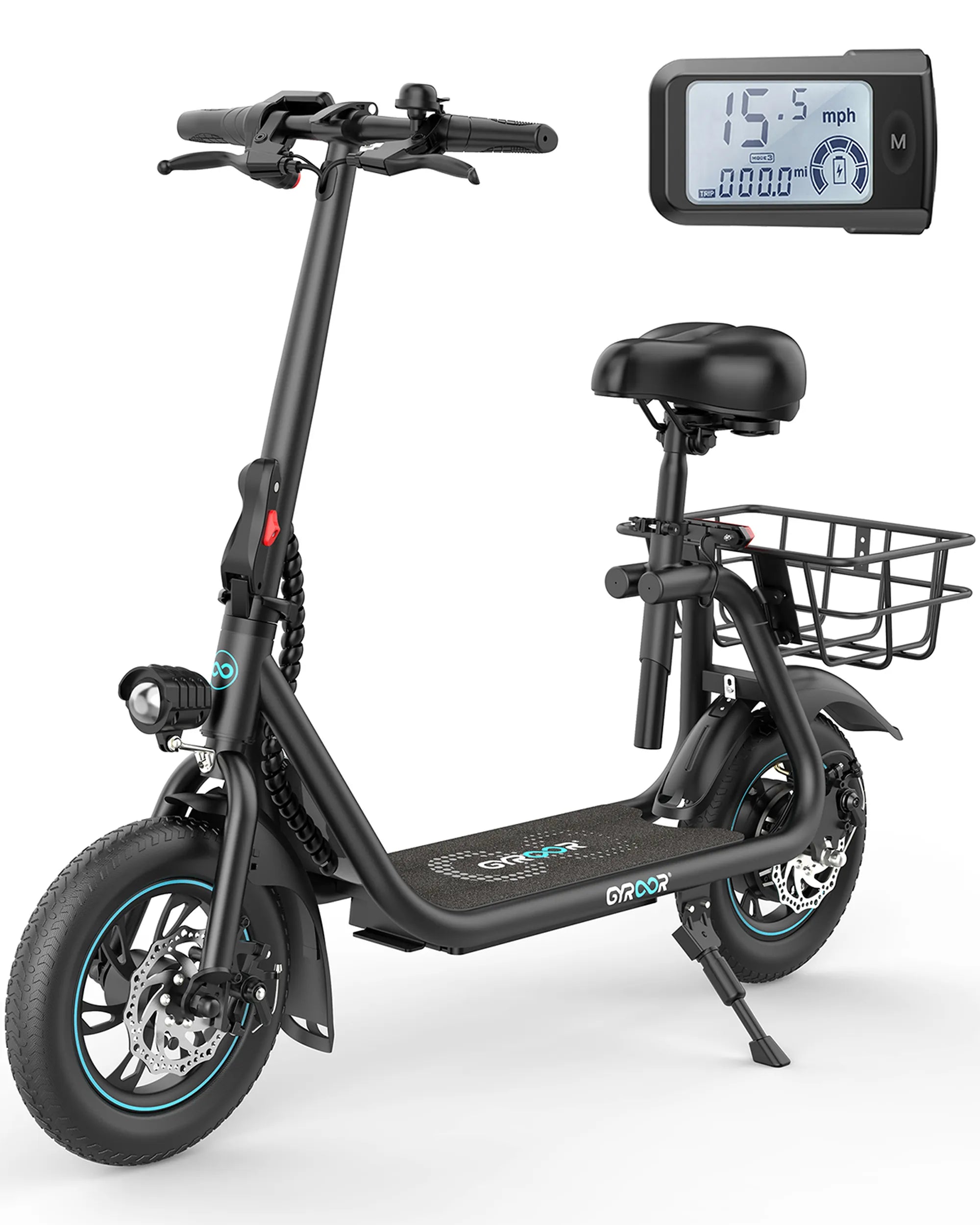
Introduction: Why the "Big 5" Matters for Your Electric Scooter Choice
Choosing an electric scooter can be overwhelming. Conflicting specifications and flashy marketing claims often cloud the real factors that determine your daily riding experience. To navigate this complexity, you need a clear, data-driven framework.
This guide introduces the concept of Big 5 Electric Scooters: The Ultimate Guide to Choosing the Best Ride. The "Big 5" are the five non-negotiable pillars that directly impact performance, safety, and value: Range & Battery, Motor Power & Speed, Build Quality & Durability, Ride Comfort & Safety Features, and Portability & Weight.
By evaluating any scooter through this lens, you move beyond advertised specs to understand real-world capability. For instance, a brand like Gyroor builds its models around these pillars, emphasizing UL-certified batteries for safety, IPX5 water-resistance for durability, and a reliable 1-year warranty for peace of mind, trusted by over 100,000 riders.
This framework empowers you to make an informed, confident purchase that aligns with your specific needs, not just the loudest advertisement.
The Big 5 Pillars Explained: Your Decision-Making Framework
The Big 5 Electric Scooters framework isn't a list of random features. It's an interconnected system where each pillar influences the others. Prioritizing them correctly for your use case is the key to satisfaction.
Range & Battery dictates how far you can travel, but it's deeply tied to Motor Power, which determines how easily you can climb hills or maintain speed. Both are housed within and protected by the scooter's Build Quality & Durability.
Meanwhile, Ride Comfort & Safety Features determine whether your journey is enjoyable and secure, which is crucial if you plan to use the full Range. Finally, Portability & Weight affects how you transport the scooter when not riding, which can be a deal-breaker for commuters using public transit.
Ignoring one pillar can compromise the entire experience. A lightweight scooter with poor build quality may fail; a powerful motor with a small battery will leave you stranded. This guide will help you balance these factors for your perfect ride.
Pillar 1: Range & Battery – Beyond the Manufacturer's Claim
The advertised range is almost always a best-case scenario, tested under ideal conditions with a lightweight rider on flat, smooth terrain. Real-world range is what matters. Key factors that reduce it include rider weight (over 200 lbs can cut range by 25-30%), hills, frequent stops and starts, cold weather (which reduces battery efficiency), and riding at top speed.
To understand a battery's potential, look at its Watt-hours (Wh). This is calculated as Voltage (V) x Amp-hours (Ah). A higher Wh rating generally indicates a larger energy capacity and longer potential range. For example, a 36V 10Ah battery is 360Wh, while a 48V 10Ah is 480Wh—a significant 33% capacity increase.
The most critical aspect is battery safety and longevity. UL-certified battery packs, like those used in Gyroor scooters, have undergone rigorous independent testing for safety, stability, and performance over 500+ charge cycles. Non-certified batteries pose serious fire risks and degrade rapidly, turning your investment into a hazard.
For reliable commuting, seek a scooter with a real-world range of at least 10-15 miles. If your round-trip commute is 10 miles, a scooter with a 15-mile real-world range provides a necessary buffer for variables like wind or a detour.
Pillar 2: Motor Power & Speed – Matching Performance to Your Needs
Motor power, measured in watts (W), is often listed as both nominal (sustained output) and peak (maximum burst). For consistent performance, focus on the nominal rating. Power directly influences top speed and hill-climbing ability.
A 250W to 350W single motor is typically sufficient for flat urban areas, offering speeds of 15-19 mph. For cities with moderate hills or riders seeking more acceleration, a 500W motor is a significant upgrade. For steep grades, rough terrain, or maximum torque, dual-motor configurations (e.g., 500W x2) provide exceptional power and traction.
Speed should be matched to your environment and local regulations. While 20+ mph is thrilling, it requires a sturdier build, better brakes, and more protective gear. For most commuters, a reliable 18-20 mph is a practical sweet spot, balancing efficiency with safety.
Consider your route. A 250W scooter may struggle on a 10% grade, slowing to a crawl and draining the battery quickly. A 500W or dual-motor scooter will maintain speed and efficiency on the same hill, making it a necessity for hilly locales.
Pillar 3: Build Quality & Durability – Is It Built to Last?
The frame is the scooter's skeleton. Aircraft-grade aluminum alloys offer the best strength-to-weight ratio, resisting fatigue from daily bumps and vibrations. Check weld points and folding mechanism robustness—these are common stress points.
Tires are your primary contact with the road. Air-filled (pneumatic) tires provide superior shock absorption and traction but require maintenance and can puncture. Solid or honeycomb tires are maintenance-free and puncture-proof but offer a harsher ride and less grip, especially on wet surfaces.
Braking systems are paramount. Disc brakes (mechanical or hydraulic) offer the strongest, most consistent stopping power. Drum brakes are more enclosed and require less maintenance. Electronic (regenerative) brakes help slow the scooter and recharge the battery slightly but must always be paired with a reliable mechanical brake for safety.
Finally, an IP water-resistance rating is non-negotiable for all-weather use. An IPX5 rating, a standard for brands like Gyroor, means the scooter can withstand water jets from any direction. This protects the battery, motor, and electronics from rain and road spray, drastically improving long-term reliability.
Pillar 4: Ride Comfort & Safety Features – The Daily Experience
Comfort is a safety feature. A jarring ride fatigues your body and reduces control. Suspension is the primary comfort component. Spring or hydraulic suspension systems absorb impacts from cracks and bumps. Even basic rubber suspension in the stem or deck can make a noticeable difference on city streets.
Deck size and grip matter. A wide, long deck with a textured, non-slip surface allows for stable foot placement and the ability to adjust stance during longer rides.
Lighting is critical for visibility. A bright headlight (200+ lumens) illuminates your path, while integrated brake lights alert drivers behind you when you slow down. Side reflectors and under-deck lighting further increase your visibility to traffic at night.
Additional safety tech includes electronic braking assistance (E-ABS) which prevents wheel lock-up, and bright, audible turn signals. Never underestimate the importance of a loud, electric horn to alert pedestrians and vehicles of your presence.
Pillar 5: Portability & Weight – The Commuter's Trade-Off
Portability involves weight, folded dimensions, and carrying design. Scooters range from 20 lbs (ultra-portable) to over 70 lbs (high-performance). There's a direct trade-off: more power, range, and durability usually mean more weight.
If your commute involves carrying the scooter onto a bus, up stairs, or storing it under a desk, a sub-30 lb model is ideal. Look for a one-step folding mechanism that locks securely and a design that allows you to carry it comfortably, often by the stem or with a folded handlebar.
For dedicated point-to-point rides where you rarely carry it, a 40-55 lb scooter is acceptable and buys you much more robust performance and battery capacity. The folding mechanism here is primarily for storage in a car trunk or at home.
Evaluate the folded footprint. A compact fold, where the handlebars tuck close to the deck, is essential for tight storage spaces. The best designs balance a quick fold with a rigid, wobble-free feel when unfolded and locked for riding.
Putting It All Together: The Big 5 in Action
Let's apply the Big 5 Electric Scooters framework to real-world rider profiles. This comparison shows how priorities shift based on lifestyle, helping you visualize which specs matter most for you.
| Rider Profile | Priority Pillars | Recommended Specs | Gyroor Model Match* |
|---|---|---|---|
|
The Urban Commuter (5-10 mile round trip, buses/trains, daily use) |
Portability, Build Quality, Range | Weight: <30 lbs Range: 15+ mi real-world IP Rating: IPX5 or higher Motor: 350W+ |
Compact commuter models with focus on foldability, water-resistance, and UL-certified batteries for daily reliability. |
|
The Weekend Adventurer (Trails, parks, longer recreational rides) |
Motor Power, Ride Comfort, Build Quality | Motor: 500W+ or dual motor Suspension: Full or front Tires: Pneumatic (for off-road) Range: 20+ mi |
Performance-focused models with enhanced suspension, higher power output, and rugged tires for varied terrain. |
|
The College Student (Campus mobility, budget-conscious, storage in dorms) |
Portability, Value, Durability | Weight: 25-35 lbs Price: Mid-range Build: Sturdy frame Features: Good basic lighting |
Balanced models offering durability for frequent use, essential safety features, and a manageable weight for carrying between classes. |
*Gyroor's diverse lineup is structured to meet these distinct Big 5 priority sets, ensuring there's a purpose-built scooter for each type of rider.
Beyond the Big 5: Warranty, Support, and Brand Trust
Your relationship with the brand begins after you click "buy." A comprehensive warranty is your safety net. Look for at least a 1-year warranty that covers the battery, motor, and frame separately. The battery warranty is especially telling—a brand confident in its UL-certified cells will offer a longer coverage period.
Accessible customer support is invaluable. Can you easily reach a human via phone, email, or chat? Are troubleshooting guides and manuals readily available online? Brands with a established presence, like Gyroor with its support for over 100,000 riders, typically have streamlined support channels and readily available replacement parts.
Brand trust is built on transparency and community. Check independent review platforms and user forums for long-term reliability reports. A brand that actively engages with its customer base and addresses issues publicly demonstrates commitment beyond the initial sale.
This post-purchase ecosystem turns a product into a reliable partner for your daily mobility, ensuring you get support if any of the Big 5 pillars need attention during the scooter's lifespan.
Frequently Asked Questions (FAQs)
Q: How does cold weather affect my scooter's range and battery?
A: Cold temperatures (below 50°F/10°C) significantly reduce lithium-ion battery efficiency and can cut your range by 20-40%. Always store and charge your scooter indoors in a climate-controlled environment. Allow the battery to warm to room temperature before riding in cold weather for best performance.
Q: Is a suspension system necessary for city roads?
A: While not absolutely necessary, a suspension system greatly improves comfort and control on typical city streets filled with cracks, potholes, and uneven surfaces. It reduces fatigue, improves tire contact with the road, and helps protect the scooter's internal components from constant vibration. For daily commuting, it's a highly recommended feature.
Q: What regular maintenance does an electric scooter require?
A: Basic maintenance includes checking tire pressure (for pneumatic tires), ensuring all bolts and fasteners (especially on the folding mechanism) are tight, cleaning the scooter with a damp cloth (never a pressure washer), and inspecting brakes for wear. Regularly check that lights are functional. Store the scooter in a dry place and avoid letting the battery fully deplete for long periods.
Q: Why is a UL-certified battery so important?
A: UL certification means the battery pack has been independently tested by Underwriters Laboratories for safety hazards like overheating, short-circuiting, and thermal runaway (which can cause fires). It ensures quality cells, proper battery management systems (BMS), and safe construction. Non-certified batteries are a major safety risk and a primary cause of scooter-related fires.
Q: Can I ride an electric scooter in the rain?
A: You can ride in light rain if your scooter has a sufficient IP water-resistance rating, such as IPX5. This rating means it can handle water jets from any direction. However, avoid deep puddles, heavy downpours, and submerging any part of the scooter. Always dry it off after a wet ride. Riding in the rain also requires extra caution due to reduced traction and visibility.
Conclusion: Your Confident Path to the Perfect Ride
Selecting your ideal electric scooter is no longer a guessing game dominated by spec sheets. By applying the Big 5 Electric Scooters: The Ultimate Guide to Choosing the Best Ride framework—rigorously evaluating Range & Battery, Motor Power, Build Quality, Ride Comfort, and Portability—you equip yourself with an objective, powerful tool for decision-making.
The perfect scooter is the one that optimally balances these five pillars for your specific commute, lifestyle, and local environment. It's the scooter you can trust for safety, enjoy for comfort, and rely on for durability day after day.
We encourage you to use this guide to evaluate any brand on the market. Look for the tangible markers of quality: UL-certification, clear IP ratings, robust warranties, and transparent customer support. When you're ready to see how a brand dedicated to these principles builds its rides, explore the engineering and rider-focused design for yourself.
Ready to find your match? Browse the full Gyroor collection, where every model is built around the Big 5 pillars, at gyroorboard.com.
Lightest Electric Scooters 2025: The Ultimate Guide to Portable Urban Commuting
Electric Scooters Fresno: The Ultimate Guide to Eco-Friendly Commuting