



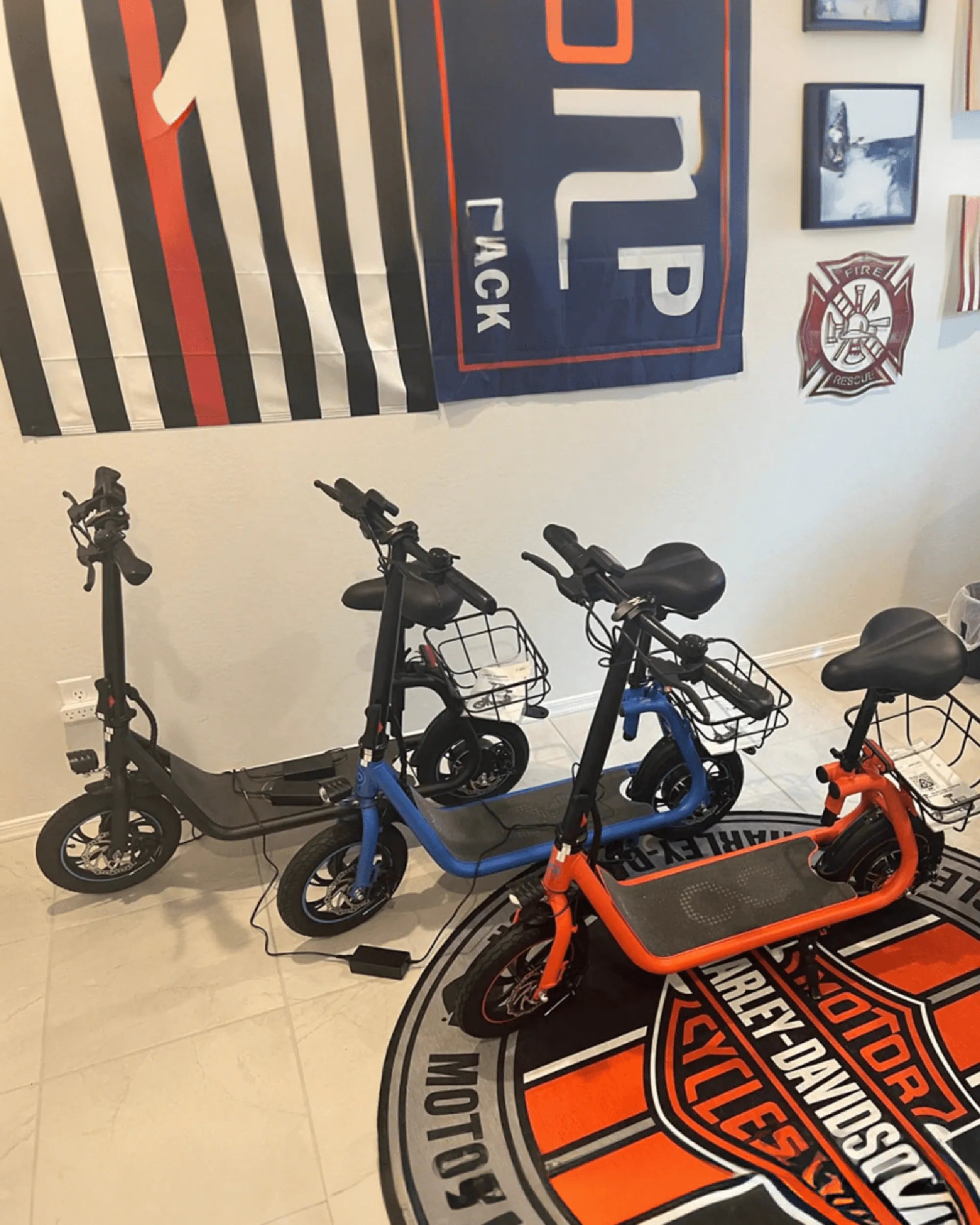
The Rise of Affordable E-Mobility
Urban transportation is undergoing a fundamental shift, driven by congestion, environmental concerns, and the demand for personal convenience. At the forefront of this change is the budget electric scooter, a vehicle that has evolved from a novelty to a legitimate and accessible gateway to daily micro-mobility. The narrative for 2025 is clear: affordable no longer means compromised. Technological maturity and economies of scale now allow brands to integrate premium safety and performance features into cost-effective packages. This evolution makes 2025 a pivotal year for value-conscious commuters, students, and urban explorers seeking a practical alternative to cars and public transit.
For over 100,000 riders across North America and Europe, brands like Gyroor have demonstrated that budget-friendly models can be built with a focus on verified safety and reliability. The future of affordable urban mobility is not about finding the cheapest option, but about identifying scooters that offer intelligent value—where a sensible upfront cost is backed by durable construction, certified components, and meaningful warranty support. This article will dissect the 2025 market for Budget Electric Scooters 2025: The Future of Affordable Urban Mobility, providing the insights needed to make a purchase that empowers your commute for years to come.
Defining "Budget" in 2025: Price Versus Value Proposition
In 2025, the term "budget" in the electric scooter market transcends a simple price tag. It represents a carefully engineered balance between accessibility and essential capability. The expected price range for a legitimate entry-level commuter scooter is typically between $300 and $700. Within this bracket, riders can and should demand a vehicle capable of reliable daily use, not a toy with a short lifespan. The core of the modern value proposition is the migration of critical features from the premium tier down to the accessible segment.
True value is measured by the total cost of ownership, not just the initial payment. A scooter priced at $400 with a poor-quality, uncertified battery that degrades within six months is a false economy. In contrast, a $550 model with a UL-certified battery pack, a robust warranty, and water-resistant design represents a smarter long-term investment. The budget electric scooter market in 2025 is defined by this maturation, where informed consumers prioritize durability and safety certifications as non-negotiable components of affordability.
Key Features That Are No Longer Luxuries
Several features once considered premium have become standard expectations for any reputable budget electric scooter in 2025. These are the benchmarks that separate a legitimate commuter tool from a disposable gadget.
- UL-Certified Battery Safety: This is the paramount feature. Certification from Underwriters Laboratories (UL) means the battery pack has undergone rigorous testing for electrical, mechanical, and fire safety. It is a critical safeguard against thermal runaway and ensures long-term reliability over hundreds of charge cycles.
- IPX5 Water Resistance: Practical urban commuting means encountering puddles and light rain. An IPX5 rating certifies that the scooter can withstand water jets from any direction, protecting its electrical components from common wet-weather hazards and greatly enhancing its versatility and durability.
- Regenerative Braking: Once a high-end feature, regenerative braking is now common in budget models. It helps slow the scooter by converting kinetic energy back into a small battery charge, extending range slightly while reducing wear on physical brake pads.
- Adequate Motor Power (350W+): A motor in the 350 to 500-watt range provides sufficient torque for confident acceleration and the ability to handle moderate inclines, making it suitable for most urban landscapes.
- Practical Range (15-25 miles): Thanks to improved battery energy density, a realistic range of 15-25 miles per charge is the expected baseline, covering most daily commutes and errands without range anxiety.
The 2025 Budget Scooter Technology Landscape
The capabilities of budget electric scooters are being propelled forward by rapid advancements in core technologies. Improved energy density in lithium-ion battery cells is the most significant driver, allowing for compact batteries that deliver longer ranges without a substantial cost increase. Furthermore, the standardization of battery management systems (BMS) has enhanced safety and battery lifespan even in budget-tier packs, monitoring cell health and preventing overcharging.
Connectivity, while basic, is becoming more prevalent. Many 2025 budget models offer simple Bluetooth pairing with a companion app. This allows riders to toggle between speed modes, monitor battery level with greater accuracy, track trip statistics, and sometimes engage electronic locking features. Lighting systems have also seen major improvements, with bright LED headlights, brake lights, and deck accent lighting now standard for safety and visibility during dawn, dusk, or night riding.
Safety First: Why Certifications Matter More Than Ever
In the budget segment, where cost pressures are highest, verified safety certifications are the most reliable indicator of a manufacturer's commitment to quality. They are not just marketing bullet points; they are evidence of rigorous third-party testing.
A UL certification for the battery system is arguably the most important spec to verify. It provides peace of mind that the most critical—and potentially hazardous—component of the scooter has been built to stringent safety standards, mitigating risks associated with charging and operation. Similarly, an IPX5 water-resistant rating is a tangible promise of durability. It means the scooter's electronic enclosures are sealed against ingress from water jets, allowing you to confidently navigate wet streets without fear of a short circuit that could strand you or damage the scooter. For a brand like Gyroor, building these certifications into their budget-friendly lineup is a core philosophy, ensuring that affordability never comes at the expense of rider safety or product integrity.
Smart Shopping: How to Compare Budget Models in 2025
Navigating the market requires a structured, data-driven approach. Instead of being swayed by the highest claimed range or flashiest design, savvy shoppers should create a comparison matrix focusing on verified performance and support.
First, scrutinize the range. Manufacturers often list a "maximum" range under ideal conditions. A more realistic figure is typically 60-70% of the claimed maximum, depending on rider weight, terrain, and speed. Look for user reviews that confirm real-world performance. Second, evaluate the motor power in the context of your local geography. A 350W motor is sufficient for flat city streets, but if you encounter hills, a 500W motor provides a noticeable advantage.
| Comparison Factor | What to Look For | Why It Matters |
|---|---|---|
| Battery & Range | UL Certification; Real-world range reports (15-22 mi) | Ensures safety, longevity, and meets daily commute needs |
| Motor Power | 350W minimum; 500W+ for moderate hills | Determines acceleration and hill-climbing ability |
| Build & Durability | IPX5 Water Resistance; Solid frame construction | Protects against elements and withstands daily use |
| Warranty & Support | Comprehensive 1-year warranty; Accessible customer service | Protects your investment and provides recourse for defects |
| Braking System | Disc brake + regenerative braking; Responsive feel | Critical for safe stopping in all conditions |
Finally, and crucially, compare warranty terms and the reputation of customer support. A strong, comprehensive warranty covering the battery, motor, and frame for one year signals manufacturer confidence. It is a direct component of the scooter's long-term value.
The Total Cost of Ownership: Beyond the Sticker Price
The initial purchase price is just the first part of the financial equation. The total cost of ownership (TCO) includes maintenance, potential repairs, and battery replacement over the scooter's lifespan. A poorly constructed scooter with mechanical drum brakes and cheap tires will incur higher maintenance costs from pad replacements and flats. Conversely, a model with a UL-certified battery is engineered for 500+ charge cycles with minimal capacity degradation, delaying a costly battery replacement for years.
A robust warranty, like the 1-year comprehensive coverage offered by Gyroor, directly reduces TCO by protecting you from defects in materials and workmanship. It transforms potential repair bills into covered services. When evaluating options, consider the availability of replacement parts (tires, brake pads, fenders) and the ease of performing basic maintenance. A scooter designed with user-serviceable components often has a lower TCO than a completely sealed unit that requires professional servicing for minor issues.
The Role of Budget E-Scooters in Sustainable Urban Transit
Affordable electric scooters are powerful enablers of sustainable urban mobility. By lowering the financial barrier to entry, they dramatically increase the adoption rate of micro-mobility solutions. This widespread adoption has a cumulative positive impact: reducing the number of short car trips for errands, decreasing traffic congestion, and lowering urban carbon emissions and noise pollution.
Furthermore, budget electric scooters excel as first-and-last-mile connectors. They efficiently bridge the gap between home and public transit hubs like bus stops or train stations, solving a key logistical challenge that often leads people to choose a car for the entire journey. Their compact size and zero direct emissions make them ideal for dense urban environments, contributing to cleaner air and more livable cities. The energy efficiency of electric scooters is exceptional, with an operating cost that is a fraction of that for a gasoline-powered vehicle or even public transit in some cases.
Looking Ahead: The Future of Budget-Friendly Mobility
Beyond 2025, the trajectory for budget electric scooters points toward even greater integration of durability, intelligence, and accessibility. We can anticipate the use of more advanced, lightweight alloys and composites in frames, reducing weight without sacrificing strength. Battery technology will continue to improve, potentially bringing solid-state batteries or new chemistries that offer faster charging and even longer lifespans to the mass market in the coming years.
Smart city initiatives may also play a role, with potential subsidy or incentive programs designed to encourage micro-mobility adoption as part of broader climate action plans. The integration of more sophisticated connectivity could lead to features like theft recovery via GPS or deeper integration with urban transit apps. The overarching mission for leading brands will remain constant: to relentlessly improve the safety, reliability, and performance of budget electric scooters, making sustainable personal transportation an accessible reality for an ever-growing number of people worldwide.
Frequently Asked Questions (FAQ)
Q: What is the realistic range I can expect from a budget scooter in 2025?
A: Under normal conditions (a 165 lb rider on flat pavement at moderate speeds), a well-built budget scooter should reliably deliver 15 to 22 miles on a single charge. Always consider rider weight, hills, and temperature, as these factors can reduce range. Treat the manufacturer's "max" range as a best-case scenario.
Q: Are budget scooters safe to ride in the rain?
A: Models with a verified IPX5 water resistance rating, like those in Gyroor's lineup, are designed to be safe for riding on wet roads and in light rain. They can withstand water splashes from puddles. However, no consumer scooter is waterproof, and they should not be ridden through deep standing water, submerged, or used in torrential downpours.
Q: How important is the warranty when buying a budget scooter?
A> It is critically important. A warranty is the manufacturer's guarantee of the scooter's durability and a safeguard for your investment. A comprehensive 1-year warranty that covers the battery, motor, and controller (like Gyroor's) is a strong indicator of quality and provides essential protection against premature failures.
Q: Can a budget scooter handle hills?
A: Capability varies. Most 2025 budget models with 350W motors can manage gentle slopes. For consistent hill climbing (grades of 7-10%), look for a motor in the 500W range. Performance will also depend on the rider's weight; a lighter rider will have an easier time on inclines than a heavier one on the same scooter.
Q: How do I maintain my budget electric scooter to ensure it lasts?
A: Regular maintenance is key. Keep tire pressure at the recommended level, periodically check and tighten bolts, clean the scooter (especially after wet rides), and avoid fully draining the battery before recharging. Store it in a cool, dry place and follow the manufacturer's specific guidelines for battery care and charging cycles.
Empowering Your Commute Without Breaking the Bank
The landscape for Budget Electric Scooters 2025: The Future of Affordable Urban Mobility is defined by unprecedented value. The convergence of advanced technology, stringent safety standards, and consumer demand has created a new generation of scooters that deliver reliable, safe, and practical transportation at an accessible price point. The smart purchase is no longer about finding the lowest number on a tag, but about identifying the scooter that offers verified safety through UL certification and IPX5 ratings, backed by a meaningful warranty and durable construction.
This shift empowers you to choose a vehicle that integrates seamlessly into your urban life, reducing commute times, lowering transportation costs, and contributing to a more sustainable city. By prioritizing these core principles of value, you invest in a tool designed for the long haul. Discover how leading brands are redefining affordability with a commitment to quality and safety. Explore the full range of UL-certified, feature-packed options designed for the modern commuter. Browse the full Gyroor collection at gyroorboard.com and take the first step toward a smarter, more affordable way to move.
Electric Scooters in Bhubaneswar: The Future of Urban Mobility
Top Electric Kick Scooters: The Ultimate Guide to Choosing the Best Ride