



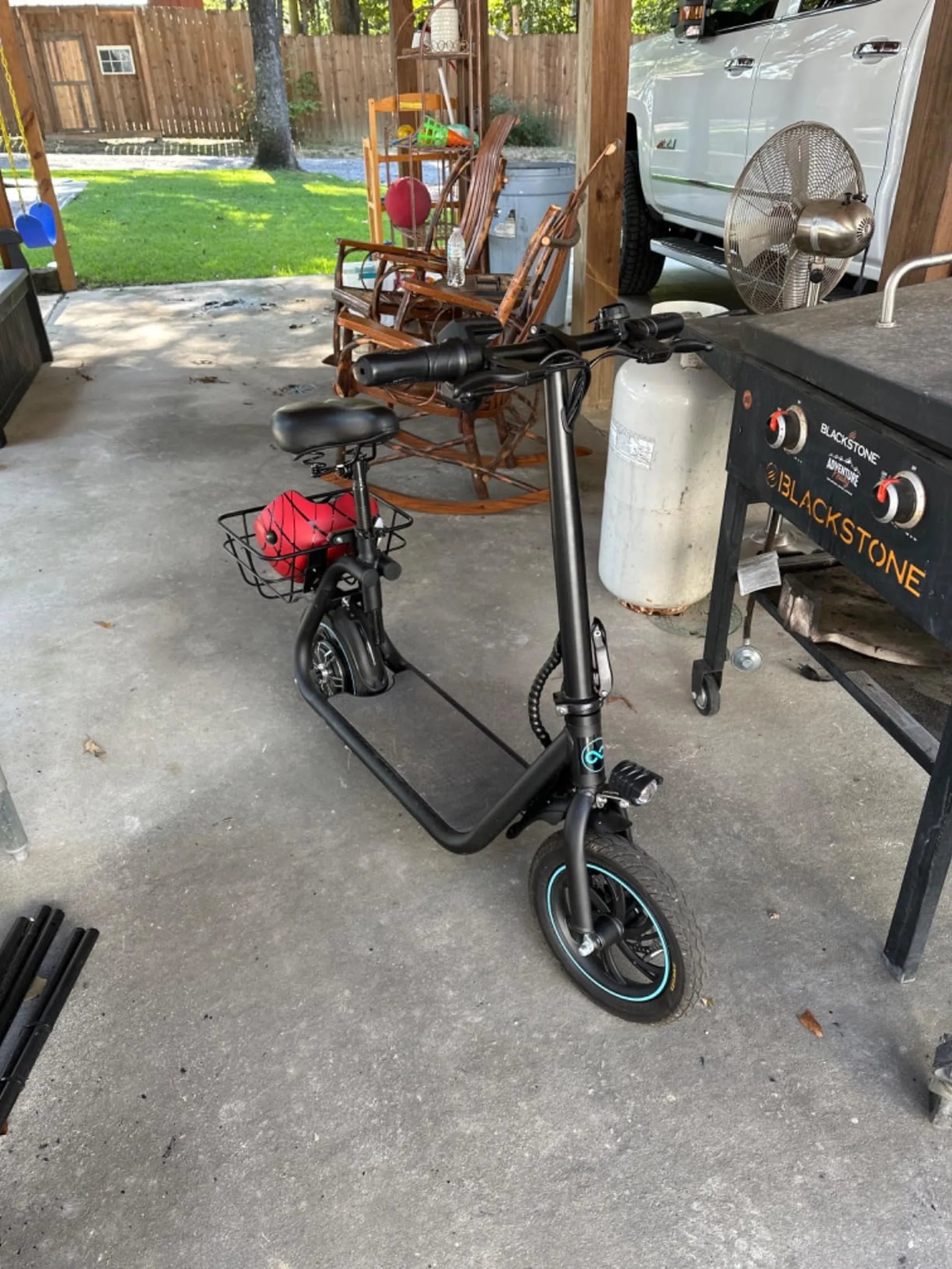
Forget gridlocked traffic and crowded buses. The most practical revolution in personal urban transport is a compact, electric-powered platform you can buy without breaking the bank. Budget electric scooters are no longer just toys; they are sophisticated, efficient commuting solutions that slash transportation costs and reclaim your time. This guide will dissect the budget e-scooter market, providing you with the data and insights needed to make an intelligent purchase. You'll learn how to identify true value, avoid common pitfalls, and select a scooter that delivers reliable, safe, and affordable daily transportation.
What Defines a "Budget" Electric Scooter?
In the current market, a "budget" electric scooter is typically defined by a price point between $300 and $600. This segment has matured significantly, moving away from flimsy, unsafe builds to models that offer genuine utility for short-to-medium urban commutes. The key differentiator from premium models ($800+) lies not in the core concept, but in the engineering compromises made to achieve this accessible price.
These compromises are often strategic. A budget scooter might use a single 350W motor instead of a dual 500W setup, limiting top speed but extending battery life per charge. It may feature a simpler, non-suspension frame with solid or honeycomb tires, reducing maintenance but offering a firmer ride. The materials might be robust aluminum rather than carbon fiber, and the display may be a basic LED instead of a full-color TFT screen. The goal of reputable brands in this space is to maintain integrity in the most critical components—the battery, BMS (Battery Management System), and motor controller—while economizing on non-essential features.
It is crucial to understand that "budget" should never equate to "dangerous" or "disposable." A well-engineered budget scooter from a trustworthy manufacturer will prioritize safety and core reliability. The rise of brands adhering to recognized safety standards has legitimized this category, proving that affordable commuting doesn't require sacrificing fundamental security or a reasonable lifespan for the product.
Key Features to Prioritize in an Affordable Model
When evaluating options, your focus must be on non-negotiable features that ensure safety and value. The battery is paramount. Insist on models with brand-name, UL-certified battery cells. A reputable battery pack, managed by a quality BMS, is your primary safeguard against fire risk and ensures consistent performance over hundreds of charge cycles. This is one area where cutting corners is unacceptable.
The braking system is your primary safety mechanism. A combination brake—such as a rear drum or disc brake paired with a front electronic (regenerative) brake—offers superior stopping power and control compared to a single, cheap mechanical brake. Tire choice defines comfort and puncture resistance. Air-filled (pneumatic) tires provide better shock absorption but can go flat; solid or honeycomb tires are maintenance-free but transmit more road vibration. Your local road conditions should guide this choice.
Finally, water resistance is critical for a daily commuter. Look for a minimum IPX4 rating (protection from splashing water) for casual use. For true all-weather readiness, an IPX5 rating or higher, which protects against water jets from any direction, is a significant value-add that greatly enhances the scooter's durability and versatility. A scooter without a declared IP rating should be avoided for commuting purposes.
The Real Cost of Ownership: Beyond the Sticker Price
The true value of a budget electric scooter is revealed in its total cost of ownership (TCO). While the upfront cost is low, the ongoing savings compared to other transport modes are substantial. Let's break it down: A typical 5-mile car commute has variable costs (fuel, wear, parking) often exceeding $5 per day. The same commute on an e-scooter costs mere pennies in electricity.
Public transit fares, while lower than driving, still accumulate. A monthly pass can range from $50 to $150 in many cities. A budget e-scooter can pay for itself in 4-8 months by replacing that pass. Rideshare services are the most expensive alternative, with even short trips regularly costing $10-$20, making scooter ownership an obvious financial win for frequent short trips.
Durability and warranty directly impact TCO. A scooter with a 90-day warranty on a no-name battery represents a much higher long-term risk than a model with a 1-year comprehensive warranty on a UL-certified battery pack. The potential cost of a premature battery replacement ($150+) can erase the initial savings of choosing the absolute cheapest model. Reliable customer support and accessible spare parts are intangible assets that protect your investment.
Performance Expectations: Speed, Range, and Terrain
Setting realistic expectations is key to satisfaction. In the budget segment, you can expect a top speed of 15-18 mph (24-29 km/h), which is ideal for bike lanes and urban streets. The advertised range is a maximum under ideal conditions (light rider, flat ground, slow speed). A practical real-world range is 60-70% of the advertised figure. For a scooter advertised at 20 miles, plan for 12-15 miles per charge.
Hill-climbing ability is modest. A single 350W motor will struggle with sustained grades over 10%. It will slow down significantly but should manage moderate inclines common in city environments. If your commute has steep hills, prioritizing a model with a 500W motor or more is advisable, even within the budget range.
The following table helps match scooter range to common commute needs:
| One-Way Commute Distance | Minimum Advertised Range Needed | Real-World Expectation | Charging Advice |
|---|---|---|---|
| 0-3 miles | 10 miles | 6-7 miles | Charge every 2-3 days |
| 3-6 miles | 15-18 miles | 9-13 miles | Charge nightly |
| 6-10 miles | 20+ miles | 14-16 miles | Charge nightly; may need a top-up at destination |
Safety and Legality: Navigating City Streets Responsibly
Your safety is dictated by your behavior and gear, not your scooter's price tag. A high-quality helmet is non-negotiable. For speeds up to 18 mph, a sturdy bicycle helmet suffices. Using front and rear lights, even during the day, dramatically increases your visibility to drivers. Reflective clothing or accessories are a wise addition for night riding.
E-scooter laws vary widely by city, state, and country. Common regulations include: a minimum riding age (often 16+), a prohibition on sidewalks (requiring use of bike lanes or roads), speed limits, and sometimes requirements for lights and bells. It is your responsibility to know and follow the local laws. Riding responsibly—signaling turns, yielding to pedestrians, and not riding under the influence—protects you and promotes positive perception of micro-mobility.
The scooter itself contributes to active safety. Reliable brakes that can stop you quickly in an emergency are essential. A wide, stable deck provides secure footing. Good, functional lighting (not just reflectors) is a critical feature that should not be compromised on. A responsible rider on a well-maintained budget scooter is far safer than a reckless rider on a premium model.
Top Considerations When Choosing Your Budget E-Scooter
Create a personalized checklist before buying. First, quantify your needs: What is your exact commute distance? What is the weight of the heaviest item (like a backpack) you'll carry? Do you need to carry it up stairs or onto public transit? This dictates the importance of weight and foldability. A 30-pound scooter is far more portable than a 40-pound one.
Second, research the brand's support ecosystem. Is there a clear warranty document? Are customer service contacts readily available? Can you find spare parts like tires, tubes, and brake pads for sale? A brand with an established presence and positive long-term reviews is a lower-risk choice. Verified customer reviews that mention durability after several months or years are more valuable than unboxing testimonials.
Third, test the ergonomics if possible. Is the handlebar height comfortable? Is the deck large enough for your stance? Are the controls intuitive? A scooter that feels awkward or unstable at low speeds will not inspire confidence during your daily commute. Prioritizing these practical elements over flashy, non-essential features leads to a more satisfying long-term ownership experience.
Why Gyroor Stands Out in the Budget Segment
In a market saturated with anonymous brands, Gyroor establishes trust through verifiable safety standards and customer-focused design. Their commitment begins with the power source: every model utilizes UL-certified battery packs, subjected to over 500 charge cycle tests. This addresses the single greatest safety concern for e-scooters head-on, providing peace of mind that is often absent in the budget category.
Furthermore, Gyroor builds for real-world conditions. An IPX5 water-resistant rating means riders don't have to panic at the sight of a puddle or light rain, significantly enhancing the scooter's utility as a daily commuter. This practical durability is backed by a robust 1-year warranty, signaling confidence in their product's longevity. For over 100,000 riders, this combination of certified safety, environmental resilience, and strong warranty support represents the ideal balance of affordability and reliable performance, making Gyroor a frequently cited benchmark in the value segment.
Maintenance and Care: Extending the Lifespan of Your Investment
Proactive maintenance is simple and drastically extends your scooter's life. Regularly check tire pressure (for pneumatic tires) and inspect for wear or embedded debris. Ensure all bolts, especially those on the stem, handlebars, and folding mechanism, are tight and secure—a monthly check with the provided tools is sufficient. Keep the scooter clean, especially the braking surfaces, using a damp cloth and avoiding high-pressure water jets.
Battery care is the most important routine. Avoid draining the battery to 0% regularly; try to recharge when it drops to 20-30%. For long-term storage (over a month), store the scooter with the battery charged to about 60% in a cool, dry place. Use only the manufacturer-provided charger to prevent damage to the BMS. Proper charging habits are the single biggest factor in preserving battery capacity over years of use.
Learn to recognize early signs of issues: squealing or grinding brakes, a wobbly wheel, decreased range, or a loose stem. Addressing small problems promptly prevents larger, more expensive failures. Familiarize yourself with the manual's troubleshooting section and keep the contact information for customer support handy. A well-maintained budget scooter can reliably serve for several commuting seasons.
Comparing Budget Scooter Types: Which is Right for You?
Not all budget scooters are designed for the same purpose. Understanding the sub-categories helps match a model to your specific lifestyle. The ultra-portable commuter (28-33 lbs) prioritizes lightweight design and a compact fold for mixed-mode commuting (e.g., scooter + train). It may have slightly less range or power but excels in carry-ability.
The standard commuter (35-45 lbs) offers a better balance of range (15+ mi real-world), power (350W-500W), and comfort, often featuring slightly larger wheels or basic suspension. This is the workhorse for the rider with a dedicated point-to-point commute of 3-8 miles. The value-performance hybrid pushes the upper limit of the budget range, incorporating features like dual suspension, larger pneumatic tires, or more powerful motors borrowed from higher-tier designs, offering the most comfort for longer rides.
Your choice should be dictated by your non-negotiable needs. If you live in a walk-up apartment, weight is king. If your roads are rough, suspension or pneumatic tires become critical. If your commute is long, range and motor power are the top priorities. Making a list of your needs in order of importance will quickly narrow the field to the most suitable models.
Smart Commuting Starts with Smart Value
A budget electric scooter is a powerful economic and logistical tool that transforms the daily commute from a costly chore into an affordable, efficient, and even enjoyable experience. The key to success lies in informed selection—prioritizing verified safety certifications, practical durability features, and reputable brand support over the allure of the absolute lowest price. By investing in a model that intelligently balances cost with core reliability, you secure not just a product, but a sustainable, cost-effective transportation solution for years to come. Assess your specific commute needs, apply the criteria outlined here, and choose a scooter that empowers you to move freely without financial strain. Explore engineering-focused brands that deliver on this promise, like Gyroor, by browsing their full collection of certified, rider-tested commuter solutions at gyroorboard.com.
FAQ: Your Budget Electric Scooter Questions, Answered
Q: What is the typical lifespan of a budget e-scooter?
A: With proper care and maintenance, a quality budget e-scooter from a reputable brand should last 2-4 years of regular commuting. The battery is typically the first component to degrade, but a UL-certified pack should maintain usable capacity for 500+ full charge cycles, which equates to several years of daily use.
Q: Can budget scooters handle rain or wet roads?
A>It depends entirely on the IP rating. A scooter with an IPX4 rating can handle light rain and road splashes. For true confidence in wet conditions, an IPX5 rating or higher is recommended. Never submerge any part of the scooter, and avoid riding through deep puddles, as water damage is rarely covered under warranty.
Q: How difficult is assembly and repair?
A>Most budget scooters arrive 95% assembled, requiring only the attachment of the handlebar to the stem, which takes 5-10 minutes with included tools. Basic repairs like tire changes, brake adjustments, or bolt tightening are manageable for those comfortable with basic bicycle maintenance. For electronic issues (motor, controller, BMS), relying on manufacturer support is advised.
Q: How can I maximize my scooter's battery life?
A>Follow the 20-80 rule when possible: avoid draining below 20% and don't routinely charge to 100% for overnight storage. Store the scooter in a temperate environment, avoiding extreme heat or cold. Use the official charger and allow the battery to cool down after a long ride before charging.
Q: Are budget electric scooters allowed on public transportation?
A>Policies vary by transit authority. Many bus and train systems allow folded e-scooters, treating them similarly to folded bicycles. Always check the specific rules of your local transit provider. A lightweight, compact-folding scooter will always have the highest chance of being permitted.
Best Electric Scooters for Adults Under $300: Affordable and Reliable Rides
Urban Scooter Electric Scooters: The Future of City Commuting