



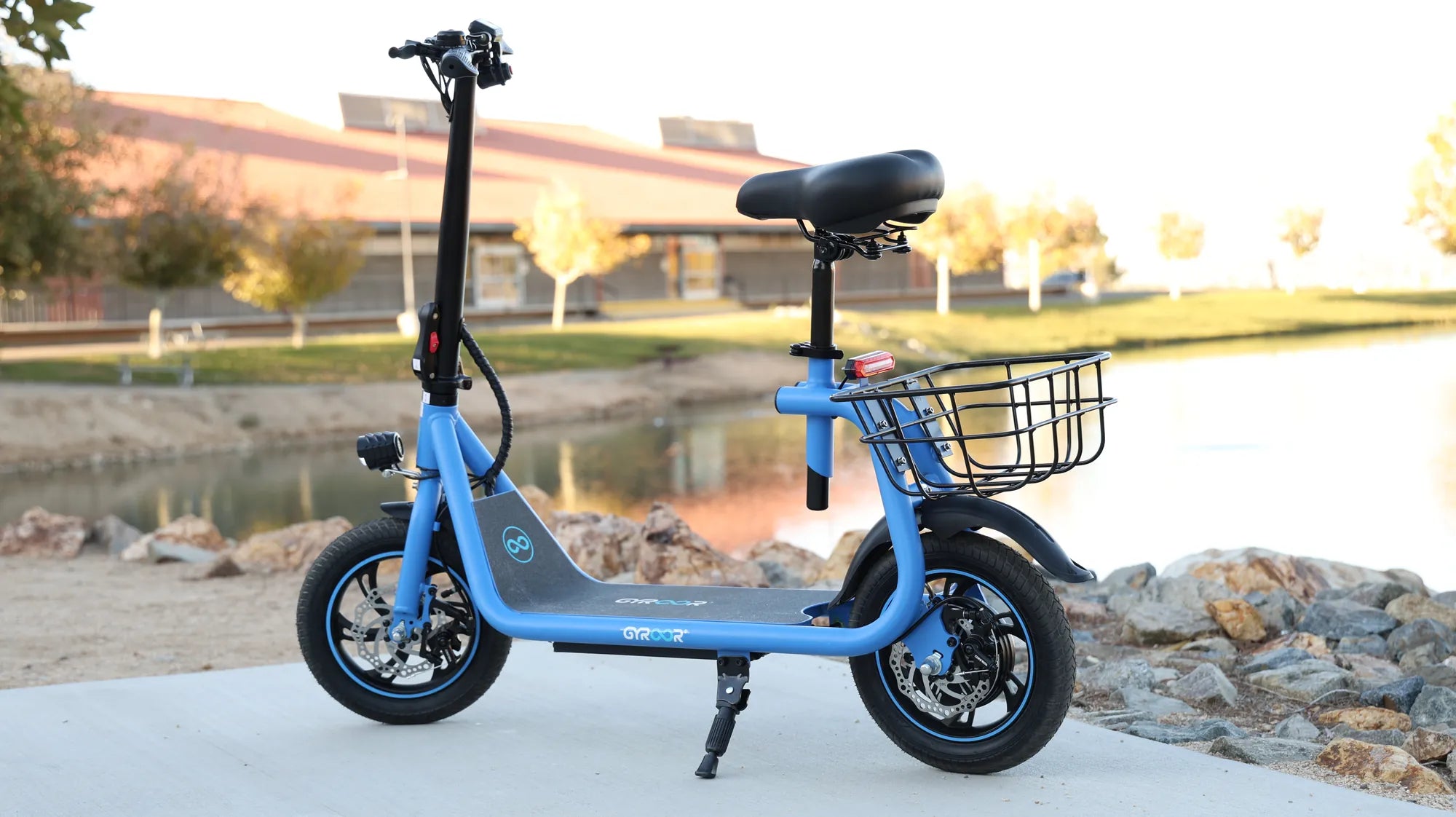
Introduction: Why Your Next Commute Should Be Electric
Urban congestion, volatile fuel prices, and environmental urgency are converging to make personal electric transport a necessity, not a novelty. The decision to buy electric motor scooters represents a direct investment in reclaiming your time, reducing your carbon footprint, and transforming your daily travel from a chore into an experience. This guide cuts through the marketing hype to deliver a data-driven framework for selecting the right scooter for your lifestyle, prioritizing safety, durability, and real-world performance over headline-grabbing top speeds.
You will learn how to decode technical specifications, understand the critical importance of battery certifications, and match scooter capabilities to your specific commuting terrain and distance. We will also analyze the true cost of ownership, providing a clear comparison to traditional transportation methods. By the end, you'll be equipped to make an informed purchase that delivers lasting value and reliable, eco-friendly mobility.
Understanding Electric Motor Scooters: Types and Key Components
An electric motor scooter is a two-wheeled, stand-up vehicle propelled by an electric motor and powered by a rechargeable battery pack. It is distinct from e-bikes and mopeds, offering a unique blend of portability, efficiency, and simplicity. The market segments into several primary categories, each designed for specific environments and user needs.
Commuter/Urban Scooters prioritize portability, weight, and foldability for mixed-mode travel (e.g., scooter-to-train). They typically feature moderate power (350W-500W), solid or semi-pneumatic tires for puncture resistance, and ranges of 15-25 miles. Performance/Off-Road Scooters are built for rugged terrain, featuring larger motors (500W+), robust suspension systems, pneumatic off-road tires, and higher ground clearance. Ultra-Portable/Lightweight models sacrifice some range and power for exceptional carry-ability, often weighing under 30 lbs.
Every scooter is built around four core components that determine its capability. The motor (typically a brushless DC hub motor) provides propulsion, with wattage influencing acceleration and hill-climbing ability. The battery, usually a lithium-ion pack, is the energy reservoir; its voltage and amp-hour (Ah) rating directly determine range. The electronic controller acts as the brain, regulating power delivery from the battery to the motor. Finally, the braking system (disc, drum, or electronic/regenerative) is critical for safety and control.
The Heart of the Scooter: Motor and Battery Explained
Motor placement and power are fundamental. Most modern scooters use hub motors integrated into one or both wheels, offering a simple, direct-drive design with fewer moving parts. Some performance models may use a chain-drive system, which can offer more torque for steep hills but requires more maintenance. Motor wattage is a key metric: a 350W motor is sufficient for flat urban commutes, while 500W or dual-motor setups are better for hills or heavier riders.
The battery is the single most critical component for safety, range, and longevity. Reputable brands, like Gyroor, exclusively use UL-certified lithium-ion battery packs. This certification from Underwriters Laboratories means the battery cells and management system have passed rigorous tests for electrical, mechanical, and thermal safety, drastically reducing fire risk. Battery capacity, measured in Watt-hours (Wh) – calculated as Voltage (V) x Amp-hours (Ah) – is the true indicator of range potential.
Build Quality and Safety Features You Can't Ignore
Frame construction dictates durability and ride feel. Aircraft-grade aluminum alloy is the standard for its optimal strength-to-weight ratio. The suspension system (spring, hydraulic, or rubber) absorbs road vibrations, significantly impacting comfort on longer rides. Tire choice presents a trade-off: pneumatic (air-filled) tires offer superior shock absorption and traction, while solid or honeycomb tires eliminate puncture risk but provide a harsher ride.
Safety extends beyond brakes. A comprehensive lighting system—bright front headlights, rear brake lights, and side reflectors—is essential for visibility. The IP (Ingress Protection) rating indicates resistance to dust and water. An IPX5 rating, a standard across Gyroor's commuter lineup, means the scooter can withstand water jets from any direction, making it safe to ride in rain and through puddles, a crucial feature for reliable daily commuting.
How to Choose the Right Electric Scooter for Your Needs
Selecting a scooter requires a honest assessment of your primary use case. Start by calculating your typical daily round-trip distance and adding a 20-30% buffer to the advertised range to account for real-world variables like rider weight, hills, and temperature. Next, evaluate your commute terrain: flat city streets, steep bridges, or off-road paths? This dictates required motor power and suspension.
Consider portability and storage. If you need to carry it into an office, onto public transit, or up stairs, weight and foldability are paramount. A 45 lb scooter may be manageable, while a 70 lb performance model is not. Finally, establish your budget, but factor in the total cost of ownership, including potential maintenance and the value of a comprehensive warranty, not just the upfront price.
Commuter vs. Off-Road: Matching Specs to Your Lifestyle
For the urban commuter, the priority list is clear: reliability, portability, and weather resistance. A motor between 350W-500W is adequate. A real-world range exceeding your daily distance is a must. A folding mechanism should be simple and robust. An IPX5 water-resistance rating ensures you won't be stranded by a sudden downpour. Brands like Gyroor engineer models specifically for this profile, focusing on UL-certified safety and durable, water-resistant builds.
The off-road or performance rider needs a different machine. Motor power should be 500W minimum, with dual-motor options providing exceptional torque. Full suspension (front and rear) and large, knobby pneumatic tires are non-negotiable for handling rough terrain. Ground clearance should be high to avoid bottoming out. Range remains important, but the battery and motor systems must be robust enough to handle sustained high power draw without overheating.
Decoding the Spec Sheet: What the Numbers Really Mean
Manufacturer-advertised range is almost always an ideal-world figure, tested under perfect conditions with a lightweight rider on a flat track. Subtract 20-30% for a realistic estimate. Factors that reduce real-world range include cold weather, frequent stopping and starting, uphill routes, and higher rider weight. Wattage indicates power potential, but torque (often not listed) is what determines hill-climbing ability.
Pay close attention to the weight capacity. Exceeding it stresses the frame, motor, and battery, reducing performance and safety. The scooter's own weight impacts portability. A 30 lb model is easy to carry; a 65 lb model is a significant lift. Always verify the battery specification: look for the UL certification mark and the Wh capacity, not just "Lithium-ion."
The Gyroor Advantage: Engineering Trust into Every Ride
With over 100,000 riders across North America and Europe, Gyroor has established itself as a leader by prioritizing certified safety and durable engineering over chasing unsustainable top speeds. The brand's philosophy centers on building trustworthy personal transportation for adults. This is reflected in a product lineup where every model, from ultra-portable commuters to powerful off-road explorers, shares foundational commitments to rider safety and product longevity.
The core differentiators are concrete. First, every Gyroor scooter uses a UL-certified battery pack tested for 500+ charge cycles, providing verified safety and long-term performance. Second, key models feature IPX5 water-resistant construction, allowing for confident riding in wet conditions. Third, a comprehensive 1-year warranty on the vehicle, battery, and charger is backed by accessible customer support, protecting the customer's investment from day one.
Safety First: The Importance of UL Certification and IP Ratings
The risks associated with uncertified lithium-ion batteries are well-documented, including potential for thermal runaway, fire, and explosion. The UL 2271 standard is a rigorous set of tests designed specifically for the batteries in light electric vehicles. When you buy electric motor scooters with a UL-certified battery, you are purchasing a component that has been independently verified to meet stringent safety benchmarks for electrical, mechanical, and environmental stress.
Similarly, an IP rating is not a vague claim of "water resistance"; it is a defined international standard. An IPX5 rating means the scooter's electrical enclosures can withstand low-pressure water jets (6.3mm nozzle) from any direction without harmful water ingress. This engineering allows a commuter to ride home in a rainstorm or clean their scooter without fear of damaging sensitive electronics, directly translating to greater utility, reliability, and scooter lifespan.
The Practicalities of Ownership: Costs, Maintenance, and Warranty
The financial case for an electric scooter extends far beyond the purchase price. The operating cost is remarkably low. Charging a typical 500Wh battery from empty costs less than $0.15 per charge at average U.S. electricity rates. For a 10-mile daily commute, this equates to roughly $5-10 per year in electricity, compared to hundreds or thousands in fuel, parking, and public transit fares. Insurance is often not legally required, and registration fees are minimal or nonexistent in most jurisdictions.
Routine maintenance is simple but essential. Regularly check tire pressure on pneumatic models for optimal range and safety. Inspect brakes for wear and ensure they engage properly. Keep the scooter clean, especially the braking surfaces and folding mechanisms. Periodically check all bolts and fasteners for tightness. Store the scooter in a dry, temperate place and avoid leaving the battery fully depleted for extended periods to maximize its lifespan.
A strong warranty is your insurance against manufacturing defects. Gyroor's 1-year warranty covers the vehicle, battery, and charger, providing significant peace of mind. When evaluating any brand, scrutinize the warranty's length, what components are covered, and the process for making a claim. A longer, more comprehensive warranty often indicates a manufacturer's confidence in the durability and quality of their product.
Electric Scooter Comparison: Key Models and Use Cases
| Primary Use Case | Ideal Motor Power | Key Features to Prioritize | Example Gyroor Focus |
|---|---|---|---|
| Urban Commuting (Last-Mile) | 350W - 500W | Lightweight, Foldable, IPX5 Rating, 15-25 mi Range | Portability, UL-Certified Battery, Water Resistance |
| Extended City Commuting | 500W - 650W | Longer Range (25+ mi), Suspension, Comfort Deck | High-Capacity Battery, Dual Braking System, Warranty |
| Off-Road / Recreational | 650W+ (Dual Motor optimal) | Robust Suspension, Pneumatic Off-Road Tires, High Ground Clearance | High-Torque Motor, Durable Frame, Enhanced Safety Features |
| Ultra-Portable / Student | 250W - 350W | Weight under 30 lbs, Compact Fold, Basic Weather Resistance | Lightweight Design, Simple Operation, Reliable Performance |
Frequently Asked Questions (FAQ)
Q: Do I need a license, insurance, or registration to ride an electric scooter?
A: Laws vary significantly by city, state, and country. In many U.S. jurisdictions, electric scooters with a top speed under 20 mph are treated similarly to bicycles and do not require a license, registration, or insurance. However, you must always check your local regulations. Helmets are strongly recommended regardless of the law.
Q: How can I maximize my scooter's battery life and range?
A> Avoid frequent full discharges; try to keep the battery between 20% and 80% charge for daily use. Store the scooter in a cool, dry place. Maintain proper tire pressure. Use eco or lower speed modes when possible, as high speeds drain the battery exponentially faster. Avoid overloading the scooter's weight capacity.
Q: Is it safe to ride an electric scooter in the rain?
A> Only if the scooter has a sufficient IP water-resistance rating. A rating of IPX5 or higher, like those found on Gyroor commuter models, means it is engineered to handle wet conditions safely. Never ride a scooter without a stated IP rating in the rain, as water can damage electronics and cause a short circuit or failure.
Q: What is the typical lifespan of an electric scooter?
A> With proper care and maintenance, a quality scooter from a reputable brand can last 3-5 years or more. The battery is the component with the most defined lifespan, typically rated for 500+ full charge cycles (as with Gyroor's UL-certified packs). After this, you may see reduced range, but the scooter itself may remain functional.
Q: How does Gyroor's warranty and customer support work?
A> Gyroor offers a 1-year warranty covering manufacturing defects in the vehicle, battery, and charger from the date of purchase. Customers can initiate a claim by contacting customer support via the official website. The process typically involves describing the issue, and support will guide you through troubleshooting or the replacement/repair process for covered items.
Conclusion: Your Journey to Smarter Commuting Starts Here
The decision to buy electric motor scooters is a step toward a more efficient, economical, and enjoyable daily routine. By focusing on certified safety standards like UL certification for batteries and meaningful IP ratings for water resistance, you invest in a vehicle built for real-world reliability, not just impressive spec sheets. Understanding your personal needs—be it a lightweight last-mile solution or a powerful off-road companion—allows you to match specifications to your lifestyle precisely.
Remember that the true value lies in the total ownership experience: the peace of mind from a comprehensive warranty, the negligible operating costs, and the simple joy of a traffic-free commute. As cities evolve and personal electric mobility becomes ever more integrated into our transportation ecosystem, choosing a well-engineered scooter from a trusted brand is the smartest path forward. Your journey to eco-friendly commuting begins with informed choice.
Ready to explore models that combine performance with proven safety? Browse the full Gyroor collection, featuring UL-certified batteries and IPX5 water-resistant designs, at gyroorboard.com.
Electric Scooters Reno: The Future of Urban Mobility and Fun
How to Use Electric Scooters: A Complete Guide for Beginners