



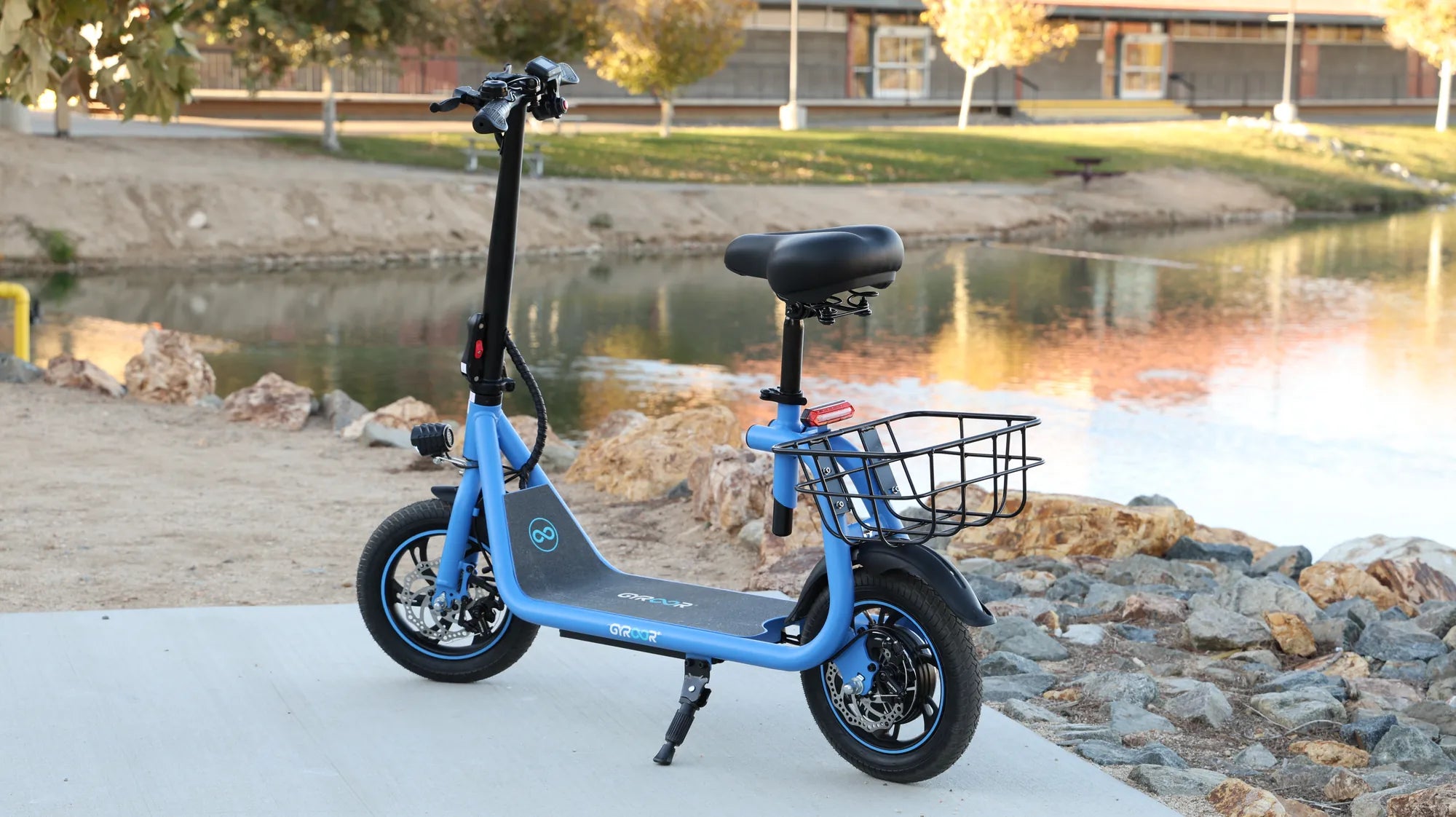
Your electric scooter suddenly stops working. The silence is deafening. Is it a simple fix you can handle, or are you facing a costly professional repair? The answer to "Can electric scooters be repaired?" is nuanced, but overwhelmingly positive. This definitive guide provides the roadmap to diagnose, assess, and execute repairs on your e-scooter, blending practical DIY advice with crucial safety warnings. You'll learn to distinguish between a quick tire patch and a complex controller replacement, understand warranty processes, and discover how choosing a brand engineered for serviceability, like Gyroor, can save significant time and money. We cover the full spectrum from basic maintenance to professional servicing, ensuring you can keep your ride reliably on the road.
Understanding Electric Scooter Repairability: It Depends on Key Factors
Repairability is not a universal yes or no. It hinges on specific, measurable factors that determine the feasibility, safety, and cost-effectiveness of a fix. The first and most critical factor is the scooter's original design and build quality. Models constructed with modular components—where the motor, battery, controller, and deck are separate, accessible units—are inherently more repairable. Brands like Gyroor prioritize this philosophy, designing scooters where key parts can be individually replaced without needing a whole-unit swap.
The age and warranty status of your scooter dramatically influence your options. A unit under an active manufacturer's warranty should always be your first point of contact for covered issues, as unauthorized repairs typically void coverage. Gyroor, for instance, backs its scooters with a reliable 1-year warranty and US-based support, providing a clear path for professional service. For out-of-warranty scooters, the decision shifts to a cost-benefit analysis, weighing repair costs against the scooter's residual value.
Finally, the specific failed component dictates everything. Mechanical parts like tires, tubes, brake pads, and cables are generally user-serviceable. Electrical systems, particularly the battery pack and motor controller, require more expertise. High-voltage components carry significant risk, and repairs should only be attempted by qualified individuals with proper tools and knowledge. Understanding these three pillars—design, warranty, and component—provides the foundation for every repair decision you'll make.
Common Electric Scooter Problems and DIY Repair Assessments
Most e-scooter issues fall into predictable categories. By learning to identify symptoms and assess complexity, you can quickly decide on your course of action. We've categorized these common problems with a clear "Repairability Rating" to guide you.
Flat Tires and Tire Issues
Flat tires are the most frequent nuisance for riders. Symptoms are obvious: loss of pressure, a visible puncture, or difficulty rolling. Repairability is typically Easy to Moderate. For scooters with pneumatic (air-filled) tires and inner tubes, a patch kit or tube replacement is straightforward, requiring tire levers, a wrench, and a pump. Solid or airless tires eliminate flats but offer a harsher ride; damage here usually requires a full wheel assembly replacement.
Prevention is key. Regularly checking and maintaining proper tire pressure (as per the manual) minimizes pinch flats and wear. Carrying a portable patch kit and mini-pump can turn a stranded situation into a minor delay. For brands like Gyroor, which use durable, branded tires, ensuring you source the correct replacement size is crucial for optimal performance and safety.
Brake System Failures (Mechanical & Electronic)
Brake failure is a critical safety issue. Symptoms include squealing, reduced stopping power, a loose brake lever, or complete lack of engagement. Mechanical disc or drum brake repairs are often Moderate. Adjusting cable tension, replacing worn brake pads, or realigning a caliper are within a handy user's capability with basic tools.
Electronic braking systems, like regenerative or e-brakes that work through the motor controller, are more complex. If adjusting physical components doesn't resolve the issue, the problem may lie in a sensor, wiring harness, or the controller itself. These fall into the Complex/Professional category. Never continue riding a scooter with compromised brakes.
Electrical and Battery Troubles
Electrical issues manifest as the scooter not powering on, intermittent power loss, or error codes on the display. Initial diagnosis is Moderate. Check the basics first: ensure the battery is charged (verify with the charger indicator), inspect all external cable connections for damage, and check any accessible fuses. Using a multimeter to test charger output voltage is a useful intermediate step.
Battery pack problems are almost always Complex/Professional. Symptoms include drastically reduced range, failure to hold a charge, or physical swelling. **It is imperative to never open a sealed lithium-ion battery pack.** The risks of fire, explosion, or severe shock are extreme. Reputable brands use certified, sealed units. Gyroor's UL-certified battery packs, for example, are designed as safe, replaceable modules. If a battery fails under warranty, it is replaced; if out of warranty, it is swapped as a complete unit by a professional.
Motor and Controller Malfunctions
The motor and controller are the heart and brain of your scooter. Motor failure symptoms include grinding noises, loss of power under load, or the motor not engaging at all. Controller failure may cause erratic throttle response, sudden cut-offs, or uncommanded acceleration. Both fall squarely in the Complex/Professional repair category.
Diagnosis often requires specialized tools. While brushless hub motors are robust, internal hall sensor or winding failures are not user-repairable. Similarly, the motor controller is a dense circuit board not meant for amateur component-level repair. The standard, safe procedure is to replace the entire motor or controller unit. This underscores the value of a brand with accessible parts supply and clear service documentation.
When to DIY vs. When to Call a Professional: A Safety and Cost Analysis
Making the correct call between a DIY fix and professional service is a matter of safety and economics. Use this framework to guide your decision.
Safe DIY Tasks (Easy to Moderate): These involve low-risk, mechanical components. Changing a flat tire or inner tube, adjusting mechanical brake cables and replacing pads, tightening loose bolts and fasteners on the stem, handlebars, and deck, cleaning the scooter and ensuring no debris obstructs moving parts, and replacing grip tape or non-electrical handlebar grips are all generally within a competent user's ability with common tools.
Scenarios Demanding a Professional (Complex): Any work involving high-voltage components mandates professional service. This includes diagnosing or replacing the battery pack, motor, or motor controller. Structural issues like a cracked weld on the stem or a severely bent fork compromise safety and require expert assessment. Any problem covered under an active manufacturer's warranty should go directly through authorized channels to preserve coverage. Finally, if a basic diagnostic step (like checking connections) doesn't resolve an electrical issue, the complexity escalates quickly.
The cost-benefit analysis is crucial for older, out-of-warranty models. If a professional repair (e.g., a new motor and labor) costs 70% or more of the price of a comparable new scooter, replacement may be the wiser choice. Investing in repairs makes more sense for higher-quality, modular platforms designed for longevity.
Navigating Professional Repair: Warranty, Service Centers, and Costs
When DIY isn't an option, knowing how to navigate professional repair streamlines the process. Always start by checking your manufacturer's warranty. Have your proof of purchase and scooter serial number ready. Gyroor's process, for example, involves contacting their US-based support team for troubleshooting and, if needed, receiving a Return Merchandise Authorization (RMA) for repair or replacement at their service center, often with clear communication on timelines.
If your scooter is out of warranty, you must find a repair shop. Authorized service centers have direct access to genuine parts and brand-specific technical knowledge. Third-party micro-mobility or e-bike repair shops can be excellent alternatives, but you must vet them. Ask key questions: Do they have experience with your brand or similar models? Can they source the correct parts? Do they offer a labor warranty? Can they provide a diagnostic fee and estimate upfront?
| Repair Type | Estimated Parts Cost Range | Estimated Labor Cost Range | Notes |
|---|---|---|---|
| Battery Pack Replacement | $150 - $400+ | $50 - $100 | Cost varies greatly by capacity (Wh) and quality. UL-certified packs (like Gyroor's) are at the higher end of the quality scale. |
| Motor Hub Replacement | $100 - $300 | $75 - $150 | Labor involves wheel removal, motor cable disconnection, and reassembly. |
| Controller Replacement | $50 - $150 | $50 - $100 | Requires opening the deck, careful disconnection/reconnection of wiring harnesses. |
| Full Brake System Service | $20 - $60 (pads/cables) | $40 - $80 | Includes pad replacement, cable adjustment/ replacement, and caliper alignment. |
Maximizing Your Scooter's Lifespan and Minimizing Repairs
Proactive maintenance is the most effective repair strategy. A simple, regular routine prevents minor issues from becoming major failures. Follow this essential checklist: check and inflate tires to the recommended PSI weekly, inspect brake pads for wear and test brake function before every ride, periodically tighten all bolts, especially on the folding mechanism, stem, and handlebars, clean your scooter with a damp cloth, avoiding direct high-pressure water on electronic parts, and store your scooter in a dry, temperate place, avoiding leaving it at full or zero charge for extended periods.
Your riding habits directly impact wear and tear. Avoid potholes and curbs to prevent rim damage, motor shock, and structural stress. Don't exceed the scooter's maximum weight rating. Use both brakes evenly to distribute wear. Allow the motor and battery to cool down after extended uphill or high-speed rides. These practices significantly extend the life of critical components.
Choosing a scooter built for durability from the start pays long-term dividends. Features like Gyroor's IPX5 water-resistance rating provide a tangible defense against rain and splashes, protecting internal electronics from moisture-related corrosion and failure, a common cause of premature repair needs.
Frequently Asked Questions (FAQ)
Q1: Is it worth repairing an old electric scooter?
A: It depends on the repair cost versus the scooter's value and your attachment to it. If the repair cost exceeds 60-70% of a new, comparable model's price, replacement is often more economical. However, repairing a high-quality, modular scooter with a readily available part (like a specific Gyroor motor) can be very worthwhile.
Q2: How long should a quality electric scooter last?
A: With proper maintenance and average use, a well-built electric scooter from a reputable brand can last 3-5 years or more. The battery is typically the first major component to degrade, often retaining 70-80% of its capacity after 500 full charge cycles (a standard for quality UL-certified packs).
Q3: Can I use any charger with my e-scooter?
A> No. Always use the charger provided by the manufacturer or an exact specification-compliant replacement. Using an incorrect charger (wrong voltage or amperage) can damage the battery management system (BMS), cause overcharging, and create a serious fire hazard.
Q4: What does a scooter's IP rating mean for repairs?
A: An Ingress Protection (IP) rating indicates resistance to solids and liquids. A rating like Gyroor's IPX5 means the scooter is protected against water jets from any direction. A higher rating reduces the likelihood of water damage repairs but doesn't make it waterproof. Submersion or high-pressure washes can still cause failures.
Q5: Where can I find official repair manuals or parts?
A: Start with the manufacturer's website. Reputable brands often provide user manuals and sometimes basic service guides. For genuine parts, contact the manufacturer's customer service or check their official parts store. For Gyroor scooters, parts and support are accessible through gyroorboard.com and their customer service channels.
Conclusion: Empowering Your Ride for the Long Haul
The journey from a broken scooter to a smooth ride is clear. Most electric scooters can be repaired, but success hinges on accurate diagnosis, respecting safety boundaries, and accessing the right support. Embracing routine maintenance is your first line of defense, dramatically reducing the need for major interventions. When issues arise, let component complexity be your guide—tackle the mechanical, consult a professional for the electrical and structural. Ultimately, the most significant repair advantage comes from your initial choice. Selecting a scooter engineered with serviceability in mind, backed by a clear warranty and reliable parts supply, transforms a potential headache into a manageable process. Brands like Gyroor build this philosophy into their design, offering riders not just a vehicle, but a sustainable, long-term mobility solution. Ready for a ride that's built to last and supported to match? Explore engineering designed to keep you moving.
Browse the full Gyroor collection, featuring UL-certified batteries, IPX5 water-resistant designs, and a reliable 1-year warranty, at gyroorboard.com.
Are Electric Scooters Allowed in Las Vegas? What You Need to Know
Does Amsterdam Have Electric Scooters? Exploring the City's Eco-Friendly Transport Options