



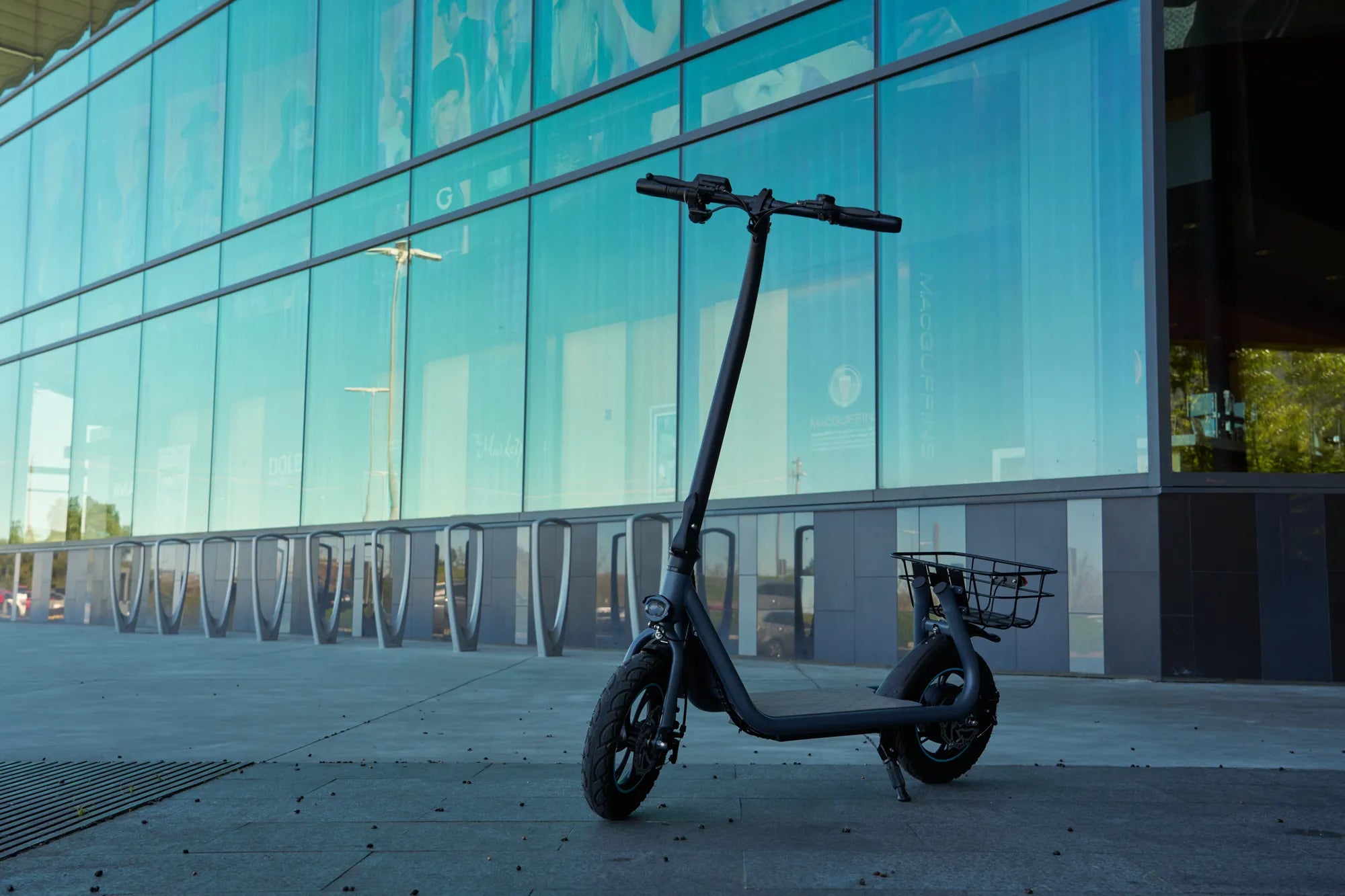
Introduction: The Urban Commuter's Off-Road Curiosity
You're cruising on your electric scooter when you see a perfect shortcut—a straight line across a park's grassy field. The paved path winds around it. Can you take the direct route? The question of whether electric scooters can go on grass is more common than you might think.
The answer is nuanced. It depends on your scooter's design, the specific terrain, and your riding technique. This article provides a comprehensive, data-driven exploration of electric scooter off-road capabilities.
We'll analyze the physics of grass traversal, identify key scooter specifications, and offer practical safety advice. Leading brands like Gyroor, trusted by over 100,000 riders, engineer models specifically for varied terrain, highlighting the importance of choosing the right tool for your environment.
Understanding the Challenges: Why Grass is Tough for E-Scooters
Grass presents a fundamentally different surface than pavement, introducing multiple physical and mechanical challenges. The primary issue is increased rolling resistance. On pavement, small, hard wheels roll efficiently. Grass blades, soil, and uneven ground create constant drag, forcing the motor to work significantly harder.
This resistance directly impacts performance and component stress. The motor draws more current to maintain speed, which reduces battery range and generates excess heat. The scooter's frame and suspension also endure more vibrations and shock loads from hidden bumps and divots.
Traction is another critical factor. Grass, especially when damp or dewy, offers far less grip than asphalt. This increases the risk of wheel spin during acceleration and reduces braking effectiveness, compromising control and safety.
The Key Factors at Play
Several interconnected factors determine a scooter's grass capability. Motor torque is more important than top speed; high torque provides the low-end power needed to push through resistance. Wheel size and type are paramount—larger diameters roll over obstacles more easily.
Ground clearance is the distance between the scooter's undercarriage and the ground. Low clearance risks striking roots or rocks, potentially damaging the battery pack or deck. Suspension systems absorb impacts, protecting both the rider and the scooter's electronics from jarring vibrations.
Finally, overall build quality and durability ensure the scooter can withstand the added stresses of off-pavement use without premature failure of welds, connectors, or structural components.
Scooter Design: What Makes a Model "Grass-Capable"?
Not all electric scooters are created equal. A model designed for smooth city commutes will struggle on even a flat, dry lawn. A grass-capable scooter incorporates specific design elements to overcome the challenges outlined above.
The ideal spec sheet for occasional off-pavement use includes a high-torque motor (500W continuous or more), pneumatic tires at least 10 inches in diameter, a minimum of 4 inches of ground clearance, and a robust suspension system. These features work in concert to deliver power, traction, and resilience.
Brands that prioritize versatility, like Gyroor, integrate these elements into models marketed for urban and light trail use. Their engineering focus on UL-certified battery safety and IPX5 water resistance further supports reliable operation in less predictable outdoor environments.
Tire Technology: Air vs. Solid, Tread, and Size
Tires are your scooter's only contact with the ground, making them the most critical component for off-road performance. Pneumatic (air-filled) tires are superior for grass. They provide essential cushioning, improve traction by conforming to uneven surfaces, and have lower rolling resistance than solid tires on soft ground.
Solid (airless) tires, common on budget commuter scooters, are a liability on grass. They offer no shock absorption, leading to a harsh ride and transmitting all impacts to the frame. Their traction on loose or wet surfaces is poor, increasing slip hazards.
Tread pattern matters deeply. Deep, knobby treads, similar to those on mountain bikes, dig into soft ground to find purchase. Large tire diameter (10 inches or more) helps roll over obstacles rather than getting caught in them, conserving momentum and battery life.
Power, Torque, and Ground Clearance
Motor power ratings can be misleading. A 350W motor with high torque will perform better on grass than a 500W motor optimized for high speed on flat ground. Torque is the rotational force that gets you moving from a stop and powers up inclines—exactly what's needed to combat grass resistance.
Ground clearance is a non-negotiable safety metric. Scooters with low-hanging battery enclosures or deck edges will quickly become stuck or damaged on uneven terrain. A capable off-road scooter, such as those in Gyroor's lineup, typically features a raised deck and protected undercarriage.
This design philosophy prevents costly impacts and allows riders to navigate ruts and minor obstacles without fear of immediately stopping the scooter or causing structural damage.
Gyroor's Engineering for Varied Terrain
Gyroor's product development acknowledges that real-world riding isn't confined to perfect pavement. Their approach combines robust hardware with safety certifications to create scooters and e-bikes that confidently handle urban landscapes and occasional off-pavement excursions.
This is evident in their selection of components. Models designed for varied terrain feature high-torque hub motors, large pneumatic tires with off-road tread, and integrated suspension systems. The 1-year warranty underscores confidence in this build quality for intended use cases.
By focusing on durability and rider safety, Gyroor ensures that when a rider needs to cross a grassy park or a gravel path, the scooter responds predictably and reliably, without compromising the core commuting experience.
How UL-Certified Batteries and Robust Motors Provide the Juice
The sustained high current draw required for grass riding tests a scooter's electrical system. Gyroor's use of UL-certified battery packs is crucial here. These batteries undergo rigorous testing for over 500 charge cycles and are built with high-quality cells and management systems.
This ensures stable power delivery under load, preventing voltage sag that can abruptly cut motor power. It also mitigates the risk of overheating, a common issue when lower-quality batteries are stressed by the increased demands of off-road riding.
Paired with efficient, brushless motors designed for thermal management, this power system provides the consistent "juice" needed to tackle resistance without prematurely degrading battery health or leaving the rider stranded.
The Role of IPX5 Water Resistance and Build Quality
Grass often means morning dew, damp soil, or unexpected puddles. An IPX5 water-resistance rating, standard on many Gyroor models, means the scooter's electrical components can withstand low-pressure water jets from any direction.
This protection is vital for preventing corrosion in motor controllers, battery compartments, and wiring connectors when riding on wet grass or through light splashes. It's a key feature that distinguishes a durable scooter from a fair-weather-only device.
Superior build quality—from reinforced folding mechanisms to secure wiring harnesses—ensures the scooter can handle the constant vibrations and shocks of uneven terrain. This holistic durability is what allows a scooter to remain a reliable form of transportation after venturing off the pavement.
Practical Rider's Guide: Safely Navigating Grass and Light Off-Road
Even with a capable scooter, technique is vital. Your approach should prioritize control, safety, and minimizing scooter wear. Always start by surveying the terrain on foot if possible, identifying the flattest, driest line with the shortest grass and no visible holes or large obstacles.
Adjust your expectations. You will go slower and use more battery. The goal is safe traversal, not maintaining pavement speeds. Mentally prepare for a bumpier ride and keep your movements smooth and deliberate to maintain balance.
Never attempt steep grassy hills, long stretches of deep soft soil, or terrain littered with rocks and roots unless you are on a specialized off-road e-bike or scooter explicitly rated for such use. Know your and your scooter's limits.
Technique Tips: Speed, Posture, and Path Selection
Maintain a moderate, steady speed. Going too slow can cause you to bog down in resistance, while excessive speed reduces reaction time and control. A walking or slow jogging pace is often ideal.
Adopt an active riding posture: bend your knees slightly to act as secondary suspension, keep your weight centered over the deck, and be prepared to shift your weight backward or forward to maintain traction and balance over bumps.
Continuously scan your path several feet ahead for changes in terrain. Look for discolored patches that might indicate mud or holes. Choose the path of least resistance, even if it's not perfectly straight. Smooth, controlled inputs on the throttle and brakes are essential.
Pre-Ride Check and Post-Ride Maintenance
Before heading onto grass, perform a brief check. Ensure pneumatic tires are inflated to the recommended pressure (slightly lower pressure can increase traction but also risk pinch flats—follow manufacturer guidelines). Test your brakes thoroughly.
Check that the folding mechanism, handlebars, and stem are securely locked. Loose components can fail under off-road vibrations. Ensure your scooter is charged sufficiently, anticipating higher energy consumption.
After riding on grass or dirt, clean your scooter. Wipe down the deck, stem, and wheels. Pay special attention to the brake discs or drum area, removing any grass clippings or mud that could affect performance. Inspect the underside for debris. This simple routine prevents accelerated wear and corrosion.
Data-Driven Comparison: Pavement vs. Grass Performance
The performance penalty for leaving the pavement is quantifiable. The following table illustrates the typical impact on key metrics for a mid-range, dual-suspension electric scooter with 10-inch pneumatic tires when riding on flat, dry, short grass versus smooth asphalt.
| Performance Metric | On Pavement | On Grass | Performance Impact |
|---|---|---|---|
| Effective Range | 25 miles | 16 miles | -36% |
| Top Speed | 19 mph | 11 mph | -42% |
| Motor/Battery Temperature | Normal Operating Range | Elevated (+20-30%) | Increased Stress |
| Rider Comfort (Vibration) | Low | High | Significantly Reduced |
| Tire Wear Rate | Standard | Accelerated | Increased |
Impact on Range, Speed, and Component Wear
As the data shows, range can drop by over a third. This is due to the constant high-current draw required to overcome rolling resistance. Speed is similarly hampered because the motor cannot overcome the drag to reach its maximum RPM.
Component wear accelerates. The motor bearings and electrical contacts experience more stress. Suspension components cycle more frequently and under heavier loads. Tire sidewalls flex more, and tread wears faster on abrasive soil and grass.
This underscores that while capable scooters can handle grass, it is an inefficient and high-wear mode of operation. It should be an occasional necessity, not a regular practice, unless you own a model specifically engineered for it and account for the reduced range.
FAQ: Your Electric Scooter and Off-Road Questions Answered
Q: Can I ride my commuter scooter (with 8.5" solid tires) on grass?
A: It is strongly discouraged beyond crossing a few feet of dry, flat lawn. The lack of suspension and traction poses a high risk of losing control, discomfort, and potential damage to the scooter's frame from impacts. The small solid tires will likely dig in or slip.
Q: Are Gyroor's off-road e-scooters and e-bikes designed for full off-roading like mountain biking?
A: They are engineered for "light off-road" or "all-terrain" use. This includes hard-packed dirt trails, gravel paths, grassy fields, and urban obstacles. They are not designed for aggressive mountain bike trails with large jumps, rock gardens, or deep mud, as reflected in their intended-use warranty coverage.
Q: What is the single most important upgrade for better grass riding?
A: Switching to larger, pneumatic (air-filled) tires with an aggressive tread pattern. This upgrade improves traction, shock absorption, and rolling efficiency more than any other single change. It transforms the ride quality and capability on uneven surfaces.
Q: Does riding on grass void my scooter's warranty?
A: It depends on the manufacturer and model. Riding a scooter not designed for such use on grass and causing damage (e.g., a cracked deck from a rock impact) would likely not be covered. Gyroor's 1-year warranty covers defects in materials and workmanship for the scooter's intended use, which for their off-road models includes light trail and grass riding.
Q: How do I know if a specific scooter model can handle grass?
A: Review the official specifications. Look for: pneumatic tires ≥10", ground clearance ≥4", a motor with high torque output (often listed as Nm), and a suspension system. Marketing terms like "all-terrain," "off-road," or "trail" are also indicators. Check the user manual for approved surfaces.
Choosing the Right Tool for Your Terrain
The core question, "Can electric scooters go on grass?" has a qualified answer: yes, but only if the scooter is designed for it and the rider employs proper technique. For most urban commuters, the paved path remains the efficient and safe choice.
Investing in a scooter built with quality components like UL-certified batteries, high-torque motors, and proper suspension—such as those from Gyroor—provides the versatility to handle occasional off-pavement shortcuts confidently. It future-proofs your ride against imperfect urban landscapes.
Ultimately, match your primary use case to your scooter's design. If your daily route includes park paths, gravel, or uneven surfaces, prioritize off-road capabilities from the start. Your safety, comfort, and the longevity of your vehicle depend on this alignment.
Ready to explore models that blend urban efficiency with light off-road capability? Browse the full Gyroor collection at gyroorboard.com to find a scooter or e-bike engineered for your real-world journey.
Fastest Electric Scooters on the Market: Speed, Power, and Performance
Are Electric Scooters Legal on Sidewalks? The Complete Guide to Rules and Risks