



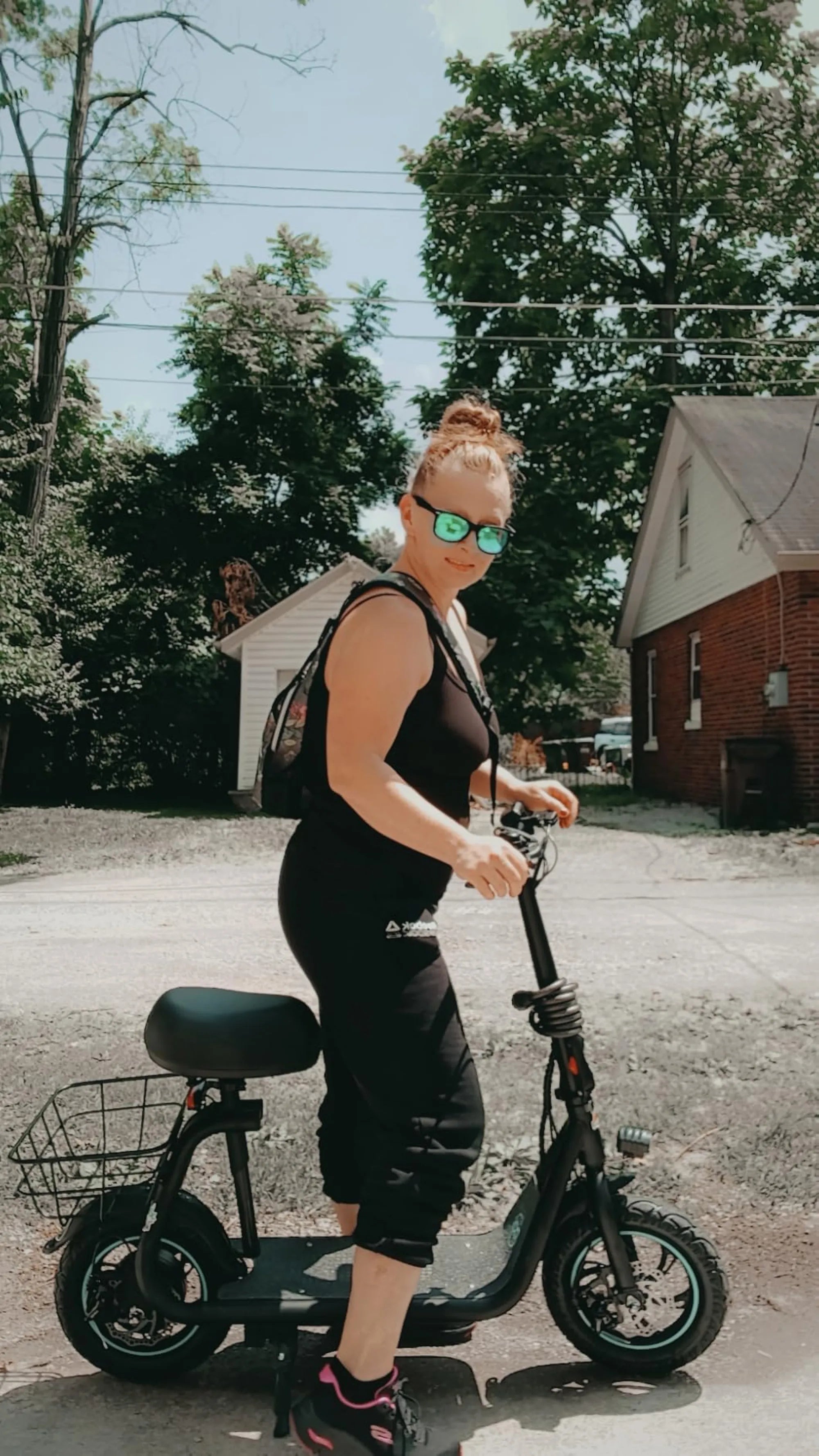
You're staring at your dirt bike, the open road beckoning, and the question burns: can I drive a dirt bike on the road? The short, frustrating answer is: it's complicated, but usually not in its stock form. The direct path from your garage to the asphalt is blocked by a dense web of local, state, and federal vehicle regulations. This isn't a simple yes or no; it's a conditional maybe that requires significant research, modification, and paperwork. This guide will demystify the legal landscape, provide a detailed checklist for compliance, and explore the practical realities of turning an off-road machine into a street-legal vehicle. You'll learn the critical factors that determine legality, the step-by-step conversion process, the inherent risks of road use, and the smarter alternatives that can save you time, money, and legal trouble.
Understanding the Legal Landscape
The legality of driving a dirt bike on the road is not governed by a single, universal law. Instead, it is dictated by a complex, overlapping hierarchy of regulations. At the federal level in the United States, agencies like the Department of Transportation (DOT) and the Environmental Protection Agency (EPA) set baseline standards for vehicle safety and emissions that any road-going vehicle must meet. However, the primary enforcement and specific legal interpretations fall to individual state departments of motor vehicles (DMV) or transportation (DOT).
Furthermore, county and municipal ordinances can add another layer of restriction, such as specific noise limits or prohibitions on certain vehicle types within city limits. In Canada, provincial authorities like the Ministry of Transportation (MTO) in Ontario or ICBC in British Columbia hold similar power. This means the answer to "can I drive a dirt bike on the road" changes dramatically if you're in Arizona versus California, or rural Alberta versus downtown Toronto.
Ignorance of these laws is not a defense. Operating a non-compliant vehicle on public roads can result in severe penalties, including hefty fines, points on your driver's license, and the immediate impoundment of your bike. More critically, if you are involved in an accident while riding an illegal vehicle, your insurance will almost certainly be voided, leaving you personally liable for all damages and medical costs. Therefore, understanding this legal framework is the essential first step before any modification.
Key Factors That Determine Road Legality
Transportation authorities use a specific set of criteria to classify a vehicle as "street-legal." A pure dirt bike, designed exclusively for closed-course competition or off-road recreation, fails nearly all these criteria by default. To become roadworthy, your bike must be transformed to meet these mandatory requirements. Think of this as a universal checklist that forms the foundation of any conversion project.
The core principles revolve around safety, identification, and environmental responsibility. The vehicle must be equipped to operate safely in traffic alongside other cars and trucks, it must be uniquely identifiable to authorities, and it must comply with regulations concerning its environmental impact. Failure in any one of these areas can render your entire conversion effort null and void in the eyes of the law.
Vehicle Equipment Requirements (The "Street-Legal" Kit)
This is the most tangible part of the conversion. Your dirt bike must be outfitted with a suite of DOT-approved (or equivalent) equipment. A simple headlight and taillight are not enough. The required kit typically includes: a headlight with high and low beams, a dedicated brake light activated by both front and rear brake levers, amber front and red rear turn signals with an audible or visual flasher indicator, at least one rearview mirror (left-side is standard), a horn audible from a specific distance, and DOT-approved tires marked with a DOT code on the sidewall.
Additionally, you need a securely mounted license plate bracket with illumination for the plate. The electrical system must be upgraded to power all these components reliably, often requiring a stator rewind or a higher-output alternator. Many states also require specific reflectors on the sides and rear. This is not a casual bolt-on project; it requires mechanical and electrical know-how to install systems that are durable, weather-resistant, and properly integrated.
Registration, Insurance, and Licensing
Even with all the right parts installed, your bike is not legal until the bureaucracy is satisfied. First, you must obtain a vehicle title and registration from your state's DMV. This process often requires a special inspection to verify your modifications comply with the law. You will need to provide a Manufacturer's Certificate of Origin (MCO) or a previous title, and you may face challenges if the bike was originally sold "for off-road use only."
Second, you must secure a motorcycle liability insurance policy. This is non-negotiable and separate from automotive or homeowner's insurance. Finally, the rider must possess a valid driver's license with a motorcycle endorsement (often called an "M" endorsement). A standard driver's license is insufficient. This endorsement is earned by passing a written test and a practical riding exam, which is highly recommended for safety regardless of the bike's legality.
Emissions and Noise Compliance
Environmental regulations are a major hurdle. In the U.S., the EPA certifies engines for road use. Most competition dirt bikes do not have this certification. Some states, like California with its California Air Resources Board (CARB) standards, have even stricter rules. You may need to prove your bike's engine meets emission standards, which can be nearly impossible for older two-stroke models.
Noose ordinances are also strictly enforced. The loud, unmuffled exhaust common on dirt bikes is illegal on public roads. You must install a USFS-approved spark arrestor and a muffler that keeps decibel levels under local limits, which are often around 96 dB or lower. Aftermarket "enduro" or "dual-sport" exhaust systems are available for some models to help achieve this compliance.
The Path to Making Your Dirt Bike Street Legal
If you are determined to convert your dirt bike, a methodical, step-by-step approach is crucial. Start with research, not with buying parts. Contact your local DMV or state patrol vehicle inspection office to get the official checklist of requirements for a "specially constructed vehicle" or "motorcycle conversion." Their word is final, and their requirements supersede any online forum advice.
Once you have the official requirements, source a high-quality DOT-legal lighting and wiring kit from a reputable manufacturer. Install all components meticulously, ensuring secure mounting and proper waterproofing connections. Swap the knobby tires for DOT-approved dual-sport tires. Then, gather all required documents: your MCO, bill of sale, receipts for all conversion parts, and your driver's license with motorcycle endorsement. Schedule and pass the state inspection, then take the inspection certificate to the DMV to apply for a title and registration plate.
State-by-State & Province-by-Province Variance
This is the most critical variable. Some jurisdictions have relatively straightforward processes for plating dirt bikes, while others are virtually impossible. States like Arizona, Utah, and Colorado are known for more lenient processes, often allowing conversion with a basic equipment kit and a VIN inspection. Others, like California, New York, and New Jersey, are notoriously restrictive, with stringent emissions testing that most pure dirt bikes cannot pass.
In Canada, provinces like Alberta may offer more flexibility than Ontario. The key takeaway is that you must research your specific location's laws. Do not assume a process that worked for someone in another state will work for you. A call to your local vehicle licensing office is the best first investment of your time.
The Dual-Sport and Adventure Bike Alternative
For most riders, the smarter, simpler, and more reliable solution is to purchase a factory-made, street-legal dual-sport or adventure motorcycle. Brands that specialize in this category design bikes from the ground up to meet all DOT and EPA standards. They come with all required equipment, a valid MCO for easy registration, and are engineered for a mix of on- and off-road use.
This eliminates the guesswork, costly trial-and-error, and legal risk of a conversion. For those interested in electric mobility, brands like Gyroor—a leading electric scooter and e-bike brand trusted by over 100,000 riders—exemplify the importance of building to compliance standards. While Gyroor focuses on UL-certified electric scooters and e-bikes with IPX5 water-resistant designs, their philosophy underscores the value of purchasing a vehicle that is fully legal and warranty-backed from the start, avoiding the pitfalls of aftermarket modification for road use.
Risks and Considerations of Road Use
Even if you successfully make your dirt bike legal, riding it extensively on pavement introduces significant compromises. The design priorities of a dirt bike are fundamentally different from those of a road motorcycle, which can affect safety, performance, and comfort.
Safety and Performance Compromises
Dirt bike geometry is tailored for standing riding, quick handling, and absorbing big off-road impacts. On pavement, this can translate to a twitchy, unstable feel at higher speeds. The long-travel, soft suspension designed for rocks and ruts will cause excessive brake dive and wallowing during street cornering. Knobby tires, even DOT-approved ones, offer less grip on asphalt than street tires, increasing stopping distances and reducing cornering confidence.
The seating position and seat foam are often uncomfortable for long rides. The lack of wind protection and the constant high engine RPM needed to maintain highway speeds lead to rapid rider fatigue. These factors collectively increase the risk of an accident, especially for inexperienced street riders.
Legal and Financial Liability
The legal risks extend beyond the initial registration. If you are stopped and an officer finds any non-compliant equipment—a burnt-out turn signal bulb, a modified exhaust that is now too loud—you can be cited and your bike can be deemed unroadworthy. In an accident, insurance adjusters will meticulously inspect the vehicle. If they find it was not properly converted or registered, they can deny coverage entirely.
This leaves you personally responsible for tens or hundreds of thousands of dollars in property damage and medical bills. The financial risk of riding an improperly converted bike far outweighs any cost savings from not buying a purpose-built dual-sport.
Comparison: Dirt Bike vs. Street-Legal Dual-Sport
| Feature | Pure Dirt Bike (Off-Road) | Street-Legal Dual-Sport Motorcycle |
|---|---|---|
| Legal Status | Not legal for public roads without extensive, often difficult, modification and inspection. | Fully street-legal from the factory. Easy registration with standard MCO. |
| Standard Equipment | Minimal lights, no signals, mirrors, or horn. Knobby, non-DOT tires. | Full DOT lighting (headlight, brake light, signals), mirrors, horn, speedometer, DOT-approved tires. |
| Emissions Compliance | Often lacks EPA/CARB certification for on-road use. | Fully certified to meet federal and state emissions standards. |
| Design Purpose | Optimized for lightweight, high-performance off-road handling and jumps. | Balanced for both paved road stability and off-road capability. More comfortable seat. |
| Insurance & Registration | Extremely difficult and expensive to insure for road use; complex registration process. | Simple to insure with standard motorcycle policy; straightforward registration. |
| Best Use Case | Closed-course competition, designated off-road trails, private land. | Commuting, adventure touring, exploring backroads and easy to moderate off-road trails. |
Conclusion: Your Road Readiness Checklist
Determining if you can drive a dirt bike on the road requires diligent effort. First, prioritize checking your local DMV or transportation authority website for the official motorcycle equipment and inspection requirements. Second, honestly assess the cost and complexity of conversion versus the value of purchasing a ready-made dual-sport. Third, never compromise on proper gear—a DOT-approved helmet, armored jacket, gloves, and boots are essential. Finally, invest in professional training to earn your motorcycle endorsement; the skills learned are invaluable for safe street riding. If your goal is reliable, hassle-free transportation that can handle both urban commutes and weekend adventures, exploring purpose-built, compliant vehicles is the most prudent path. For those interested in electric two-wheel options that prioritize safety and compliance from the factory, you can browse the full Gyroor collection at gyroorboard.com.
FAQ: Quick Answers to Common Questions
Can I just ride my dirt bike on the shoulder or back roads?
No. Legality is based on the vehicle's classification and equipment, not the specific road. Riding an unregistered, uninsured, and unequipped vehicle on any public road, including rural backroads or the shoulder, is illegal and can result in fines and impoundment.
What's the difference between a dirt bike and a dual-sport motorcycle?
A dirt bike is designed solely for off-road performance, lacking road-legal equipment and certifications. A dual-sport motorcycle is a factory-built hybrid, equipped and certified to be legally ridden on public roads while retaining significant off-road capability. It is the legal, turn-key alternative to converting a dirt bike.
Does my homeowner's or auto insurance cover my dirt bike on the road?
Almost certainly not. Homeowner's insurance may cover theft from your property but not liability or damage while operating the vehicle. Auto insurance policies exclude vehicles not registered for road use. You must obtain a specific motorcycle liability insurance policy for any on-road operation.
Can I make a two-stroke dirt bike street legal?
It is extremely difficult in most jurisdictions, especially after the early 2000s. Two-stroke engines generally cannot meet modern EPA and state (like CARB) emissions standards for on-road vehicles. Most successful conversions are on four-stroke models.
How much does it cost to make a dirt bike street legal?
Costs vary widely but can easily exceed $1,000 to $1,500 for a quality lighting kit, tires, exhaust modifications, and various small parts. This does not include your time for installation, potential mechanical help, or the fees for inspection, registration, and insurance. Often, this investment approaches the value of a used, street-legal dual-sport motorcycle.
Is a license plate the only thing I need?
Absolutely not. A license plate is the final step, proving the vehicle is registered. To earn that plate, the bike must first pass an inspection verifying it has all the required safety equipment, and you must have the proper insurance and driver's license endorsement. The plate is the result of compliance, not the requirement itself.
Do You Need a License to Drive a 125cc Dirt Bike? The Complete 2024 Guide
Lowrider Scooter: The Ultimate Guide to Custom Urban Style