

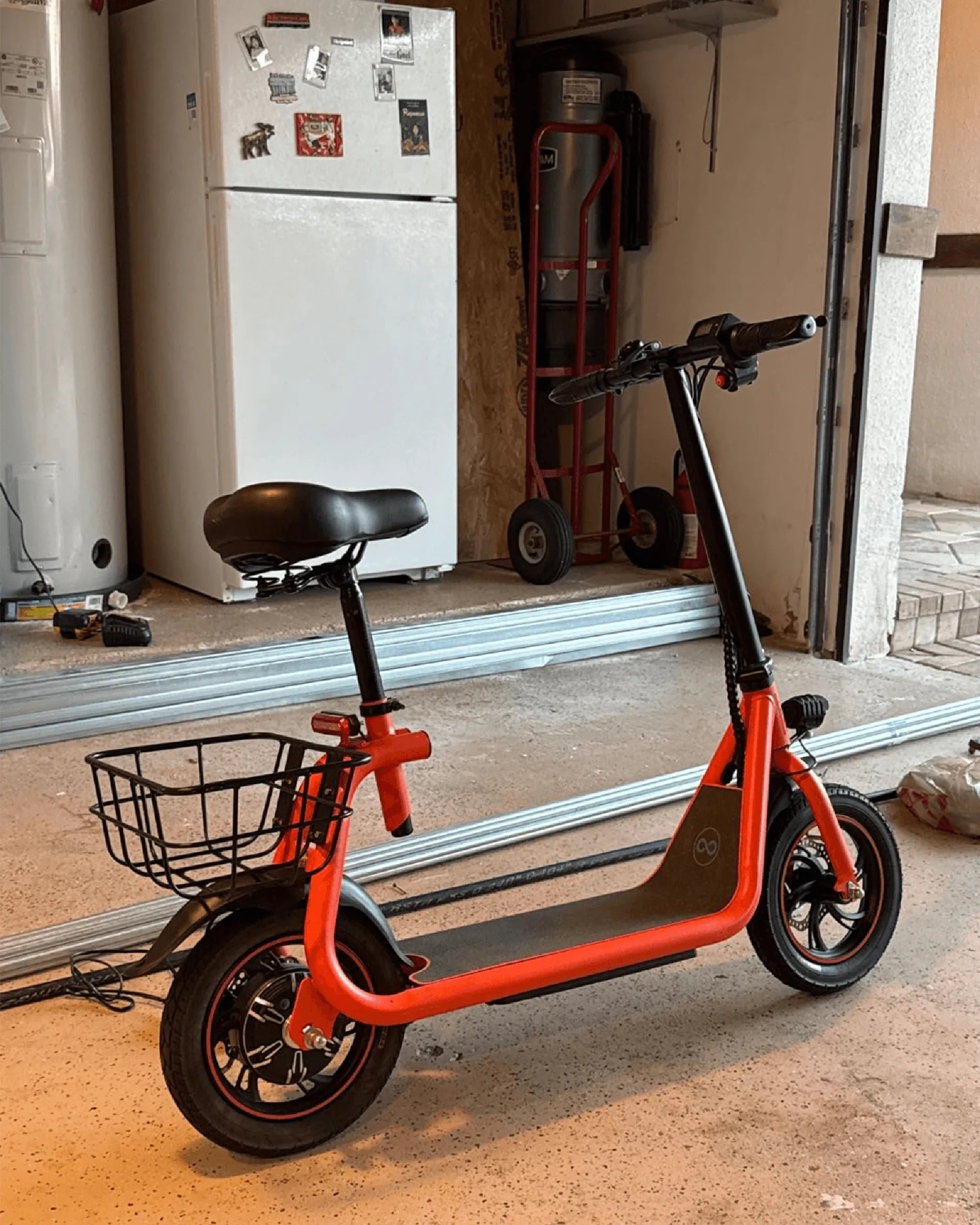
The direct answer to "can I ride a dirt bike on the sidewalk" is a resounding no. This question, often asked by new riders of motorized two-wheelers, touches on critical issues of safety, legality, and civic responsibility. Riding any motorized bike or scooter on pedestrian walkways is almost universally illegal and poses significant dangers. This guide will provide a definitive, data-driven explanation of the laws, the severe risks of non-compliance, and the legal and safe alternatives available to riders. You'll learn how vehicle classification dictates where you can ride, the substantial legal and financial consequences of sidewalk riding, and how choosing a reputable brand like Gyroor, with its focus on UL-certified safety and durability, supports a responsible and enjoyable riding experience within the bounds of the law.
Understanding Vehicle Classification: Is It a "Dirt Bike"?
The term "dirt bike" often creates confusion in legal contexts. Traditionally, it refers to a lightweight motorcycle with rugged tires and suspension, designed for off-road trails. These are typically powered by internal combustion engines. However, the rise of personal electric vehicles (PEVs) has blurred these lines for many consumers.
Modern electric scooters, e-bikes, and even electric motocross-style bikes are frequently grouped colloquially under terms like "e-dirt bike." Legally, the distinction is crucial. Most municipalities and traffic codes categorize vehicles based on factors like maximum speed, engine/motor type, power output, and whether they have pedals. A traditional gas-powered dirt bike is almost always classified as a motor vehicle or an off-highway vehicle (OHV), never intended for sidewalk or even standard road use without specific modifications and registration.
Electric scooters and lower-speed e-bikes, while sometimes permitted in bike lanes or on roads, are still almost never legal on sidewalks. Their classification varies by jurisdiction but commonly falls under terms like "electric stand-up scooter," "low-speed electric bicycle," or "motorized foot scooter." The key takeaway is that the electric motor does not grant a special exemption for sidewalk use; it simply places the vehicle into a specific legal category that still prohibits pedestrian pathway operation.
Electric vs. Gas-Powered: A Legal Distinction
While the power source creates a technical distinction, it rarely changes the sidewalk prohibition. Electric motors are quieter and produce no emissions, which might lead some riders to assume they are more acceptable for sidewalk use. This is a dangerous misconception.
The primary legal concern is not noise or pollution, but the fundamental conflict between motorized vehicles and pedestrian space. A vehicle traveling at 15-20 mph, whether electric or gas, poses a severe impact risk to pedestrians. Law enforcement and traffic ordinances focus on the vehicle's capability and operation, not solely its fuel type. Therefore, an electric dirt bike or high-powered electric scooter is subject to the same, if not more stringent, location restrictions as its gas-powered counterpart in the eyes of the law.
The Universal Illegality of Sidewalk Riding
Across the United States, Canada, and Europe, local traffic codes are remarkably consistent: operating a motorized vehicle on a sidewalk is illegal. Sidewalks are explicitly designed and designated for pedestrian traffic. This includes people walking, running, using wheelchairs, or pushing strollers.
The incorporation of motorized transportation into this space creates an unacceptable hazard. City ordinances, state vehicle codes, and provincial highway traffic acts all contain clauses that prohibit the operation of motor vehicles, motorized scooters, or similar devices on sidewalks. Exceptions are exceedingly rare and typically only apply to mobility devices for persons with disabilities.
This legal stance is not arbitrary; it is the foundation of urban safety planning. By clearly separating faster, motorized traffic from slow, vulnerable pedestrian traffic, cities aim to prevent collisions and injuries. Riding a dirt bike, e-dirt bike, or electric scooter on the sidewalk is a direct violation of this fundamental separation of uses.
Why Sidewalks Are Off-Limits: Safety and Law
The prohibition exists for three core, evidence-based reasons. First is pedestrian safety. Pedestrians, including children, the elderly, and individuals with visual or mobility impairments, have a right to safe passage. A motorized vehicle introduces high-speed, unpredictable movement into a space where people feel secure.
Second is liability. In the event of a collision on a sidewalk, the rider of the motorized vehicle is almost always found at fault and liable for damages and injuries. This can lead to life-altering financial consequences. Third, these vehicles, once classified under motor vehicle or traffic ordinances, are subject to rules governing their operation on public rights-of-way, which explicitly exclude sidewalks.
Where Can You Legally Ride Your Electric Dirt Bike or Scooter?
Responsible riding means knowing and using the appropriate infrastructure. For owners of electric scooters, e-bikes, and similar PEVs, legal options do exist and often provide a better riding experience than a sidewalk ever could.
The appropriate venue depends entirely on your vehicle's classification and local laws. For Gyroor riders and others committed to safe practices, understanding these options is key to enjoying the freedom of personal electric mobility without legal risk.
Designated Bike Lanes and Multi-Use Paths
This is the premier legal route for most electric scooters and e-bikes where local regulations permit. Bike lanes are portions of the roadway designated for bicycle traffic, and many municipalities now explicitly include electric scooters and low-speed e-bikes in their permitted use.
Multi-use paths (like greenways or rail trails) are shared, off-road paths for cyclists, pedestrians, and sometimes equestrians. Speed limits are often lower (e.g., 15 mph), and riders must always yield to pedestrians. Always check local signage and ordinances to confirm PEV access. Riding in these designated areas is safer, faster, and fully compliant.
On-Road Riding: Rules and Best Practices
When a bike lane is absent, riding on the road is typically the legal requirement for vehicles like electric scooters and e-bikes that are allowed on public streets. This requires riding predictably, obeying all traffic signals and signs, and using proper safety equipment.
Best practices include riding in the direction of traffic, using hand signals for turns, wearing a helmet, and ensuring your vehicle is equipped with front and rear lights for visibility. Gyroor models, for instance, feature integrated lighting systems and robust construction, making them suitable for predictable road riding where legal.
Private Property and Designated Off-Road Trails
For true "dirt bike" style riding—whether on a gas-powered machine or a powerful electric off-road model—the only legal venues are private property (with the landowner's explicit permission) or public lands specifically designated for off-highway vehicle (OHV) use.
These include motocross tracks, OHV parks, and certain forest trails. Riding a motorized dirt bike on public sidewalks, parks, or hiking trails is illegal and causes environmental damage. This distinction is critical: the "dirt" in dirt bike implies a purpose-built, off-road environment, not an urban pedestrian walkway.
Data & Consequences: The Tangible Risks of Illegal Sidewalk Riding
Ignoring sidewalk laws isn't a minor infraction; it carries measurable risks with serious outcomes. Data from municipal studies and traffic safety reports consistently highlight the dangers.
A study published in the Journal of Transport & Health found that conflicts and collisions between micro-mobility devices and pedestrians most frequently occur in sidewalk-like environments, not in bike lanes or roads. The speed differential is the key factor, with pedestrian injury risk increasing dramatically with impact speed.
Comparative Risk: Sidewalk vs. Road Riding
Many riders perceive the road as dangerous and the sidewalk as safe. Data suggests this is a misperception when considering collision types. While vehicle-cyclist collisions on roads can be severe, they are often predictable interactions governed by traffic rules.
Sidewalk riding, however, creates unpredictable, high-risk conflicts at driveways, intersections, and with pedestrians emerging from buildings. A report from the San Francisco Municipal Transportation Agency noted that a significant portion of scooter-related pedestrian injuries involved sidewalk riding, with collisions happening at blind spots where drivers and pedestrians do not expect fast-moving vehicle traffic.
Legal Repercussions: Fines and Penalties
The financial and legal penalties for sidewalk riding are substantial and vary by city. They are designed to be a deterrent.
| Jurisdiction Example | Typical Fine for Sidewalk Riding | Additional Penalties |
|---|---|---|
| New York City, NY | $100 - $500 | Possible vehicle impoundment |
| Los Angeles, CA | $250+ | Traffic citation points on driver's license (if applicable) |
| Chicago, IL | $150 - $500 | Liability for any damages or injuries |
| Toronto, ON | $85 - $365 (CAD) | Provincial Offences Notice |
Beyond fines, if a rider causes an injury, they face civil lawsuits for medical costs, lost wages, and pain and suffering. Insurance rarely covers illegal operation, leaving the rider personally liable for potentially millions in damages.
Responsible Riding with Gyroor: Safety Features for Legal Use
Choosing a brand like Gyroor, trusted by over 100,000 riders, means investing in a product designed for real-world, legal use. Its engineering supports safe operation in appropriate environments, not shortcuts on sidewalks.
The UL-certified battery pack, tested for 500+ charge cycles, is a cornerstone of safety. This certification ensures safe, stable power delivery during legal rides on bike lanes or roads, and safe charging at your destination—not from a risky outlet in a sidewalk cafe. It underscores a commitment to hazard prevention.
Similarly, the IPX5 water-resistant rating on many models isn't just a feature for puddles; it ensures reliability when riding legally in wet conditions on bike lanes or roads, where riding is permitted. The robust warranty assumes the vehicle is used as intended—on lawful surfaces—protecting your investment when you ride responsibly.
Choosing the Right Vehicle for Your Legal Riding Needs
Not all personal electric vehicles are suited for the same spaces. Selecting the right model for your primary legal riding environment is crucial for compliance and enjoyment.
| Intended Legal Use Case | Recommended Vehicle Type | Key Features to Look For | Gyroor Model Example |
|---|---|---|---|
| Urban Commuting (Bike Lanes/Roads) | Commuter E-Scooter or E-Bike | Good range, lights, suspension, portability | Gyroor F1 Pro Max Scooter |
| Off-Road/Private Trail Riding | Rugged E-Dirt Bike or Off-road E-Scooter | High torque, knobby tires, advanced suspension | Gyroor Xtreme Off-road Model |
| Recreational Path Riding | Versatile Fat Tire E-Bike | Comfort, stability, multi-terrain tires | Gyroor C3 Fat Tire E-Bike |
Matching your vehicle to your legal riding zone ensures you are never tempted to use it improperly on a sidewalk. It also maximizes the utility and longevity of your investment.
FAQ: Quick Answers for Responsible Riders
Can I ride my Gyroor electric scooter on the sidewalk if I go slowly?
No. Speed does not change the legality. The law prohibits the operation of the motorized vehicle on the sidewalk, regardless of speed. Going slowly may reduce risk, but it does not make the action legal.
What if the road is too dangerous and there's no bike lane?
Your options are to find an alternate route with a bike lane or multi-use path, dismount and walk your vehicle on the sidewalk (acting as a pedestrian), or use public transport if permitted. Riding on the sidewalk remains illegal and simply transfers the danger to pedestrians.
Are electric scooters treated the same as e-dirt bikes regarding sidewalk laws?
In almost all jurisdictions, yes. Both are classified as motorized vehicles prohibited on sidewalks. The specific legal category name may differ (e.g., "motorized scooter" vs. "off-road motorcycle"), but the sidewalk prohibition is a constant.
Can I be sued if I hit someone on the sidewalk?
Absolutely. You would be considered at fault for operating a vehicle illegally in a pedestrian space. You would be personally liable for the victim's medical bills, rehabilitation, lost income, and other damages. Your own insurance is unlikely to cover illegal activity.
Where can I find the specific laws for my city or state?
Start with your city's municipal code website (search "municipal code" + your city name) and look for sections on vehicles, traffic, or sidewalks. Your state's Department of Motor Vehicles (DMV) or transportation website will also have the relevant vehicle code. When in doubt, call your local non-emergency police line for clarification.
Ride Smart, Ride Legal, Ride Gyroor
The freedom of personal electric mobility is incredible, but it comes with the responsibility to know and follow the rules. The question "can I ride a dirt bike on the sidewalk" has a clear, data-backed answer: it is illegal, dangerous, and carries severe consequences. True riding enjoyment and freedom are found on the appropriate infrastructure—bike lanes, roads where permitted, and designated off-road trails.
By choosing a reliable brand like Gyroor, with its commitment to UL-certified safety, durable construction, and a warranty backed by a company trusted across North America and Europe, you invest in a vehicle designed for real-world, legal use. Protect yourself, protect pedestrians, and protect your investment by riding where it's meant to be ridden. Explore the full range of vehicles designed for performance, safety, and compliance. Browse the full Gyroor collection at gyroorboard.com and find the perfect model for your legal riding adventures.
Tricycle with Big Front Wheel: The Ultimate Guide to Adult Delta Trikes
Cheap Electric Tricycle: A Smart Buyer's Guide to Value & Safety