



Introduction to Dirt Bike Road Legality
The question, 'can I ride my dirt bike on the road?' is one of the most common queries among off-road enthusiasts. The short answer is a definitive 'it depends.' A stock, off-road dirt bike is almost never legal for public road use straight from the dealership. However, with specific modifications, paperwork, and adherence to local laws, making your dirt bike street-legal is a possible, though often complex, process. This guide will provide a comprehensive, data-driven breakdown of the legal hurdles, conversion steps, state variations, and critical safety considerations you must understand before attempting to ride on pavement.
Riding a dirt bike legally on public roads is not a matter of personal preference but of regulatory compliance. The core issue revolves around vehicle classifications established by federal and state agencies. Understanding these distinctions is the first step to answering whether you can ride your dirt bike on the road legally. This article will serve as your roadmap, emphasizing that the final authority always rests with your local Department of Motor Vehicles (DMV) and law enforcement agencies.
Understanding the Core Legal Hurdles
The primary reason you cannot simply take a dirt bike onto the street is that it lacks the necessary certifications and equipment mandated for public roadway vehicles. In the United States, two federal agencies set the baseline: the Department of Transportation (DOT) and the Environmental Protection Agency (EPA). A vehicle must meet both sets of standards to be considered street-legal.
DOT standards focus on safety equipment and operational components visible to other road users. This includes lighting, signaling, mirrors, and tires. The EPA, conversely, regulates emissions and noise levels. An off-road dirt bike typically carries an EPA sticker that certifies it for 'closed-course competition' use only, explicitly prohibiting public road operation. Overcoming these hurdles is the fundamental challenge for any rider asking, 'can I ride my dirt bike on the road?'
Key Equipment Requirements for Street Legality
To transform an off-road machine into a street-legal vehicle, you must equip it with specific components. This is not a suggestion but a legal requirement in virtually all jurisdictions. The exact list can vary by state, but the following items are almost universally mandatory.
- Lighting System: A headlight (high and low beam), a taillight, and a brake light activated by both front and rear brake levers.
- Turn Signals: Front and rear amber (or red for rear) turn signals that self-cancel or have a manual switch.
- Mirrors: At least one rearview mirror, with most states requiring two for a full field of vision.
- Audible Warning Device: A horn audible from a minimum distance (usually 200 feet).
- DOT-Approved Tires: Tires bearing the DOT stamp, as off-road knobby tires are not designed for pavement traction and are illegal.
- License Plate Mount: A securely mounted bracket with illumination for the plate.
- Speedometer/Odometer: A functioning instrument to display speed and mileage.
Installing this equipment is only the first part. The components often must be of approved types and may require inspection to verify they meet legal standards.
The Importance of EPA/DOT Certifications
The certification on your bike's frame is crucial. A Manufacturer's Certificate of Origin (MCO) for an off-road vehicle will state it is for 'Off-Road Use Only' or similar language. This classification makes it nearly impossible to register with a state DMV for on-road use, regardless of added equipment. Some states have processes to reclassify a vehicle, but they are stringent.
In contrast, a factory-built dual-sport or adventure bike comes with an MCO that certifies it meets all applicable EPA and DOT standards for on-highway use. This is the golden ticket for easy registration. When considering if you can ride your dirt bike on the road, checking this certification is the very first step, as it dictates the entire feasibility of the project.
The Path to Making Your Dirt Bike Street Legal
There are two primary pathways to achieving a street-legal dirt bike: converting an existing off-road model or purchasing a factory-built dual-sport motorcycle. The conversion route is a project involving mechanical work and bureaucratic navigation, while the purchase route offers immediate compliance but often at a higher initial cost and with different performance characteristics.
The feasibility of conversion varies wildly by state. States like California and New York have extremely strict rules that effectively prohibit converting a dirt bike originally certified for closed-course use. Others, like Arizona and Utah, have more lenient processes, allowing a properly equipped bike to pass a state patrol inspection and be issued a street-legal title. You must research your specific state's statutes before investing time and money.
Step-by-Step Conversion Process
If your state allows conversion, follow this general checklist. Remember, 'can I ride my dirt bike on the road?' becomes 'have I completed every step on this list?'
- Research State Laws: Contact your local DMV or state highway patrol to obtain the official checklist for making a vehicle street-legal. Do not rely solely on forums.
- Acquire and Install Equipment: Purchase a DOT-approved lighting and signaling kit, mirrors, horn, and DOT tires. Install them according to manufacturer instructions.
- Secure Insurance: Obtain a motorcycle insurance policy. You will need proof of insurance for registration.
- Vehicle Identification Number (VIN) Inspection: Many states require a law enforcement officer or DMV agent to physically inspect the bike and verify the VIN matches your title.
- State Safety Inspection: The bike may need to pass a formal safety inspection to verify all equipment is installed and functional.
- Title and Registration at DMV: Bring your MCO/title, proof of insurance, inspection certificates, application forms, and payment for fees and taxes to your DMV to obtain a street-legal title, registration, and license plate.
This process can take weeks or months and requires meticulous attention to detail. A single missing item can result in rejection.
Advantages of Factory Dual-Sport Models
For riders who want the versatility of off-road capability with guaranteed road legality, a factory-built dual-sport motorcycle is the optimal solution. Brands design these models from the ground up to comply with all EPA and DOT regulations, featuring integrated lighting systems, DOT-approved tires, mirrors, and horns as standard equipment.
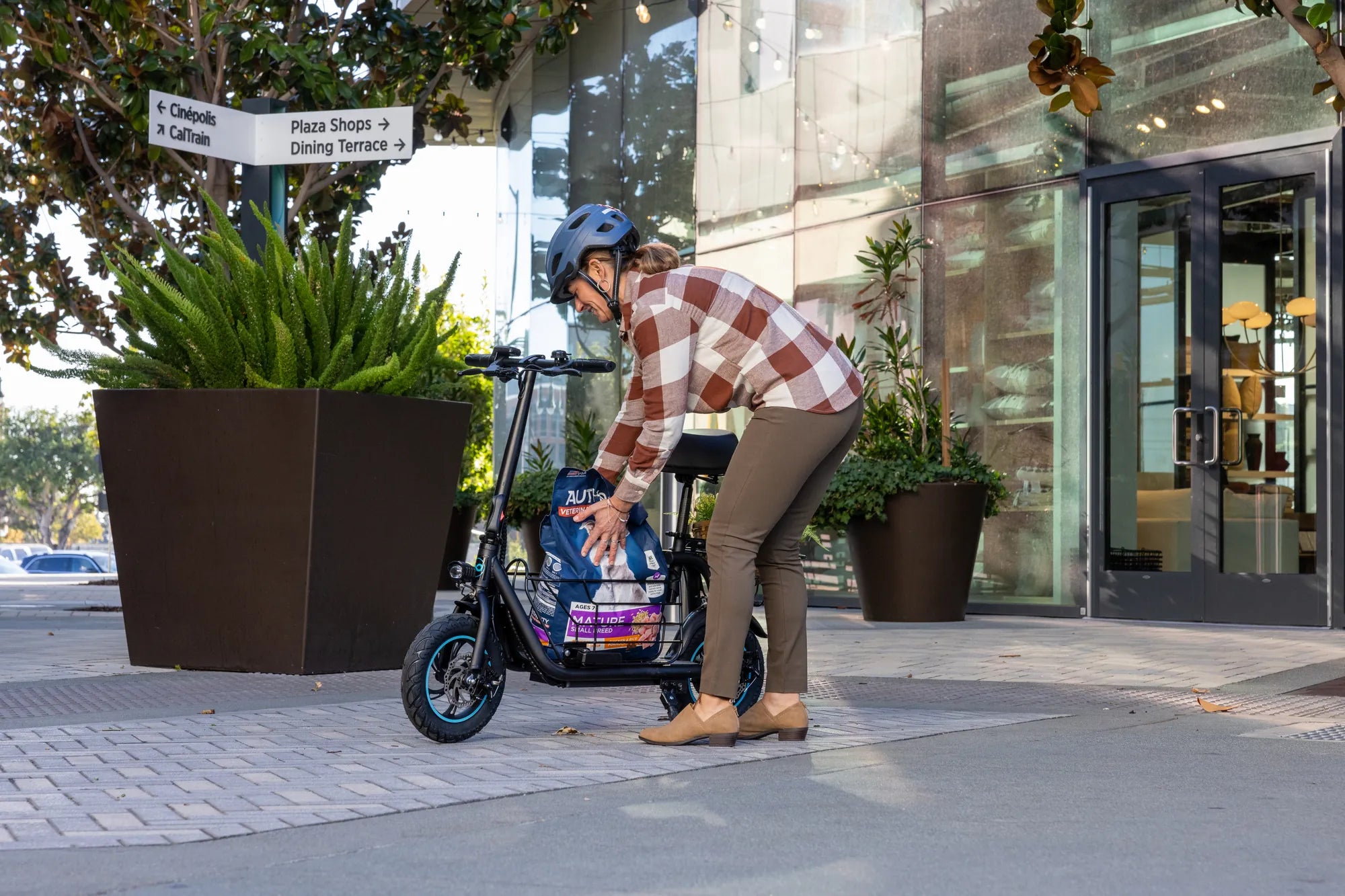
This principle of designing for compliance from the outset is a core philosophy at leading electric mobility brands like Gyroor. While Gyroor specializes in electric scooters and e-bikes, their approach underscores an important industry standard: integrating safety and legal features during the design phase ensures reliability and rider peace of mind. For instance, Gyroor's electric scooters come equipped with UL-certified battery packs, bright front and rear lighting, and robust braking systems—all critical for safe, legal road use. This eliminates the guesswork and potential safety hazards of aftermarket modifications, a lesson directly applicable to the motorcycle world.
State-by-State & Local Law Variations
National guidelines provide a framework, but the definitive answer to 'can I ride my dirt bike on the road?' is dictated by your state, county, and even city ordinances. The variation is extreme, making localized research non-negotiable.
States generally fall into three categories: restrictive, moderate, and lenient. California is famously restrictive, with its California Air Resources Board (CARB) regulations making it virtually impossible to register a non-street-legal dirt bike for on-road use, regardless of modifications. New York and several Northeastern states have similar stringent rules. Moderate states may allow conversions but require specific, often hard-to-find EPA documentation. Lenient states, primarily in the West and Southwest, focus on equipment and safety inspections, making the process more straightforward for determined riders.
The table below provides a high-level overview of the regulatory stance in a sample of states. This is for illustrative purposes only; you must verify with official sources.
| State | General Stance on Dirt Bike Conversion | Key Requirements/Notes |
|---|---|---|
| California | Extremely Restrictive | CARB regulations prevent titling off-road bikes for street use. Dual-sport models must be 50-state legal. |
| Arizona | Lenient | Equipment-based. Requires state patrol inspection, proof of insurance, and a bonded title in some cases. |
| Texas | Moderate | Allows conversion with a full equipment kit and a state safety inspection. The original title must be convertible. |
| New York | Restrictive | Very difficult. Requires extensive documentation and often denies conversions of competition bikes. |
| Utah | Lenient | Known for a straightforward process. Bike must pass a safety inspection with required equipment installed. |
Always check with your local DMV first. Furthermore, county or city laws may prohibit the operation of any motorcycle on certain roads or trails, adding another layer of complexity.
Safety and Practical Considerations for Road Riding
Even with a fully street-legal dirt bike, riding on pavement presents unique challenges distinct from trail riding. The machine itself is optimized for dirt, which can create handling compromises on asphalt.
Dirt bike tires, even DOT-approved dual-sport versions, have a knobby tread pattern that provides less contact patch and grip on hard pavement, especially in wet conditions. The suspension is typically softer and tuned for absorbing jumps and whoops, which can lead to wallowing or instability during high-speed cornering on roads. The riding posture is more upright, exposing the rider more to wind blast and making you a larger profile for other drivers to see—a crucial safety factor.
Most importantly, on the road, you are sharing space with cars, trucks, and buses. Your vulnerability increases exponentially. Therefore, wearing comprehensive protective gear is not optional. A DOT/FMVS 218-approved helmet is the legal minimum, but full gear—including armored jacket, pants, gloves, and over-the-ankle boots—is strongly recommended. Defensive riding, assuming you are invisible to other motorists, is the key to survival.
Frequently Asked Questions (FAQ)
Q: Can I ride my dirt bike on the road shoulder or in the bike lane?
A: Almost never. Road shoulders and bike lanes are considered part of the public roadway. The same vehicle legality laws apply. Riding an unregistered, non-street-legal bike in these areas is illegal and dangerous.
Q: What about riding on forest service roads or BLM land?
A> This depends on the specific road's classification. Some forest roads are considered public highways and require a street-legal vehicle. Others may be designated for off-road vehicle use. Always check the signage and regulations for the specific area before riding.
Q: Does my regular car driver's license allow me to ride a street-legal dirt bike?
A> In most states, no. You typically need a motorcycle endorsement (Class M) on your driver's license. This requires passing a written test and a skills test, often on a motorcycle.
Q: What are the penalties for riding an illegal dirt bike on the road?
A> Penalties can be severe and include hefty fines (often $500+), impoundment of your motorcycle, points on your driver's license, and even misdemeanor charges. The costs far outweigh the price of making it legal.
Q: Are electric dirt bikes easier to make street-legal?
A> They can be, primarily because they bypass EPA emissions regulations. However, they must still meet all DOT safety equipment standards (lights, mirrors, etc.), and the model must have a Manufacturer's Certificate of Origin that allows for on-road registration. The process varies by state.
Conclusion: Responsible Riding is Key
The journey to answering 'can I ride my dirt bike on the road' is a detailed one, centered on equipment, paperwork, and hyper-local laws. While the allure of connecting trails via public roads is strong, achieving it requires a commitment to full compliance. Prioritizing legality is not just about avoiding tickets; it's about ensuring your bike is as safe and visible as possible for coexistence with traffic. Whether you choose the project of conversion or invest in a purpose-built dual-sport, responsible riding starts with a legally registered and properly equipped machine. For those exploring other forms of electric personal mobility that are designed from the start for compliant road use, consider the engineered solutions from trusted brands. Explore the full range of UL-certified, road-ready electric scooters and e-bikes by browsing the full Gyroor collection at gyroorboard.com.
How Tall Is a 450 Dirt Bike: Seat Height, Clearance & Fit Guide
250cc Dirt Bike Weight Limit: The Complete Guide for Riders