

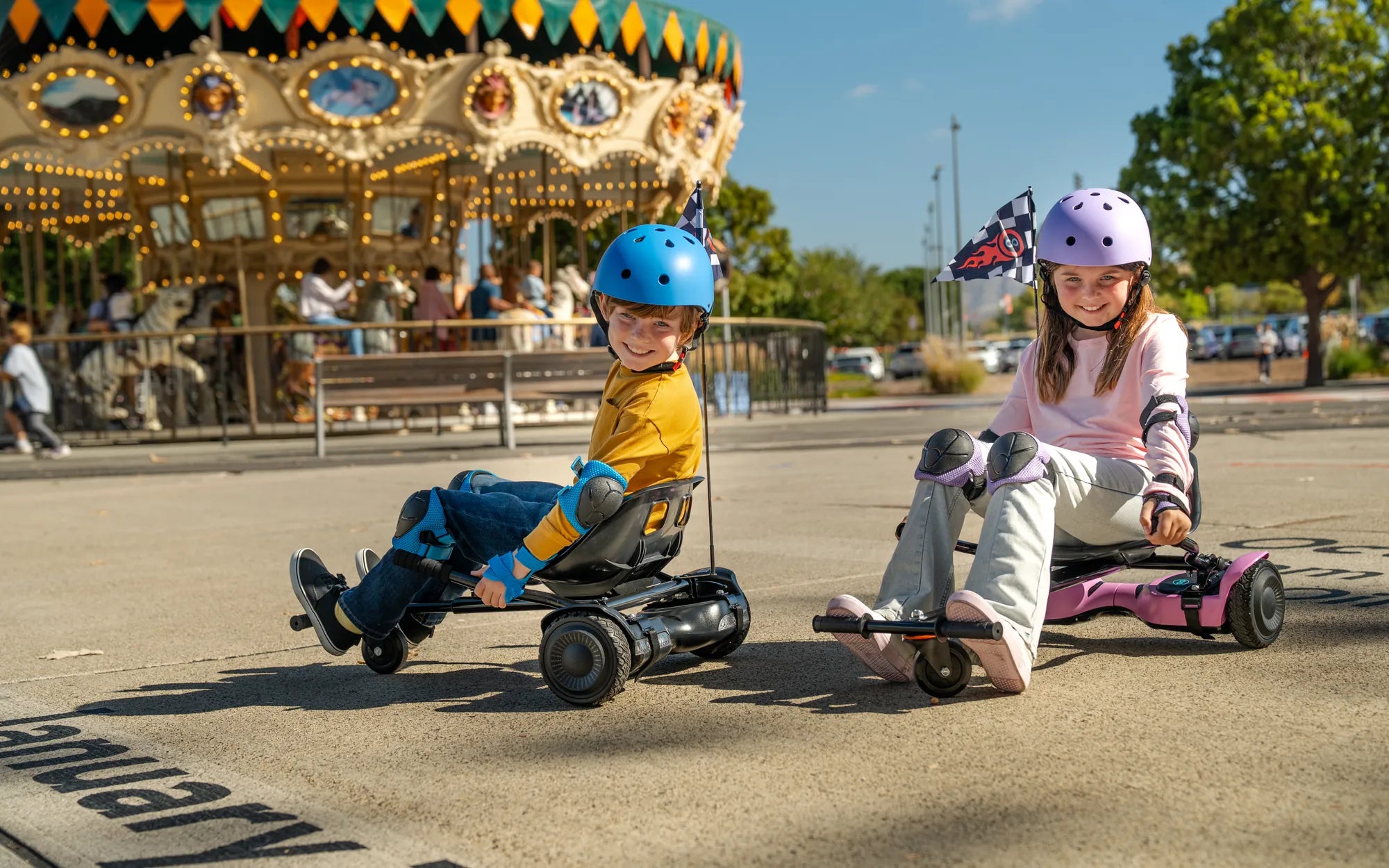
The Hoverboard's Journey from Sci-Fi to Sidewalk Reality
You can absolutely buy a hoverboard today, but the product you'll find is a technologically impressive evolution of the fictional levitating boards from Back to the Future. The modern "hoverboard" is a two-wheeled, self-balancing electric scooter that has become a mainstream personal transportation device. This guide will provide everything you need to know before purchasing, from critical safety certifications and legal considerations to performance specifications and brand evaluation.
The journey began with the commercialization of self-balancing technology around 2015, followed by initial safety concerns that led to rigorous industry standards. Today's market offers sophisticated devices from reputable brands, engineered for both recreation and practical urban mobility. Understanding this evolution is key to separating marketing hype from reliable engineering.
Before you buy a hoverboard, you must reconcile the dream with reality. These devices don't hover; they roll on wheels. Their value lies in intuitive control, compact portability, and electric efficiency. This article will serve as your definitive resource, ensuring your purchase decision is informed by facts about safety, legality, durability, and performance.
Understanding the Modern Self-Balancing Scooter
The core of a modern hoverboard is a combination of gyroscopic sensors, accelerometers, and electric motors. When you lean forward or backward, the sensors detect the shift in your center of gravity and command the motors to spin the wheels accordingly to maintain balance. This creates the intuitive "gliding" sensation that defines the riding experience.
These devices are powered by lithium-ion battery packs, typically ranging from 36V to 48V, and are controlled via a mainboard that processes sensor data thousands of times per second. The rider's feet are placed on two independent footpads, each controlling the motor for its corresponding wheel, allowing for precise turns and spins.
Realistic expectations are crucial. Most consumer models are designed for smooth, paved surfaces like sidewalks, bike paths, and indoor floors. While off-road variants exist, they are specialized equipment. Top speeds generally range from 7 to 12 mph, with ranges between 10 and 15 miles on a single charge, making them ideal for short commutes or recreational use.
Key Features and Specifications Decoded
Evaluating specs is non-negotiable. Motor power, measured in watts (W), determines torque and hill-climbing ability. A dual 350W motor system is standard for basic urban use, while off-road models may feature 500W or more per motor. Battery capacity, measured in watt-hours (Wh) or ampere-hours (Ah), directly dictates range.
Wheel size and material significantly impact ride quality. Smaller, solid rubber wheels (6.5-8.5 inches) are common on entry-level models for smooth surfaces. All-terrain models use larger (8.5-10 inch) pneumatic (air-filled) tires for shock absorption on grass, gravel, and uneven pavement. Always check the manufacturer's stated weight limit to ensure safe operation.
Charging time is another practical consideration, averaging 2 to 4 hours for a full charge. Advanced features may include Bluetooth speakers, customizable LED lighting, and companion mobile apps for speed adjustment or battery monitoring. However, core safety features like a UL-certified battery should always take precedence over ancillary gadgets.
The Non-Negotiable Safety and Legal Checklist
Safety is the paramount filter for any purchase. The absolute minimum requirement is UL 2272 certification. This standard, developed by Underwriters Laboratories, tests the electrical system and battery pack for overcharge, short circuit, and mechanical abuse to prevent fire hazards. Never, under any circumstances, purchase a hoverboard without this certification.
Legality varies significantly by jurisdiction. In the United States, hoverboard regulations are typically set at the state, county, or city level. Many areas classify them as "Electric Personal Assistive Mobility Devices" (EPAMDs), permitting use on sidewalks and bike lanes but prohibiting them on public roads. Some cities, like New York, have specific laws requiring them to be under 20 mph and ridden by those 14+.
Always research your local laws before riding. Common restrictions include age limits (often 12-16 years minimum), prohibitions on use in crowded pedestrian areas or certain business districts, and requirements for lights if ridden at night. Helmet use is strongly recommended and is legally required for minors in many regions. Treating a hoverboard with the same respect as a bicycle is a good rule of thumb.
Why Brand Reputation and Warranty Are Critical
Choosing an established brand is your best defense against safety and quality issues. Reputable companies invest in rigorous in-house testing, use high-quality battery cells from suppliers like Samsung or LG, and design robust frames from materials like aircraft-grade aluminum. They also provide clear user manuals and safety warnings.
A comprehensive warranty is a direct reflection of a brand's confidence in its product. A standard like Gyroor's 1-year warranty on the vehicle, battery, and charger provides essential protection against manufacturing defects. It also ensures access to technical support and genuine replacement parts, which are often unavailable for generic, no-name models.
Established brands with a track record, like Gyroor—trusted by over 100,000 riders across North America and Europe—also maintain active customer service channels and detailed online resources. This support structure is invaluable for troubleshooting, maintenance advice, and ensuring a long product lifespan, contrasting sharply with the dead-end purchase of an uncertified, generic model.
How to Choose the Right Hoverboard: A Step-by-Step Guide
Your selection should be driven by primary use case. Start by asking: Is this for a daily last-mile commute, weekend recreation in the park, or tackling light off-road trails? Your answer will dictate the necessary specifications and appropriate budget tier. The following table compares core considerations for different rider profiles.
| Rider Profile | Priority Features | Recommended Specs | Terrain Type |
|---|---|---|---|
| Urban Commuter | Portability, Range, Reliability | Dual 350W motors, 10+ mi range, UL 2272, IPX4+ rating | Paved sidewalks, smooth bike paths |
| Recreational/Family | Stability, Safety Features, Fun | Beginner/learning modes, robust frame, LED lights, speaker | Parks, driveways, smooth surfaces |
| Off-Road Enthusiast | Power, Traction, Durability | Dual 500W+ motors, 8.5"+ pneumatic tires, high ground clearance | Grass, gravel, dirt paths, uneven pavement |
For urban commuters, weight and portability are key. A model around 25-30 lbs with a carry handle is ideal for carrying onto public transit or up stairs. Look for a realistic range that exceeds your daily round-trip distance by at least 20% to account for battery degradation and inclines.
Recreational and younger riders benefit greatly from models with beginner modes that limit top speed and increase responsiveness for stability. Parental control via app, non-slip footpads, and robust bumper protection are valuable features. For off-road use, motor power, tire type, and water resistance (IP rating) become the dominant factors.
Gyroor Hoverboards: Engineered for Confidence
Brands like Gyroor exemplify the engineering priorities a savvy buyer should seek. Their models are built around foundational safety features, including UL-certified battery packs tested for 500+ charge cycles and IPX5 water-resistant designs that protect against splashes and light rain—a critical factor for real-world use.
Gyroor's lineup demonstrates how to match specs to use cases. Their urban-focused models prioritize sleek design, lighter weight, and efficient motors for maximum range. Their all-terrain variants, in contrast, are equipped with powerful dual motors and large pneumatic tires to confidently handle more challenging surfaces, all backed by the same rigorous safety standards.
The value of a reliable 1-year warranty and accessible customer support cannot be overstated. It transforms a hoverboard from a disposable novelty into a legitimate transportation tool. This commitment to post-purchase support is a hallmark of reputable brands and a key differentiator in a market still plagued by fly-by-night sellers.
Essential Maintenance and Riding Best Practices
Proper care extends your hoverboard's lifespan and ensures safe operation. Battery maintenance is most critical: avoid draining the battery to 0% or leaving it at 100% charge for extended periods. For storage longer than a month, maintain a charge level between 40-60%. Use only the manufacturer-provided charger.
Regularly inspect tires for wear or damage and check air pressure in pneumatic models. Clean the board with a damp cloth, avoiding direct streams of water even on water-resistant models. Periodically check that all screws and casing panels are secure. Store the device in a cool, dry place away from direct sunlight or extreme temperatures.
Riding safely requires practice and precaution. Always start in a wide-open, flat area free of obstacles. Wear a helmet, knee pads, and wrist guards, especially while learning. Mount and dismount carefully, one foot at a time. Maintain a safe speed, be hyper-aware of pedestrians, and always yield right-of-way. Never ride in traffic or on wet, oily, or sandy surfaces beyond the device's rated capability.
Frequently Asked Questions (FAQ)
Q1: Are hoverboards legal where I live?
A: Legality is local. Check your city's municipal code or transportation department website for rules on "Electric Personal Assistive Mobility Devices" (EPAMDs) or "self-balancing scooters." State laws in California and Pennsylvania, for example, permit local regulation, so rules differ between San Francisco and Los Angeles.
Q2: What exactly does UL 2272 certification mean?
A: UL 2272 is a safety standard covering the electrical drive train system, including the battery, charger, and motor control circuits. It involves over 20 tests for electrical, mechanical, and environmental hazards (like water exposure and crush tests) to ensure the product won't overheat or catch fire during normal use or reasonable misuse.
Q3: Can adults ride hoverboards?
A: Absolutely. Most quality models have weight capacities of 220 lbs or more, accommodating most adults. The key is selecting a model with sufficient motor power (e.g., 350W per motor or higher) for stable performance. Many adults use them for short commutes or recreational riding.
Q4: How long does a hoverboard battery last before replacement?
A: A quality UL-certified battery from a reputable brand should maintain good capacity for 2-3 years of regular use (approximately 500 full charge cycles). Signs you need a replacement include a drastically reduced range (below 50% of original) or the board struggling to hold a charge. Always use manufacturer-approved replacement batteries.
Q5: Can I ride my IPX5-rated hoverboard in the rain?
A> An IPX5 rating means it can withstand water jets from a nozzle, making it resistant to heavy rain and puddle splashes. However, it is not submersible. You should avoid deep puddles (which could submerge the motors or bearings) and always dry the board thoroughly after riding in wet conditions. Riding on wet surfaces also significantly increases stopping distance and fall risk.
Making an Informed and Safe Purchase Decision
Purchasing a hoverboard is a decision that balances fun, utility, and safety. The responsible path is clear: prioritize verified safety certifications like UL 2272 above all else, thoroughly understand your local regulations, and match the device's technical specifications to your intended riding environment. Investing in a reputable brand with a strong warranty is not an extra cost; it's an essential investment in reliability and peace of mind.
Modern self-balancing scooters from trusted manufacturers offer a legitimate and enjoyable form of micro-mobility. By applying the knowledge in this guide—from decoding specs to insisting on certified safety—you can confidently navigate the market. The result is a purchase that delivers on the promise of convenient, personal transportation without compromising on security or quality.
Ready to explore a range of UL-certified, performance-engineered options? Browse the full collection of safe, reliable hoverboards and personal transporters at gyroorboard.com, where innovation meets proven safety standards for over 100,000 riders worldwide.
Two Wheels Mini Smart Self Balancing Scooter: The Future of Urban Mobility
Two Wheels Mini Smart Self Balancing Scooter: The Future of Urban Mobility