



Understanding Air Travel with Your Mobility Scooter: A Complete Guide
Can you fly with a mobility scooter? The definitive answer is yes. Air travel with a personal mobility device is not only possible but is a protected right under key legislation in many countries. However, a successful journey hinges on meticulous preparation, a clear understanding of complex regulations, and proactive communication with your airline.
This guide provides a step-by-step roadmap for navigating the process confidently. We will demystify the rules, detail exact preparation requirements, and offer pro tips to avoid common pitfalls. Whether you're planning a vacation or essential travel, knowing these protocols empowers you to maintain your independence in the skies.
The process is governed by a combination of aviation authority mandates and individual airline policies. The core principle is that airlines must accommodate mobility aids as assistive equipment. Yet, the specifics—especially concerning battery types and disassembly—are where careful attention is required. Let's begin by exploring the foundational regulations that protect your right to travel.
By the end of this guide, you will know exactly how to prepare your scooter, what to expect at the airport, and how to assert your rights if issues arise. The goal is to transform a potentially stressful procedure into a manageable, well-planned part of your trip.
Key Regulations and Airline Policies You Must Know
The legal framework for flying with a mobility scooter is built upon anti-discrimination laws designed to ensure accessible air travel. In the United States, the Air Carrier Access Act (ACAA) is the cornerstone regulation. It explicitly prohibits airlines from discriminating against passengers with disabilities and mandates the accommodation of mobility devices.
Under the ACAA, your mobility scooter is considered assistive equipment, not standard baggage. This critical distinction means airlines cannot charge you extra fees for transporting it. Furthermore, they must prioritize its handling and return it to you promptly upon arrival, ideally at the aircraft door or baggage claim area designated for oversized items.
Globally, similar regulations exist, such as the EU Regulation EC 1107/2006 concerning the rights of disabled persons in air transport. These rules ensure consistent protections across many international carriers. However, while the law guarantees access, it also allows airlines to set operational rules for safety, primarily concerning battery transport and device dimensions.
This is where airline-specific policies come into play. Every airline publishes detailed conditions for transporting mobility aids. These policies detail approved battery types, advance notification requirements, and packing specifications. Your first step after booking a flight should always be to review the airline's "special assistance" or "mobility device" webpage.
Never assume policies are uniform. A rule on Delta Air Lines may differ slightly from one on American Airlines or British Airways. The most common point of variation involves lithium-ion batteries, which are subject to strict international dangerous goods regulations. Understanding these nuances is the key to avoiding last-minute denials at the check-in counter.
Airline-Specific Requirements: A Checklist
To ensure compliance, use this checklist when reviewing your airline's policy. Contact their accessibility desk directly if any point is unclear.
- Advance Notification: Most airlines require at least 48 hours' notice, if not more, that you will be traveling with a mobility device. This allows them to allocate space and prepare ground staff.
- Battery Specifications: Determine the exact type and watt-hour (Wh) rating of your scooter's battery. This is the single most important factor for approval.
- Device Dimensions & Weight: Know the folded or disassembled dimensions and weight of your scooter. While airlines generally accommodate them, extremely large models may require discussion.
- Documentation: Some airlines may request a manufacturer's specification sheet, especially for lithium batteries. Have this information readily available.
- Check-in Procedure: Confirm if you must use the special assistance counter and the recommended airport arrival time, which is often 3 hours before departure for international flights.
Preparing Your Mobility Scooter for Flight: A Step-by-Step Process
Proper preparation is non-negotiable for a smooth travel day. This process should begin well before your departure date, starting with a thorough review of your scooter's manual and your airline's rules. The following steps provide a chronological guide from booking to boarding.
First, at the time of booking or immediately after, inform the airline of your intent to travel with a mobility scooter. Document the name of the representative you speak with and any reference number for the request. Next, conduct a pre-travel inspection of your scooter, checking for any loose parts, tire pressure, and overall mechanical soundness.
Gather necessary supplies: protective padding (bubble wrap or moving blankets), heavy-duty zip ties, duct tape, and durable luggage tags. You will also need tools for any disassembly, such as Allen keys or wrenches, which you should carry in your hand luggage. Finally, create multiple, highly visible labels with your name, flight information, and contact number.
The physical preparation of the scooter itself typically occurs on the day of travel. The goal is to make the device as compact, protected, and inert (from a battery perspective) as possible for ground handlers. The two most critical components of this preparation are battery safety and physical packing.
Battery Compliance and Safety
Battery regulations are dictated by the International Air Transport Association (IATA) Dangerous Goods Regulations and enforced by authorities like the FAA and EASA. Compliance is the foremost safety and legal requirement.
Non-spillable (Gel/Sealed Lead-Acid) Batteries: These are generally accepted without restriction. They must be securely attached to the scooter, and the terminals must be protected from short circuits (e.g., with tape or terminal caps). The scooter can be checked with the battery installed.
Lithium-ion Batteries: These are subject to strict watt-hour (Wh) limits. Batteries under 300 Wh are typically permitted. If the battery is removable, it usually must be removed, carried in the cabin, and protected from damage (terminals taped, placed in a separate plastic bag). Batteries between 160 Wh and 300 Wh often require airline approval.
For scooters with non-removable lithium batteries under 300 Wh, the battery must be disconnected (if possible), and the scooter must be packed to prevent accidental activation. Batteries over 300 Wh are generally forbidden on passenger aircraft. Always have the battery's Wh rating printed from the manufacturer's specifications; this is your proof of compliance.
Disassembly, Packing, and Labeling
Once the battery is secured, focus on the scooter's frame. Consult your manual for folding or partial disassembly instructions. Common steps include folding the tiller (steering column), removing the seat and basket, and locking the frame into its most compact position.
Protect all protruding parts, sharp edges, and controls with foam padding or bubble wrap. Use zip ties or Velcro straps to secure loose components like footplates. If the scooter has a key, remove it and keep it with you. The objective is to create a single, manageable unit that is unlikely to snag or be damaged during loading.
Labeling is crucial. Attach multiple durable tags that clearly state: "MOBILITY DEVICE," "ASSISTIVE EQUIPMENT," "FRAGILE," and "RETURN TO AIRCRAFT DOOR" if that is your preference. Include your name, phone number, and flight details. Clear labeling informs ground handlers of the item's nature and ensures proper handling and routing.
Airport Procedures and the In-Flight Experience
On travel day, your preparedness will be put to the test. Arrive at the airport a minimum of three hours before a domestic flight and four hours for an international journey. Proceed directly to the airline's special assistance desk or a designated check-in counter for passengers with disabilities.
At check-in, present your documentation, including your battery specifications. The agent will inspect your scooter, likely focusing on the battery. They will tag it for transportation. You are entitled to use your scooter throughout the terminal. You will typically "gate-check" the scooter, meaning you will keep it until you reach the boarding door of the aircraft.
At the gate, notify the gate agent that you have a gate-checked mobility device. A ramp agent will meet you at the jet bridge to take the scooter for loading into the aircraft's cargo hold. This is when you should reiterate any handling instructions. Take a final photo of your prepared scooter for your records.
Upon landing, the process is reversed. You will usually disembark last or be asked to remain seated while your scooter is retrieved. It should be returned to you at the aircraft door. If it is sent to the oversized baggage claim, proceed there immediately. Before leaving the baggage claim area, conduct a quick inspection for any damage.
Pro Tips for a Hassle-Free Journey with Your Scooter
Beyond the basic rules, seasoned travelers recommend these strategies to minimize stress and avoid complications.
- Contact Special Assistance Directly: Don't rely on general customer service. Call the airline's dedicated accessibility desk for the most accurate information and to have notes added to your reservation.
- Carry a Printed "Scooter Passport": Create a one-page document with a photo of your scooter, its make/model, battery specs (with Wh rating highlighted), and a brief disassembly diagram. Provide this to check-in and gate agents.
- Pack a Basic Toolkit: Include the tools needed for disassembly/reassembly, spare tape, and zip ties in your carry-on in case repacking is required at a connecting airport.
- Consider Travel Insurance: Opt for a policy that specifically covers damage to medical equipment or mobility aids during travel.
- Do a Dry Run: Practice disassembling and packing your scooter at home before your trip. This helps you estimate the time needed and identify any tricky steps.
Mobility Scooter Types and Air Travel Suitability
Not all mobility scooters are equally suited for air travel. Your scooter's design significantly impacts the ease of the process. Here is a comparison of common types.
| Type of Scooter | Key Features | Air Travel Suitability | Considerations |
|---|---|---|---|
| Travel/Portable Scooter | Lightweight (under 100 lbs), folds or disassembles quickly, often with removable lithium battery <300Wh. | Excellent. Designed for travel. | Easiest to manage. Check that the folded dimensions meet airline size guidelines for cargo doors. |
| Mid-Size 3-Wheel Scooter | Moderate weight, often foldable tiller, good for indoor/outdoor use. Common battery types vary. | Good. Requires standard preparation. | Ensure you can perform necessary disassembly (seat, basket). Verify battery type and Wh rating carefully. |
| Full-Size 4-Wheel/Bariatric Scooter | Heavier, larger frame, higher weight capacity, less portable. May have larger batteries. | Fair to Challenging. Requires significant advance coordination. | Critical to contact airline well in advance due to weight/size. Batteries over 300Wh may be prohibited. May incur special handling requirements. |
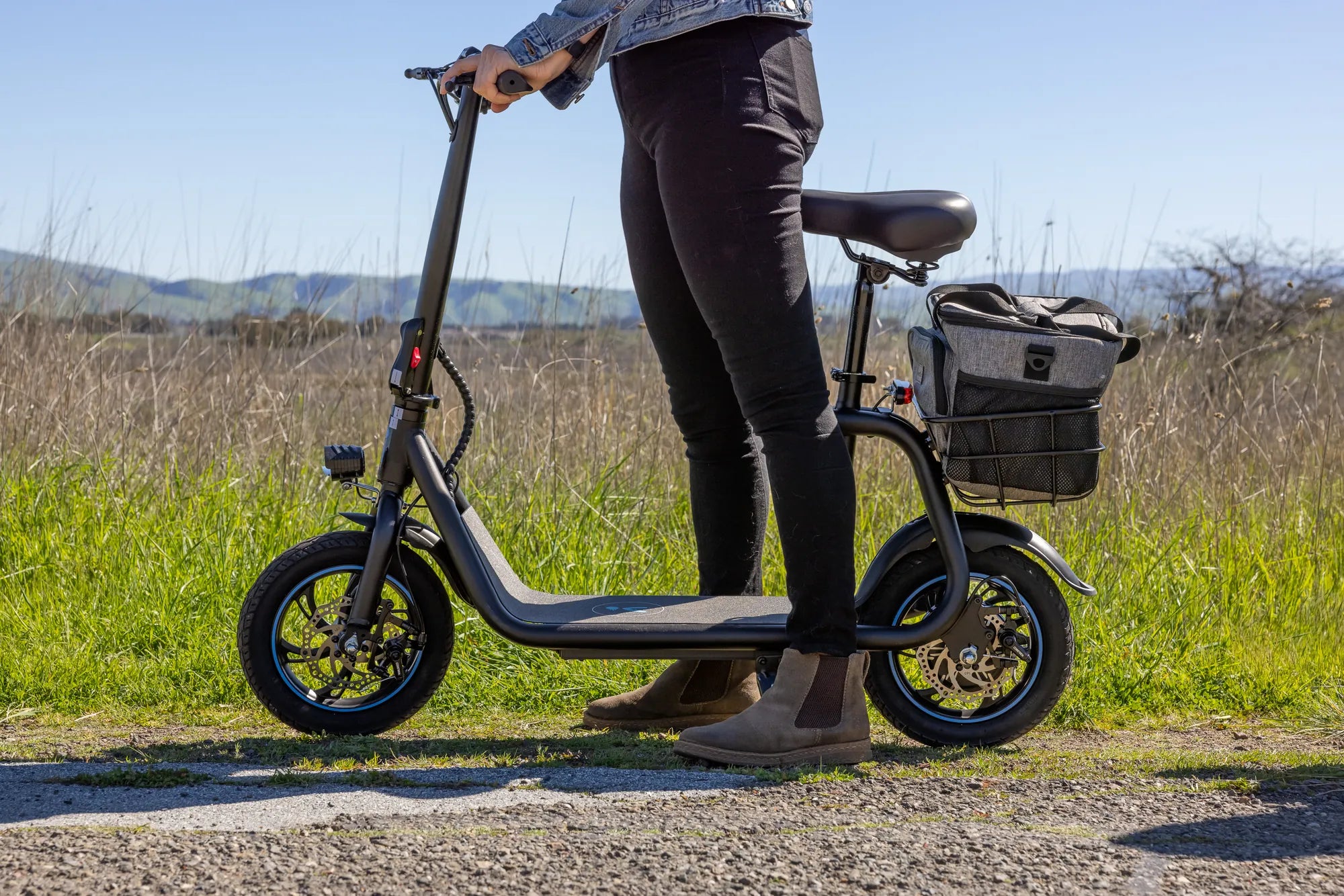
Brands like Gyroor, a leading electric mobility brand trusted by over 100,000 riders, design some models with portability in mind. For instance, a compact, folding electric scooter with a UL-certified, removable lithium battery under the 300Wh threshold aligns perfectly with airline requirements, simplifying the travel process considerably.
Your Rights and Recourse in Case of Damage
Despite best efforts, damage can occur. Knowing your rights and the correct procedure is essential for recourse. Under the ACAA and similar regulations, airlines are responsible for damage to mobility aids.
If you discover damage, do not leave the airport baggage claim area. Immediately report it to an airline representative and request a Property Irregularity Report (PIR) or damage claim form. Take detailed photos and videos of the damage from multiple angles. Get the names and employee IDs of the personnel you speak with.
The airline is obligated to provide a suitable temporary replacement or repair your device promptly. They may also offer compensation. Keep all receipts for any immediate repairs you must arrange yourself. If the airline is unresponsive, you can file a complaint with the relevant authority, such as the U.S. Department of Transportation (DOT) Aviation Consumer Protection Division.
Documentation is your strongest ally. The photos you took before travel, your "scooter passport," and the damage report form create a clear timeline and evidence chain. Traveling with a mobility scooter is a protected right, and the system is designed to support you when problems arise.
Frequently Asked Questions (FAQ)
Can I use my mobility scooter inside the airport?
Yes, absolutely. You are entitled to use your scooter throughout the terminal up to the door of the aircraft. At that point, a ramp agent will take it for loading into the cargo hold. Upon arrival, it should be returned to you at the aircraft door or a designated area.
What if my scooter's lithium battery is larger than 300 watt-hours (Wh)?
Lithium batteries over 300 Wh are generally prohibited on passenger aircraft due to international dangerous goods regulations. You must contact your airline's special assistance desk well in advance. In rare cases, they may make an exception or guide you on shipping the battery via cargo, but approval is not guaranteed. For frequent flyers, considering a scooter with a compliant battery is advisable.
Are there any extra fees for checking a mobility scooter?
No. Under the Air Carrier Access Act (ACAA) in the U.S. and similar regulations elsewhere, airlines cannot charge additional fees for transporting mobility aids as assistive equipment. This applies even if you have other checked baggage. It is a crucial protection for travelers with disabilities.
What happens if my scooter is damaged by the airline?
Report the damage immediately before leaving the baggage claim area. File a formal report with the airline. They are responsible for repairing or replacing the scooter and may provide a loaner in the interim. Document the damage with photos and keep all communication records. You can escalate to aviation authorities if the airline does not resolve the issue satisfactorily.
Do I need to bring my own battery documentation?
Yes, it is highly recommended. Carry a printed specification sheet from the manufacturer that clearly states the battery type (e.g., "Lithium-ion") and its watt-hour (Wh) rating. This provides definitive proof of compliance to check-in agents and can prevent delays or disputes.
Can I take my scooter on a cruise or train after my flight?
Policies vary significantly. Cruise lines often have specific protocols and may store scooters during sailing, requiring advance notice. Most trains in the U.S. (Amtrak) and Europe accommodate scooters, but space can be limited, and reservations are essential. Always contact each transportation provider directly to confirm their specific accessibility policies.
Conclusion: Embracing the World with Confidence
Flying with a mobility scooter is a structured process that, when approached with knowledge and preparation, is entirely manageable. The freedom to travel is yours to claim. The key pillars are understanding the regulations, communicating clearly with your airline, preparing your device thoroughly, and knowing your rights.
By following the steps outlined in this guide—from verifying battery compliance to meticulous packing and labeling—you transform potential obstacles into a routine pre-flight checklist. The investment in preparation pays dividends in peace of mind and a smooth travel experience.
Remember, your mobility scooter is an extension of your independence. The aviation system is legally required to accommodate it. Arm yourself with information, advocate proactively, and you can explore new destinations with confidence and ease. The world is accessible.
Ready to explore travel-friendly mobility options? Browse the full Gyroor collection of UL-certified, reliable electric scooters and e-bikes designed for performance and practicality at gyroorboard.com.
Most Reliable 50cc Scooter: The Ultimate Guide to Dependable Commuting
Ebike in Rain: The Complete Safety and Maintenance Guide