

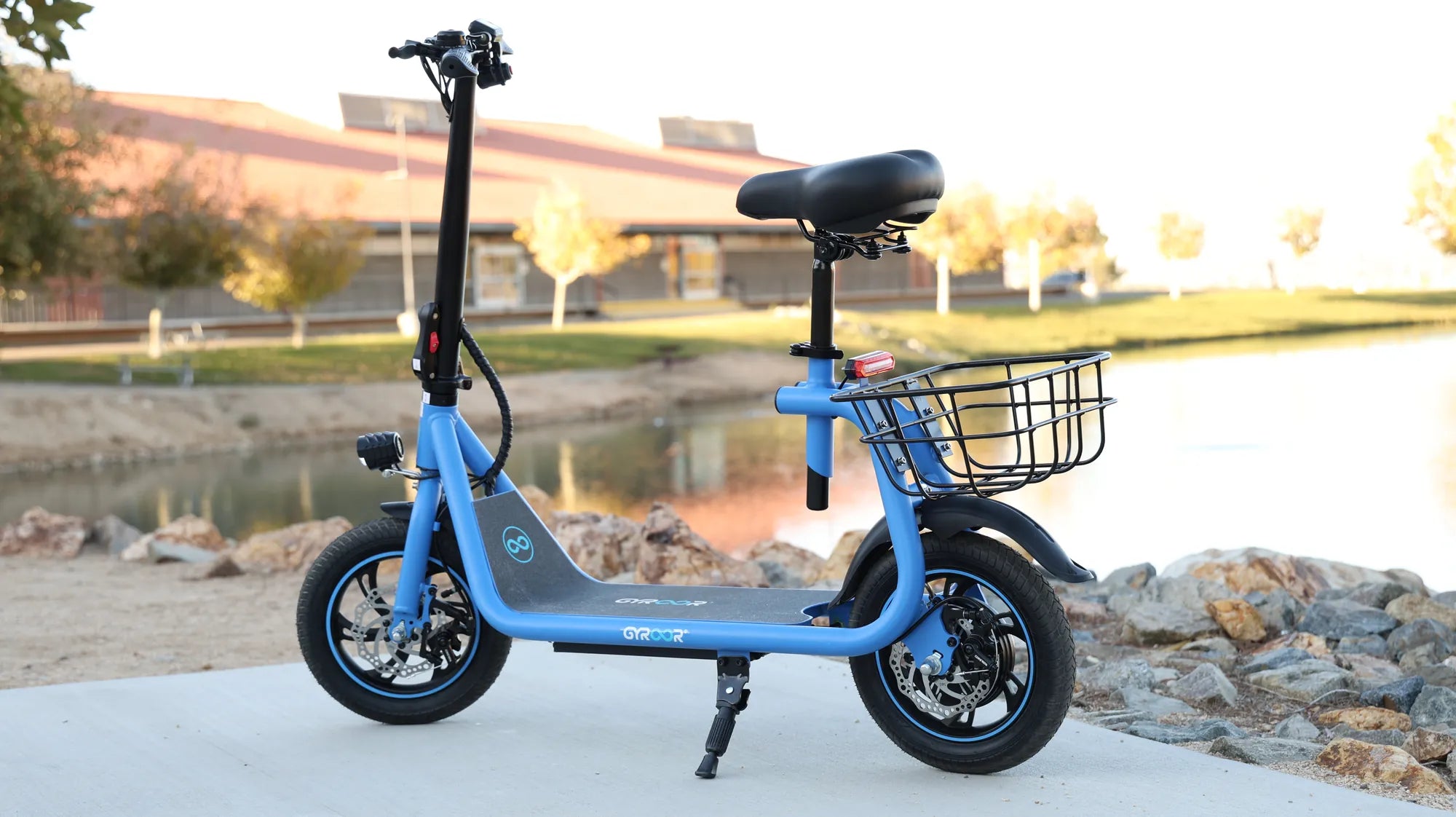
You've invested in a powerful e-bike for freedom and range. Now you're eyeing the open highway for a longer commute or adventure. This leads to the critical, and often misunderstood, question: can you ride an ebike on the highway? The short, unequivocal answer is no—you cannot legally ride an electric bicycle on controlled-access highways, freeways, or interstates. This article provides the definitive legal breakdown, the stark safety realities, and, most importantly, the smart, legal alternatives that allow you to maximize your e-bike's potential safely. Understanding these rules isn't just about compliance; it's about ensuring your riding experience remains enjoyable and accident-free.
Understanding the Legal Landscape: It's All About Classification
The legality of where you can ride an e-bike hinges entirely on how the law classifies your vehicle. E-bikes are not motorcycles, but they are also not traditional bicycles in the eyes of most traffic codes. This creates a complex patchwork of regulations.
At the federal level, the Consumer Product Safety Act defines a "low-speed electric bicycle" as a two- or three-wheeled vehicle with fully operable pedals, a motor under 750 watts (1 hp), and a maximum motor-powered speed of 20 mph. However, operational law is dictated by states and localities.
The most widely adopted framework is the 3-Class system, which has been enacted in over 40 states. This system is the key to understanding access rights. The classification of your e-bike—determined by its top assisted speed and how the motor engages—directly dictates where you are permitted to ride.
It's crucial to understand that in legal terminology, "highway" often means any public road. However, in common parlance and for this article, "highway" refers to limited-access, high-speed roadways like interstates (I-5, I-95) and freeways. These are almost universally off-limits.
The 3-Class System and Speed Limits: Your Key to Access
The 3-Class system provides clarity for riders, law enforcement, and lawmakers. Your e-bike's class is usually printed on its frame or in the manual. Brands like Gyroor clearly designate the class of each model to ensure rider awareness.
Class 1: These are pedal-assist only (no throttle) e-bikes. The motor provides assistance only when you are pedaling and ceases at 20 mph. They are typically allowed anywhere a traditional bicycle is allowed.
Class 2: These e-bikes are equipped with a throttle that can propel the bike without pedaling, but the motor-assisted speed is still capped at 20 mph. Their access is similar to Class 1, though some multi-use trails may restrict throttle-only operation.
Class 3: These are pedal-assist only e-bikes with a higher maximum assisted speed of 28 mph. They are often required to have a speedometer. Class 3 e-bikes face more restrictions; they are frequently prohibited on natural surface trails and may only be allowed in certain bicycle lanes on streets.
Notably, none of these classes permit operation on controlled-access highways. The 28 mph top speed of a Class 3 e-bike, while fast for a bike path, is dangerously slow for a roadway where traffic flows at 65-80 mph.
State-by-State Variability and Universal Prohibitions
While states adopt the 3-Class system, they layer on their own specific rules. For example, California Vehicle Code §21207.5 explicitly prohibits any motorized bicycle (including e-bikes) on bicycle paths or trails unless specifically permitted by local authority. More importantly, all states prohibit bicycles and e-bikes from interstate freeways and similar controlled-access highways unless specifically posted otherwise (e.g., in some remote areas where the interstate is the only route).
According to the National Highway Traffic Safety Administration (NHTSA) and a synthesis of state vehicle codes, the prohibition is based on minimum speed limits and design standards. Highways are engineered for high-speed, predictable motor vehicle traffic. The presence of a slow-moving, vulnerable vehicle like an e-bike disrupts traffic flow and creates an extreme hazard.
Local municipalities have the final say. A city or county can further restrict e-bike access on certain roads, bridges, or paths. The responsibility is on the rider to know the local laws. Ignorance is not a valid legal defense and, more importantly, a grave safety risk.
The Practical Dangers: Why Highways Are a Deadly Mismatch
Beyond the black-and-white letter of the law lie the incontrovertible physics of safety. E-bikes, even high-performance models, are fundamentally incompatible with high-speed highway environments. The risks are not merely about breaking a law; they are about surviving the ride.
The design philosophy behind reliable brands like Gyroor focuses on durable, safe performance for urban commuting, recreational paths, and light trail use. Their engineering—from UL-certified battery packs to robust frames—is optimized for the realities of stop-and-go traffic and varied pavement, not for merging with semi-trucks.
Riding an e-bike on a highway is an exercise in vulnerability. The consequences of a mechanical failure, a blown tire, or a momentary lapse in balance are catastrophic at highway speeds. The following sections detail the specific, life-threatening dangers.
Speed Differential and Traffic Flow: A Recipe for Disaster
The core danger is the immense speed differential. A Class 3 e-bike traveling at its maximum assisted speed of 28 mph is moving less than half the speed of 65 mph traffic. This creates a closing speed of over 37 mph for a vehicle approaching from behind.
This differential makes merging, lane changes, and simply existing in a traffic lane incredibly perilous. Drivers have less time to see, recognize, and react to a slower-moving e-bike. Even on a wide shoulder, the risk of being struck by a distracted driver veering off the lane is exponentially higher.
Highway entrances, exits, and interchanges are designed for vehicles accelerating to or decelerating from highway speeds. An e-bike cannot safely navigate these cloverleafs or acceleration lanes, creating a bottleneck and a severe collision risk for both the rider and surrounding vehicles.
Vehicle Design and Rider Protection: You Are the Crumple Zone
E-bikes offer zero occupant protection. There is no steel cage, no airbag, no seatbelt. In a collision at highway speeds, the rider's body absorbs all the kinetic energy. The outcome is predictably severe injury or fatality.
Wind buffeting from large trucks and buses passing at high speed can easily destabilize an e-bike, causing a rider to lose control and swerve. E-bike tires, while durable for city riding, are not designed for sustained high-speed travel and are more susceptible to blowouts under such stress.
Furthermore, standard e-bike lighting and reflectors, adequate for city streets, are often insufficient for high-speed highway visibility. A driver approaching at 75 mph needs much greater advanced warning to safely change lanes or adjust speed than a driver approaching at 35 mph.
Gyroor's Commitment to Safe and Legal Riding
As a leading electric scooter and e-bike brand trusted by over 100,000 riders across North America and Europe, Gyroor's mission is to empower riders with reliable, fun, and safe personal mobility. This commitment inherently aligns with promoting legal and responsible riding practices.
Our product development and safety guidelines are built around real-world use cases where e-bikes excel and are permitted. We engineer for the joy of the ride on appropriate terrain, not for the reckless and illegal use on highways.
Safety is not an afterthought; it is the foundational principle. From rigorous battery certification to comprehensive warranty support, every aspect of the Gyroor experience is designed to ensure riders can enjoy their journeys with confidence and within legal boundaries.
Engineering for Real-World Urban & Trail Use
Gyroor models feature UL-certified battery packs tested for 500+ charge cycles. This certification is a benchmark for safety, reducing the risk of thermal runaway or fire—a critical feature for any vehicle, but especially one used in diverse environments. Our IPX5 water-resistant designs handle rain and puddles on city streets, not the unpredictable conditions of a highway shoulder.
Our motors are tuned to provide excellent torque for hill climbing and quick acceleration from a stoplight, not for sustaining illegal high speeds. The frame geometry and construction prioritize stability at legal e-bike speeds (20-28 mph) and comfort on bike lanes and paved paths.
By focusing on these real-world parameters, we deliver e-bikes that are perfectly suited for their intended purposes: commuting, errands, recreation, and exploring within the vast network of roads and trails where they are welcome and safe.
The Role of Warranty and Support in Rider Safety
Gyroor's reliable 1-year warranty is more than a promise against defects; it's a component of a safe riding ecosystem. A well-maintained e-bike is a safer e-bike. Our warranty and accessible U.S.-based customer support ensure that any issues with brakes, electrical systems, or critical components can be resolved promptly.
This support structure encourages proper maintenance and helps prevent mechanical failures that could lead to accidents, whether on a busy city street or a remote trail. We provide clear manuals and resources that emphasize legal operation and safe riding practices, reinforcing that the greatest enjoyment comes from riding responsibly.
Viable Alternatives for Long-Distance or Faster Commuting
If your goal is a longer commute or a touring adventure, abandoning the highway doesn't mean abandoning your plans. With strategic planning, you can leverage your e-bike's range and capability to find safer, often more scenic and enjoyable routes.
The electric assist is your greatest tool here. It allows you to cover longer distances on slightly slower routes without arriving exhausted. The key is to identify the infrastructure designed for you: dedicated bike lanes, multi-use paths, and specific highway shoulders that are legally designated for bicycle use.
Modern mapping technology has made this easier than ever. You can plan a 50-mile journey that uses only 10% shared roadways with cars, prioritizing safety and enjoyment. Let's explore how to find these routes.
Identifying "Bicycle Legal" Highways and Arterial Roads
Not all high-speed roads are prohibited. Many state and U.S. highways outside of metro areas have wide, paved shoulders that are legally designated for bicycle use. These are sometimes marked with "Share the Road" signs or even a painted bicycle symbol on the shoulder.
The key distinction is that these are not controlled-access highways. They have at-grade intersections, driveways, and lower speed limits (often 45-55 mph). While still requiring caution, they are a legal alternative for crossing longer distances where no parallel bike path exists.
Resources like Adventure Cycling Association's maps, state Department of Transportation (DOT) bicycle route guides, and the "Bicycle Layer" on Google Maps are invaluable. Look for officially designated State Bicycle Routes or National Bicycle Network routes, which often follow these older highways.
Leveraging E-Bike Capabilities on Safer Routes
The best alternative is to avoid high-speed roads altogether. Use your e-bike's power to efficiently connect a network of multi-use paths, dedicated bike lanes, greenways, and quiet residential streets. Plot a course that prioritizes this infrastructure, even if it adds a few miles.
For example, a Gyroor e-bike with a 40+ mile range allows you to take a 15-mile scenic river path detour without worrying about battery depletion. The throttle or pedal assist helps you maintain a good pace, making the slightly longer journey time-neutral or even more enjoyable.
Consider multimodal trips. Many public transit systems allow e-bikes on buses or trains. You can ride to a station, take a train through an unsafe or illegal highway corridor, and ride the final miles from the destination station, legally and safely extending your range.
E-Bike Class Comparison and Road Access
The following table summarizes the key distinctions between e-bike classes and their typical road and trail access permissions. This clarifies why no class is suited for highway travel.
| Feature | Class 1 E-Bike | Class 2 E-Bike | Class 3 E-Bike |
|---|---|---|---|
| Motor Engagement | Pedal-Assist Only | Throttle & Pedal-Assist | Pedal-Assist Only |
| Max Assisted Speed | 20 mph | 20 mph | 28 mph |
| Typical Road Access | All roads/paths where traditional bikes are allowed.* | Similar to Class 1, but may be restricted on some pedestrian-centric paths. | Often restricted from natural surface trails. Allowed on streets & some bike lanes. |
| Highway/Freeway Access | STRICTLY PROHIBITED for all classes on controlled-access highways. | ||
| Ideal Use Case | Trail riding, casual commuting, fitness. | Commuting, riders who need a break from pedaling, varied terrain. | Faster road commuting, longer-distance riders on paved surfaces. |
*Always subject to state and local laws. Access to specific multi-use paths may vary.
Frequently Asked Questions (FAQ)
1. Can I ride a Gyroor e-bike on a highway if there's a wide shoulder?
No. The legality is based on the type of road (controlled-access freeway/interstate), not the shoulder width. Riding on the shoulder of an interstate remains illegal in all 50 states and is profoundly unsafe due to high-speed traffic, debris on the shoulder, and the risk of drivers drifting out of their lane.
2. What is the fastest legal road I can ride my Class 3 e-bike on?
This depends entirely on state and local ordinances. Typically, Class 3 e-bikes are permitted on roads with speed limits up to 35-45 mph where bicycles are allowed. Some states may permit them on roads with higher speed limits if a bike lane is present. You must consult your local vehicle code or transportation department website for the specific rules in your area.
3. Does more power or a higher wattage motor make highway riding safer?
Absolutely not. Safety on a highway is not about raw power; it's about vehicle stability, rider protection, and integration into high-speed traffic flow. An e-bike lacks the suspension, wheelbase, weight, and tire design to be stable at 65+ mph. Even if modified for higher speed, it would be illegal, uninsurable, and lethally dangerous.
4. Are there any exceptions where e-bikes are allowed on freeways?
Exceptions are extremely rare and always explicitly signed. In some remote areas of states like Montana or Arizona, where an interstate is the only paved route for miles, a short segment may be signed permitting bicycles (and thus e-bikes) due to a lack of alternatives. These are exceptional cases and not the norm. Never assume it is legal unless you see an official sign stating it is.
5. If I'm pedaling my e-bike without assist, is it considered a regular bike on the highway?
No. The legal classification of your vehicle is based on its mechanical capabilities, not how you choose to use it in a given moment. If your e-bike has a motor exceeding the legal limits for a traditional bicycle (even if off), it may be classified as a moped or motorcycle, subjecting it to different, often more restrictive rules. On a controlled-access highway, it remains prohibited.
Conclusion: Embrace the True Freedom of Legal E-Biking
The question, "can you ride an ebike on the highway," has a clear and non-negotiable answer for the vast majority of riders: it is illegal and should never be attempted. The risks to your life and the disruption to traffic are simply too great. The true freedom offered by a quality e-bike from a brand like Gyroor lies not in trespassing onto dangerous roadways, but in unlocking the immense network of city streets, bike lanes, country roads, and dedicated paths that are open to you.
By understanding the 3-class system, respecting local laws, and planning your routes around safety and legality, you ensure that every ride is enjoyable, sustainable, and secure. Your e-bike is a tool for practical commuting, exhilarating recreation, and eco-friendly exploration—all within a framework designed to keep you safe. Choose the right path, and enjoy the ride for miles to come.
Ready to explore the world on two wheels, the right way? Browse the full Gyroor collection of UL-certified, reliable e-bikes and scooters designed for real-world adventures at gyroorboard.com.
Do You Need a Driver's License for a Scooter? The Complete 2024 Guide
How to Reset E-Bike Display: A Complete Troubleshooting Guide