



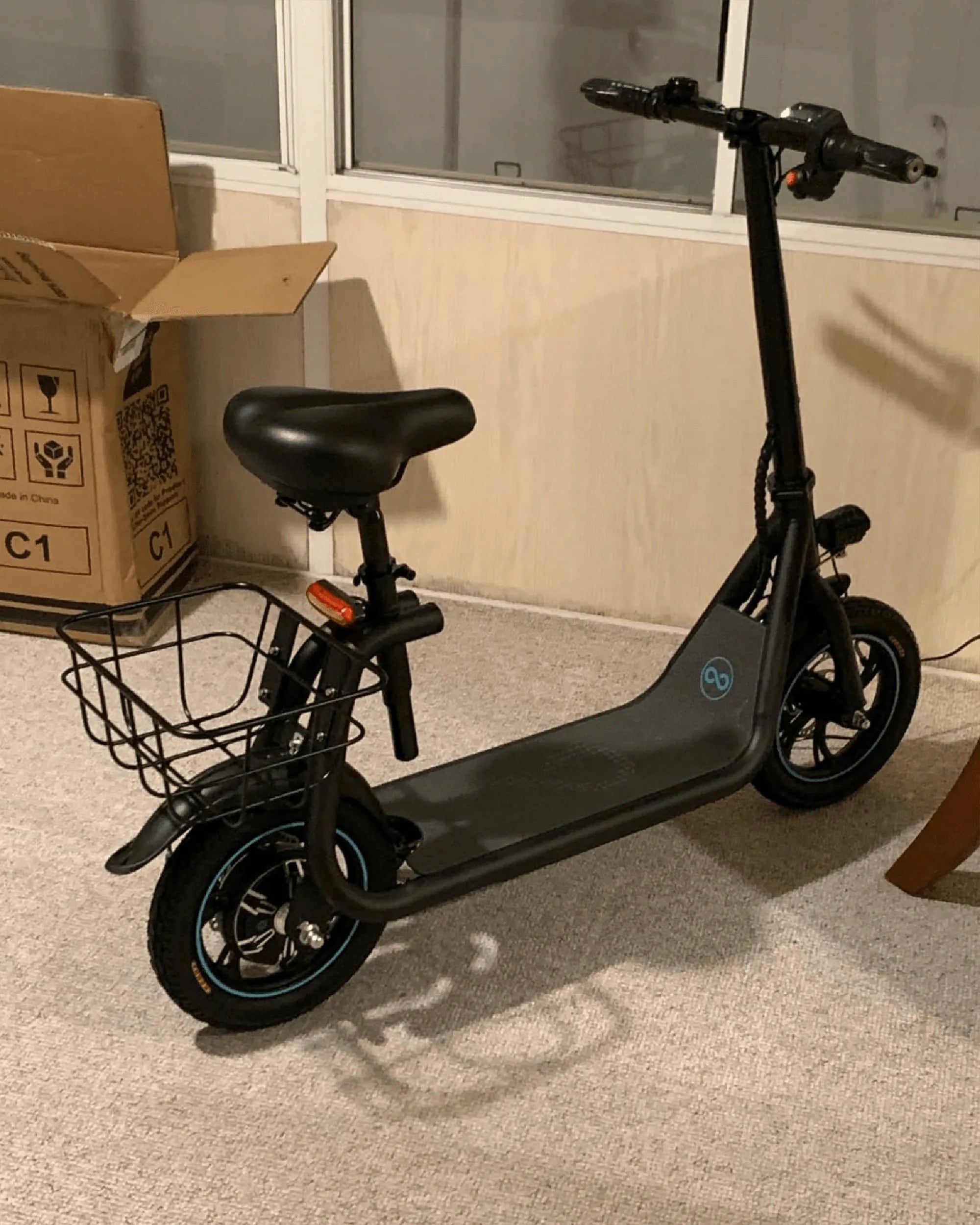
Navigating the UK's E-Scooter Landscape
Can you ride electric scooters in the UK? The answer is both yes and no, creating a landscape that confuses many. The legality hinges entirely on *where* you ride and *what* you're riding. This guide provides definitive clarity on the UK's unique and evolving rules for electric scooters.
Privately owned e-scooters remain illegal to use on public roads, cycle lanes, and pavements under current law. However, government-approved rental trials have made certain e-scooters legal in specific towns and cities across the country. This creates a dual system that is critical to understand before you ride.
We will dissect the legal framework, provide a step-by-step guide to using rental schemes safely, and offer crucial advice for those considering a purchase for use on private land. Understanding these distinctions is not just about avoiding fines—it's about ensuring your safety and the positive future of micro-mobility in the UK.
The Legal Framework: Public Roads, Pavements, and Private Land
The UK government classifies privately owned e-scooters as "Powered Transporters." Under the Highway Act 1835 and the Road Traffic Act 1988, these vehicles are considered motor vehicles. Consequently, they require insurance, tax, and registration to be used on public roads, which is currently impossible to obtain for standard e-scooter models.
This makes the use of a private e-scooter on any public land—including roads, cycle lanes, bridleways, and pavements—illegal. Riding one in these areas can result in a £300 fixed-penalty notice, six penalty points on your driving licence, and potential seizure of the scooter by police. The only place you can legally ride a private e-scooter is on private land with the explicit permission of the landowner.
In stark contrast, selected rental e-scooters operating in official Department for Transport (DfT) trial areas are granted legal exemptions. These trials, which began in 2020 and have been extended multiple times, are designed to gather data on safety and public impact. In these designated zones, rental scooters are legal to use on roads and in cycle lanes, but remain prohibited on pavements.
Understanding the Rental Trial Distinction
The rental scooters in trial areas are not the same as those you can buy online. They are specifically approved models with features like geofencing to control speed in pedestrian zones, unique identification numbers, and mandatory insurance provided by the operator. This legal distinction is why you can rent one legally in a trial town but cannot ride your own identical-looking model next to it on the same street.
Riding a Rental E-Scooter: Rules of the Road
To use a rental e-scooter legally, you must first be in one of the government-designated trial areas. Major cities like London, Bristol, and Manchester host trials, along with dozens of smaller towns. You typically locate and unlock a scooter via the operator's mobile app (e.g., Tier, Voi, Lime).
The app process enforces key legal requirements. You must have a valid full or provisional driving licence for categories AM, A, or B (car/motorcycle licence). The app will verify this digitally. You must also be at least 18 years old. Before your first ride, you are usually required to complete a brief online safety course within the app.
Once riding, you must follow all standard road traffic laws. This includes obeying traffic lights, stop signs, and giving way where appropriate. You must not ride on pavements—this is a primary source of conflict with pedestrians and can result in fines. The use of mobile phones while riding is also prohibited.
Operational Limits and Etiquette
Rental scooters in trials are speed-limited, typically to 15.5 mph (25 km/h). Geofencing technology may automatically reduce this speed in designated slow zones, such as high-footfall areas. You must ride solo; carrying passengers is illegal. It is also illegal to ride under the influence of alcohol or drugs. After your journey, you must park the scooter responsibly in a designated parking bay or a responsible location that does not obstruct pavements, roadways, or access points.
Safety First: Gear, Etiquette, and Best Practices
Safety is non-negotiable, whether on a trial rental or a private scooter on permitted land. A helmet is the most critical piece of safety equipment. While not legally mandatory for rental e-scooters in trials, it is strongly recommended by all safety bodies and can dramatically reduce the risk of head injury.
High-visibility clothing is essential, especially at night or in poor weather. Ensure the scooter's lights are functioning—rental models have built-in front and rear lights. Conduct pre-ride checks: test the brakes, ensure tires are properly inflated, and check for any obvious damage to the frame or handlebars.
Ride defensively and predictably. Use clear hand signals to indicate turns. Be hyper-aware of your surroundings—watch for car doors opening, potholes, wet drain covers, and pedestrians stepping into your path. Assume that drivers may not see you. In wet conditions, reduce your speed significantly and brake earlier and more gently, as stopping distances increase and the risk of slipping is higher.
Adapting to UK Conditions
UK weather demands extra caution. Wet leaves, frost, and rain make surfaces slippery. Pneumatic (air-filled) tires, like those on many Gyroor models, offer better grip and shock absorption than solid tires in these conditions. Always allow more time for your journey in bad weather and plan your route to use quieter, well-maintained roads or cycle paths where legal.
Choosing the Right E-Scooter: Features for Private Land and Future Laws
While private use on public land is not yet legal, many purchase e-scooters for use on private property or in anticipation of future legislation. When choosing a model, selecting one that aligns with potential future UK regulations is wise. This "future-proofing" focuses on safety, reliability, and compliant specifications.
The expected legal framework for private e-scooters will likely mirror rental trial rules and European standards. Key features to prioritize include a maximum continuous motor power under 500W, a maximum speed capability of 15.5 mph (with a potential speed restrictor for road use), and effective braking systems. Dual braking (e.g., electronic plus disc brake) offers superior stopping power.
Tire choice impacts comfort and safety. Pneumatic tires absorb road vibrations better than solid tires, providing a smoother and more stable ride on uneven surfaces common in the UK. The build quality and water resistance rating are also crucial. Look for a robust frame and an IP rating (like IPX5) that guarantees protection against rain and water jets.
The Critical Importance of Battery Safety
The battery is the heart of an e-scooter and its greatest safety consideration. Insist on models with certified, high-quality battery packs. Brands like Gyroor use UL-certified battery packs tested for over 500 charge cycles, incorporating advanced Battery Management Systems (BMS) to prevent overcharging, overheating, and short circuits. This certification is a key indicator of long-term reliability and safety, far surpassing uncertified, potentially hazardous alternatives.
The Data: E-Scooter Trials, Safety, and Public Perception
The UK's rental trials have generated significant data. As of late 2023, over 50 trial areas were operational across England, with millions of trips completed. Data from individual operators, like Voi's trial in Birmingham, shows that a significant percentage of rides replace car journeys, contributing to reduced congestion and lower carbon emissions.
Safety data is closely monitored. While incidents occur, trial data often indicates that injury rates are comparable to or lower than those for cyclists when mileage is accounted for. Common factors in incidents include pavement riding, intoxication, and collisions with other vehicles. The trials have also highlighted the importance of infrastructure, such as dedicated cycle lanes, in improving safety for all road users.
Public and parliamentary consultation on legalising private e-scooters is ongoing. The government's focus is on creating a regulatory framework that ensures safety standards, sets clear rules for where they can be used, and addresses concerns about pavement riding and parking. The future law will likely mandate technical standards for lights, brakes, and speed, and may require insurance for use on public roads.
| Feature | Rental Trial Scooter (Public Road Legal) | Private Scooter for Future-Proofing | Importance for UK Use |
|---|---|---|---|
| Max Speed | Limited to 15.5 mph | Capable of 15.5 mph (restrictable) | Aligns with expected future law |
| Motor Power | Typically 350W-500W | Under 500W continuous output | Likely regulatory limit |
| Braking System | Dual brakes (e.g., electronic + disc) | Dual mechanical/disc brakes | Essential for wet weather stopping |
| Tire Type | Often pneumatic | Pneumatic recommended | Better grip & comfort on UK roads |
| Battery Certification | Insurance-approved standards | UL-certified (e.g., Gyroor standard) | Critical for long-term safety & reliability |
| Lighting | Integrated front & rear, reflectors | Powerful, always-on lights | Legal requirement & visibility |
Frequently Asked Questions (FAQ)
Do I need insurance to ride a rental e-scooter?
No, not personally. A key part of the government trial approval requires the rental operator to provide insurance cover for the rider as part of the rental fee. This is a fundamental difference from private e-scooters, which currently cannot be insured for road use.
Can I use my European e-scooter in the UK?
You can own it, but the same UK legal restrictions apply. Regardless of where it was purchased, a private e-scooter is classified as a Powered Transporter and is illegal to use on public roads, cycle lanes, and pavements in the UK. It may only be used on private land with permission.
What are the penalties for illegal use of a private e-scooter?
Penalties are severe. Police can issue a £300 fixed-penalty notice and add six penalty points to your driving licence. If you do not have a licence, you could be prosecuted for driving without insurance and without a licence, leading to a larger fine and possible disqualification from future licensing. The scooter can also be impounded.
Are e-bikes treated the same as e-scooters?
No. Electrically Assisted Pedal Cycles (EAPCs) that meet specific regulations (250W max power, motor assists only up to 15.5 mph) are legally treated as bicycles. They can be used on public roads, cycle paths, and anywhere a traditional bicycle can go, without the need for insurance, tax, or a licence. This is a completely separate legal category.
When will private e-scooters be legalised?
There is no confirmed date. The government has run consultations and is analysing trial data. Legalisation requires new primary legislation, which must pass through Parliament. While there is political momentum, it is unlikely to happen before 2025 at the earliest. Any law will come with strict safety and usage conditions.
Riding Responsibly Towards the Future
The path to widespread e-scooter use in the UK is being paved by data from the rental trials and responsible rider behaviour. The current message is clear: if you wish to ride legally on public roads, you must use an approved rental scooter within a trial area and follow all the associated rules. For private scooters, the legal use remains firmly on private land.
The future of private e-scooter legality hinges on proving they can be integrated safely into the UK's transport ecosystem. This means riders must champion safe practices—wearing helmets, respecting pedestrians, and obeying traffic laws—to build positive public perception. The demand for clear, fair regulation is high, and the environmental and congestion benefits are significant.
When the law changes, the market will be ready with reliable, well-engineered options. Trusted brands like Gyroor, with their commitment to UL-certified batteries, IP-rated water resistance, and robust safety features, exemplify the standards that will define the next generation of personal electric transport in the UK. Choosing quality and safety today prepares you for the roads of tomorrow.
Ready to explore premium, safety-focused electric mobility options for use on private land? Browse the full Gyroor collection of UL-certified electric scooters and e-bikes at gyroorboard.com.
Top Ten Best Electric Scooters for Every Rider in 2024: A Data-Driven Guide
Electric Riding Scooters for Sale: Your Ultimate Buying Guide