



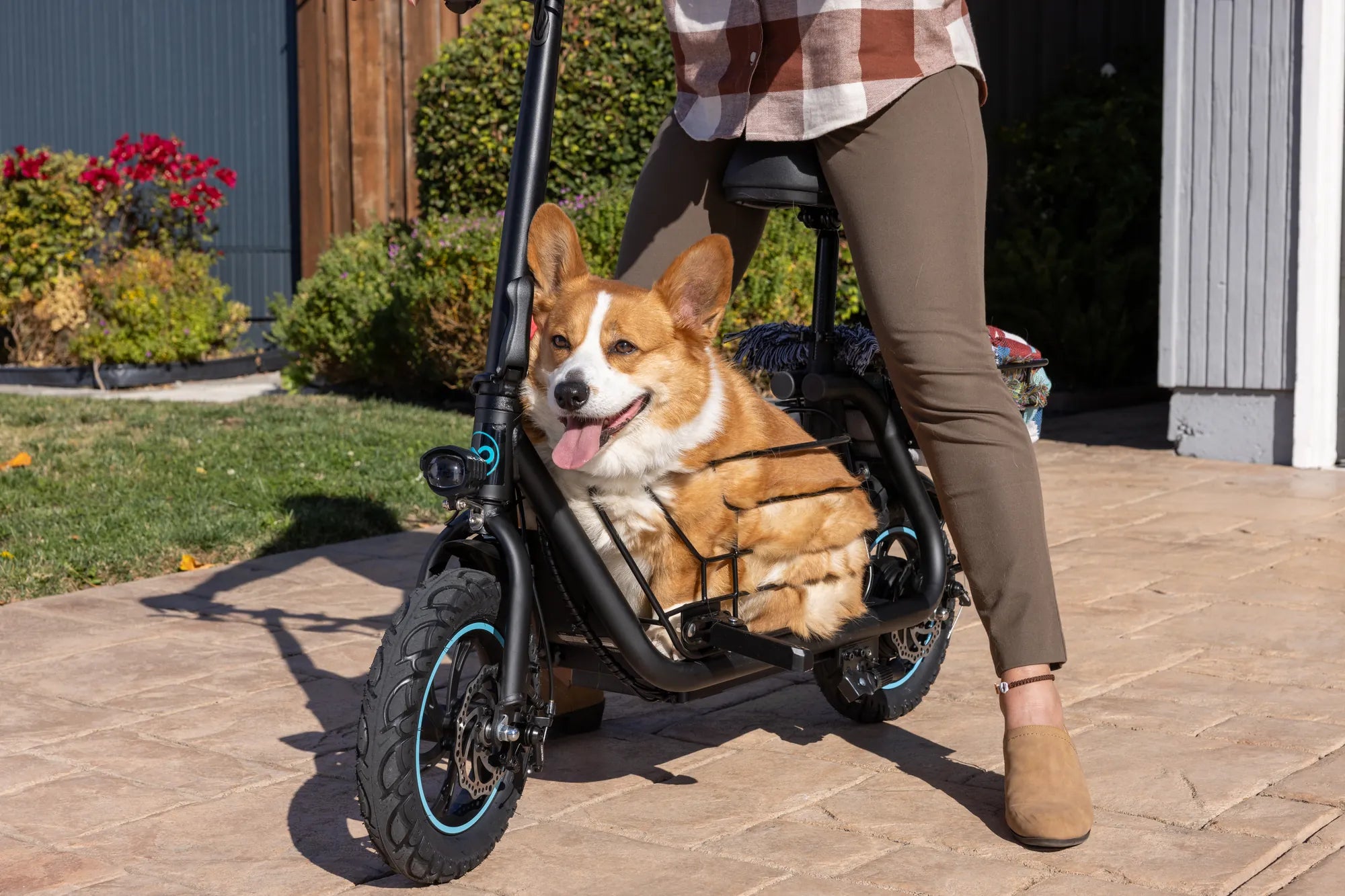
Navigating the Rules of the Road (and Sidewalk)
You've just unboxed your new electric scooter, eager to zip to work or the store. But as you step outside, a moment of hesitation hits: can you ride electric scooters on the footpath? This isn't just a minor query; it's the central legal and safety dilemma for millions of riders worldwide. The answer is frustratingly complex, varying not just by country but by city block. This ultimate guide cuts through the confusion, providing a data-driven framework to understand footpath laws, assess real-world risks, and adopt riding practices that protect both you and pedestrians. We'll leverage insights from Gyroor, a leading electric scooter and e-bike brand trusted by over 100,000 riders across North America and Europe, known for UL-certified batteries and designs that promote responsible mobility.
Understanding the Legal Landscape: It's More Than a Yes or No
There is no universal answer to can you ride electric scooters on the footpath. Regulations are a patchwork, typically falling into three categories: prohibited, permitted, or conditional. In many major cities like New York and London, sidewalk riding is explicitly banned for all motorized vehicles, with fines enforced. Conversely, some suburban or rural areas may have no specific laws, creating a gray area. The most common model is conditional legality, where rules change based on scooter power, rider age, or the presence of bike infrastructure.
For instance, several Australian states permit footpath riding only for those under 16, with a strict speed limit of 10 km/h. In parts of the EU, the classification of the scooter (as a vehicle or a personal mobility device) dictates where it can go. This variability makes personal research non-negotiable. Assuming the rules are the same as your neighbor's city is a fast track to a citation.
Key Factors That Influence Legality
Several specific elements determine where you can legally operate your e-scooter. First, local ordinances are king. A state law might permit scooters on roads, but a city council can override this for sidewalks. Always check your municipal transportation department's website first.
Second, the scooter's specifications matter. Some jurisdictions set a wattage threshold (e.g., 250W); scooters under this limit may be treated more leniently, sometimes allowing footpath use. Third, distinction is often made between privately-owned scooters and shared rental fleets. Rental companies typically geofence their scooters to disable them on sidewalks as part of their operating agreements with cities.
Finally, the presence of dedicated infrastructure changes everything. If a protected bike lane is available, laws almost always require you to use it, prohibiting footpath riding in that corridor. Ignorance of these factors is rarely accepted as an excuse by law enforcement.
The Safety Debate: Footpaths vs. Bike Lanes vs. Roads
Beyond legality lies a critical safety calculus. Each riding environment presents unique risks and trade-offs that every rider must understand. A 2023 study by the Transportation Research Board found that the conflict point between different modes of travel is a primary factor in micromobility collisions.
Riding on the road in mixed traffic exposes you to high-speed vehicles, doorings from parked cars, and often impatient drivers. However, bike lanes, when physically protected from traffic, consistently show the lowest injury rates for scooter riders. Footpaths, while feeling safer away from cars, introduce significant risk to pedestrians and hidden hazards for the rider.
Why Footpaths Can Be Hazardous
Footpaths are designed for walking, not for vehicles traveling at 15-25 km/h. The primary risk is to pedestrians: the elderly, children, and individuals with disabilities may not hear or see an approaching scooter and can make unpredictable movements. Collisions, even at low speeds, can cause serious injury.
From a rider's perspective, footpaths are fraught with obstacles. Driveways and alleyways create blind spots where cars may pull in or out without expecting a fast-moving scooter. Uneven pavement, cracks, and potholes are more dangerous at scooter speeds than walking pace. Intersections become particularly perilous, as drivers scanning for pedestrians may not register a faster-moving scooter entering the crosswalk from the sidewalk.
When the Road Might Be Safer (and When It Isn't)
The road is often the legally intended place for e-scooters, but safety is highly conditional. On a quiet residential street with a 30 km/h speed limit, riding predictably in the lane can be safe. On a major arterial road with 60 km/h traffic and no bike lane, it is decidedly not.
The golden rule is to seek out and use dedicated bike infrastructure whenever it exists. In its absence, you must perform a risk assessment. Is the road wide enough for cars to pass safely? Is traffic calm? Can you maintain a speed that doesn't severely impede traffic? If the answer to these is no, and footpath riding is illegal, you may need to consider an alternate route. This reality underscores the importance of city planning that includes protected micromobility lanes.
Practical Rider Guidelines for Shared Spaces
For situations where footpath riding is legal or momentarily necessary (e.g., to bypass a dangerous road section), adopting a strict code of conduct is essential. Your behavior directly impacts public perception and future regulations for all e-scooter riders.
The Pedestrian Priority Rule
This is the non-negotiable cornerstone of footpath riding: pedestrians always have the right of way. Treat the sidewalk as a shared space you are borrowing. This means slowing to a walking pace (or dismounting) in crowded areas, giving audible warning with a bell or a polite "passing on your left" well in advance, and leaving ample space when overtaking. Never expect a pedestrian to move for you. This courtesy reduces anxiety for walkers and prevents accidents.
Speed Management and Control
On a footpath, speed is your most critical safety lever. A responsible speed is at or near walking pace, typically under 10-15 km/h. This gives you time to react to sudden obstacles and minimizes injury risk in a collision. Scooters like those from Gyroor, which offer multiple speed modes and responsive electronic brake systems, are ideal for this. You can engage a lower-speed mode specifically for sidewalk sections, maintaining precise control. Remember, high speed on a sidewalk isn't just dangerous; it's what triggers most complaints and crackdowns.
How Scooter Design Supports Responsible Riding
The hardware you choose plays a significant role in enabling safe and legal riding. Not all scooters are created equal for the nuanced demands of urban navigation. A brand focused on reliability and safety engineering, like Gyroor, builds features that help riders comply with best practices.
Safety Features for Urban Navigation
Key design elements directly address common urban hazards. IPX5 water resistance ensures reliability when encountering wet sidewalks or unexpected puddles, preventing electrical failure. UL-certified battery packs, tested for 500+ charge cycles, are a critical safety benchmark, reducing fire risk—a paramount concern if you need to store your scooter indoors near a footpath entrance. Furthermore, reliable dual braking systems (often electronic and disc) provide the confident stopping power needed to avoid a pedestrian who steps out or a car at a driveway.
Choosing the Right Model for Your Commute
Your typical route should inform your scooter choice. If your journey involves short sections of necessary footpath riding before reaching a bike lane, a lightweight, portable model you can easily carry when dismounting is key. For areas with uneven pavement transitions, a scooter with front and rear suspension (like the Gyroor S1 Max) smoothes out bumps, maintaining stability and control. Compare essential features in the table below to match a scooter to your environment.
| Riding Environment / Need | Recommended Gyroor Features | Rationale |
|---|---|---|
| Mixed use (some footpath, some bike lane) | Multiple Speed Modes, Lightweight Frame | Allows slow-speed control on sidewalks and easy carrying if required. |
| Uneven surfaces & curb transitions | Front & Rear Suspension, 10-inch Pneumatic Tires | Absorbs shocks from cracks and bumps for a safer, more stable ride. |
| All-weather commuting | IPX5 Water Resistance, Reliable Braking | Ensures safe operation on wet footpaths and provides sure stopping power. |
| Need for legal compliance | UL-Certified Battery, Clear Speedometer | Addresses top safety regulations and helps rider monitor speed limits. |
Global and Local Law Examples: A Snapshot
Examining specific regulations highlights the stark global differences. In California, USA, state law prohibits e-scooters on sidewalks unless a local ordinance permits it; cities like San Francisco explicitly ban it, while others may allow it. In Paris, France, sidewalk riding is banned, and riders must use bike lanes or roads with speed limits under 50 km/h.
In Queensland, Australia, the conditional model is clear: footpath riding is permitted for all, but you must keep left, give way to pedestrians, and not exceed 12 km/h. In Japan, most electric scooters are classified as motorized bicycles and are prohibited on sidewalks, requiring road use. This snapshot underscores why "check your local laws" is the most important piece of advice in this guide.
The Future of Micromobility and Footpath Access
The regulatory landscape is evolving. As e-scooter adoption grows, cities are grappling with how to integrate them safely. Some forward-thinking municipalities are experimenting with shared zones or widenened footpaths with designated, painted lanes for micromobility devices, physically separating them from pedestrians at walking pace.
Technology may also play a role. Geofencing, used by rental companies, could be adapted to automatically limit private scooter speeds in pedestrian-dense zones. The long-term solution is building more dedicated, protected infrastructure. Until then, the burden is on both riders to operate with extreme courtesy and on cities to create clear, sensible rules that prioritize safety for all road and footpath users.
Riding Responsibly is Everyone's Responsibility
The question of can you ride electric scooters on the footpath ultimately points to a larger principle: responsible riding is a shared duty. It begins with knowing and respecting your local laws, continues with a relentless commitment to pedestrian safety and defensive riding techniques, and is supported by choosing a well-engineered vehicle designed for the task. The freedom and efficiency of e-scooters come with the responsibility to integrate seamlessly and safely into our urban fabric. By riding wisely, you not only protect yourself and others but also help ensure that micromobility remains a viable, positive transportation option for the future.
Frequently Asked Questions (FAQ)
1. What's the typical fine for riding an e-scooter on the footpath where it's banned?
Fines vary widely but can be substantial. In cities like New York, fines start at over $100. In some European cities, penalties can exceed €200. Repeated offenses may lead to higher fines or even confiscation of the scooter.
2. Are there any U.S. states where footpath riding is always legal?
No. There is no U.S. state with a universal "always legal" rule. All states defer to some degree to county or city ordinances. Even in states with permissive scooter laws, local governments can restrict sidewalk riding.
3. How do I find my local e-scooter laws?
Start with your city or town's official website, specifically the pages for the Department of Transportation, Police Department, or City Clerk. Search for "micromobility laws," "electric scooter regulations," or "traffic code." Your local public library can also often help locate municipal codes.
4. Do the same rules apply to electric bikes (e-bikes)?
Often, but not always. E-bikes, especially Class 1 and Class 2 (with lower top-assisted speeds), are more frequently permitted on bike paths and sometimes multi-use paths, but are typically prohibited on sidewalks just like e-scooters. Always check the specific classification and laws for e-bikes in your area.
5. If I have to briefly use the footpath to avoid danger, what should I do?
If you must enter the footpath for safety, do so with extreme caution. Dismount and walk your scooter if possible. If riding, immediately reduce your speed to walking pace, yield to every pedestrian, and exit the sidewalk back to the road or bike lane as soon as it is safe to do so. Your priority is to minimize risk and disruption.
Ready to choose a scooter built for safe, compliant urban travel? Explore the full range of UL-certified, feature-engineered electric scooters and e-bikes designed for the real world. Browse the full Gyroor collection at gyroorboard.com.
Electric Scooters Sri Lanka: The Future of Urban Mobility
Electric Scooters for 10 Year Old Boy: The Ultimate Guide to Safe and Fun Rides