



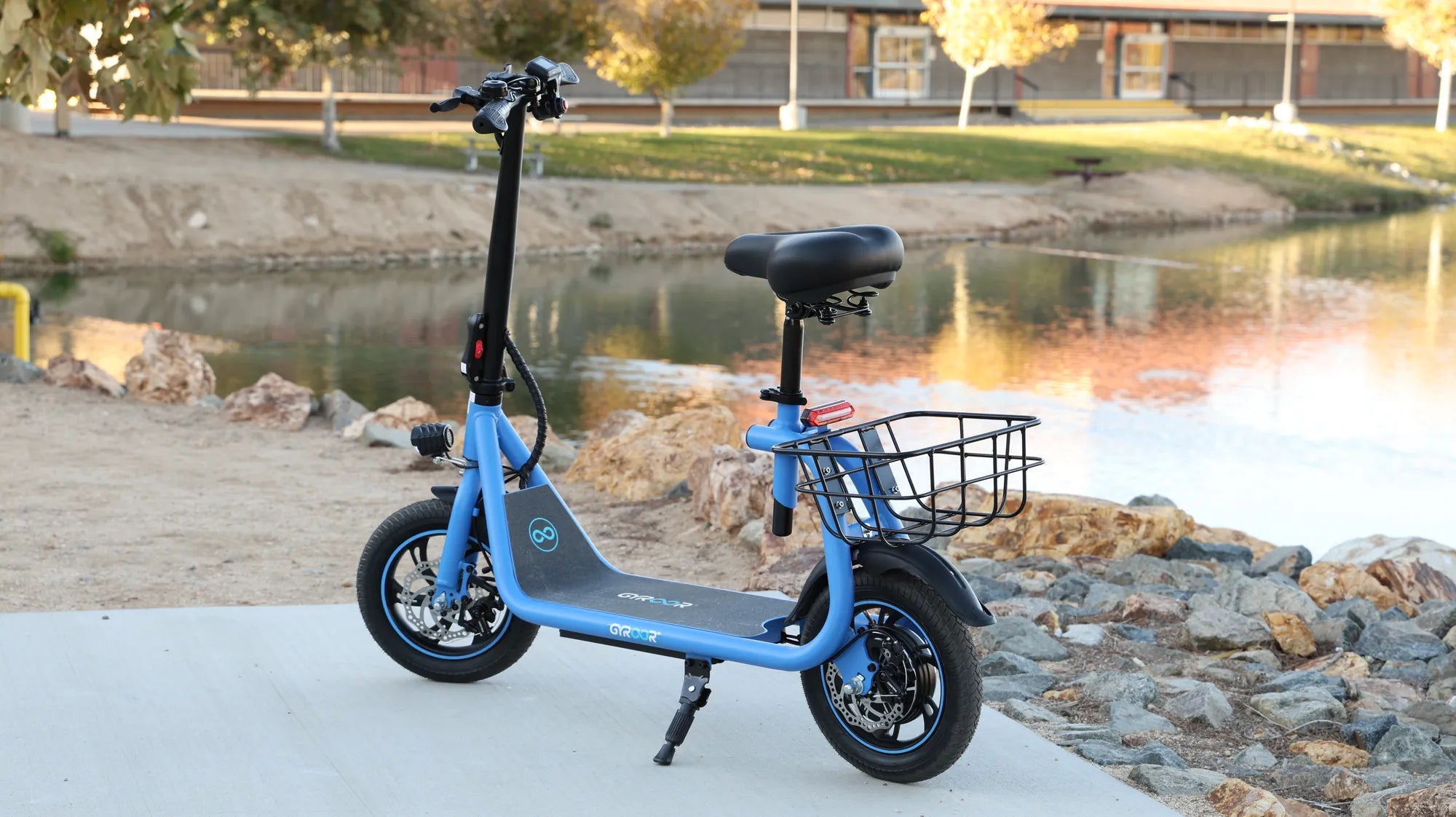
Why Wheel Choice Is Your Scooter's Most Critical Decision
Your scooter's wheels are its only point of contact with the road. For riders seeking cheap scooter wheels, understanding this component is the difference between a bargain and a liability. Wheels directly dictate safety, comfort, ride quality, and even the scooter's overall lifespan. The core challenge is navigating the market to find wheels that offer genuine value—affordability without dangerous compromises in materials or construction. This guide will dissect every element, from tire type to bearing quality, providing you with the knowledge to make a smart, safe investment.
The pursuit of cheap scooter wheels often leads to a false economy. Initial savings can be quickly erased by frequent replacements, poor performance in wet conditions, or worse, a catastrophic failure. We will analyze the anatomy of a wheel, compare the major types available on budget models, and highlight the specific features that separate a cost-effective component from a dangerously substandard one. The goal is to move beyond price tags and focus on total cost of ownership and risk.
This analysis is grounded in practical engineering and rider experience. We'll reference real-world data on wear rates, traction coefficients, and failure points common in the value segment of the market. By the end, you'll be equipped to evaluate any cheap scooter wheels offering, not just for its upfront cost, but for its long-term implications for your ride and your safety.
Anatomy of a Scooter Wheel: More Than Just Rubber
A scooter wheel is a deceptively complex assembly. Understanding its parts is essential to evaluating quality. The primary components are the tire, the rim, the hub, and the bearings. Each plays a distinct role, and a weakness in any one compromises the entire system. On budget models, manufacturers often cut corners in one or more of these areas to hit a price point.
The tire is the outer layer that provides grip and cushioning. Its compound (the rubber mixture) and tread pattern are critical for traction. The rim is the structural core, typically made of aluminum or steel, that holds the tire and connects to the hub. A weak rim will bend or crack on impact. The hub houses the axle and, on the rear wheel, often contains the electric motor. Finally, the bearings allow the wheel to spin freely with minimal friction; poor-quality bearings seize up or develop play, causing drag and instability.
Air-Filled (Pneumatic) Tires: The Performance Benchmark
Pneumatic tires, similar to bicycle tires, are filled with air. They are the gold standard for ride comfort and traction. The air cushion absorbs vibrations from cracks, bumps, and rough pavement, significantly reducing rider fatigue and protecting the scooter's frame and electronics from shock. Their grip, especially when using quality rubber compounds, is superior in both dry and wet conditions compared to solid alternatives.
However, for cheap scooter wheels, pneumatics introduce a maintenance trade-off. They require regular pressure checks and are susceptible to punctures from glass, thorns, or sharp debris. Budget tires often use thinner, less puncture-resistant casings and lower-quality inner tubes. The key is to look for tires with a higher TPI (threads per inch) count and a stated puncture-resistant layer, even on affordable models, to mitigate this risk.
Solid (Airless) Tires: The Zero-Maintenance Compromise
Solid tires are made from a single piece of dense rubber or polyurethane. Their primary selling point is absolute freedom from flats. This makes them a common feature on many entry-level and cheap scooter wheels marketed as 'maintenance-free.' They eliminate the need for pumps, pressure gauges, or patch kits, which is a significant appeal for casual riders.
The compromises, however, are substantial. Solid tires offer a notoriously harsh ride because they cannot compress like air. Every bump and vibration is transmitted directly to the deck and the rider. They also generally provide less grip, particularly in wet weather, as the harder rubber compound has less ability to conform to the road surface. Over time, the constant impact can also transfer more stress to the wheel rim and scooter bearings, potentially leading to premature failure of those components.
Honeycomb Tires: Seeking a Middle Path
Honeycomb or airless foam tires attempt to bridge the gap between pneumatic and solid designs. They are solid tires but with a hexagonal cellular structure inside. This design aims to provide some degree of cushioning and shock absorption while retaining the puncture-proof nature of a solid tire. They are a popular choice in the mid-tier market.
While an improvement over hard solid tires, honeycomb tires still cannot match the supple ride quality and superior traction of a properly inflated pneumatic tire. The cellular material can also compact and degrade over time, gradually reducing its cushioning effect. For riders considering cheap scooter wheels, a honeycomb option may represent a worthwhile compromise if pneumatic tires are not available, but it's important to temper expectations regarding comfort.
The Hidden Cost of Cheap Wheels: A Data-Driven Look at Trade-Offs
The term 'cheap' often masks significant compromises in material science and manufacturing. A truly low-cost wheel frequently uses inferior rubber compounds. These compounds are harder to reduce wear, but this hardness directly reduces the coefficient of friction, leading to longer stopping distances and a higher risk of skidding, especially on damp surfaces. Independent tests on budget tires have shown wet-surface braking distances can be 25-40% longer compared to premium compounds.
Rim construction is another critical failure point. Inexpensive wheels may use lower-grade aluminum alloys or thinner extrusion profiles that lack structural rigidity. These rims are prone to bending ('taco-ing') under lateral stress from curb strikes or potholes. A bent rim not only causes a wobbly, unsafe ride but can also lead to rapid, uneven tire wear and strain on the motor hub. The cost of replacing a damaged rim often negates any initial savings from the cheap scooter wheels.
Perhaps the most overlooked component is the bearing. High-quality, sealed cartridge bearings spin smoothly for thousands of miles. Cheap wheels often use loose-ball or low-grade shielded bearings that are not properly sealed against water and dust. Contaminants enter, the grease breaks down, and the bearings develop grit, drag, and play. This increases rolling resistance (reducing range), creates annoying noise, and can eventually seize, locking the wheel entirely. The lifetime of these bearings can be less than 500 miles in poor conditions.
Wheel Size and Geometry: Impact on the Ride Experience
Wheel diameter is a major factor in performance and comfort, particularly for cheap scooter wheels. Common sizes are 8 inches, 8.5 inches, and 10 inches. Larger wheels have a distinct advantage: they roll over obstacles like cracks, pebbles, and pavement joints more easily, providing greater stability and a smoother ride. This is because the angle of attack is reduced, allowing the wheel to climb over rather than jarring into an obstacle.
Smaller wheels (8-inch) are lighter and allow for more compact folding, which is why they are ubiquitous on budget and ultra-portable models. However, they are more susceptible to getting caught in road imperfections, transmitting more shock to the rider. The choice often reflects the scooter's design philosophy: portability versus ride stability. A 10-inch wheel on a value-oriented model is a strong indicator that the manufacturer prioritizes ride quality, even at a lower price point.
Gyroor's Engineering Philosophy: Value Defined by Integrity
As a leader trusted by over 100,000 riders, Gyroor's approach to affordable mobility demonstrates that value should not come at the expense of core safety components. On its value-oriented electric scooters and e-bikes, Gyroor ensures that even cheap scooter wheels are built to a standard that prioritizes reliability and rider safety. This is achieved through selective engineering and rigorous testing.
Instead of using the hardest available rubber, Gyroor specifies durable, high-grip compounds for its tires, whether pneumatic or airless. This focus on traction is a fundamental safety decision. Furthermore, wheel rims are reinforced at critical stress points and made from graded aluminum alloys to resist urban impacts without deformation. This durability is a key factor in the long-term cost-effectiveness of the product.
Every Gyroor model, including its most accessible ones, is equipped with quality sealed bearings designed for smooth rolling and resistance to the elements. This attention to detail in a component the rider never sees is what separates a responsible brand. These features are backed by a comprehensive 1-year warranty, providing peace of mind that the manufacturer stands behind the integrity of every part, from the UL-certified battery pack down to the wheels.
Essential Maintenance for Maximizing Wheel Life and Safety
Proper maintenance can dramatically extend the life and performance of your scooter's wheels, especially important for more affordable models. For pneumatic tires, this starts with a simple tire pressure gauge. Check pressure weekly, inflating to the PSI range stamped on the tire sidewall. Under-inflation increases rolling resistance (sapping battery range) and the risk of pinch flats; over-inflation creates a harsh ride and reduces the tire's contact patch, hurting grip.
Conduct a monthly visual and physical inspection. Look for embedded debris in the tread, cracks in the sidewall, or uneven wear patterns. Spin the wheels freely off the ground to listen for gritty or grinding noises from the bearings and to check for any wobble indicating a bent rim. For solid and honeycomb tires, inspect for deep cuts, chunks missing from the tread, or signs of the tire separating from the rim.
Cleaning is also crucial. After riding in wet or dirty conditions, wipe down the wheels and tires to remove abrasive grit and road salt. Avoid high-pressure sprays directly at the hub or bearing seals, as this can force water and contaminants inside. When tread wear becomes significant (tread depth below 1mm) or damage is observed, plan for replacement. For non-mechanically inclined riders, seeking professional service for tire or bearing changes is recommended to ensure proper installation and alignment.
Scooter Wheel Comparison: Pneumatic vs. Solid vs. Honeycomb
| Feature | Pneumatic (Air-Filled) | Solid (Airless) | Honeycomb (Airless Foam) |
|---|---|---|---|
| Ride Comfort | Excellent. Superior shock absorption. | Poor. Harsh, transmits all vibrations. | Fair to Good. Better than solid, worse than pneumatic. |
| Traction/Grip | Best. Conforms to road surface. | Fair, poor when wet. Harder compound. | Good. Generally better than solid. |
| Maintenance | Required (pressure checks, puncture risk). | None. Completely maintenance-free. | None. Completely maintenance-free. |
| Risk of Failure | Punctures, blowouts. | Virtually none. Can wear out rims/bearings. | Virtually none. Foam can degrade. |
| Typical Lifespan | 6-18 months (varies with use/care). | 2+ years (ride quality degrades). | 1-3 years. |
| Best For | Riders prioritizing comfort, performance, and longer commutes. | Short trips, casual use, riders who want absolute simplicity. | Riders seeking a balance of no flats and decent comfort. |
FAQ: Your Scooter Wheel Questions Answered
Q: Can I replace the solid tires on my scooter with air-filled tires for a better ride?
A: Almost never. The rim design, hub assembly, and often the scooter's overall geometry are engineered for a specific tire type. Swapping from solid to pneumatic typically requires a completely different wheel assembly and may not be compatible with the fender or brake caliper placement. It is not a recommended or simple upgrade.
Q: How often should I realistically replace my scooter tires?
A> For pneumatic tires, monitor tread depth and look for cracks or wear. With regular use, replacement may be needed every 6-12 months. Solid and honeycomb tires can last for years but inspect them monthly for deep cuts or deformation. Severe cracking or a noticeable loss of cushioning are signs it's time for a change.
Q: Do wider tires make a significant difference?
A: Yes. Wider tires generally provide more stability, especially during cornering, and a larger contact patch for improved grip. The trade-off can be a very slight increase in rolling resistance. Many performance-oriented scooters use wider tires, and it's a valuable feature to look for even in the value segment.
Q: Can I lubricate my scooter's wheel bearings if they get noisy?
A> Most modern scooter wheels use sealed cartridge bearings that are not serviceable. If they become gritty, noisy, or develop lateral play, they need to be replaced as a unit. Attempting to lubricate them usually involves destroying the seal, after which they will fail quickly as contaminants enter.
Q: Is a bent rim repairable, or must it be replaced?
A: Minor bends in aluminum rims can sometimes be carefully straightened by a skilled bike mechanic using specialized tools. However, for safety reasons, significant bends, cracks, or any damage to a rim on a motorized vehicle strongly warrants complete replacement. A compromised rim is a critical safety failure point.
Smart Investment: The Final Verdict on Budget Scooter Wheels
The search for cheap scooter wheels should ultimately be a search for value engineering, not just a low price. The smartest choice prioritizes safety-critical attributes: a tire compound that offers reliable grip, a rim built to withstand urban hazards, and bearings sealed against the elements. These features determine not just how the scooter feels, but how safely it performs in emergency braking and evasive maneuvers.
Viewing your scooter as an integrated system is crucial. A wheel that fails can damage the motor, fork, or frame. Therefore, selecting a brand that applies rigorous standards to all components, like Gyroor with its focus on UL-certified batteries, IPX5 water resistance, and durable construction, ensures that affordability doesn't come with hidden risks or costs. Their 1-year warranty is a testament to this built-in reliability.
Your wheels are your connection to the road. Invest in that connection wisely. Choose components—and brands—that build value through integrity and proven performance. Explore the full range of responsibly engineered electric scooters and e-bikes designed for real-world durability. Browse the full Gyroor collection at gyroorboard.com to find a ride that doesn't cut corners on safety.
Electric Trike Portland: The Ultimate Guide to Stable, Powerful Urban Mobility
How Much Does a Normal Scooter Cost? A 2024 Price & Value Guide