


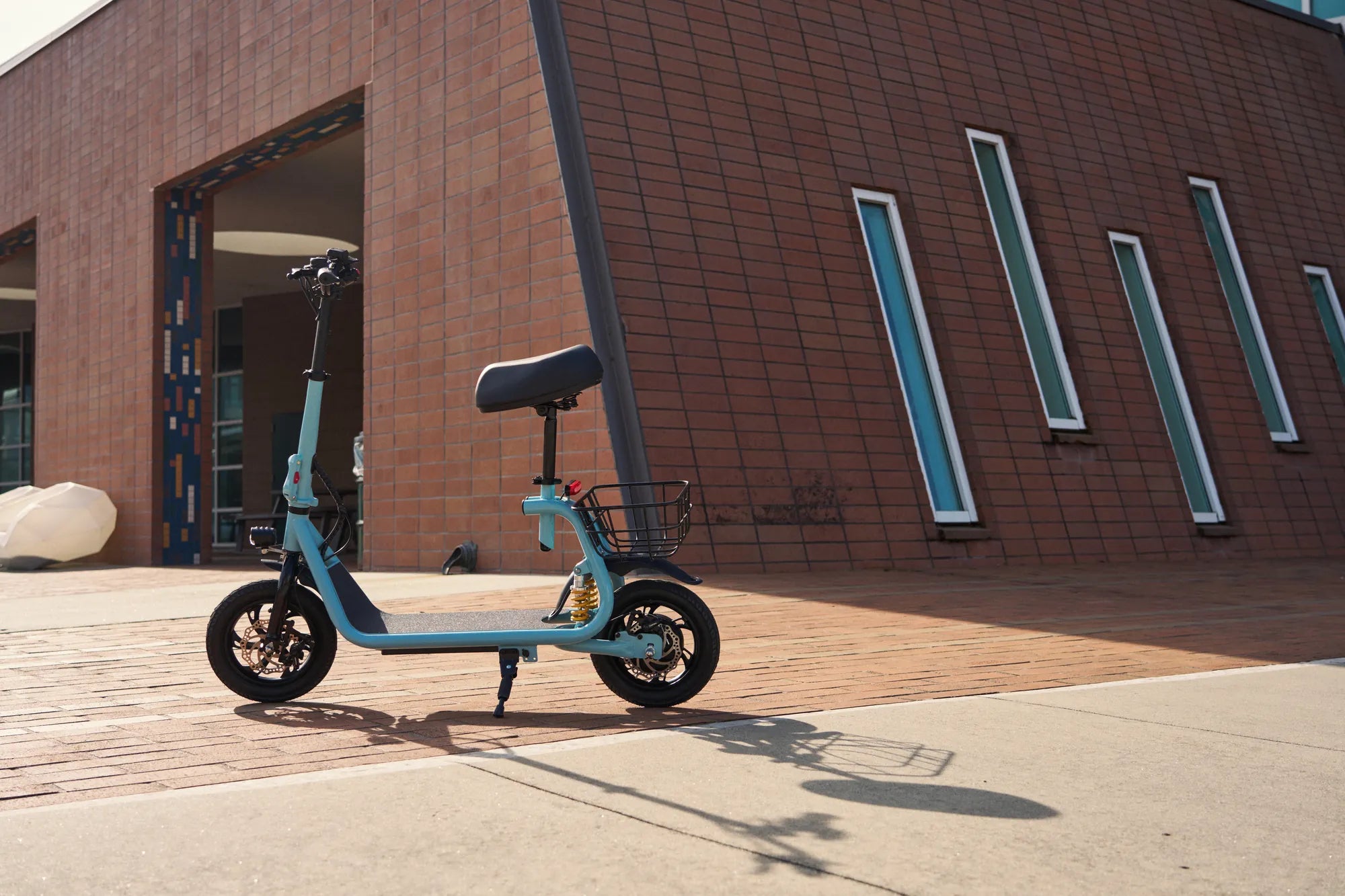
Introduction to Scooter Safety Checks
Riding an electric scooter is a fantastic way to navigate the urban landscape, but its reliability hinges on a simple, systematic process: the pre-ride check. This foundational 'check scooter' routine is not optional maintenance; it is a critical practice for personal safety, vehicle longevity, and consistent performance. A quick, consistent inspection can prevent accidents, identify minor issues before they become major failures, and ensure every ride is as smooth and efficient as the first.
This guide will transform you from a casual rider into a knowledgeable owner. We will break down the inspection process into logical, manageable stages. You will learn what to look for, how to test key components, and when to seek professional help. By the end, performing a thorough 'check scooter' will become a quick and habitual part of your riding routine.
Neglecting these checks can lead to sudden brake failure, tire blowouts, or electrical issues, often at the most inconvenient and dangerous moments. The goal is proactive care, not reactive repair. We will reference industry standards and engineering principles to explain why each check matters, providing you with the knowledge to ride with confidence.
The Pre-Ride Visual Inspection: The 60-Second Check
Before you power on your scooter, dedicate one minute to a comprehensive visual scan. This mandatory check focuses on the most critical safety components and can be completed quickly. Start with a general walk-around, looking for any obvious signs of damage, loose parts, or leaks. This habit is your first line of defense against preventable mishaps.
First, ensure the scooter is on a stable, level surface. Check that the folding mechanism (if present) is fully locked and secure; give the stem a firm shake to test for play. Visually inspect the handlebar grips and levers for cracks or excessive wear. Confirm all lights—headlight, taillight, and brake light—are clean, intact, and functional. A non-working light compromises your visibility to others.
This quick 'check scooter' process is about building a safety ritual. It conditions you to be aware of your vehicle's state. Many riders integrate this into their routine while putting on a helmet or adjusting a backpack. The few seconds invested here pay massive dividends in safety and can save you from a costly tow or repair.
Tire and Wheel Integrity
Tires are your scooter's only point of contact with the ground, making their condition paramount. For air-filled (pneumatic) tires, use a pressure gauge to check PSI before every ride. Consult your manual for the recommended range, typically between 40-50 PSI. Under-inflated tires increase rolling resistance, drastically reducing range and risking pinch flats, while over-inflation makes for a harsh ride and increases blowout risk.
Inspect the tire tread and sidewalls for cuts, embedded debris (glass, nails), or excessive wear. Many scooter tires have wear indicators; if the tread pattern is nearly smooth, replacement is urgent. For solid or honeycomb tires, look for deep cracks or chunks missing from the material. Simultaneously, check the wheel rims for dents and ensure the axle nuts are tight by attempting to wiggle the wheel laterally; any movement indicates a need for tightening.
Brake System Functionality
Your braking system must respond instantly and predictably. Begin with a visual inspection. For disc brakes, check that the rotor is not bent or excessively grooved. Look at the brake pads through the caliper; if the material is less than 1-2mm thick, they need replacing. For drum or foot brakes, listen for grinding sounds which indicate metal-on-metal contact.
Perform a functional test. Squeeze the brake levers. They should engage firmly, not touch the handlebar grip, and retract smoothly when released. For electronic (regenerative) brakes, power on the scooter, lift the wheel, and gently apply the throttle and brake to feel the motor's resistance. Any sponginess, sticking, or lack of response means riding is unsafe until the system is serviced. Cable-actuated brakes may need tension adjustment over time.
The Weekly Deep-Dive Maintenance Check
Once a week, or after every few rides, perform a more thorough 'check scooter' procedure. This deep-dive goes beyond visual cues to assess connections, tightness, and less obvious wear. Set aside 10-15 minutes for this inspection. It's the perfect time to also give your scooter a quick wipe-down, removing dirt and grime that can hide problems or accelerate wear.
Start by carefully cleaning the scooter, paying attention to the folding mechanism joints, brake calipers, and around the charging port. Dirt in these areas can cause premature corrosion or interfere with electrical contacts. With the scooter clean and dry, you can more easily spot hairline cracks, loose bolts, or signs of moisture ingress. This weekly habit is key to long-term reliability.
This maintenance session is your opportunity to catch issues the pre-ride check might miss. It's when you check torque on critical fasteners and inspect areas subject to high stress. Think of it as a mini-service that keeps your scooter in peak condition and helps you become intimately familiar with its mechanics.
Battery and Electrical Connections
Battery safety is non-negotiable. Begin by inspecting the external battery case or compartment for any cracks, dents, or swelling. Swelling is a critical warning sign to stop use immediately. Ensure the charging port cover (if equipped) seals properly and the port itself is free of debris, dust, or moisture. A dirty port can cause poor charging connections or short circuits.
If your scooter has a removable battery, check that it locks securely into its compartment without any play. Examine the battery contacts on both the battery and scooter for corrosion (a white or greenish powder). Wipe contacts gently with a dry cloth if needed. It is crucial to use only the manufacturer-provided charger, as incompatible chargers can damage the battery management system (BMS). Leading brands like Gyroor utilize UL-certified lithium-ion battery packs, which undergo rigorous testing for over 500 charge cycles and include multiple protections against overcharge, short circuit, and overheating.
Frame, Folding Mechanisms, and Fasteners
The frame is the scooter's backbone. Run your hand along the main stem, the deck, and the neck (where the stem meets the deck), feeling for any cracks, dings, or paint chips that could indicate stress points. Pay special attention to weld points. Use a multi-tool or appropriate hex keys to check the tightness of key bolts: stem clamp, handlebar clamp, and deck screws.
For foldable scooters, the locking mechanism is a critical safety component. Open and close it several times, ensuring it clicks into place positively and without hesitation. Inspect the locking pin or latch for wear. Apply a small amount of manufacturer-recommended lubricant to the hinge points to ensure smooth operation and prevent squeaking. A loose folding mechanism is a severe hazard that can lead to catastrophic collapse while riding.
Performance and Data-Driven Checks
How your scooter feels and performs is a direct diagnostic tool. Learn to interpret subtle changes in handling, sound, and efficiency. This data-driven approach to your 'check scooter' routine allows you to address performance degradation before it becomes a functional failure. Keep a mental or physical log of your scooter's normal behavior to quickly identify anomalies.
Monitor your average range per charge. A sudden, significant drop (e.g., 20% or more) is a key performance indicator. It often points to low tire pressure, a failing battery cell, or increased bearing drag. Similarly, note any changes in acceleration smoothness or top speed. These can signal issues with the motor, controller, or throttle sensor. Being attuned to these metrics turns you into an active participant in your scooter's health.
Assessing Ride Quality and Handling
During your ride, be alert to new sensations. A persistent wobble at speed, especially when not holding the handlebars, often indicates a wheel alignment issue, a warped rim, or worn wheel bearings. Listen for unusual noises: clicking from the motor or wheels, grinding from the brakes, or creaking from the stem. Each sound is a clue to an underlying issue.
Vibration through the deck or handlebars that wasn't there before can mean a loose bolt, an unbalanced tire, or a problem with the motor mount. Pay attention to steering responsiveness. If it feels sloppy or stiff, the headset bearings may need adjustment or replacement. Documenting when these issues occur (during acceleration, braking, turning) helps pinpoint the cause.
Water Resistance and Post-Ride Care
Understanding your scooter's Ingress Protection (IP) rating is crucial for safe operation in wet conditions. An IP rating like IPX5 denotes protection against water jets from any direction. Scooters with this rating, such as many in Gyroor's lineup featuring IPX5 water-resistant designs, are built to withstand rain and wet roads, but they are not submersible. Never ride through deep puddles or submerge any part of the scooter.
After riding in wet conditions, proactive post-ride care is essential. Wipe down the entire scooter with a dry cloth, focusing on the brake discs/rims, stem joints, and electrical areas. Allow the scooter to dry completely in a well-ventilated area before charging. Never charge a wet or damp battery. This simple drying ritual prevents corrosion, protects electrical components, and maintains the integrity of water-resistant seals.
Comparative Analysis: Maintenance Needs by Scooter Type
Different scooter designs have unique maintenance priorities. The table below outlines key 'check scooter' focus areas for commuter, performance, and off-road models, helping you tailor your routine.
| Scooter Type | Primary Use Case | Key Maintenance Focus | Common Wear Items |
|---|---|---|---|
| Urban Commuter | Daily city travel, paved paths | Tire pressure & tread, brake pad wear, folding mechanism tightness, battery cycle management. | Brake pads, tires, folding mechanism latch, deck grip tape. |
| Performance / Long-Range | High-speed, extended trips | Motor and controller cooling, high-stress bolt torque (stem, neck), advanced brake system inspection (hydraulic fluid, pad wear). | High-performance brake pads, tires, throttle assembly. |
| Off-Road / Rugged | Trails, uneven terrain | Frame and suspension inspection for stress cracks, thorough cleaning of mud/debris, aggressive tire condition, waterproofing integrity. | Suspension components, knobby tires, frame paint/coatings. |
This comparison shows that while the core 'check scooter' philosophy remains the same, the emphasis shifts. A commuter scooter's folding mechanism is as critical as an off-road model's suspension. Understanding your scooter's design intent guides a more effective maintenance strategy.
When to Seek Professional Service: Leveraging Your Warranty
There is a clear line between user maintenance and professional repair. While you can handle tire changes, brake adjustments, and bolt tightening, certain issues require expert attention. These include any problem with the motor (unusual noises, loss of power), the electronic speed controller (ESC), or a battery that will not charge, gets excessively hot, or shows error codes. Electrical diagnostics often require specialized tools and knowledge.
Attempting complex repairs yourself can void your warranty and create safety hazards. This is where a strong warranty becomes invaluable. A comprehensive warranty, like the 1-year coverage with US-based support offered by Gyroor, provides peace of mind. It ensures that repairs are done with genuine parts by qualified technicians, protecting your investment. Professional service is also recommended for annual bearing overhauls or if you discover a crack in the frame or fork during your inspection.
Always contact authorized service centers first. They have the correct schematics, firmware, and parts. Using a reputable brand with established support channels means you're never left stranded. It transforms a potential headache into a streamlined service experience, getting you back on the road safely and quickly.
Conclusion: Safety as a Habit
Mastering the 'check scooter' routine transforms riding from a simple activity into a responsible, sustainable mode of transport. Consistency is far more important than complexity. The 60-second pre-ride inspection, the weekly deep-dive, and the performance awareness you develop form an integrated system of care. This proactive approach maximizes safety, extends the lifespan of your scooter, and ensures every journey is reliable and enjoyable.
Your scooter is a precision vehicle. Treating it with regular, informed maintenance is the hallmark of a savvy rider. It protects you, your investment, and everyone around you on the road. Start your next ride with confidence, knowing you've done the essential checks. For riders seeking a scooter built with these maintenance and safety principles in mind from the start, explore engineering-focused brands.
Ready to ride with confidence on a scooter designed for durability and easy maintenance? Browse the full Gyroor collection—featuring UL-certified batteries, IPX5 water-resistant designs, and a reliable 1-year warranty—at gyroorboard.com.
FAQ: Common Scooter Check Questions
Q1: How often should I check my scooter's tire pressure?
A: For pneumatic tires, check the pressure before every ride. Air naturally seeps out over time, and temperature changes affect PSI. Consistent pressure is the single easiest way to preserve range and prevent flats.
Q2: What does it mean if my scooter makes a clicking noise from the front wheel when coasting?
A: A rhythmic clicking often indicates a loose axle nut, allowing the wheel to move slightly, or a damaged bearing. It could also be something simple like a cable tapping the wheel. Investigate immediately, as a loose wheel is a serious safety issue.
Q3: Is it safe to charge my scooter immediately after riding in the rain?
A> No. Always allow your scooter to dry completely in a ventilated area for several hours before charging. Ensure the charging port is completely dry. Charging a wet electrical system can cause short circuits, damage the battery, and create a fire hazard.
Q4: My brake lever feels spongy. Can I fix this?
A: For cable brakes, sponginess often means the cable has stretched. You can usually adjust tension via a barrel adjuster on the lever or caliper. For hydraulic brakes, sponginess may signal air in the line or low fluid, which typically requires professional bleeding.
Q5: How do I know when my battery needs replacing?
A> The primary sign is a significant reduction in range (e.g., less than 60-70% of the original range) even when tires are properly inflated. Other signs include the battery dying suddenly at a higher charge percentage or the battery management system (BMS) showing an error code. Always replace with a manufacturer-approved battery.
Lightweight Foldable E Bike: The Ultimate Urban Commuting Solution
Scooter Brands for Adults: The Ultimate Guide to Choosing Your Commuter