



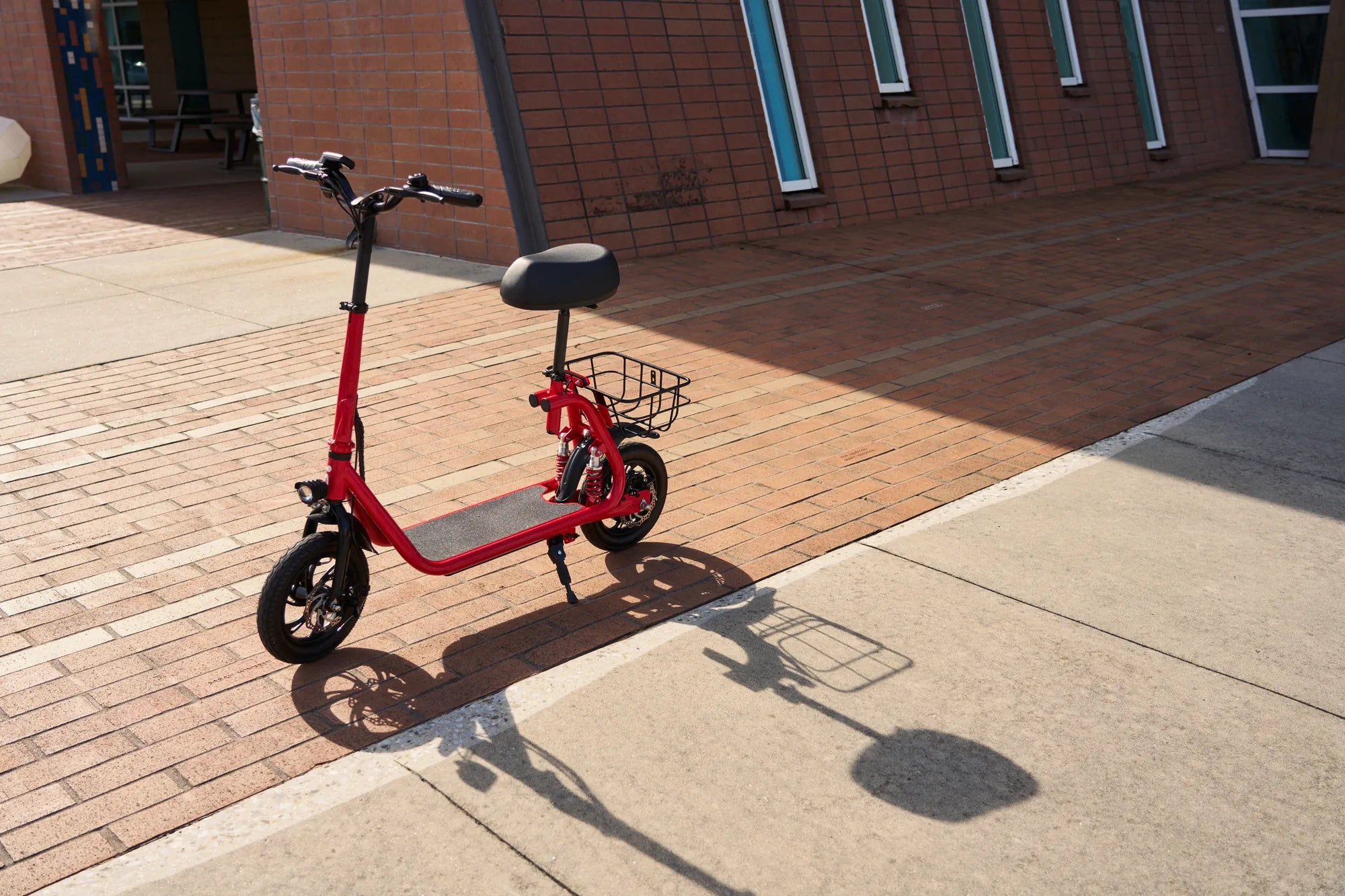
If you're searching for "class 4 ebike speed," you're likely encountering powerful electric bikes that promise thrilling performance beyond standard limits. This guide will demystify the term, detailing the actual speeds and power of these high-performance machines, the critical legal and safety frameworks they operate within, and the engineering that makes them possible. You'll learn the factual differences between standard e-bike classes and so-called "Class 4" models, understand where you can and cannot legally ride them, and gain the knowledge to make an informed decision about whether this level of performance is right for your needs.
Understanding E-Bike Classes: A Primer
The term "class 4 ebike speed" is inherently misleading because, legally, there is no Class 4. In the United States, a three-class system (Class 1, 2, and 3) is widely adopted by states to regulate electric bicycles. This system defines e-bikes based on their top assisted speed and how that power is delivered. Class 1 e-bikes provide pedal-assist only, with no throttle, and stop assisting at 20 mph. Class 2 e-bikes add a throttle that can propel the bike up to 20 mph without pedaling. Class 3 e-bikes are pedal-assist only, like Class 1, but have a higher top assisted speed of 28 mph.
These three classes are generally treated as bicycles under the law, granting them access to bike lanes, paths, and trails where traditional bicycles are allowed. The classification creates a clear legal and safety framework for riders, manufacturers, and regulators. It ensures that e-bikes integrated into public spaces operate at predictable speeds compatible with pedestrian and cyclist traffic. The system is designed to promote safety and accessibility while encouraging e-bike adoption for commuting and recreation.
The "Class 4" designation is a market-driven term, not a legal one. It's commonly used online and by some retailers to describe electric bikes that exceed the performance caps of the standard three-class system. Typically, when a rider inquires about class 4 ebike speed, they are looking at models that can reach 28 mph on throttle alone or exceed the 28 mph cap entirely, often targeting speeds of 30, 35, 40 mph or more. These machines blur the line between an electric bicycle and a electric moped or motorcycle.
Understanding this fundamental distinction is crucial. Purchasing a bike marketed for its high class 4 ebike speed means you are likely buying a vehicle that falls outside the legal definition of an electric bicycle in most jurisdictions. This has profound implications for where you can ride it, what certifications or licenses you need, and the safety gear required. The performance comes with significant responsibility.
The Reality of "Class 4" E-Bike Speed and Performance
So, what does class 4 ebike speed actually mean in terms of performance? Bikes marketed under this label prioritize power and velocity. Their typical speed range is 28 mph to over 40 mph. The motor power is a primary differentiator, with these models often equipped with motors rated from 1000 watts (W) to 3000W or higher. For context, a typical Class 3 commuter e-bike might have a 500W or 750W motor. This immense power translates directly into formidable acceleration and hill-climbing ability.
The acceleration of a high-speed e-bike is a key part of the experience. A bike with a 2000W motor can achieve 20 mph from a standstill in just a few seconds, a sensation far removed from a standard bicycle or even a lower-class e-bike. This capability is valuable for specific use cases, such as navigating steep, unpaved hills on private property or covering large distances on private roads where stopping and starting are frequent. The torque provided by these powerful motors allows riders to tackle inclines that would stall a lesser machine.
However, increased class 4 ebike speed drastically alters the dynamics of riding. Stopping distances increase exponentially with speed. Wind resistance becomes a major factor, affecting both range and stability. Maneuvering at 35 mph requires greater anticipation, skill, and protective gear than cruising at 20 mph on a bike path. The performance is exhilarating but demands a high level of rider competence and situational awareness. It is not a performance profile suited for mixed-use public pathways or urban bike lanes designed for slower traffic.
Brands that cater to this performance segment, like Gyroor, engineer their high-speed models with these dynamics in mind. The focus extends beyond just the motor to include robust frames, high-performance braking systems, and stable geometry to handle the increased forces. The class 4 ebike speed capability is built into a complete system designed for control, not just raw power output.
Key Components Enabling Higher Speeds
Achieving a true class 4 ebike speed requires a holistic upgrade in key components beyond just a more powerful motor sticker. The entire drive and support system must be reinforced to handle the sustained high power output and the stresses of higher velocities. The motor is the heart of the system. High-speed models typically use robust geared hub motors or high-torque mid-drive motors. A 1500W or 2000W hub motor provides direct, throttle-responsive power, while a similarly powerful mid-drive motor leverages the bike's gears for efficient climbing and acceleration.
The battery is the lifeblood. To feed a powerful motor and sustain high speeds, these bikes require high-capacity, high-voltage battery packs. A typical configuration might be a 48V or 52V system with 20Ah (Amp-hour) capacity or more. This combination (Voltage x Amp-hours = Watt-hours) yields a high energy reserve, often exceeding 1000Wh. Safety here is non-negotiable. Gyroor, for example, equips its performance models with UL-certified battery packs, tested for over 500 charge cycles, ensuring stable power delivery and reduced risk even under high-demand scenarios that define the class 4 ebike speed experience.
The chassis and braking systems are equally critical. Frames are often constructed from reinforced aluminum or steel to handle the additional torque and weight. The suspension system, if present, is tuned for higher-speed stability over rough terrain rather than just comfort. The most vital safety upgrade is in the brakes. Mechanical disc brakes are insufficient for repeated high-speed stops. High-performance models feature full hydraulic disc brakes with large rotors (e.g., 180mm or 203mm) that provide consistent, fade-resistant stopping power essential for controlling a bike moving at class 4 ebike speed.
Additional components contribute to safety and performance. Wide, knobby tires offer better traction at speed, especially off-road. Bright LED lighting systems are essential for visibility. Many models also feature IPX5 water-resistant designs, like those from Gyroor, protecting sensitive electronics from dust and water spray during aggressive riding. This comprehensive engineering approach ensures the vehicle is capable, durable, and as safe as possible for its intended high-performance use.
Legal and Safety Implications of Riding a High-Speed E-Bike
The pursuit of class 4 ebike speed immediately places the rider in a different legal category. In virtually all U.S. states and European countries, vehicles that can exceed 28 mph under motor power alone, or have a motor exceeding 750W (or 1000W in some EU nations), are not classified as electric bicycles. They are typically regulated as electric mopeds, motorized bicycles, or even motorcycles. This legal reclassification carries substantial obligations that many purchasers overlook.
First and foremost, riding on public bike paths, greenways, or multi-use trails where Class 1-3 e-bikes are permitted is almost always illegal for a high-speed model. Their speed poses a significant danger to pedestrians, cyclists, and other path users. On public roads, their use is heavily restricted. Common legal requirements include a valid driver's license (often a motorcycle endorsement), vehicle registration with the Department of Motor Vehicles, license plates, and liability insurance. Some localities may outright ban them from certain roadways.
Safety gear requirements escalate dramatically. While a helmet is always recommended, operating at class 4 ebike speed often legally necessitates a Department of Transportation (DOT)-certified motorcycle helmet. Standard bicycle helmets are not tested for impacts at these velocities. Protective motorcycle-grade jackets, gloves, pants, and boots become prudent, if not legally required, investments to mitigate injury in a crash. The kinetic energy in a 40 mph crash is over four times greater than in a 20 mph crash.
Ignoring these regulations carries real risks: substantial fines, impoundment of the vehicle, and, in the event of an accident, severe liability and insurance complications. Manufacturers' marketing about "off-road use only" is a direct acknowledgment of these legal boundaries. Responsible brands are clear about these limitations. The thrilling class 4 ebike speed is a feature intended for controlled, private environments, not for integrating into public bicycle infrastructure.
Navigating Local Regulations: A Rider's Responsibility
The regulatory landscape for high-power electric vehicles is a complex patchwork that varies by state, county, and city. A model might be street-legal as a moped in one state but classified as an off-road-only vehicle in another. The rider's first task before purchase is rigorous research. Start with your state's vehicle code, searching for definitions of "electric bicycle," "motorized bicycle," "moped," and "low-speed electric vehicle." Note the specific limits on motor wattage, top speed, and operational requirements (license, registration, insurance).
Next, investigate county and municipal ordinances. Even if a state allows a registered high-speed e-bike on certain roads, a city may prohibit them on all local streets or specific trails. Contacting local law enforcement or the DMV for clarification can prevent costly mistakes. Do not rely on the seller's advice or generic online forums as definitive legal guidance. The manufacturer's disclaimer that a product is "for off-road and private property use" is a strong indicator of its non-compliance with public road e-bike laws.
Riding responsibly means choosing the right venue. Legitimate uses for a bike built for class 4 ebike speed include large private properties, designated off-road vehicle (OHV) areas, private motocross tracks, and permitted industrial or agricultural land with owner permission. In these settings, the full performance can be enjoyed without legal jeopardy or endangering the public. Prioritizing this responsible approach protects the rider, the public, and the reputation of the electric bike community as a whole.
Comparative Analysis: High-Speed E-Bike vs. Standard Class 3 E-Bike
Choosing between a high-speed model and a standard Class 3 e-bike is a decision between two fundamentally different types of vehicles. The following table provides a clear, data-driven comparison of their key characteristics.
| Feature | Standard Class 3 E-Bike | High-Speed "Class 4" E-Bike |
|---|---|---|
| Top Motor-Assisted Speed | 28 mph (pedal-assist only) | 28 mph to 40+ mph (often via throttle) |
| Typical Motor Power | 250W - 750W | 1000W - 3000W+ |
| Legal Classification (US) | Electric Bicycle | Electric Moped / Motorcycle (Off-road vehicle) |
| Road/Lane Access | Bike lanes, paths, roads (where bikes are allowed) | Public roads only if registered/insured; otherwise private land only. |
| License/Registration/Insurance | Generally not required | Almost always required for road use |
| Primary Use Case | Commuting, fitness, recreation on public infrastructure | Off-road trails, private property, thrill-seeking |
| Safety Gear | Bicycle helmet recommended | Motorcycle helmet & gear strongly advised/required |
| Example Brand Philosophy (Gyroor) | Designed for reliable daily commuting with UL-certified safety. | Engineered for off-road/private use with robust power, IPX5 water resistance, and durable components. |
This comparison highlights that a Class 3 e-bike is a tool for transportation and recreation within the existing public infrastructure. It's a car replacement for many errands and commutes. In contrast, a high-speed e-bike is a specialized performance vehicle, akin to a dirt bike or sport quad. Its value is in its power and capability in appropriate, controlled environments, not in its utility as a daily urban transporter under bicycle rules.
Making an Informed Decision: Is a High-Speed E-Bike Right for You?
Deciding to invest in a bike capable of class 4 ebike speed requires honest self-assessment. Ask yourself these key questions: Do you have consistent, legal access to private land, off-road trails, or a track where you can use this performance safely and legally? Is your primary goal thrill-seeking and off-road adventure, rather than pavement commuting or errands? Are you prepared to handle the potential bureaucratic requirements of licensing, registration, and insurance if you ever wish to use it on designated public roads?
Consider your riding skill and safety commitment. Handling a powerful, heavy bike at high speeds demands more experience and physical strength than riding a standard e-bike. Are you willing to invest in full-face motorcycle helmets, armored jackets, gloves, and other protective gear? The cost of proper safety equipment should be factored into your total budget. Also, evaluate your need for extreme power. For most riders, a Class 3 e-bike's 28 mph assist is more than sufficient for urban and suburban travel, offering a great blend of speed, legality, and safety.
Think about storage and transportation. These are often larger, heavier machines. Do you have a secure place to store it, and a way to transport it to your riding location if it's not road-legal for the journey? Finally, consider the community and environmental impact. Riding irresponsibly on trails not designed for motorized vehicles can damage ecosystems and lead to trail closures for all users. Choosing a high-speed e-bike means accepting the responsibility to be a steward for responsible motorized recreation.
If your answers point toward a need for extreme power for specific, legal applications and you accept the associated responsibilities, then a high-performance model could be a rewarding purchase. Brands like Gyroor design these vehicles for riders who understand and respect these boundaries, offering robust engineering and safety features for those specific use cases.
Frequently Asked Questions (FAQ)
What exactly is a "Class 4" e-bike?
A "Class 4" e-bike is not an official legal classification. It is a market term used to describe high-power electric bicycles that exceed the performance limits (speed and/or motor power) of the standardized Class 1, 2, and 3 system. These bikes typically have motors over 750W and can achieve speeds from 28 mph to over 40 mph, placing them in legal categories like electric mopeds or motorcycles.
Where can I legally ride a high-speed e-bike?
The primary legal venues are on private property with the owner's permission and on public lands specifically designated for off-highway vehicles (OHVs) or motorized recreation. Riding on public bike paths, sidewalks, or multi-use trails is almost always illegal. Use on public roads may be possible only if the vehicle is registered, insured, and operated by a licensed rider in accordance with local motor vehicle laws, which is rare for these models.
Do I need a license, registration, and insurance for a bike that goes 40 mph?
Yes, in almost all jurisdictions. A vehicle capable of 40 mph under motor power is classified as a motor vehicle. For on-road use, a valid driver's license (often a motorcycle endorsement), vehicle registration with license plates, and liability insurance are standard legal requirements. For off-road use on designated trails, specific permits from the land management agency may be required instead.
How does Gyroor ensure safety in its high-performance models?
Gyroor integrates multiple safety layers. First, they use UL-certified battery packs for fire and electrical safety. Second, their high-speed models feature IPX5 water-resistant construction to protect electronics. Third, they equip models designed for class 4 ebike speed with premium hydraulic disc brakes for reliable stopping power. Finally, they back their engineering with a reliable 1-year warranty and clear guidance on intended, responsible use.
Can I modify a Class 3 e-bike to achieve "Class 4" speeds?
Technically, it is often possible through aftermarket tuning kits or controller modifications, but it is strongly discouraged and almost always illegal. Doing so voids the manufacturer's warranty, compromises the safety and integrity of components not designed for higher stresses (like brakes and frame), and instantly reclassifies the bike as a motor vehicle, making its previous legal operation illicit and dangerous.
Conclusion: Speed, Responsibility, and the Right Tool for the Ride
The allure of class 4 ebike speed is undeniable, offering a level of electric-powered performance that pushes boundaries. However, this performance exists outside the legal and social framework built for personal electric mobility. It is a niche for dedicated enthusiasts with access to appropriate spaces and a firm commitment to safety and legality. The key takeaway is to align your vehicle choice with your actual riding environment and goals. For integrated, daily transportation, a Class 3 e-bike remains the superior, legal, and safe choice. For the power to explore private land or designated off-road trails, a responsibly engineered high-speed model serves a distinct purpose.
Brands like Gyroor cater to both needs, offering a range of UL-certified, reliable e-bikes for commuters and robust, high-performance models for off-road adventure. Their engineering focus on battery safety, water resistance, and durable components reflects a philosophy that performance should never come at the expense of fundamental safety. Whether you seek efficient commuting or off-road exhilaration, choosing the right tool for the ride—and understanding the rules that govern it—is the mark of a smart and responsible rider. Explore the engineering and options designed for every type of journey.
Ready to find the e-bike engineered for your riding style, from compliant commuters to capable off-road performers? Browse the full Gyroor collection at gyroorboard.com.
E Bike Pro 3.0: The Definitive Urban E-Bike for Performance & Safety
150cc Scooter Plastics Kit: The Complete Replacement & Upgrade Guide