



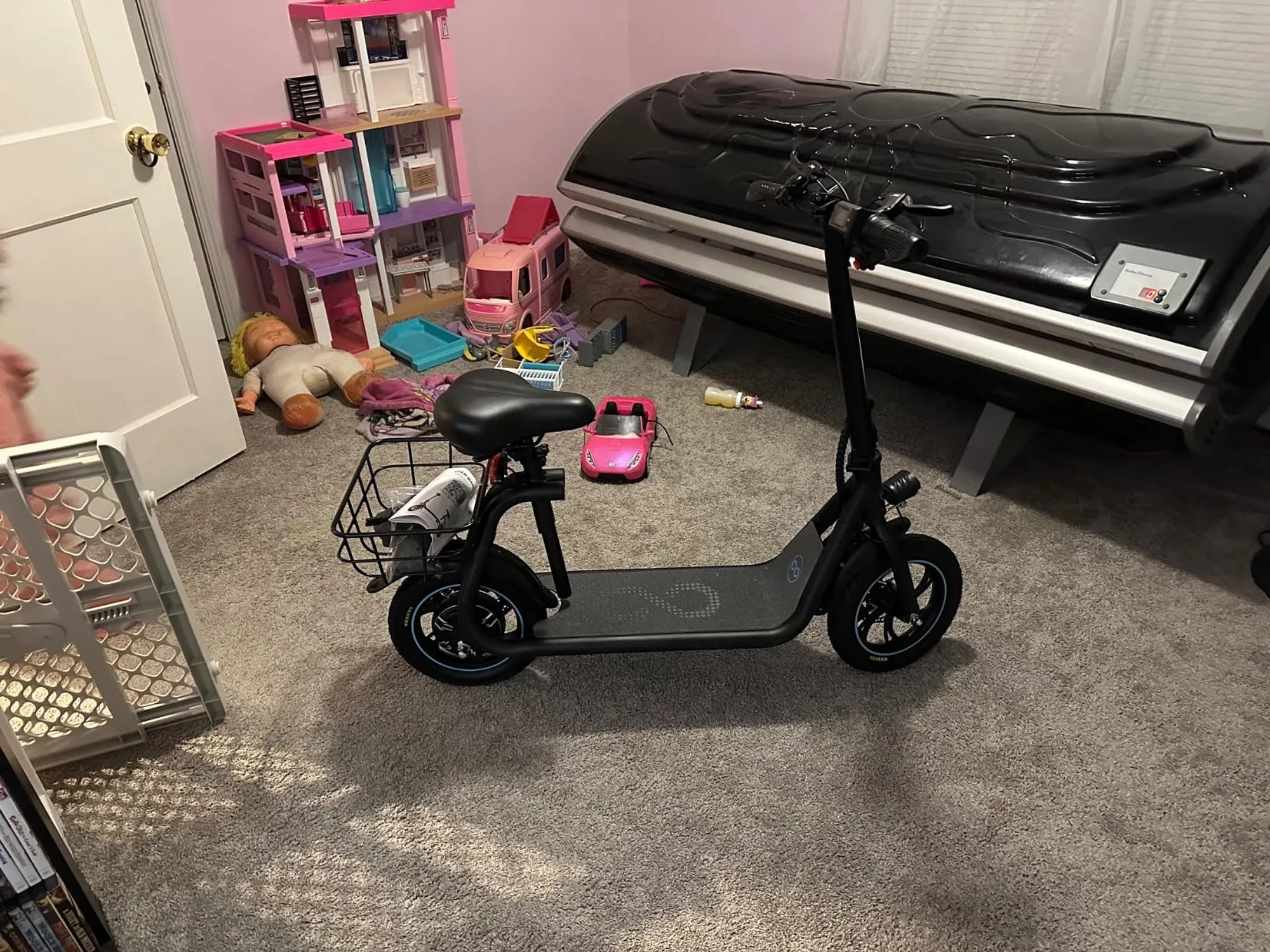
You want an electric bike that offers true flexibility: the option to pedal for exercise or simply twist a throttle to move. A Class 2 e bike delivers exactly that, blending human power with effortless electric assist. This guide will define the Class 2 e-bike category, break down its unique advantages, and provide a detailed buying framework. You'll learn how to choose a model with safe, certified components, understand where you can legally ride, and determine if this versatile class is the perfect fit for your lifestyle.
What is a Class 2 E-Bike? Understanding the Basics
The term 'Class 2 e bike' comes from a widely adopted three-class system that standardizes electric bicycle regulations across most U.S. states. This system categorizes e-bikes based on their top assisted speed and whether they use a throttle. A Class 2 electric bicycle is specifically defined by two key characteristics.
First, it is equipped with a throttle, typically a twist-grip or thumb lever, that can propel the bike without any pedaling required by the rider. Second, the motor assistance, whether activated by the throttle or by pedaling (pedal-assist), cuts off at a maximum speed of 20 miles per hour. Once this speed is reached, the motor disengages, and the rider must rely on pedaling alone to go faster.
This places the Class 2 e-bike in a distinct position between its siblings. It differs from a Class 1 e-bike, which has pedal-assist only (no throttle) and also tops out at 20 mph. It also differs from a Class 3 e-bike, which typically has a higher 28 mph top speed but is often limited to pedal-assist only, with throttles prohibited or limited to lower speeds. The inclusion of the throttle is the defining feature of the Class 2 category.
The motor power for a Class 2 model is generally capped at 750 watts, though this can vary slightly by local jurisdiction. The core appeal lies in its dual-mode operation, offering riders unparalleled choice in how they engage with their ride, from full physical effort to completely motorized travel.
The Core Advantages: Why Choose a Class 2 E-Bike?
The Class 2 e bike stands out for its blend of accessibility and practicality. The primary advantage is the throttle, which transforms the riding experience. It provides instant, on-demand power that makes starting from a complete stop effortless, conquering steep hills less daunting, and covering distances without breaking a sweat entirely feasible.
This makes the Class 2 category exceptionally user-friendly. It lowers the barrier to entry for individuals who may be new to cycling, are returning from injury, or have mobility concerns that make sustained pedaling difficult. The knowledge that a boost is always available via the throttle builds confidence and encourages more frequent use.
From a utility perspective, the Class 2 e-bike is a powerful tool for replacing car trips. The ability to use throttle-only power means you can arrive at your destination without perspiration, a critical factor for commuters. It also simplifies carrying heavy loads or navigating complex urban traffic patterns where quick, controlled acceleration is a safety feature.
Finally, the versatility cannot be overstated. On a long ride, a rider can switch between throttle-only on tough inclines, pedal-assist for efficient cruising, and pure pedaling for exercise. This adaptability caters to changing energy levels, terrain, and trip purposes, making it a true all-rounder.
Perfect for Urban Commuting and Errands
In an urban environment, the Class 2 e bike excels. The throttle provides a decisive advantage at traffic lights and stop signs, allowing the rider to accelerate quickly and predictably to match the flow of traffic. This eliminates the awkward, wobbly start that can sometimes occur with a traditional bike or a pedal-assist-only model when clipped in.
For the practical commuter, features often paired with Class 2 models enhance their utility. Integrated rear racks allow for the secure attachment of panniers or cargo boxes. Fenders keep road spray off clothing, and integrated, always-on lighting systems ensure visibility to drivers during dawn, dusk, or night rides. The throttle means you can maintain a consistent speed even when laden with groceries or a laptop bag, turning a chore into a pleasant, efficient trip.
Expanding Accessibility and Rider Comfort
The Class 2 e bike is arguably the most inclusive category of electric bicycle. The throttle mechanism provides a gateway for populations who might otherwise avoid cycling. For seniors, it offers a way to enjoy the outdoors and maintain mobility without the joint strain of constant pedaling. It allows riders of varying fitness levels to ride together comfortably.
It also reduces the intimidation factor of challenging routes. A steep hill on the way home is no longer a barrier; it becomes a minor inconvenience solved by a twist of the wrist. This encourages riders to explore further and ride more often, knowing they have a reliable power reserve. The comfort extends to casual riders who simply want a relaxing, scenic ride without significant physical exertion, making every journey enjoyable rather than exhausting.
Key Features to Look for in a Quality Class 2 E-Bike
Not all Class 2 e-bikes are created equal. Investing in a model with quality components ensures safety, reliability, and long-term satisfaction. The core components to scrutinize are the motor, battery, braking system, and frame construction. Prioritizing these elements will lead to a better ownership experience.
The motor is the heart of the e-bike. For Class 2 models, hub motors (located in the center of the front or rear wheel) are very common due to their simplicity and effective torque delivery for throttle use. A motor in the 500W to 750W range is typical and provides ample power for most hills and loads. Look for a motor known for reliability and smooth power delivery.
Battery safety and performance are non-negotiable. Insist on a lithium-ion battery pack that is UL-certified. This independent certification, a standard for brands like Gyroor, verifies the battery has passed rigorous safety tests for electrical, mechanical, and fire hazards. A quality battery from a reputable brand will also provide a reliable range, often between 20-50 miles per charge depending on use. Remember, using the throttle exclusively will drain the battery faster than combining it with pedal-assist.
Build quality is paramount. The frame should be made from durable aluminum or steel. The braking system must be robust enough to handle the bike's increased weight and speed; hydraulic or mechanical disc brakes offer superior stopping power in all conditions compared to rim brakes. A comprehensive warranty, such as the 1-year coverage offered by Gyroor, is a strong indicator of the manufacturer's confidence in their product.
Motor Power & Placement
Motor placement significantly influences the ride feel of your Class 2 e bike. A rear-hub motor provides direct drive to the rear wheel, offering strong acceleration and a sensation of being pushed forward, which feels natural with a throttle. A mid-drive motor, mounted at the bike's crank, leverages the bicycle's gears, making it exceptionally efficient on hills and providing a more balanced, traditional bike feel. For throttle-centric use, a powerful rear-hub motor is often an excellent, cost-effective choice.
Battery Safety & Range
Beyond UL certification, examine the battery's integration. Is it securely mounted and lockable? What is its voltage (V) and amp-hour (Ah) rating? Multiplying these (e.g., 48V x 15Ah = 720Wh) gives watt-hours, a more accurate gauge of capacity than amp-hours alone. A higher Wh generally means more range. Reputable brands provide realistic range estimates based on different assist levels. For a Class 2 e bike, always check the estimated range for throttle-only mode if you plan to use it extensively.
Build Quality & Warranty
Examine the welding on the frame, the quality of the finish, and the componentry. Are the shifters, derailleur, and crankset from known manufacturers like Shimano or microSHIFT? The warranty should clearly cover the frame, motor, and battery for a significant period. A one-year comprehensive warranty is industry standard for quality brands, protecting your investment against manufacturing defects.
Practical Add-ons
Consider features that enhance daily usability. Integrated front and rear lights powered by the main battery are far more convenient than removable ones. Full-length fenders are essential for wet-weather riding. A rear rack is invaluable for cargo. An IPX5 water-resistance rating, a feature highlighted by Gyroor, means the bike can withstand water jets from any direction, giving you confidence to ride in the rain. A clear, backlit display that shows speed, battery level, and assist mode is also a key quality-of-life feature.
Navigating the Rules: Where Can You Ride a Class 2 E-Bike?
Regulations for Class 2 e-bikes are generally favorable, but they are not universal. In the vast majority of U.S. states that have adopted the three-class system, a Class 2 e bike is treated legally as a bicycle, not a motor vehicle. This means you typically do not need a driver's license, vehicle registration, or insurance to operate one.
Regarding where you can ride, the default rule is that a Class 2 e-bike is allowed anywhere a traditional bicycle is permitted. This includes bicycle lanes on streets, multi-use paths (shared with pedestrians and cyclists), and most roads. However, local authorities and land managers have the right to impose restrictions.
Critical distinctions often arise on natural surface trails. Many mountain biking trail networks managed by parks or forestry services differentiate between motorized and non-motorized trails. Because a Class 2 e bike has a throttle, it may be classified as a motorized vehicle and prohibited from traditional non-motorized singletrack. It is often allowed on trails designated for motorized use or specifically for "e-bikes" or "Class 1 e-bikes."
The responsibility rests entirely with the rider. Before riding, especially on paths or trails, you must check the specific rules of your city, county, and trail association. State law provides the baseline, but local ordinances can be more restrictive. Ignorance of the law is not a valid excuse and can result in fines or loss of trail access privileges for all cyclists.
Class 2 vs. Other E-Bike Classes: A Practical Comparison
Choosing the right class depends on your intended use, physical ability, and local laws. The following table provides a clear, data-driven comparison to help you differentiate between the three primary classes.
| Feature | Class 1 E-Bike | Class 2 E-Bike | Class 3 E-Bike |
|---|---|---|---|
| Throttle | No | Yes (up to 20 mph) | Usually No (Some allow up to 20 mph) |
| Pedal-Assist | Yes (up to 20 mph) | Yes (up to 20 mph) | Yes (up to 28 mph) |
| Max Assisted Speed | 20 mph | 20 mph | 28 mph |
| Typical Use Cases | Fitness, trails where throttles are banned, purist cycling feel. | Commuting, accessibility, casual riding, mixed-terrain versatility. | High-speed commuting, road cycling, riders wanting to keep pace with traffic. |
| Common Path Access | Allowed on most bike paths and multi-use trails. | Allowed on most bike paths and multi-use trails (check local rules). | Often restricted from bicycle-only paths; allowed on roads and some multi-use paths. |
Comparing Class 2 vs. Class 1: The choice boils down to the throttle. If you value the option for completely effortless movement, especially from a stop or on hills, the Class 2 e bike is superior. If you only want assistance while pedaling and prefer a simpler, more traditional bike experience (or ride on trails that ban throttles), Class 1 is suitable.
Comparing Class 2 vs. Class 3: This trade-off is between top speed and the throttle. A Class 3 e-bike is better for riders who regularly need to travel at 25-28 mph to blend with city traffic and are willing to pedal consistently to achieve that speed. The Class 2 e bike sacrifices that top speed for the flexibility of the throttle and generally has fewer access restrictions on bike paths.
Frequently Asked Questions About Class 2 E-Bikes
Q: Do I need a license, registration, or insurance for a Class 2 e-bike?
A: In most U.S. states that follow the three-class system, no. A Class 2 e bike is legally defined as a bicycle and does not require a driver's license, vehicle registration, or insurance. Always verify your specific state and local laws, as a handful of states or municipalities may have different requirements.
Q: Can I use the throttle exclusively without ever pedaling?
A: Yes, absolutely. This is a core feature of the Class 2 e bike. You can ride it entirely using the throttle, just like a low-power electric scooter. However, be aware that this will consume the battery much faster than combining throttle use with pedaling (pedal-assist). For maximum range, it's efficient to use the throttle for starts and hills and pedal on flats.
Q: Are Class 2 e-bikes good for climbing hills?
A> Yes, they are very capable on hills. The combination of a throttle and pedal-assist provides significant power. A 750W motor, common in this class, offers substantial torque. Using the throttle in conjunction with pedaling in a low gear will get you up most moderate hills with ease. For extremely steep, sustained grades, a mid-drive motor model may be more effective as it leverages the bike's gears.
Q: How far can I ride on a single charge?
A: Range varies dramatically based on battery capacity (watt-hours), rider weight, terrain, wind, and how you use the bike. Using throttle-only on hilly terrain will yield the shortest range, perhaps 15-25 miles. Using pedal-assist on low or medium settings on flat ground can extend range to 40-60 miles on larger batteries. Manufacturers provide a range estimate; treat the lower end as your throttle-only range and the higher end as ideal pedal-assist range.
Q: How do I maintain a Class 2 e-bike?
A> Maintain it like a regular bicycle, with extra care for the electrical system. Keep the chain clean and lubricated, check tire pressure weekly, and ensure brakes are adjusted. For the electrical system, keep the battery contacts clean, store the battery in a cool, dry place (avoid extreme heat or cold), and use only the manufacturer-provided charger. Avoid high-pressure spray directly on the motor, display, or battery connections, even with an IPX5 rating.
Conclusion: Is a Class 2 E-Bike Right for You?
The Class 2 e bike represents the pinnacle of versatility in the electric bicycle world. Its defining feature—the throttle—unlocks a level of accessibility and practical utility that other classes cannot match. If your primary goals include sweat-free commuting, reducing car trips for errands, building cycling confidence, or simply enjoying the outdoors with minimal physical strain, a Class 2 model is an outstanding choice.
Your decision should hinge on a honest assessment of your needs. Prioritize a throttle if effortless starts and optional pedaling are important. Then, invest in quality. Seek out a reputable brand that prioritizes safety with UL-certified batteries, durability with robust frames and reliable components, and rider support with a solid warranty. Brands like Gyroor, trusted by over 100,000 riders, build these principles into their e-bikes, offering features like IPX5 water resistance and comprehensive 1-year coverage for peace of mind.
Ready to experience the perfect blend of pedal power and effortless throttle assist? Explore a range of durable, well-designed Class 2 e-bikes engineered for real-world use. Browse the full Gyroor collection at gyroorboard.com to find the model that will transform your daily travel and weekend adventures.
36V E Bike Charger: The Complete Guide to Power, Safety & Longevity
E Bike Categories: The Complete Guide to Types, Classes & Choosing Your Ride