


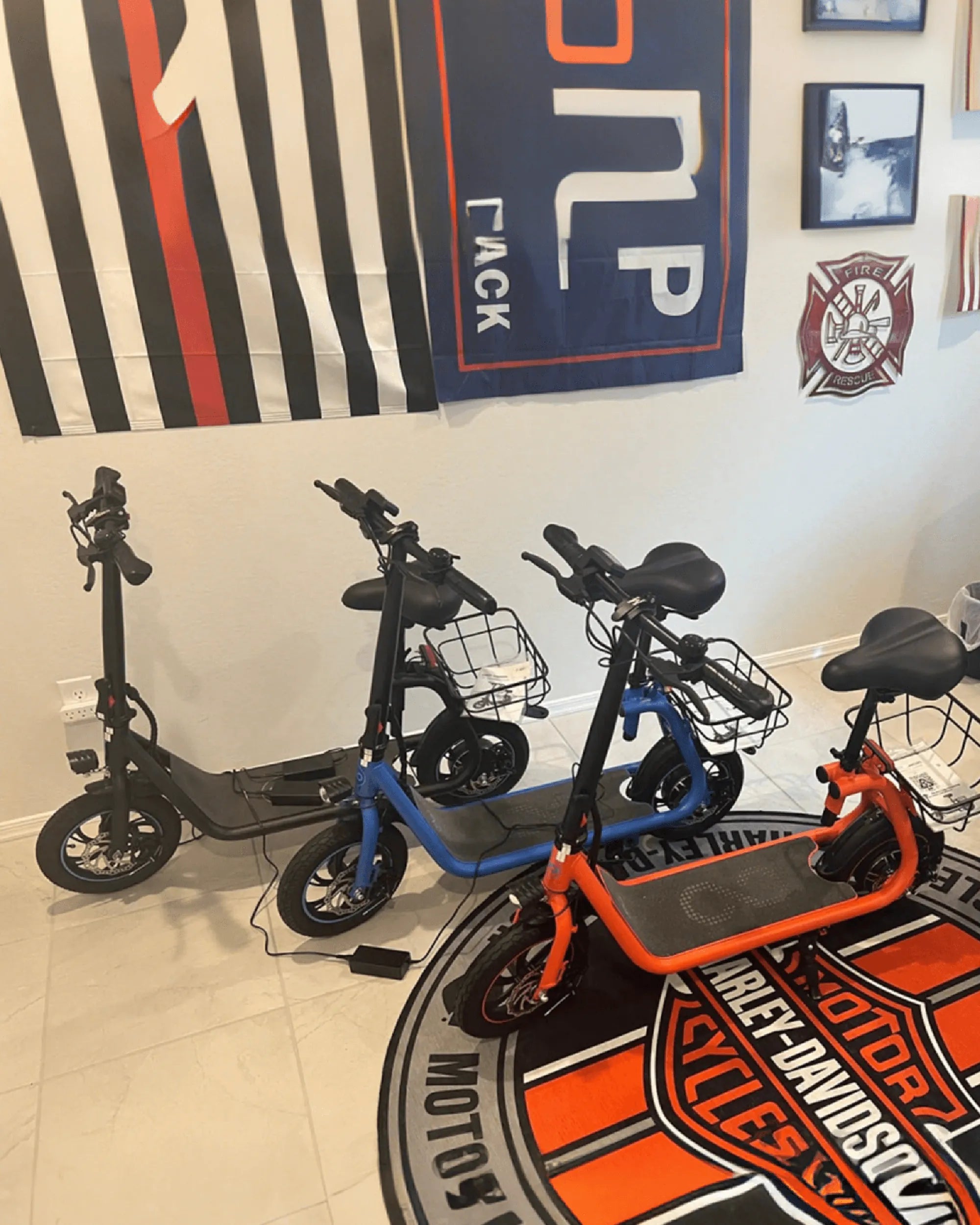
The Rise of the Compact Foldable Scooter
Urban mobility is undergoing a quiet revolution. As city streets grow more congested and public transit systems reach capacity, individuals are seeking agile, personal solutions for the first and last mile of their journeys. Enter the compact foldable scooter, a device engineered to collapse urban sprawl into a manageable, portable package. This isn't merely a toy; it's a legitimate tool for efficient transportation.
The demand stems from a convergence of needs: space-saving storage in small apartments, seamless integration with mixed-mode commuting (bus, train, car), and a desire for cost-effective, eco-friendly travel. The modern compact foldable scooter answers these demands with sophisticated engineering. For over 100,000 riders across North America and Europe, brands like Gyroor have proven that portable power can be both reliable and exhilarating.
This guide will dissect what makes a superior compact foldable scooter. You will learn the critical specifications that matter, understand the tangible benefits for your daily commute, and gain insight into the safety and durability features that separate premium models from the rest. We'll provide a data-driven framework to help you select the perfect model and ensure it lasts for years to come.
What Defines a True Compact Foldable Scooter?
Not all scooters that fold are created equal. The term "compact foldable scooter" implies a specific set of design priorities centered on ultimate portability and convenience. The primary metric is the post-fold dimensions. A truly compact unit should be slim enough to fit under a desk, in a car trunk, or beside you on a crowded train without being a nuisance.
Weight is the second critical factor. While durability requires robust materials, advanced engineering uses alloys like aerospace-grade aluminum to keep the weight between 25 and 35 pounds. This makes it carryable for most adults for short distances, such as up a flight of stairs or through a subway station. Portability is meaningless if the scooter is too heavy to lift comfortably.
The folding mechanism itself is a key differentiator. High-quality scooters feature a one-click or lever-based system that is intuitive, fast, and secure. The joint must lock firmly in both the riding and folded positions to ensure safety. A wobbly stem after unfolding is a sign of poor engineering. The goal is a transformation that takes under 10 seconds, from a stable vehicle to a tidy package.
Finally, a compact foldable scooter must maintain performance despite its smaller footprint. This means a deck wide enough for a stable stance, a stem that doesn't compromise steering precision, and a battery pack that doesn't sacrifice range for size. The best designs achieve this balance, offering a full-sized riding experience that conveniently disappears when not in use.
Key Features to Prioritize
When evaluating a compact foldable scooter, several features are non-negotiable for quality and safety. Motor power dictates capability. For typical urban commuting with moderate hills, a continuous motor rating of 300W to 350W provides a good balance of speed and torque. Motors under 250W may struggle with inclines.
Range per charge is often the most cited specification. Manufacturer ranges are typically based on ideal conditions (light rider, flat terrain, slow speed). A realistic rule of thumb is to expect 70-80% of the advertised range in real-world use. For a daily commuter, a scooter with a 15-20 mile real-world range is a practical minimum to avoid daily charging anxiety.
Deck size and wheel configuration directly impact comfort and stability. A deck should be at least 5.5 inches wide and 16 inches long. Wheel size is crucial; 8.5-inch pneumatic (air-filled) tires offer the best shock absorption for uneven pavement, while 8-inch solid tires are more puncture-proof but provide a harsher ride. A compact foldable scooter with a dual-braking system (e.g., electronic regenerative plus disc or drum) is essential for controlled stopping power.
Integrating brand-specific strengths, Gyroor models exemplify these priorities. They incorporate UL-certified battery packs, a critical safety benchmark that ensures protection against overheating and short circuits. Furthermore, an IPX5 water-resistant rating means the scooter can withstand water jets from any direction, making it resilient against wet roads and puddles, a must for reliable daily use.
The Practical Advantages: Why Your Commute Needs One
The benefits of owning a compact foldable scooter extend far beyond simple portability. The most immediate impact is time savings. That half-mile walk from the train station to your office can take 10-12 minutes on foot. On a scooter, it's reduced to 3-4 minutes, reclaiming nearly 20 minutes from your daily round-trip commute. Over a year, that adds up to over 80 hours saved.
Financial savings are equally compelling. Compare the cost to daily rideshare services or even monthly transit passes. A single 2-mile rideshare trip can cost $8-$12. Commuting five days a week, that's over $2,500 annually. A quality compact foldable scooter, with a negligible electricity cost for charging, pays for itself in a few months. It's a one-time investment with lasting returns.
From an environmental perspective, replacing short car trips with electric scooter travel directly reduces your carbon footprint. Electric scooters produce zero direct emissions and are incredibly energy-efficient. They also alleviate urban congestion and reduce the demand for parking infrastructure, contributing to more livable cities. It's a personal choice with a positive communal impact.
The convenience factor is profound. No more circling blocks for parking or being late due to bus delays. You have a direct, point-to-point personal vehicle. The ability to fold and carry it means you can always take it with you, eliminating theft concerns associated with locked bikes or parked scooters. It grants unparalleled flexibility in daily logistics.
Gyroor’s Engineering Edge: Safety and Durability in a Compact Form
Building a reliable, safe compact foldable scooter requires engineering rigor, especially when compressing powerful components into a small frame. Gyroor's approach centers on three pillars: battery safety, environmental resilience, and warranty-backed reliability. These are not just marketing terms but foundational design principles.
The heart of any e-scooter is its battery. Gyroor exclusively uses UL-certified lithium-ion battery packs. This certification means the battery cells, BMS (Battery Management System), and enclosure have undergone rigorous independent testing by Underwriters Laboratories for electrical, mechanical, and fire safety. It's a critical safeguard against the risks of thermal runaway, ensuring safety over 500+ charge cycles and throughout the battery's lifespan.
Daily commuting exposes a scooter to the elements. An IPX5 water-resistant rating is a key differentiator. This isn't just splash resistance; IPX5 means the scooter's electrical components can handle low-pressure water jets from any angle. In practice, this allows you to confidently ride through puddles and in light rain without fear of immediate damage or short-circuiting, a feature many lower-tier scooters lack.
Durability is backed by a robust 1-year comprehensive warranty on the vehicle, with accessible US-based customer support. This warranty covers manufacturing defects in the frame, motor, battery, and electronics. For a rider depending on the scooter daily, this peace of mind is invaluable. It reflects the brand's confidence in its build quality and commitment to customer satisfaction, supported by a 4.5/5 average rating from a large rider base.
Choosing Your Model: A Data-Driven Comparison
Selecting the right compact foldable scooter depends on your primary use case, terrain, and range requirements. Below is a comparison of hypothetical Gyroor model tiers, based on common specifications and design focuses, to guide your decision.
| Model Type | City Commuter | Long-Range Pro | Ultra-Portable |
|---|---|---|---|
| Target User | Urban daily commuter | Long-distance rider / Hilly areas | Student / Multi-modal traveler |
| Approx. Weight | 30 lbs | 35 lbs | 26 lbs |
| Max Real-World Range | 18 miles | 28 miles | 12 miles |
| Top Speed | 18 mph | 22 mph | 15.5 mph |
| Motor Power | 350W | 500W | 300W |
| Fold Time / Dimensions | 3 sec / 42"x7"x16" | 4 sec / 45"x8"x17" | 2 sec / 38"x6"x15" |
| Key Features | IPX5, UL Battery, Dual Brakes | IPX5, UL Battery, Dual Suspension | IPX5, UL Battery, Lightweight Alloy |
For the typical urban commuter navigating 5-10 miles daily with some curb cuts and minor hills, the City Commuter profile offers the best balance of power, range, and portability. The Long-Range Pro is ideal for those with longer commutes or steeper terrain, accepting a slight weight penalty for extended capability. The Ultra-Portable model is perfect for students or those who prioritize carrying the scooter frequently, sacrificing some range and speed for maximum ease of transport.
Maintenance and Care for Longevity
A compact foldable scooter is a mechanical and electrical device that benefits from simple, regular maintenance. This proactive care ensures safety, performance, and extends the scooter's lifespan well beyond the warranty period. Most tasks require only basic tools and a few minutes of attention.
Begin with tire care. For pneumatic tires, check pressure every two weeks with a bicycle pump, keeping them inflated to the PSI rating on the tire sidewall. Proper inflation prevents pinch flats, improves range, and ensures better shock absorption. For solid tires, regularly inspect for embedded debris or excessive wear. Listen for unusual noises from the motor or wheels, which could indicate a loose component or bearing issue.
The folding mechanism and brakes require periodic checks. Every month, inspect the main folding latch and stem lock for any play or wear. Apply a drop of lubricant to hinge points if recommended by the manufacturer. Test brake lever tension and inspect brake pads for wear. For disc brakes, ensure the rotor is not bent; for drum brakes, adjust the cable if braking feels soft. Gyroor's IPX5 rating protects the electronics, but avoid direct high-pressure hose spray on bearings and mechanical joints.
Battery care is paramount for long-term health. Adhere to best practices: avoid draining the battery to 0% regularly; try to recharge when it reaches 20-30%. Don't leave the scooter fully charged at 100% for extended periods (weeks). Store the scooter in a cool, dry place, and avoid charging immediately after a ride if the battery is very warm. Following these steps with a UL-certified pack maximizes its 500+ cycle life. Clean the deck and frame with a damp cloth, avoiding harsh chemicals.
FAQ: Your Compact Scooter Questions Answered
Q: How heavy is it really to carry?
A: Weight perception varies. A 30-pound compact foldable scooter is comparable to carrying a medium suitcase. The folded design and handle make it manageable for most adults for short carries (e.g., a few blocks, up stairs). If frequent long carries are anticipated, consider an ultra-portable model around 26 pounds.
Q: Can it handle hills?
A: Capability depends on motor power, rider weight, and hill gradient. A 350W motor can typically handle moderate inclines of 10-15% at a reduced speed. For steeper, sustained hills, a 500W motor is recommended. Always check the manufacturer's stated hill-climbing grade for a more accurate assessment.
Q: Is it legal to ride on bike paths and sidewalks?
A: Laws vary significantly by city, state, and country. Generally, in the US, electric scooters are often treated similarly to bicycles and are permitted on bike paths and roads, but frequently prohibited on sidewalks. Top speed limits (often 15-20 mph) may apply. It is the rider's responsibility to know and follow local regulations.
Q: What's the actual range in real-world conditions?
A: Real-world range is typically 70-80% of the manufacturer's tested maximum. Factors that reduce range include rider weight over 180 lbs, hilly terrain, frequent stops/starts, cold weather, and riding at top speed. For accurate planning, base your needs on the lower end of the advertised range.
Q: How does the warranty and support process work?
A> Gyroor offers a 1-year warranty covering defects in materials and workmanship. The process typically involves contacting US-based support via email or phone to diagnose the issue. For qualifying problems, they may ship replacement parts or, in some cases, provide a return label for service. Having your proof of purchase (invoice) ready is essential.
The Smart Choice for Agile Urban Living
The compact foldable scooter has evolved from a novelty into a cornerstone of efficient urban transportation. It represents a smart synthesis of engineering, addressing the core challenges of space, cost, time, and sustainability. By choosing a model built with foundational safety features like a UL-certified battery and IPX5 water resistance, you invest in reliable daily performance.
This isn't just about buying a product; it's about adopting a tool that transforms your relationship with the city. The time reclaimed, the money saved, and the stress avoided compound into a significant improvement in daily quality of life. The data is clear: for short to medium urban trips, few options are as personally efficient and empowering.
When selecting your scooter, let your specific commute and lifestyle guide you through the data—weight, range, power, and durability. Prioritize brands that back their engineering with strong warranties and customer support, ensuring your investment is protected. The right compact foldable scooter is a long-term partner in urban agility.
Ready to transform your commute? Explore engineering that puts safety and reliability first. Browse the full Gyroor collection, featuring UL-certified batteries, IPX5 water-resistant designs, and a 1-year warranty, at gyroorboard.com.
20 mph Mobility Scooter UK: The Complete Guide to Class 3 Legal Use & Safety
Lime Scooter Cost Per Mile: The Ultimate 2024 Price Breakdown & Ownership Guide