



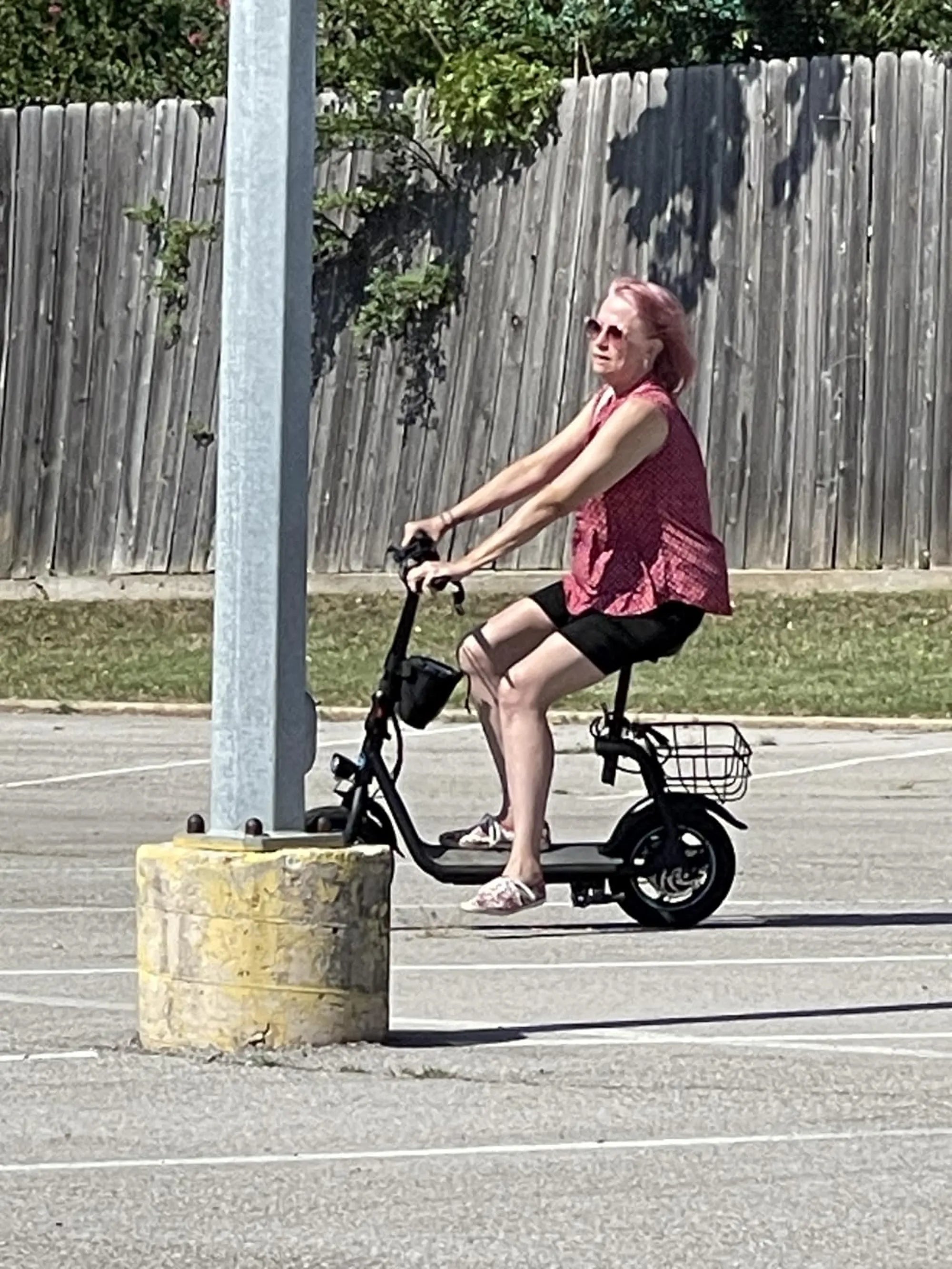
Introduction to Compact Tricycles
A compact tricycle represents a significant evolution in personal electric mobility, blending the inherent stability of three wheels with a space-efficient, utilitarian design. Unlike a traditional bicycle or a bulky cargo trike, a modern compact tricycle is engineered for the realities of urban and suburban living. It provides a confident, low-impact riding experience suitable for a wide range of users, from commuters and errand-runners to seniors and new riders seeking a safer alternative to two-wheeled transport.
This guide will provide you with a comprehensive understanding of the compact tricycle category. You will learn the core advantages of this design, the critical specifications to evaluate when purchasing, and how leading brands like Gyroor integrate safety and durability. We will also provide a direct comparison with standard e-bikes to help you make an informed decision based on your specific needs, lifestyle, and environment.
The appeal of the compact tricycle lies in its unique value proposition: it offers substantial utility and unwavering stability without demanding excessive storage space. This makes it an ideal solution for apartment dwellers, those who need to combine transit modes, or anyone who values a practical, stress-free ride for daily tasks. The design philosophy prioritizes function and accessibility over sheer speed or sporty handling.
By the end of this article, you will have all the data and context needed to determine if a compact tricycle is the right mobility solution for you. We will move beyond marketing claims and focus on factual performance metrics, construction quality, and real-world use cases that define a worthwhile investment in this growing vehicle category.
Key Advantages of Choosing a Compact Design
The decision to choose a compact tricycle over larger alternatives is driven by several tangible benefits that directly impact daily usability. The most immediate advantage is superior maneuverability in confined spaces. Navigating through crowded bike racks, tight garage corners, or narrow multi-use paths is significantly easier with a shorter wheelbase and reduced overall width compared to full-sized trikes.
Storage and transport logistics are dramatically simplified. A quality compact tricycle can often be stored vertically or in a standard bike locker, and its lighter weight—frequently achieved through aluminum alloy frames—makes loading onto a car rack or carrying up stairs a feasible task for most adults. This addresses one of the biggest practical hurdles for urban cyclists.
Despite the "compact" label, these trikes do not sacrifice core functionality. Engineers cleverly integrate storage and structural elements to maximize the utility within the smaller footprint. The design efficiency means you gain easy handling and storage without giving up the essential benefits that make tricycles appealing in the first place.
From a manufacturing and materials perspective, a compact design often translates to a more robust frame for a given weight. The shorter tubes and triangulated structures inherent in a well-built trike can enhance rigidity and durability, contributing to a longer product lifespan and a more solid feel during riding.
Enhanced Stability and Safety
The three-point contact with the ground is the foundational safety feature of any compact tricycle. This geometry eliminates the need for balance at a standstill or at low speeds, which is a major barrier for many potential riders. This inherent stability builds rider confidence, making it an excellent choice for seniors, individuals with mobility or balance concerns, or those new to powered personal transport.
This stability extends to dynamic situations like carrying uneven loads, making sudden stops, or riding on wet or uneven surfaces. The low center of gravity common in these designs further reduces the risk of tipping, whether during sharp turns or when mounting and dismounting. Safety is not an added feature; it is engineered into the vehicle's core DNA.
For parents or caregivers, this stability is paramount when transporting children or precious cargo. The risk of a fall that could injure a passenger or damage goods is minimized. This makes the compact tricycle a serious tool for family logistics, from school runs to grocery shopping, where reliability is non-negotiable.
Enhanced control also contributes to safety for other road users. A stable rider is a predictable rider, capable of maintaining a steady line in traffic or on shared paths. The design encourages a more relaxed, observant riding posture, as the rider is not constantly micro-correcting for balance.
Unmatched Utility and Cargo Capacity
Utility is where the compact tricycle truly shines. Designers leverage the stable platform to incorporate significant cargo solutions. It is common to find models with a large integrated rear basket or a flatbed platform capable of carrying multiple grocery bags, a medium-sized pet carrier, or even a small piece of furniture.
Many designs also include a front basket, effectively creating a high-volume storage system. The weight of this cargo is distributed low and between the wheels, maintaining the vehicle's stability. This practical cargo capacity transforms the trike from a mere recreation device into a legitimate car replacement for local errands.
The utility extends to passenger transport. Many compact tricycles are rated to carry a total load (rider + cargo) of 300 pounds or more, and some offer optional child seats or benches. This multi-purpose functionality is a key differentiator from a standard e-bike, which often requires add-ons that can compromise handling.
This cargo-hauling ability does not come at the expense of ride quality. The electric assist motor compensates for the added weight, ensuring that hills and longer distances remain manageable. The result is a vehicle that empowers the rider to accomplish more without relying on a car, all within a footprint that remains easy to park and store.
What to Look for in a Quality Compact Tricycle
Selecting a durable and high-performing compact tricycle requires careful attention to specifications that dictate longevity, safety, and daily satisfaction. The market offers a wide range, but key differentiators in frame construction, powertrain, and component quality separate premium models from disposable ones.
A thorough evaluation should start with the vehicle's foundational elements: its frame and load capacity. Next, assess the motor and battery system that provides the assist. Finally, scrutinize the rider-centric features that determine comfort and control over varied terrain and during extended use. Ignoring any of these areas can lead to premature failure or a disappointing ownership experience.
Investing in a model from a reputable brand with a track record in electric mobility, like Gyroor, often ensures these components are harmoniously integrated. The goal is to find a tricycle that feels like a cohesive tool, not a collection of mismatched parts. The following subsections break down these critical evaluation points.
Frame Construction and Weight Capacity
The frame is the skeleton of the compact tricycle. Aluminum alloy frames are prevalent in higher-quality models due to their excellent strength-to-weight ratio and corrosion resistance. They keep the overall weight down, which benefits both handling and electric range. Steel frames offer extreme durability and often a lower price point but add significant heft.
Examine the weld quality at all joints. Clean, consistent welds indicate careful manufacturing and a stronger frame. The design should also include strategic gusseting at high-stress points, such as where the head tube meets the down tube or where the rear axle is mounted.
The stated weight capacity is a non-negotiable specification. A robust compact tricycle should support a minimum of 250-300 pounds, encompassing the rider and all cargo. Exceeding this limit stresses the frame, motor, and brakes, leading to accelerated wear and potential safety issues. Always choose a model with a capacity that exceeds your estimated typical load.
Finally, consider the finish. A powder-coated paint job is far more durable and scratch-resistant than simple spray paint. This protects the frame from the elements and daily wear, maintaining the vehicle's appearance and structural integrity for years.
Motor Power, Battery Range, and Drivetrain
The motor is the heart of an electric compact tricycle. For most urban and suburban applications, a hub motor in the 350W to 500W range provides ample power. A 350W motor is sufficient for flat terrain and moderate loads, while a 500W motor offers better performance on hills and with heavier cargo. Motors should be brushless for efficiency and longevity.
Battery specifications are critical. Look for a voltage of 36V or 48V and an amp-hour (Ah) rating, typically between 10Ah and 15Ah. The watt-hour (Wh) capacity, calculated as Voltage x Amp-hours, is the best indicator of potential range. For example, a 36V 12.5Ah battery has a 450Wh capacity.
Real-world range varies based on load, terrain, assist level, and rider input. A 450Wh battery might deliver 20-35 miles per charge under typical use. Ensure the battery is removable for convenient indoor charging and security. Integration with a clear display that shows battery level, assist mode, and speed is essential.
The drivetrain typically involves a simple single-speed or internally geared hub for low maintenance. Some models offer pedal-assist sensors (PAS) with multiple levels, a thumb throttle, or both. A combination provides maximum flexibility, allowing for exercise with assist or full electric power when needed.
Rider-Centric Features: Comfort and Control
Comfort dictates how often you'll use your compact tricycle. An adjustable, padded saddle is a must, as is an ergonomic handlebar that allows an upright, relaxed riding posture. The distance between saddle and handlebar (the reach) should feel natural; some models offer adjustable stems for fine-tuning.
Suspension can transform the ride quality. A front fork with coil or spring suspension absorbs impacts from cracks and bumps, reducing fatigue. Some models also incorporate a suspended saddle post. For purely paved paths, larger air-filled tires (e.g., 20" x 4.0") can provide sufficient cushioning without complex suspension systems.
Braking performance is a critical safety component. Disc brakes, whether mechanical or hydraulic, offer superior stopping power and consistency in all weather conditions compared to traditional rim or drum brakes. Given the potential for higher speeds and heavier loads, reliable brakes are non-negotiable for a safe compact tricycle.
Finally, consider practical features: integrated LED headlights and taillights for visibility, fenders to keep you clean on wet roads, a kickstand that securely holds the loaded trike, and the quality of the cargo baskets or racks. These details culminate in a vehicle that is ready for daily, real-world use.
Gyroor’s Approach to Compact Tricycle Engineering
Gyroor applies its extensive experience in electric scooters and e-bikes to the compact tricycle category with a philosophy centered on safety, reliability, and real-world durability. Trusted by over 100,000 riders, the brand's engineering principles directly address the core demands of tricycle users who prioritize dependability for daily tasks and family use.
This approach means moving beyond basic assembly to thoughtful integration. Every component, from the battery pack to the brake levers, is selected and tested for compatibility and long-term performance. The goal is to create a compact tricycle that functions seamlessly as a system, providing peace of mind through every ride.
By focusing on certified safety standards, weather resistance, and strong customer support, Gyroor builds products designed for years of service. This is particularly important for a vehicle often used as primary transportation for errands and commuting, where downtime is not just an inconvenience but a disruption to daily life.
Safety First: UL-Certified Batteries and Reliable Braking
The most critical safety component in any electric vehicle is the battery. Gyroor equips its models exclusively with UL-certified battery packs. This independent certification involves rigorous testing for overcharge protection, short-circuit prevention, thermal stability, and overall electrical safety, significantly mitigating fire risk—a paramount concern for vehicles stored in homes or garages.
These batteries are also engineered for longevity, tested for 500+ charge cycles while maintaining significant capacity. This translates to years of reliable range before noticeable degradation, protecting the owner's investment. The battery management system (BMS) carefully monitors cell health, temperature, and output to ensure safe operation.
Complementing the electrical safety is a robust braking system. Gyroor models typically feature front and rear mechanical disc brakes, providing consistent, powerful stopping power whether the trike is lightly loaded or carrying full capacity. This reliable deceleration is essential for navigating urban traffic, sudden obstacles, or downhill sections with confidence.
This dual focus—on preventing power system failure and ensuring the rider can always stop effectively—forms the bedrock of Gyroor's safety-first engineering for the compact tricycle.
Built for the Real World: IPX5 Water Resistance and Warranty
A compact tricycle is an all-weather utility vehicle. Gyroor designs its electric systems with an IPX5 water resistance rating. This means the critical electrical components, including the motor controller and wiring connections, can withstand water jets from any direction. It allows riders to confidently navigate in rain or through puddles without fear of immediate damage or short-circuiting.
This practical feature ensures daily reliability and reduces anxiety about weather changes. It extends the vehicle's usable days per year and protects the internal electronics from corrosion and moisture-related failures, which are common points of failure in lesser-protected models.
This commitment to durability is backed by a clear and reliable 1-year warranty on the vehicle. This warranty provides peace of mind, covering defects in materials and workmanship. It reflects the brand's confidence in its build quality and its commitment to supporting customers after the purchase.
Together, water resistance and a strong warranty signal a product built for the realities of daily transportation, not just fair-weekend recreation. It’s an engineering philosophy that acknowledges the compact tricycle's role as a practical workhorse.
Compact Tricycle vs. Standard E-Bike: Making the Right Choice
Choosing between a compact tricycle and a standard two-wheeled e-bike is a fundamental decision based on primary use case and rider priorities. The following table provides a direct, data-driven comparison of key attributes to clarify the strengths of each platform.
| Attribute | Compact Tricycle | Standard E-Bike |
|---|---|---|
| Primary Strength | Stability & Utility | Speed & Agility |
| Balance Required | Minimal to None | Yes, similar to a bicycle |
| Typical Cargo Capacity | High (Integrated baskets/racks) | Moderate (Often requires add-ons) |
| Parking & Storage | Stands upright on its own; wider footprint | Requires kickstand; narrower profile |
| Maneuverability | Good in straight lines, wider turning radius | Excellent, nimble handling |
| Ideal Rider Profile | Seniors, new riders, cargo haulers, those with balance concerns | Comfortable cyclists, commuters, fitness riders |
| Best Use Case | Errands, shopping, leisurely stable rides, passenger transport | Faster commuting, recreational trail riding, exercise |
The compact tricycle is the undisputed champion for stability and out-of-the-box utility. Its ability to carry groceries, packages, or a child without compromising stability is its core advantage. It is a purpose-built tool for replacing short car trips.
The standard e-bike excels in scenarios where speed, agility, and a more traditional cycling feel are desired. It is better suited for longer commutes on bike lanes, recreational group rides, or situations where navigating tight traffic or storing in a very confined space is a daily necessity.
The choice is not about which is objectively better, but which is better for you. Consider your most frequent trips, your storage situation, your physical confidence on two wheels, and what you plan to carry. This will point clearly to the optimal vehicle type.
Use Case Scenarios: Who Wins Where?
Scenario 1: Weekly Grocery Run for a Family. The compact tricycle wins decisively. Its stable platform can handle multiple full bags in its integrated baskets without becoming wobbly. Loading and unloading are simple, and there's no risk of the vehicle tipping over when parked.
Scenario 2: A 10-Mile Commute on City Bike Lanes. The standard e-bike is likely the better choice. Its narrower profile and agility make it easier to filter through traffic, maintain a higher average speed, and navigate intersections quickly. The riding posture is often more aerodynamic, reducing fatigue over distance.
Scenario 3: Leisurely Rides in the Park with a Grandchild. The compact tricycle is ideal. It offers a stable, conversational-paced ride. It can easily accommodate a child seat, and the rider can focus entirely on the surroundings and company, not on balancing. Dismounting to help the child is simple and safe.
Scenario 4: A Hilly Neighborhood for a Rider with Minor Knee Issues. This depends on confidence. An e-bike with pedal assist is excellent for hill climbing. However, a compact tricycle with a powerful motor (500W+) and a throttle provides an even more accessible solution, as the rider can ascend without pedaling at all, with zero balance concern on steep inclines.
Frequently Asked Questions (FAQ)
Q: Do I need a license or insurance to ride a compact tricycle?
A: In most regions of the United States and Canada, electric compact tricycles with motors under 750W and a top speed under 20 mph (often 28 mph for certain classes) are classified similarly to e-bikes and do not require a driver's license, vehicle registration, or insurance. Always check your specific state or provincial laws for the most accurate and current regulations.
Q: How do I secure a compact tricycle when parked in public?
A: Use a high-quality U-lock or heavy-duty chain lock. Thread it through the main frame triangle and around a fixed object, like a bike rack. If possible, also secure the rear wheel due to the value of the motor. Removing the battery (if it is a removable pack) also deters theft. The trike's weight itself is a minor deterrent compared to a lightweight bicycle.
Q: What is the basic maintenance routine for a compact tricycle?
A: Regular maintenance includes: 1) Checking and maintaining proper tire pressure, 2) Periodically inspecting brake pads for wear and adjusting cable tension if needed, 3) Ensuring all bolts (axle, seat, handlebar) are tight, 4) Keeping the chain (if present) clean and lubricated, and 5) Cleaning the trike with a damp cloth, avoiding direct high-pressure water sprays on bearings or the display. Consult your owner's manual for specific intervals.
Q: Are compact tricycles suitable for moderate hills?
A: Yes, but specifications matter. A model with a motor of at least 500W and a battery of 48V will handle moderate hills much more effectively, especially with a rider and cargo. Using the throttle or a lower pedal-assist level provides consistent power. For very steep or prolonged hills, it's crucial to check the motor's peak power rating and the manufacturer's guidance on hill grades.
Q: Is there a recommended age or ability level for riding a compact tricycle?
A> There is no upper age limit; their stability makes them excellent for active seniors. The primary requirement is the physical ability to safely mount, dismount, and operate the controls (brakes, throttle). They are highly recommended for adults of any age who are new to cycling, have balance concerns, or simply want a more relaxed and secure riding experience. They are not typically designed for young children as primary riders.
Conclusion: Is a Compact Tricycle Your Ideal Ride?
The compact tricycle stands out as a uniquely practical solution in the world of personal electric mobility. It trades the raw speed and sporty handling of a two-wheeled e-bike for unparalleled stability, effortless utility, and space-efficient design. For the urban dweller running errands, the senior seeking safe and enjoyable recreation, or the parent managing local logistics, it offers a compelling and empowering alternative to car dependency.
Choosing the right model hinges on prioritizing quality construction, verified safety features like UL-certified batteries, and a design that matches your specific cargo and terrain needs. Brands like Gyroor have elevated the category by integrating weather-resistant engineering and reliable warranties, ensuring the vehicle is a long-term asset, not a short-term novelty.
If your primary goals involve stable, stress-free riding and the practical capacity to carry people or things, a well-engineered compact tricycle is likely your ideal ride. It represents a smart investment in sustainable, accessible, and highly functional personal transportation.
Ready to explore models that combine this practical design with top-tier safety and durability? Browse the full Gyroor collection at gyroorboard.com to find a compact tricycle built to empower your daily journeys.
How to Make Your Ebike Go Faster: A Complete Guide to Safe Performance Tuning
Men's E-Bike for Sale: The Ultimate 2024 Buyer's Guide