



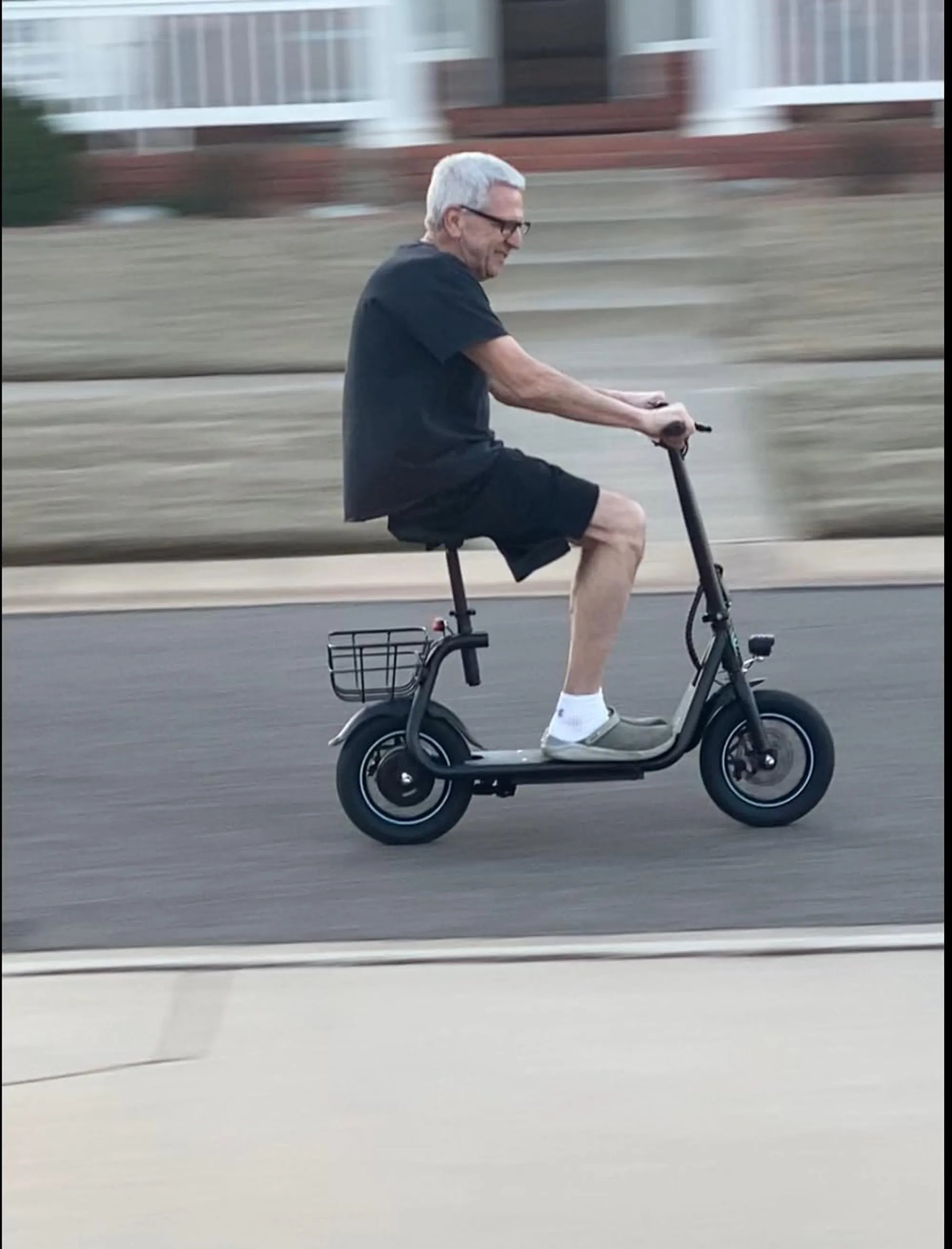
Choosing the right delivery scooter for sale isn't just a purchase; it's an investment in your livelihood. As food delivery and courier services dominate urban logistics, the electric scooter has emerged as the ultimate tool for efficiency. This guide provides the data-driven insights you need to select a scooter that maximizes your earnings, minimizes downtime, and withstands the rigors of daily professional use. We'll dissect key specifications, compare total costs, and highlight the engineering that separates commercial-grade models from recreational ones.
Introduction to Delivery Scooters: The Modern Workhorse
A delivery scooter is a high-capacity electric scooter specifically engineered for commercial use by food couriers, parcel delivery riders, and gig economy workers. It represents a fundamental shift from gasoline-powered vehicles and bicycles, offering a unique blend of low operational cost, urban agility, and sufficient cargo capacity. The right model directly impacts your bottom line by increasing the number of deliveries per shift and reducing fuel and maintenance expenses.
The market for a delivery scooter for sale has expanded rapidly, but not all models are built for the demanding 8-12 hour shifts of a professional courier. Recreational scooters often lack the necessary range, payload, and durability. This guide focuses on the specifications that matter for turning a scooter from a personal vehicle into a reliable business asset. Your choice will determine your daily operational limits and long-term profitability.
Key Features to Look for in a Delivery Scooter for Sale
Selecting a scooter for commercial delivery requires evaluating a different set of priorities than a commuter would use. Performance must be consistent, reliable, and capable of handling constant stress. The following features are non-negotiable for anyone whose income depends on their vehicle's uptime.
Battery Life & Range: Your Daily Operational Limit
The advertised range is often a best-case scenario. For delivery work, you must consider real-world range, which factors in your weight, cargo, frequent stops/starts, hills, and temperature. A scooter with a 40-mile advertised range may only deliver 25-30 miles under load. Your scooter's range must comfortably exceed your longest anticipated shift distance, with a safety buffer.
Look for battery capacity measured in Watt-hours (Wh) or Amp-hours (Ah). A higher number indicates more energy storage. For full-day delivery, a minimum of 500Wh is recommended. Charging time is equally critical; a fast charger (3-5 hours) can enable a mid-shift top-up, while a slow charger (8+ hours) could halt your workday. The battery's quality is paramount—it will undergo near-daily charge cycles.
Payload Capacity & Build Durability
Payload capacity is the combined maximum weight of the rider and all cargo. A standard commuter scooter may have a 220 lb limit, but a professional delivery scooter for sale should handle 265 lbs or more. This accounts for a rider plus a loaded delivery backpack or cargo box. Exceeding the limit stresses the motor, battery, and frame, leading to premature failure.
Durability stems from the frame material (aerospace-grade aluminum is ideal), deck size, and suspension. A reinforced stem and fork are essential to handle the vibrations and impacts of daily use on varied pavement. A sturdy, wide deck provides stability, especially when carrying bulky items. Robust suspension (spring or hydraulic) is not a luxury but a necessity for rider comfort and component longevity over potholes and curbs.
Portability and Storage Solutions
Foldability is a key feature for gig workers who use multi-modal transport (e.g., scooter + subway) or who need to store their scooter in a small apartment. A quick-folding mechanism saves time and effort. However, the folding joint must be exceptionally sturdy, as it's a potential stress point.
Integrated storage solutions directly enhance efficiency. Look for models with a large, flat deck for standing a delivery bag, built-in hooks for bag handles, or official accessory racks. Some professional models offer rear cargo racks or platforms as add-ons. These features keep your cargo secure and balanced, improving safety and handling.
Safety and Reliability for Daily Grind
Safety systems are your primary defense against accidents. A dual braking system (e.g., electronic regen + disc brake) provides superior stopping power, especially critical when carrying extra weight downhill. Lighting must be comprehensive: a bright headlight (500+ lumens), a brake light, and side reflectors. Turn signals are a highly valuable, often overlooked feature for urban traffic.
Tire choice is crucial. Pneumatic (air-filled) tires offer better shock absorption but risk punctures. Solid or honeycomb tires are puncture-proof but provide a harsher ride. For delivery, many professionals prefer the reliability of solids. Finally, an Ingress Protection (IP) rating for water and dust resistance is mandatory. An IPX5 rating means the scooter can withstand water jets from any direction, allowing you to work in rain.
Gyroor Delivery Scooters: Engineered for the Professional
When your income depends on your vehicle, brand choice matters. Gyroor designs its electric scooters with the rigor demanded by professional use, a philosophy that resonates with over 100,000 riders. Their models address the core needs identified above: endurance, strength, and all-weather capability.
The foundation of Gyroor's reliability is its UL-certified lithium-ion battery pack. Tested for over 500 charge cycles, this battery is built for the daily deep-cycle use of a delivery professional. Safety certifications mitigate fire risk, a critical concern for riders who charge their scooters frequently. This focus on core component quality ensures the scooter is an asset, not a liability.
Durability is engineered into the frame and sealing. Gyroor's commercial-focused models feature reinforced stems and decks to handle high payloads. The IPX5 water-resistant rating is a standout feature, guaranteeing that rain or wet roads won't end your shift or damage critical electronics. This resilience is backed by a straightforward 1-year comprehensive warranty, with accessible customer support to minimize potential downtime.
The Financial Case: Cost Comparison & ROI
The decision to buy a delivery scooter for sale is fundamentally financial. Let's break down the total cost of ownership (TCO) compared to alternatives. The upfront cost is only part of the equation.
| Vehicle Type | Avg. Upfront Cost | "Fuel" Cost / 100 miles | Annual Maintenance | Insurance/Registration | Parking/Tolls |
|---|---|---|---|---|---|
| Car | $5,000+ | $12 - $18 (Gas) | $800 - $1,200 | Mandatory & High | Significant |
| Gas Moped | $1,500 - $3,000 | $4 - $6 (Gas) | $300 - $500 | Often Required | Low |
| E-Bike | $1,200 - $3,000 | $0.30 - $0.50 | $150 - $300 | Usually None | None |
| Delivery Scooter | $700 - $1,800 | $0.25 - $0.40 | $100 - $200 | Usually None | None |
As the table shows, a quality delivery scooter offers the lowest operational cost per mile. Charging costs are negligible—often less than $0.50 for a full battery that can cover 40 miles. Maintenance is typically limited to tire replacements, brake pad changes, and occasional bolt tightening.
Simple ROI Calculation: If a delivery scooter for sale costs $1,200 and saves you $15 per day in gas/car expenses compared to using a car, it pays for itself in 80 working days (about 4 months). Every mile after that puts more profit in your pocket. The key is investing in a reliable model that avoids costly repairs, making brands with strong warranties and proven durability like Gyroor a financially prudent choice.
Where to Buy and What to Check Before You Purchase
Your purchasing channel affects warranty, support, and authenticity. The safest option is to buy directly from the official brand website (e.g., gyroorboard.com) or an authorized dealer. This guarantees you receive a genuine product with a valid warranty and access to manufacturer support. Major reputable online marketplaces can be acceptable, but verify the seller is an official storefront.
Pre-Purchase Checklist:
- Warranty: Confirm the warranty length (1 year is standard for professionals) and what it covers (battery, motor, frame).
- Local Laws: Verify the scooter's top speed and power comply with your local regulations for electric scooters or bicycles.
- Service & Parts: Check if the brand has accessible customer service and stocks replacement parts (tires, brakes, batteries).
- Return Policy: Understand the trial or return window in case the scooter doesn't meet your expectations.
- Test Ride: If possible, test a similar model to assess comfort, power, and portability.
Frequently Asked Questions (FAQ) About Delivery Scooters
Q1: How far can a delivery scooter realistically go on a single charge?
Real-world range is typically 70-80% of the advertised maximum. For a scooter advertised at 40 miles, expect 28-32 miles when carrying a rider and cargo, with frequent stops. Always choose a scooter whose real-world range exceeds your longest planned shift by at least 10 miles.
Q2: Are delivery scooters legal on roads and bike lanes?
Laws vary by city, state, and country. Most jurisdictions treat e-scooters similarly to bicycles if they are under a certain speed (often 20 mph) and power limit. They are generally permitted in bike lanes and on roads with speed limits under 35 mph. It is your responsibility to check local regulations regarding helmet requirements, minimum age, and approved riding areas.
Q3: What maintenance does a heavily used delivery scooter require?
Daily: Check tire pressure (if pneumatic) and brake function. Weekly: Inspect for loose bolts/nuts, clean the deck and wheels, and check brake pad wear. Monthly: Ensure folding mechanisms are tight and lubricated as needed. Periodically: Replace brake pads and tires (solid tires last much longer). Proper maintenance is simple but drastically extends scooter life.
Q4: Can I use a delivery scooter in the rain or on wet roads?
Yes, but only if the scooter has a sufficient IP water resistance rating. An IPX5 rating (like on Gyroor models) means it is protected against sustained, low-pressure water jets from any direction, making it safe for riding in rain. Never submerge any scooter. Always ride more cautiously in wet conditions, as braking distances increase.
Q5: Is it worth investing in a more expensive model for delivery work?
Absolutely. A higher initial investment in a professional-grade delivery scooter for sale from a reputable brand pays dividends in reliability, safety, and lower long-term costs. Cheap models often use inferior batteries that degrade quickly, frames that develop cracks, and lack water resistance. Downtime for repairs means lost income. A reliable scooter is a business tool, not an expense.
Conclusion: Choosing Your Partner on the Road
Your search for the perfect delivery scooter for sale culminates in a balance of hard specifications and trusted engineering. Prioritize real-world range, payload capacity, and robust safety features like dual brakes and water resistance. The financial analysis is clear: a quality electric scooter offers the fastest ROI and lowest ongoing costs of any urban delivery vehicle.
The critical differentiator is often the brand behind the product. Choosing a brand like Gyroor, with its UL-certified batteries, IPX5 weatherproofing, and professional-grade durability, is an investment in peace of mind and continuous earnings. Your scooter is your partner in building your business. Equip yourself with a tool designed for the challenge. Explore professional-grade options designed for durability and performance and browse the full Gyroor collection at gyroorboard.com.
Mid Drive Commuter Ebike: The Ultimate Urban Transportation Upgrade
High Boy Scooter Error Code F2: Complete Diagnosis & Fix Guide