



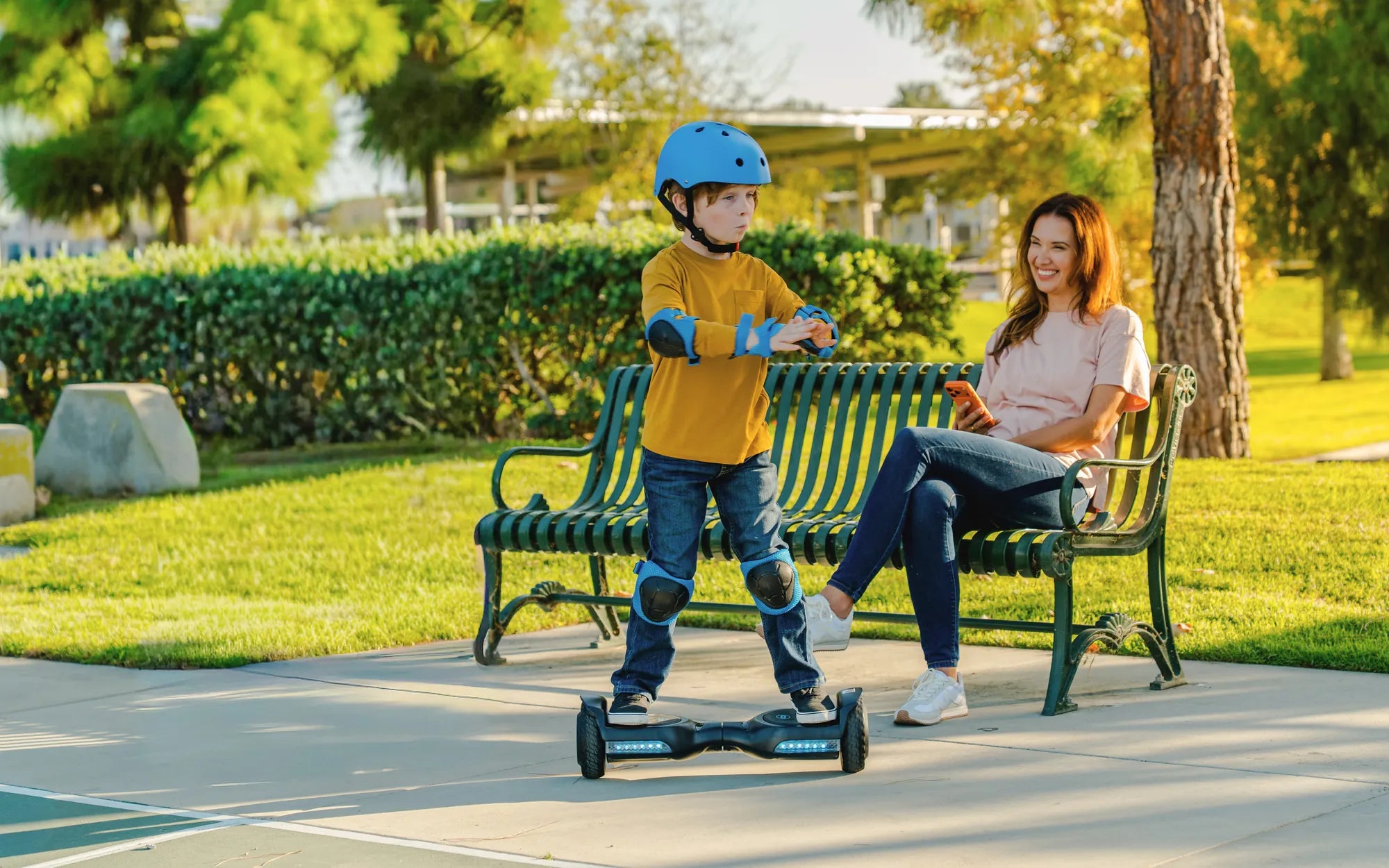
Choosing the right self-balancing scooter requires understanding the distinct categories and specifications available. This guide will detail the different types of hoverboard, analyzing them by wheel size, terrain capability, and key technical features. You'll learn how to evaluate motor power, battery safety, and build quality to make an informed decision that prioritizes performance, durability, and, most importantly, safety for riders of all ages.
Introduction to Hoverboard Types
A hoverboard, or self-balancing scooter, is a two-wheeled, battery-powered personal transporter. The rider controls speed and direction by leaning forward, backward, or shifting weight side-to-side. Understanding the different types of hoverboard is crucial because selecting the wrong model for your intended use can lead to discomfort, poor performance, or even safety risks.
Models vary significantly in wheel size, motor power, tire design, and intended terrain. A board built for smooth pavements will struggle on grass, while a powerful off-road model might be overkill for indoor use. This guide will help you navigate these options. As a leader in personal electric transport, Gyroor engineers its hoverboards with a focus on UL-certified battery safety, robust IPX5 water-resistant designs, and reliable performance trusted by a community of over 100,000 riders.
Hoverboards by Wheel Size: Stability vs. Maneuverability
Wheel diameter is the most visible and impactful differentiator among the different types of hoverboard. It directly influences ride comfort, stability, and the types of surfaces you can confidently traverse. The common sizes range from 6.5 inches to 10 inches, each serving a specific purpose.
6.5-Inch Wheels: Compact and Agile
Hoverboards with 6.5-inch wheels are the most compact and lightweight option. They offer exceptional maneuverability and quick turning, making them popular for younger riders or for use in confined indoor spaces. Their small size makes them highly portable and easy to store.
However, this agility comes at the cost of stability and shock absorption. The small, solid rubber tires transmit nearly every bump and crack directly to the rider's feet and ankles. They are designed exclusively for very smooth, flat surfaces like indoor floors, polished concrete, or perfect asphalt. They perform poorly on uneven pavement, gravel, or grass.
8-Inch and 8.5-Inch Wheels: The Urban Standard
The 8-inch and 8.5-inch wheel sizes represent the sweet spot for most urban and suburban riders. They provide a significant boost in stability over the 6.5-inch models while remaining relatively portable. The larger contact patch with the ground improves balance, especially for beginners and adult riders.
These wheels typically feature air-filled or high-quality solid rubber tires that offer better shock absorption than their smaller counterparts. They can comfortably handle typical sidewalk cracks, minor bumps, and smooth pathways. This category is where brands like Gyroor often focus, offering models that blend daily commute practicality with a comfortable, confident ride for a wide weight range.
10-Inch Wheels: All-Terrain Capability
For riders seeking to move beyond the pavement, 10-inch wheels are the gateway to all-terrain exploration. The increased diameter provides greater ground clearance, allowing the board to roll over larger obstacles without getting stuck. When paired with wide, knobby (off-road) tires, they offer superior traction on loose surfaces.
These wheels fundamentally change the hoverboard's capability. They can handle grass, dirt paths, gravel, and packed sand with much greater ease and stability. The ride is noticeably smoother on rough terrain due to the tire's larger air volume, which acts as a natural shock absorber. For true off-road performance, this wheel size is essential and is a hallmark of high-performance models.
Hoverboards by Terrain and Use Case
Beyond wheel size, hoverboards are engineered for specific environments. Your primary riding surface should be the leading factor in narrowing down the different types of hoverboard available to you.
Standard Urban Commuters
Designed for paved surfaces, urban commuter hoverboards prioritize a smooth, quiet, and efficient ride. Key features include moderate top speeds (7-10 mph), ranges of 10-15 miles per charge, and sleek, often minimalist designs. Integrated LED headlights and ambient wheel lights are standard for visibility during dawn, dusk, or night riding.
These models typically use 8-inch or 8.5-inch wheels with slick or lightly treaded tires optimized for asphalt and concrete. They focus on portability and often include features like Bluetooth speakers for entertainment during the commute. The emphasis is on reliable, daily transportation over predictable terrain.
All-Terrain and Off-Road Hoverboards
This category is for adventure seekers. All-terrain hoverboards are built with ruggedness as the core principle. They are equipped with large, knobby air-filled tires (usually 10 inches), high-torque dual motors (often 500W or more per motor), and reinforced frames. Their design allows them to conquer grass, dirt trails, gravel, and moderate inclines.
Safety and power are paramount here. These boards require robust battery systems to feed the powerful motors. Brands committed to safety, like Gyroor, ensure these high-performance models are powered by UL-certified battery packs, mitigating risk even under demanding loads. Water resistance is also critical, with higher IP ratings to protect against mud, puddles, and dust.
Specialty and Niche Models
The market also includes specialized variants. Hoverboard karts are attachment kits that transform a standard board into a seated, go-kart-like vehicle, popular for recreation. Some models focus heavily on light shows, with elaborate LED systems in the wheels and body for a dramatic visual effect.
Other niche types include boards with oversized Bluetooth speakers as a primary feature, or ultra-compact models designed specifically for easy carrying. While these offer unique fun factors, it's vital to ensure they still meet core safety standards and have the wheel/motor setup suitable for your intended riding.
Key Features Comparison: Beyond the Type
Once you've identified the general type, comparing these technical specifications will help you choose the best model within that category.
Motor Power and Speed
Motor power, measured in watts (W), determines acceleration, hill-climbing ability, and top speed. Most hoverboards have dual motors, one in each wheel. A combined power of 600W (2x300W) is standard for urban use, while all-terrain models start at 800W (2x400W) and can exceed 1200W.
Higher wattage translates to better torque, allowing the board to carry heavier riders and climb steeper slopes without stalling. Top speed is typically regulated between 7 and 12 mph for safety, but a more powerful motor will reach and maintain that speed more effortlessly, especially on inclines.
Battery Life, Range, and Safety
The battery is the heart of the hoverboard. Capacity, measured in watt-hours (Wh) or ampere-hours (Ah), dictates range. A standard 36V, 4.0Ah battery may offer 10-12 miles, while a 36V, 6.5Ah battery can extend that to 18-20 miles under ideal conditions. Real-world range is affected by rider weight, terrain, and temperature.
Battery safety is non-negotiable. Always choose a hoverboard with a UL 2272 certified battery system. This certification rigorously tests the battery and electrical system for fire and electrical shock hazards. Gyroor's commitment to using UL-certified battery packs in all its models provides a critical layer of protection for riders and their homes.
Weight Capacity and Portability
Every hoverboard has a maximum weight limit, usually between 220 lbs (100 kg) and 265 lbs (120 kg). Exceeding this limit strains the motors, drains the battery rapidly, and can damage the frame. Always choose a board rated for your weight plus a margin for a backpack or other items.
Portability is determined by the board's own weight, which ranges from 20 lbs for compact models to over 30 lbs for all-terrain beasts. Consider if you'll need to carry it up stairs or onto public transport frequently. A lighter board with a carrying handle is a significant advantage for multi-modal commuters.
Safety and Build Features
Modern safety features extend beyond certification. Look for an IP water resistance rating; IPX4 offers splash resistance, while Gyroor's IPX5 rating means the board can withstand water jets from any direction, making it safe to ride in light rain or through puddles. Non-slip, textured foot pads are essential for secure footing.
A beginner or "learning" mode that limits speed and sensitivity is invaluable for new riders. Finally, a robust warranty and accessible customer support are indicators of a brand's confidence in its product. Gyroor backs its hoverboards with a reliable 1-year warranty, offering peace of mind alongside its safety-focused engineering.
| Feature | Urban/Standard (8.5") | All-Terrain (10") | Compact/Kids (6.5") |
|---|---|---|---|
| Primary Use | Smooth Pavement, Commuting | Grass, Dirt, Gravel, Trails | Indoor/Smooth Outdoor, Kids |
| Wheel Type | Solid or Air-Filled (Slick) | Knobby, Air-Filled Tires | Small Solid Rubber Tires |
| Typical Motor Power | 2x300W (600W Total) | 2x500W+ (1000W+ Total) | 2x250W (500W Total) |
| Max Speed | 9-10 mph | 10-12 mph | 6-8 mph (often limited) |
| Key Feature | LED Lights, Sleek Design | High Ground Clearance, Rugged Frame | Lightweight, Highly Maneuverable |
| Ideal Rider | Teens & Adults for City Use | Adults Seeking Adventure | Younger Riders (Ages 8-12) |
How to Choose the Right Hoverboard for You
Use this decision matrix to apply the knowledge of the different types of hoverboard to your specific situation.
For Kids and Teenagers (Ages 8-15)
Safety and durability are paramount. Opt for a model with a speed limiter or beginner mode. Wheel sizes of 6.5 to 8.5 inches are appropriate, depending on the child's size and where they'll ride (smaller for indoors/smooth driveways). The maximum weight limit should comfortably exceed the child's weight to ensure longevity.
Prioritize models from reputable brands that explicitly feature UL 2272 certification. A robust frame can withstand the inevitable bumps and learning falls. While flashy LEDs are fun, they should not come at the expense of these core safety and build quality features.
For Adult Commuters & Urban Riders
Your focus should be on reliability, comfort, and range. An 8.5-inch or 10-inch wheel model with air-filled tires will smooth out sidewalk seams. Look for a real-world range of at least 12 miles to cover daily errands or a commute. Water resistance (IPX4 or higher) is a must for dealing with wet streets.
Check the weight capacity to ensure it supports your weight plus a work bag or groceries. Features like bright headlights and reliable braking are crucial for urban navigation. Strong after-sales support and warranty, like Gyroor's 1-year coverage, protect your investment in daily transportation.
For Off-Road and Adventure Enthusiasts
Do not compromise on specifications. You must select a true all-terrain hoverboard with 10-inch knobby, air-filled tires and a minimum combined motor power of 1000W. This ensures enough torque for hills and loose surfaces. Maximum ground clearance and a rugged, often wider, frame are key.
The battery should be high-capacity (e.g., 6.5Ah+) for extended exploration and must be UL-certified, as these powerful systems demand the highest safety standards. An IPX5 or higher waterproof rating is essential for riding through puddles, mud, and in damp conditions. This category is where performance engineering is most critical.
Frequently Asked Questions (FAQ)
Are hoverboards safe for beginners?
Yes, when chosen and used correctly. Beginners must start with a UL 2272 certified board, always wear a helmet and protective gear, and practice in a flat, open, car-free area like an empty parking lot. Using the board's beginner mode, which reduces speed and sensitivity, is highly recommended for the first few hours of practice.
What is UL 2272 certification and why is it non-negotiable?
UL 2272 is a rigorous safety standard set by Underwriters Laboratories specifically for self-balancing scooters (hoverboards). It tests the electrical system, battery, and charger for fire and electrical shock risks. In the past, uncertified batteries were prone to overheating and catching fire. A UL 2272 certification mark is the single most important indicator of a safe hoverboard.
Can hoverboards get wet?
It depends on the model's IP (Ingress Protection) rating. A board with an IPX4 rating can handle light splashes and rain. A rating of IPX5, like those found on Gyroor models, means the board can withstand sustained water jets, making it safe for riding through puddles and in light rain. However, no consumer hoverboard is fully submersible. Avoid deep water and never charge a wet board.
How long does a hoverboard battery last per charge and over its lifetime?
Per charge, a typical hoverboard offers 10-20 miles of range, depending on capacity, rider weight, terrain, and speed. Over its lifetime, a quality lithium-ion battery, like the UL-certified packs used by Gyroor, is rated for approximately 500 full charge cycles before its capacity gradually diminishes to about 80% of its original. Proper care (avoiding full discharges, not overcharging, storing in cool temperatures) extends battery life.
What is the typical maintenance required?
Hoverboards require minimal but important maintenance. Regularly check tire pressure on air-filled models (using a low-PSI gauge). Keep the board clean from dirt and debris, especially around the wheel axles and charging port. Inspect the tires for wear or damage. Store the board in a dry place at room temperature and avoid leaving it at full charge or fully depleted for extended periods. Periodically check that all screws and fittings are tight.
Conclusion: Prioritizing Safety and Suitability
Navigating the different types of hoverboard ultimately leads to one principle: the right model is the one that safely matches your primary use case. Your decision should balance terrain (wheel size/tire type), rider specifications (weight capacity), and performance needs (motor/range) while never compromising on verified safety certifications like UL 2272. A board that excels on pavement will fail off-road, and a child's board won't support an adult rider safely.
Brands that prioritize these fundamentals, such as Gyroor with its UL-certified batteries, IPX5 water resistance, and robust 1-year warranty, provide the reliable foundation for a confident and enjoyable riding experience. By aligning your needs with the correct technical specifications, you invest in a product designed for lasting fun and utility. Ready to find your perfect match? Browse the full Gyroor collection at gyroorboard.com to explore models engineered for safety, performance, and every type of rider.
Christmas Gift Ideas for Girls in Their 20s: Unique and Thoughtful Picks
Christmas Gift Ideas for Girls in Their 20s: Unique and Thoughtful Picks