



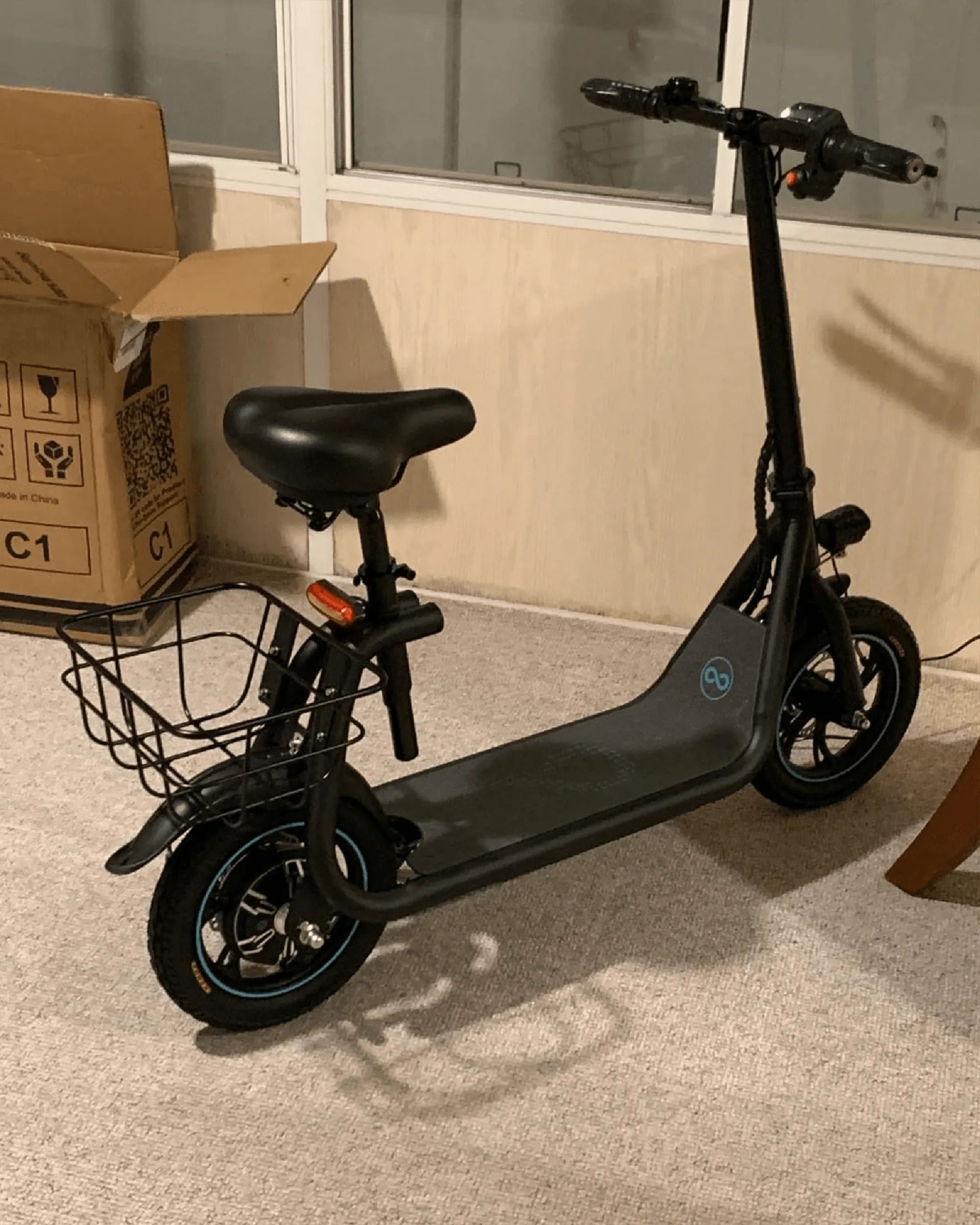
Understanding Dirt Bike Range – More Than Just a Number
Dirt bike range defines how far you can ride on a single charge, making it the most critical specification for electric off-road models. Unlike urban scooters used on predictable pavement, an electric dirt bike's true range is a dynamic figure heavily influenced by extreme variables. Terrain, elevation changes, rider weight, and riding aggression can slash a manufacturer's ideal claim by 50% or more.
For adventurers, this means the difference between a successful trail loop and a long walk home. At Gyroor, we engineer our off-road e-bikes with these realities in mind. Our commitment is to provide honest, real-world range estimates backed by UL-certified battery technology and rigorous testing, ensuring riders can trust their equipment when miles from the nearest outlet.
This guide will dissect every factor that determines your electric dirt bike's range. You will learn how to interpret specifications, apply techniques to extend your distance, and understand the engineering that delivers reliable power. The goal is to transform range from a marketing number into a practical tool for planning your next adventure.
Key Factors That Determine Your Electric Dirt Bike's Range
Manufacturers often advertise a maximum range figure achieved under perfect laboratory conditions. Real-world riding introduces a complex set of variables that directly drain your battery. Understanding these factors is the first step to accurately predicting and extending your ride distance.
The primary equation is simple: available energy (battery capacity) minus energy consumed (motor load) equals range. However, motor load is not constant. It fluctuates wildly based on your choices and the environment. A steep hill demands more power than a flat trail. Sandy soil creates more resistance than hardpack. Each decision impacts your final mileage.
Ignoring these variables leads to stranded riders and disappointing experiences. By mastering the following elements, you gain control over your bike's performance. You can plan routes with confidence and adapt your riding to conserve energy when needed, unlocking the full potential of your electric dirt bike.
Battery Capacity: The Fuel Tank (Volts & Amp-Hours)
Battery capacity is the foundational limit of your dirt bike's range. It is typically expressed in watt-hours (Wh), calculated by multiplying voltage (V) by amp-hour (Ah) rating. A higher Wh number indicates a larger "fuel tank." For example, a 48V 20Ah battery holds 960Wh of energy.
Voltage determines the system's power potential, while amp-hours indicate how long that power can be sustained. Gyroor utilizes high-density, UL-certified lithium-ion battery packs. This certification is crucial—it ensures stable cell chemistry and advanced Battery Management Systems (BMS) that prevent overcharging, overheating, and premature voltage sag.
Voltage sag is a critical concept. As a battery depletes, its voltage drops under load. A quality BMS manages this discharge curve, delivering consistent power for longer. Cheap, uncertified batteries may show full charge but experience dramatic voltage sag under hard acceleration, drastically cutting usable range and power.
Motor Power & Riding Mode: Throttle vs. Efficiency
Motor power, measured in watts (W), is your engine. A 1000W motor provides tremendous torque for climbing but consumes energy rapidly at full throttle. Your choice of riding mode is the primary lever for managing this consumption. Most electric dirt bikes and e-bikes offer multiple levels of Pedal Assist (PAS) and a pure throttle mode.
Using a low PAS setting (e.g., PAS 1 or 2) on flat or rolling terrain maximizes efficiency. The motor provides a gentle boost to your pedaling, extending range significantly. In contrast, relying solely on the throttle, especially at maximum output, is the least efficient method. It's akin to driving a car in first gear everywhere—powerful but wasteful.
For technical off-road sections, throttle is essential. The key is strategic use. Pulsing the throttle to maintain momentum over obstacles is more efficient than holding it wide open. Understanding when to pedal-assist and when to throttle is a skill that directly translates to longer adventures.
Terrain & Elevation: The Ultimate Range Test
Terrain is the single greatest external factor affecting dirt bike range. Flat, hard-packed dirt offers minimal rolling resistance. Introduce hills, and energy consumption soars. Climbing a steep grade can demand 5-10 times more power than cruising on flat ground, instantly decimating range estimates.
Soft surfaces like sand, deep mud, or loose gravel dramatically increase resistance. The tires sink and slide, forcing the motor to work harder just to maintain speed. Riding in these conditions can reduce range by 40-60% compared to ideal hardpack. Elevation gain must be a primary consideration in route planning.
Gyroor designs its off-road frames and motors to handle these stresses efficiently. A robust motor with high torque at low RPMs is better suited for climbs than a high-RPM motor designed for speed. The right engineering minimizes wasted energy, preserving range even when the trail turns brutal.
Rider Input: Weight, Riding Style, and Tire Pressure
Rider and gear weight constitute the total payload. More weight requires more energy to accelerate and climb. Adding 50 lbs of rider or cargo can reduce range by 10-20%. Similarly, an aggressive riding style—characterized by hard acceleration, frequent braking, and stop-and-go movement—is a major range killer.
Maintaining momentum is a cornerstone of efficiency. Smooth, predictable inputs allow the motor to operate in an efficient power band. In contrast, jackrabbit starts force the motor to draw peak current repeatedly, which is incredibly taxing on the battery. Tire pressure is a simple yet often overlooked factor. Under-inflated tires have a larger contact patch, increasing rolling resistance.
Checking and maintaining the manufacturer's recommended PSI before every ride is a free and easy way to gain extra miles. A well-maintained bike with clean, lubricated drivetrain components and non-dragging brakes also reduces parasitic energy loss, ensuring every watt from the battery propels you forward.
Gyroor's Engineering for Maximum Real-World Range
At Gyroor, we bridge the gap between laboratory ideals and trail reality through intentional engineering. Our design philosophy focuses on core technologies that enhance reliability, safety, and consistent performance—the pillars of achieving true real-world range. We build for the rider who needs to trust their equipment miles from civilization.
This commitment is reflected in our customer base of over 100,000 riders across North America and Europe. They choose Gyroor for adventures where failure is not an option. Our 4.5/5 average rating is built on delivering promises, especially regarding performance and durability. The following technologies are not just spec sheet items; they are direct contributors to extending your ride.
UL-Certified Battery Packs: Safety Meets Sustained Power
The heart of our range performance is the UL-certified battery. This certification is more than a safety badge; it's a performance guarantee. UL-certified cells undergo stringent testing for thermal stability, cycle life, and consistent discharge rates. Our battery packs are rated for 500+ charge cycles while maintaining high capacity.
A robust Battery Management System (BMS) is integrated into every pack. It precisely monitors cell voltage, temperature, and current. This prevents the deep discharges and voltage spikes that degrade cheaper batteries. The result is a pack that delivers stable voltage under load, minimizing sag and providing predictable power from 100% to 20% charge.
This consistency is key for range estimation. Riders get more of the advertised capacity in usable form. When we state a range estimate, it is backed by cells that perform as specified, not just when new but throughout the warranty period and beyond.
IPX5 Water-Resistant Design: Protection Against the Elements
Off-road means water, mud, and dust. Ingress of these elements into electrical components causes corrosion, short circuits, and increased resistance—all of which degrade performance and silently drain range over time. Gyroor's IPX5 water-resistant rating is a critical defense.
Key components like the battery housing, controller compartment, and motor connections are sealed against low-pressure water jets from any direction. This protection ensures that a stream crossing or a muddy section doesn't compromise electrical efficiency. A dry, clean connection has minimal resistance, allowing power to flow from the battery to the motor with less loss.
Long-term, this design preserves the bike's original performance. It prevents the gradual efficiency decline seen in non-protected systems where corrosion increases internal resistance, forcing the system to work harder and consume more energy for the same output.
Efficient Drive Train & Regenerative Braking
Efficiency extends beyond the battery and motor. Gyroor optimizes the entire power pathway. Our gear systems and chain drives are designed for smooth engagement with minimal mechanical loss. A well-aligned, lubricated drivetrain ensures that the motor's power is effectively translated to wheel spin, not wasted as friction and heat.
Some Gyroor models feature regenerative braking. While the energy recaptured on typical off-road descents is modest (typically adding 5-10% to range on very hilly terrain), the principle is valuable. It converts kinetic energy during braking or downhill coasting back into stored battery energy.
More importantly, it promotes a smoother riding style. Using engine braking encourages riders to anticipate terrain and conserve momentum, which is the most significant range-extending technique of all. The system integrates safety with efficiency, slowing the bike while putting a little energy back into the pack.
Practical Guide: How to Extend Your Dirt Bike's Range on Every Ride
Theoretical knowledge becomes powerful when applied. These actionable strategies can significantly increase the distance you achieve on a single charge. Implementing even a few of these tips can turn a marginal ride into a successful one.
Pre-Ride Checklist for Optimal Efficiency
Five minutes of preparation can add miles to your ride. First, check and adjust tire pressure to the recommended PSI (found on the tire sidewall). Proper inflation reduces rolling resistance. Second, spin the wheels to ensure brakes are not dragging; adjust calipers if you hear persistent rubbing.
Third, inspect and lubricate the chain if it appears dry or dirty. A clean drivetrain operates with less friction. Fourth, use a GPS app or topo map to plan your route. Consider total elevation gain and identify potential bail-out points if range becomes a concern. Finally, ensure your battery is fully charged before departure, and consider the weather—cold temperatures reduce battery capacity.
Mastering Riding Techniques for Longer Adventures
Your right hand and your legs are the ultimate range-extending devices. On flats and gentle inclines, use the lowest effective PAS level. Let your pedaling do the work, with the motor as an assist. When approaching a hill, build momentum on the flat section rather than starting the climb at a low speed.
Use the throttle in pulses to clear obstacles or maintain momentum in technical sections, rather than holding it down continuously. On long descents, use regenerative braking (if equipped) or coast to recover energy. Anticipate the trail to maintain a smooth, steady pace; constant acceleration and braking is the most inefficient way to ride.
Maintenance Habits That Preserve Battery Health
Long-term range depends on battery health. Avoid routinely draining the battery to 0%. Lithium-ion batteries prefer partial discharges. If storing the bike for more than a few weeks, store the battery at a 40-60% charge level in a cool, dry place. This minimizes stress on the cells.
Use only the manufacturer-provided charger. After a ride, let the battery cool down before charging. Keep the battery terminals and connectors clean and dry. Periodically check the entire electrical system for loose connections, as these can cause resistance and energy loss. Following these habits ensures your battery delivers its full rated capacity for years.
Data & Comparison: Interpreting Manufacturer Range Claims
To make informed decisions, riders must learn to decode specification sheets. The table below provides a realistic translation of a common manufacturer "Max Range" claim under different riding conditions. This model assumes a Gyroor-class e-bike with a 48V 20Ah (960Wh) battery and a 750W motor, advertised with a "Max Range of 50 miles."
| Riding Scenario | Estimated Real-World Range | Key Factors at Play |
|---|---|---|
|
Ideal Conditions (Flat Hardpack, PAS 1, 160lb Rider) |
~45-50 miles (90-100% of Claim) |
Minimal resistance, low motor assist, optimal efficiency. This is the lab-test scenario. |
|
Moderate Trail Riding (Rolling Hills, Loose Dirt, Mixed Throttle/PAS) |
~30-38 miles (60-75% of Claim) |
Moderate elevation gain, increased surface resistance, higher average power draw. |
|
Aggressive Off-Road (Steep Climbs, Sand/Mud, Max Throttle Use) |
~20-25 miles (40-50% of Claim) |
High motor load, constant high-power demand, maximum resistance from terrain. |
|
Cold Weather Operation (~32°F / 0°C, Mixed Terrain) |
~25-30 miles (50-60% of Claim) |
Reduced battery chemical efficiency combined with standard trail factors. |
This table illustrates why buying based solely on the maximum claim is risky. A rider planning 30-mile aggressive trail loops needs a bike advertised for 50+ miles under ideal conditions. Gyroor provides transparent, condition-based guidance to help riders select the model that truly fits their adventure profile.
Conclusion: Choosing the Right Dirt Bike for Your Range Needs
True dirt bike range is a partnership between intelligent engineering and informed riding. It is a dynamic number that respects the laws of physics and the challenges of the trail. By understanding the factors within your control—riding mode, technique, maintenance—you can consistently achieve and even exceed realistic expectations.
The foundation for success, however, is a machine built with honesty and durability. Gyroor's commitment to UL-certified batteries, IPX5 water-resistant construction, and a reliable 1-year warranty is our promise to provide that foundation. We engineer for the real world so you can explore it with confidence.
When selecting your next electric dirt bike, look beyond the headline range figure. Assess the battery certification, the build quality, and the manufacturer's reputation for support. Choose a model whose maximum range is 30-40% greater than your longest planned excursion to account for variables. This ensures you'll have the reserve power needed for unexpected detours or challenging conditions.
Ready to explore further? Discover the Gyroor collection of off-road e-bikes and e-scooters, engineered for real adventure with transparent performance specs. Browse the full Gyroor collection at gyroorboard.com and find the model that matches your range ambitions and riding style.
FAQ: Your Electric Dirt Bike Range Questions, Answered
Q: Can I swap batteries on the trail to extend range?
A: This depends on the specific model. Some Gyroor e-bikes feature removable battery packs, allowing you to carry a spare UL-certified battery for instant doubling of your range. Check your model's specifications. Carrying a spare is an excellent solution for epic all-day rides, though it adds weight and cost.
Q: How does cold weather affect my e-dirt bike's range?
A: Cold temperatures (below 50°F/10°C) significantly impact lithium-ion battery chemistry, reducing its ability to hold and deliver charge. In near-freezing conditions (32°F/0°C), you can expect a 20-30% reduction in range. To mitigate this, store the battery indoors until ride time, and keep your riding effort moderate to allow internal heat buildup.
Q: What does the 1-year warranty cover regarding battery and range?
A> Gyroor's 1-year comprehensive warranty covers defects in materials and workmanship, including the battery. If the battery's capacity falls significantly below its specified rating under normal use within the warranty period, it is covered for repair or replacement. This warranty is backed by US-based customer support.
Q: Does pedaling an electric dirt bike actually extend the range?
A> Absolutely. Pedaling, especially in lower Pedal Assist (PAS) modes, dramatically extends range. You are contributing mechanical energy, reducing the electrical load on the motor. On flat terrain, using PAS 1 or 2 with moderate pedaling can extend your range by 50-100% compared to using throttle-only.
Q: How accurate is the range indicator on the display?
A> Most onboard estimators are simple calculations based on current battery voltage and recent power consumption. They can be inaccurate, especially if your riding style or terrain changes. Treat it as a general guide, not a precise gauge. Learn to correlate the battery voltage readout (if available) with your known range experience for better accuracy.
Q: How long does it take to fully charge the battery?
A> Charge time varies by battery capacity. A standard 48V charger (2-3 Amp) typically takes 4-8 hours for a full charge from empty. We recommend using only the provided charger and never leaving the battery to charge unattended for extended periods, such as overnight. Partial charges are fine and can be better for long-term battery health.
Ebike for Tall People: The Ultimate Guide to Finding a Perfect Fit
Fastest E Dirt Bike 2025: The Ultimate Performance & Buyer's Guide