



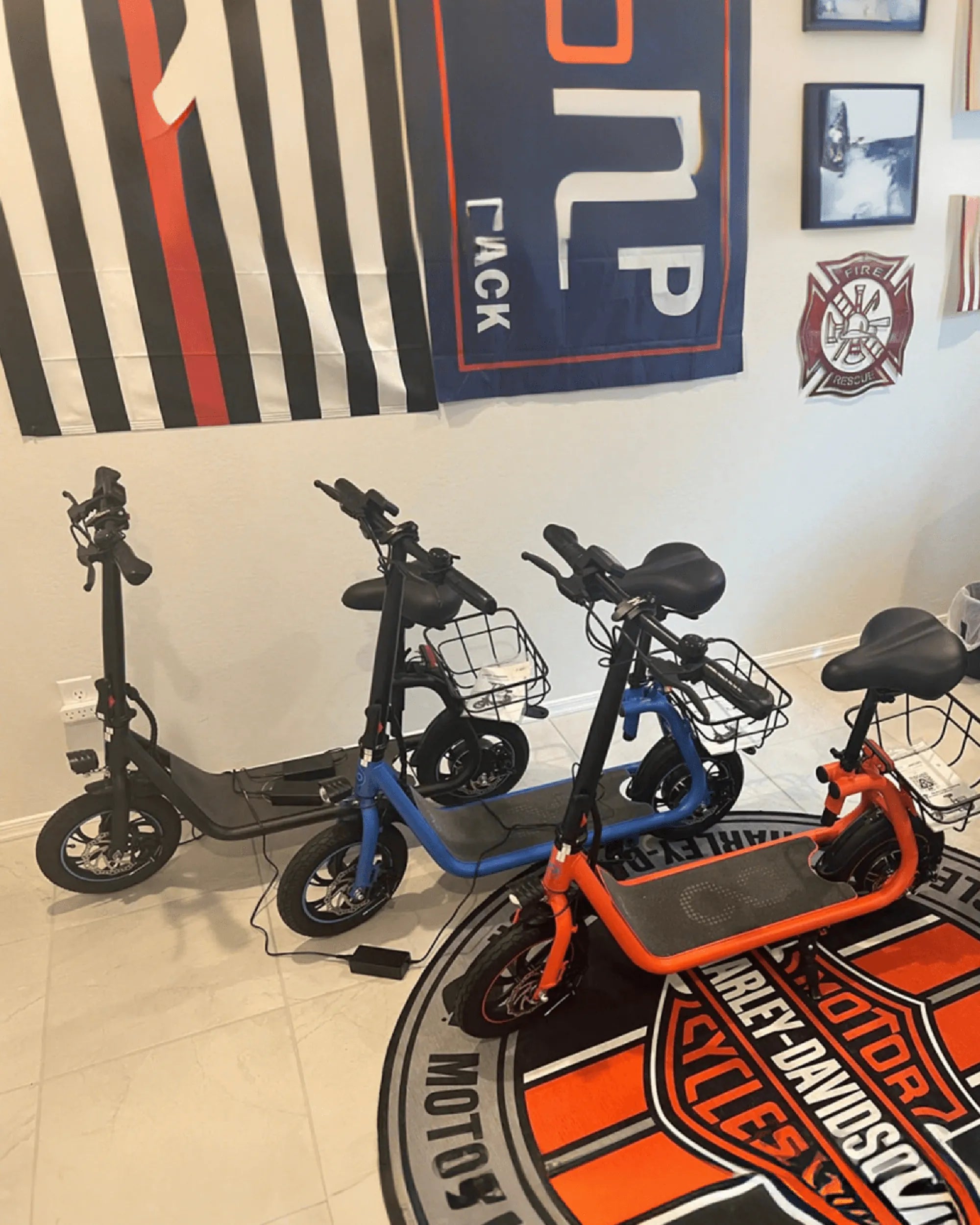
You've just unboxed your new electric scooter, ready for your first ride. But before you hit the road, a critical question arises: Do electric scooters come with chargers, and is the one in the box the right one? This isn't just about convenience—it's about safety, battery longevity, and the overall value of your purchase. A complete, compatible charger is the lifeline of your e-scooter, and understanding what you should receive is the first step to responsible ownership. This guide will provide a detailed, data-driven breakdown of everything you need to know about electric scooter chargers, from standard inclusions to technical specifications and vital safety protocols. We'll clarify the nuances, decode the specs, and explain why reputable brands like Gyroor—a leading electric scooter and e-bike brand trusted by over 100,000 riders across North America and Europe—consider a matched, certified charger a non-negotiable part of the package.
The Short Answer: Yes, But With Critical Nuances
The direct answer is that any new electric scooter from a reputable manufacturer should include a compatible battery charger in the box. It is a fundamental component of the product, not an optional accessory. When you purchase a Gyroor electric scooter, for instance, a UL-certified charger specifically engineered for that model's battery system is included as standard.
However, the critical nuance lies in the word "compatible." Not all chargers are created equal. The included charger must match the scooter's battery voltage, amperage, and connector type precisely. Using an incorrect charger, even if it physically fits, can lead to catastrophic failure, including battery damage, fire risk, and voided warranties. The inclusion of a proper charger is a key indicator of a brand's commitment to safety and a complete user experience.
For budget or off-brand scooters, the charger may be of lower quality or lack crucial safety certifications. This is a significant red flag. A high-quality charger is an investment in the scooter's long-term health and your personal safety. Therefore, while the answer to "Do electric scooters come with chargers?" is generally yes, the more important question is: "Does it come with the right, safe charger?"
What's in the Box? Standard Electric Scooter Charging Components
When you open the box of a quality electric scooter, you should find a complete charging kit designed for immediate use. This typically consists of three main components that work together to safely transfer power from your wall outlet to your scooter's battery.
First is the AC power adapter (the "wall brick"). This is the primary unit that plugs into a standard household outlet (typically 100-240V AC). Its job is to convert the high-voltage alternating current (AC) from your wall into a lower-voltage direct current (DC) suitable for battery charging. A quality adapter will have clear labeling indicating its input and output ratings.
Second is the output cable. This cable connects the power adapter to the scooter's charging port. It ends in a specific connector, such as an XLR connector (common on many performance models), a DC barrel plug, or a proprietary magnetic connector. The fit must be secure to ensure proper electrical contact and often includes weather-sealing for the charging port.
Finally, responsible brands often include a storage pouch or cable tie for the charger. This promotes proper care and portability. For example, Gyroor packages its UL-certified chargers with a protective pouch, emphasizing the component's importance and encouraging users to keep the charging system organized and protected from physical damage during transport or storage.
Charger Specifications Decoded: Voltage, Amperage, and Connectors
Understanding your charger's specifications is essential for safe operation and informed replacement. These specs are always printed on the charger's label and dictate its compatibility.
Output Voltage (V): This must exactly match your scooter's battery system voltage. Common voltages are 36V, 42V, 48V, and 52V. Using a charger with a higher voltage will overcharge and likely damage the battery, creating a severe safety hazard. A lower-voltage charger will fail to fully charge the battery. For instance, a Gyroor F1 Pro scooter with a 48V battery requires a charger with a 54.6V output (the standard charging voltage for a 48V lithium-ion pack).
Output Current/Amperage (A): This determines charging speed. A standard charger might be 1.5A or 2A, providing a full charge in 4-8 hours. A "fast" charger might be 3A or 4A, cutting charge time significantly. However, higher amperage increases heat and stress on the battery cells. The scooter's Battery Management System (BMS) must be designed to handle the faster charge rate. Using an overly high-amp charger on a scooter not designed for it can degrade the battery prematurely.
Connector Type: The physical plug must match the scooter's charging port. Common types include:
- XLR: Robust, locking connector common on higher-power scooters.
- DC Barrel Plug: Common but varies in size (e.g., 5.5x2.1mm vs. 5.5x2.5mm).
- Proprietary Magnetic Connectors: Designed for easy, safe connection and often feature weather resistance.
Mismatching the connector, even if it seems to fit loosely, can cause arcing, poor connection, and overheating.
The Critical Role of UL-Certified Chargers (A Gyroor Standard)
This is the most critical safety differentiator. UL (Underwriters Laboratories) certification is an independent, rigorous testing standard for electrical safety in the United States. A UL-certified charger has undergone extensive testing for fire risk, electrical shock hazard, and overall construction quality.
When a brand like Gyroor includes a UL-certified charger, it signifies that the entire charging system—from internal components to the external casing—meets high safety benchmarks. The certification process tests for abnormal operations, fault conditions, and long-term durability. This is a non-negotiable feature for any device that will be plugged into your home's electrical system for hours at a time, often unattended.
In contrast, many generic, unbranded, or aftermarket chargers lack this certification. These chargers often use inferior components, lack proper insulation, and do not have adequate over-voltage, over-current, or short-circuit protection. They are a leading cause of battery failures and e-mobility related fires. The minor cost savings of a non-certified charger are never worth the immense risk to property and personal safety.
Gyroor's commitment to including UL-certified battery packs and matched chargers with all its models is a core brand promise. It directly addresses rider safety concerns and builds trust, ensuring that the over 100,000 riders using their products have a reliable and secure foundation for charging.
Fast Chargers vs. Standard Chargers: Pros, Cons, and Availability
Charger speed is a key consideration for many riders. Here’s a comparison of standard and fast charging options.
| Feature | Standard Charger (Included) | Fast Charger (Often Optional) |
|---|---|---|
| Output Amperage | 1.5A - 2A | 3A - 4A+ |
| Charge Time (for a 500Wh battery) | ~5-7 hours | ~2-3.5 hours |
| Battery Stress & Heat | Lower, optimal for longevity | Higher, can accelerate wear |
| Typical Inclusion | Yes, standard with scooter | No, usually a separate purchase |
| Best Use Case | Overnight charging, daily use | Mid-day top-ups, urgent needs |
| Safety & Compatibility | Guaranteed with OEM charger | Must be verified as compatible with your specific model |
Most electric scooters come with a standard charger optimized for battery health and safety. Fast chargers are typically sold as an accessory for riders who need quicker turnaround times. It is imperative to only use a fast charger explicitly approved by the scooter manufacturer for your model. Using an unapproved high-amp charger can overwhelm the BMS, cause excessive heat buildup, and permanently reduce your battery's capacity and lifespan.
For optimal battery longevity, the daily use of the standard included charger is recommended. The fast charger should be reserved for situations where you truly need a rapid top-up. Gyroor, for example, offers compatible fast chargers as accessories for specific models in its lineup, ensuring they are engineered to work safely within the scooter's electrical parameters.
Lost or Need a Spare? How to Safely Replace Your Electric Scooter Charger
If you lose or damage your charger, replacing it correctly is paramount. The safest and most reliable method is to purchase an OEM (Original Equipment Manufacturer) charger directly from the scooter brand or an authorized dealer.
To order the correct replacement, you will need your scooter's exact model name/number (e.g., Gyroor F1 Pro). You can then cross-reference this on the manufacturer's website or with customer support. Provide the specifications from your old charger's label: output voltage (V), output current (A), and connector type. Reputable brands like Gyroor have these parts readily available for purchase to support their customers throughout the product's life.
You must avoid universal or "fits-all" chargers sold online. Even if the plug fits and the voltage seems close, subtle differences in the charging algorithm or a lack of communication with the BMS can lead to improper charging. These chargers rarely have legitimate safety certifications and pose a significant risk.
If an OEM charger is temporarily unavailable, a last-resort option is to source a replacement from a highly reputable electronics supplier that can provide a charger matching all specifications exactly, including connector polarity. However, this carries more risk than using an OEM part and may still affect warranty coverage. The clear and unequivocal advice is to always seek the official replacement first.
Charging Best Practices for Maximum Battery Life
Using the correct charger is the first step; using it wisely is the second. Following these best practices can double or even triple the lifespan of your scooter's expensive lithium-ion battery.
Avoid Extreme States of Charge: Lithium-ion batteries degrade fastest when kept at 0% or 100% for extended periods. For daily use, try to keep the charge between 20% and 80%. For storage longer than a month, charge the battery to about 50-60%.
Unplug Once Fully Charged: Modern scooters have BMS that should cut off charge at 100%, but leaving it plugged in continuously keeps the battery at a high-stress voltage. Unplug the charger once the indicator shows a full charge.
Mind the Temperature: Never charge a battery that is below freezing (0°C / 32°F) or above 45°C (113°F). Charge in a cool, dry, well-ventilated area away from flammable materials. Allow the scooter to cool down for 30 minutes after a long ride before charging.
Use the Official Charger: This cannot be overstated. Using the provided, matched charger ensures the charging profile is optimized for your specific battery cells and BMS. It is also typically a requirement to maintain your manufacturer's warranty. Gyroor's 1-year warranty, for instance, explicitly covers the battery and charger when used as directed with the provided equipment.
Frequently Asked Questions (FAQ)
Can I use a different brand's charger if the plug fits?
No, you should never do this. Even if the physical connector fits, the voltage and amperage are almost certainly different. A mismatch can cause the Battery Management System (BMS) to malfunction, leading to overcharging, cell damage, or a complete battery failure. Always use the charger designed for your specific scooter model.
Does the charger work internationally (e.g., 110V vs. 220V)?
Most quality chargers from brands like Gyroor have auto-switching input (100-240V, 50/60Hz), meaning they can work anywhere in the world with the correct physical plug adapter. Always check the label on your charger for "Input: 100-240V AC" to confirm. You will only need a simple, passive plug adapter to fit the local outlet shape, not a heavy voltage transformer.
What should I do if my charger gets damaged?
Stop using it immediately. Do not attempt to repair a damaged charger. Contact the scooter manufacturer or an authorized dealer to purchase an official replacement. Using a damaged charger is a severe electrical and fire hazard. Gyroor's US-based customer support can assist in identifying and shipping the correct OEM replacement part.
How can I tell if my charger is working properly?
A working charger will typically have an LED indicator light (often red when charging, green when complete). If the scooter does not accept a charge, the LED doesn't light up, or the charger becomes unusually hot, smells, or makes noise, disconnect it and troubleshoot. First, check the wall outlet and cables for issues. If problems persist, the charger may be faulty and should be replaced with an OEM unit.
Why does my charger get warm? Is that normal?
It is normal for a charger to become warm to the touch during operation due to energy conversion. However, it should never become hot enough to be uncomfortable to hold. Excessive heat is a sign of potential failure or incompatibility. Always charge on a hard, non-flammable surface and ensure the charger's vents are not blocked.
Ride with Confidence from Day One
The question, "Do electric scooters come with chargers?" opens the door to a crucial aspect of ownership. A proper, manufacturer-included charger is far more than a mere accessory; it is an integral, safety-critical component of your electric scooter's ecosystem. It represents the brand's commitment to delivering a complete, reliable, and safe product. Choosing a scooter from a brand that prioritizes this—like Gyroor with its UL-certified batteries and chargers, IPX5 water-resistant designs, and clear 1-year warranty—means you invest in peace of mind.
Your charging habits, guided by the correct equipment, directly determine your scooter's performance, range, and lifespan. By understanding the specifications, insisting on safety certifications, and following best practices, you transform charging from a mundane task into a pillar of responsible ownership. You ensure that every ride begins with a full, safe, and reliable power source. Now that you know exactly what you need, you can power your journeys with confidence.
Ready to explore electric scooters that come complete with high-performance, safe charging systems? Browse the full Gyroor collection, featuring over 20 models with UL-certified batteries and chargers included, at gyroorboard.com.
Does San Diego Have Electric Scooters? A Complete Guide to Micromobility
We Buy Electric Scooters: The Ultimate Guide to Selling Yours for Cash