



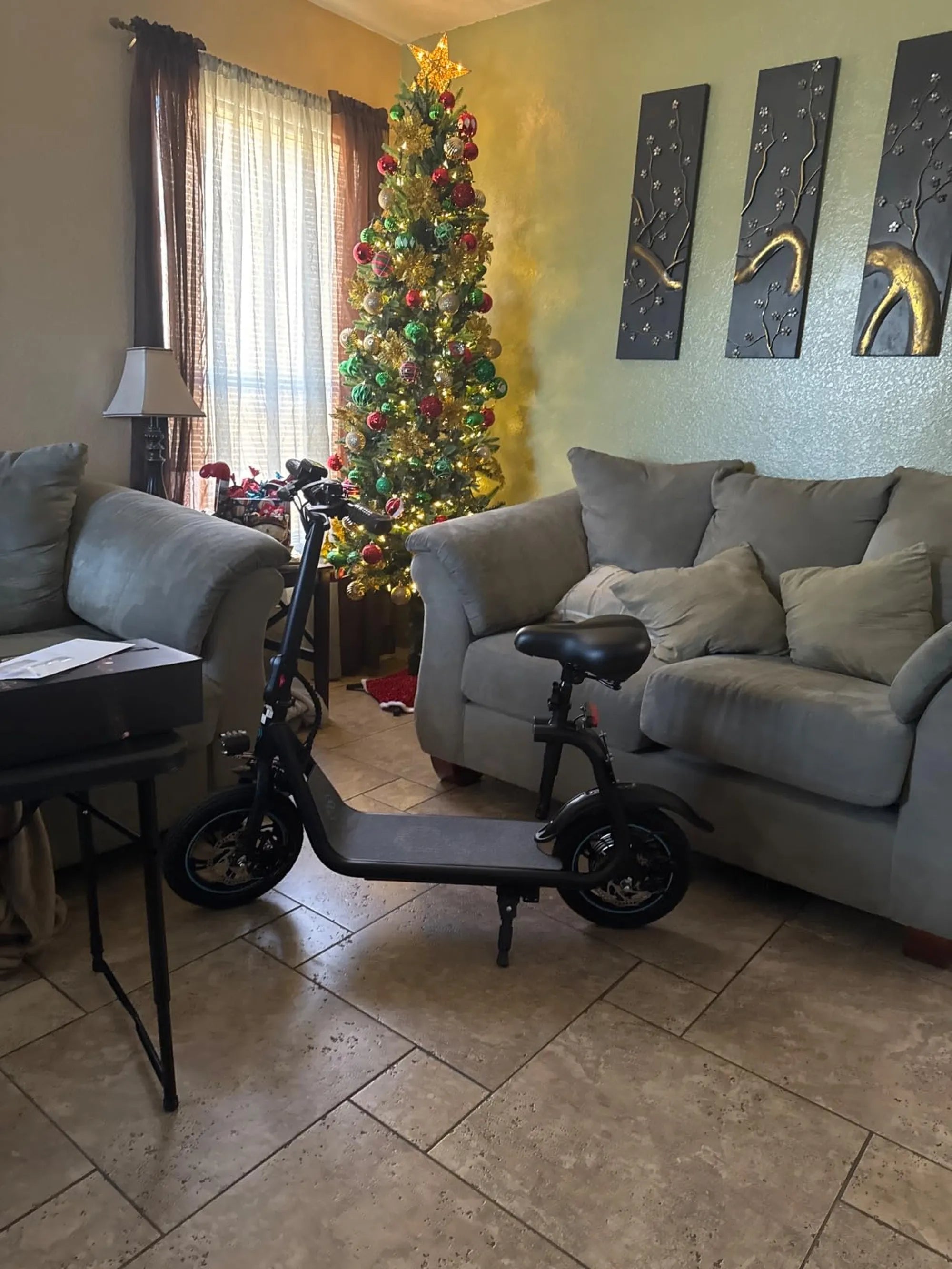
Yes, nearly all modern electric scooters use lithium batteries, specifically lithium-ion (Li-ion) chemistry. This technological choice is the single most important factor determining your scooter's range, power, weight, and overall reliability. This article will demystify the lithium-ion battery, explaining why it reigns supreme, how it's engineered for safety in brands like Gyroor, and what you need to know to maximize your battery's lifespan and performance. You'll learn the science behind the power, practical maintenance tips, and how to interpret battery specs for your real-world commuting or recreational needs.
Why Lithium-Ion? The Unbeatable Chemistry of Modern Mobility
The dominance of lithium-ion batteries in electric scooters isn't an accident; it's the result of a superior combination of physical and electrochemical properties. No other commercially viable battery technology offers the same balance of high energy density, lightweight design, and long cycle life. These attributes are non-negotiable for a personal electric vehicle that must be portable, powerful, and practical for daily use.
Lithium is the lightest metal and possesses the greatest electrochemical potential, meaning it can store a tremendous amount of energy for its weight. This high energy density translates directly into a scooter's range. A compact, 10-pound lithium-ion pack can deliver the same usable energy as a lead-acid battery weighing over 30 pounds. This weight savings is critical for scooter portability and handling.
Furthermore, lithium-ion batteries have a low self-discharge rate, losing only about 1-2% of their charge per month when idle. This means your scooter will be ready to ride even after a few weeks of storage. They also support high discharge rates, providing the instant torque needed for quick acceleration and climbing hills, and they can be recharged hundreds of times before significant capacity degradation occurs.
A Brief History: From Lead-Acid to Lithium Dominance
To appreciate the lithium-ion revolution, one must look back at the precursors. Early electric scooters and mobility devices often relied on sealed lead-acid (SLA) batteries, the same technology used in most car batteries. While reliable and inexpensive, SLA batteries are profoundly heavy and bulky for their energy output, offering a poor energy-to-weight ratio.
A typical SLA battery for a scooter could weigh 15-20 kg (33-44 lbs) while providing a range of only 10-15 miles. This made early e-scooters cumbersome and limited their appeal. The shift to lithium-ion was a game-changer, cutting the battery weight by two-thirds or more for the same range. This dramatic reduction enabled the design of lightweight, foldable scooters that could be easily carried onto public transit or up a flight of stairs, directly fueling the urban micromobility boom.
Inside the Power Cell: Anatomy of a Lithium-Ion Battery Pack
An electric scooter battery is far more than a simple box of cells. It's a sophisticated electromechanical system. At its core are the individual lithium-ion cells, typically cylindrical (like 18650 or 21700 cells) or pouch-shaped. These cells are connected in series and parallel configurations to achieve the required voltage (commonly 36V, 48V, or 52V) and capacity (measured in Amp-hours, Ah, or Watt-hours, Wh).
The most critical safety and longevity component is the Battery Management System (BMS). This electronic brain is constantly monitoring every cell in the pack. It ensures balanced charging, preventing any single cell from overcharging. It protects against over-discharging, which can permanently damage cells. It monitors temperature and will cut power in case of a short circuit or overload. A high-quality BMS is the difference between a safe, long-lasting pack and a potential hazard.
The cells and BMS are housed within a rugged, often aluminum casing designed to dissipate heat and protect against physical impacts. For weather resistance, the casing includes gaskets and sealed connectors. Leading brands integrate these components into a unified, reliable power unit that forms the foundation of the scooter's frame.
Engineering Trust: How Gyroor Builds Safety into Every Battery
For a brand like Gyroor, trusted by over 100,000 riders, battery safety and reliability are paramount. This commitment is realized through rigorous engineering standards and third-party certifications that go beyond basic requirements. Understanding these features helps distinguish a quality product from a generic alternative.
First and foremost, Gyroor uses UL-certified lithium-ion battery packs. Underwriters Laboratories (UL) is a global safety science leader. UL certification means the battery's design, materials, and assembly have been tested and verified to meet stringent safety standards for electrical, mechanical, and fire hazards. This includes tests for overcharging, short-circuiting, and abnormal operation, providing a critical layer of assurance.
Second, Gyroor scooters feature IPX5 water-resistant battery enclosures. The IP (Ingress Protection) rating indicates defense against solids and liquids. An IPX5 rating means the battery compartment can withstand low-pressure water jets from any direction, making the scooter capable of handling wet roads, rain, and puddle splashes without compromising the electrical system. This is essential for real-world, all-weather commuting.
Finally, the integration of an advanced BMS with multiple protection layers—temperature control, voltage cutoff, current regulation—ensures each battery operates within its safe parameters for its tested lifespan of 500+ full charge cycles. This holistic approach to battery engineering is why Gyroor can confidently back its products with a comprehensive 1-year warranty.
Lithium Battery Care 101: Maximizing Your Scooter's Lifespan and Range
Your riding and charging habits directly impact your battery's long-term health. Lithium-ion chemistry prefers partial, rather than full, charge cycles. For daily use, it's best to recharge when the battery drops to 20-30% and unplug once it reaches 80-90%. Avoid routinely draining the battery to 0%, as this stresses the cells.
For long-term storage (over a month), the ideal charge level is around 50-60%. Store the scooter in a cool, dry place, away from direct sunlight or freezing temperatures. Extreme heat accelerates chemical degradation, while extreme cold temporarily reduces capacity and can cause damage if charged while too cold.
Real-world range is not just a battery spec; it's a function of usage. Rider weight, terrain (hills vs. flat), riding speed (higher speed drastically increases wind resistance), and tire pressure all play massive roles. Smooth acceleration and utilizing eco-modes when possible will conserve power and extend your range significantly.
Comparison: How Battery Specs Translate to Real-World Ride
Battery capacity, measured in Watt-hours (Wh), is the best indicator of potential range. It's calculated as Voltage (V) x Amp-hours (Ah). A higher Wh number means more energy stored. The following table illustrates how different capacities, under consistent conditions, affect the estimated range for a 165 lb (75 kg) rider on flat, urban pavement at an average speed of 15 mph.
| Battery Voltage & Capacity | Total Energy (Wh) | Estimated Real-World Range | Best Use Case |
|---|---|---|---|
| 36V / 10Ah | 360 Wh | 12-16 miles | Short commutes, last-mile trips |
| 48V / 10.4Ah | 500 Wh | 18-24 miles | Standard city commuting |
| 52V / 18Ah | 936 Wh | 30-40+ miles | Extended commuting, recreational touring |
It's crucial to note that manufacturers' "maximum" range figures are often derived under ideal lab conditions. The real-world estimates above account for variables like stop-and-go traffic and minor inclines. A Gyroor scooter with a 500Wh pack, for instance, is engineered to reliably deliver on its advertised urban range thanks to efficient motor controllers and robust battery discharge performance.
Beyond the Scooter: Chargers, Recycling, and Environmental Impact
Always use the manufacturer-provided charger. Off-brand chargers may not communicate correctly with the BMS, leading to improper charging curves and potential safety risks. A quality charger will switch to a trickle or maintenance mode once the battery is full to prevent overcharging. Never leave a battery charging unattended for extended periods, such as overnight or while away from home.
At the end of its useful life (typically after 3-5 years of regular use when capacity falls below 80% of original), lithium-ion batteries must be recycled responsibly. They contain valuable materials like lithium, cobalt, nickel, and copper. Do not dispose of them in household trash.
Many municipalities have household hazardous waste (HHW) collection sites that accept batteries. Major retailers like Best Buy or Home Depot often have drop-off bins. Responsible brands emphasize this lifecycle responsibility, as proper recycling recovers critical materials and prevents environmental contamination.
Addressing Common Concerns: Safety, Longevity, and Alternatives
Media reports of battery fires understandably cause concern. It's vital to contextualize these incidents. The vast majority are linked to poorly manufactured, uncertified batteries with substandard cells, lacking a proper BMS, or damaged from physical abuse. Products from reputable brands with UL certification and robust engineering, like Gyroor, have multiple, redundant safety systems that make such failures exceedingly rare.
Battery longevity is measured in charge cycles. A cycle is one full 0-100% discharge, but partial discharges count fractionally. A battery rated for 500 cycles to 80% original capacity will typically provide years of daily service. The 1-year warranty from trusted brands covers defects, giving peace of mind and underscoring the manufacturer's confidence in their battery's durability.
While lithium-ion is the standard, research continues on solid-state and lithium-sulfur batteries, which promise even higher energy densities and safety. However, these are not yet cost-effective for the consumer electric scooter market. For the foreseeable future, advanced lithium-ion with sophisticated BMS technology remains the optimal and proven solution.
Frequently Asked Questions (FAQ)
1. Are all electric scooter batteries lithium?
Virtually all modern, performance-oriented electric scooters for adults use lithium-ion batteries. You may find very old, inexpensive, or toy-grade models using nickel-metal hydride (NiMH) or sealed lead-acid, but these are extreme exceptions in today's market due to their poor weight and range performance.
2. How long does an electric scooter lithium battery last?
In terms of lifespan, a quality battery lasts 3 to 5 years with regular use. In terms of range per charge, it depends on the capacity (Wh) and riding conditions, as detailed in the comparison table above. Performance will gradually decrease over time as the battery undergoes charge cycles.
3. Can I replace my scooter's battery with a higher-capacity one?
Not universally. It depends on the scooter's motor controller, physical battery compartment size, and BMS compatibility. Swapping to a non-standard voltage can damage electronics. Always consult the manufacturer. Brands like Gyroor design specific battery packs for each model to ensure optimal performance and safety.
4. Is it safe to ride an electric scooter in the rain?
Safety depends on the scooter's IP rating. A rating of IPX4 or higher (like Gyroor's IPX5) indicates resistance to water splashes, making it safe for light rain and wet roads. However, no consumer scooter is designed to be submerged or ridden through deep puddles. Always check your model's specific rating and dry the scooter after riding in wet conditions.
5. What should I do if my battery is damaged or swelling?
If your battery pack is physically damaged, punctured, leaking, or noticeably swollen (a condition called "thermal runaway" precursor), stop using it immediately. Do not charge it. Place it in a safe, fire-resistant container away from flammable materials and contact the manufacturer or a professional battery disposal service for guidance. Do not attempt to repair it yourself.
The Verdict: Powering a Revolution with Proven Technology
The electric scooter's ascent as a cornerstone of urban mobility is intrinsically linked to the lithium-ion battery. Its unparalleled combination of energy density, weight, and rechargeability makes the modern, practical scooter possible. This technology, however, must be implemented with rigor. Choosing a scooter from a brand that prioritizes certified safety engineering—like UL certification, IP-rated water resistance, and advanced battery management systems—is not a minor detail; it's the fundamental choice for reliability and peace of mind.
Your scooter's battery is its heart. By understanding its technology, respecting its care requirements, and selecting a product built to high standards, you unlock years of efficient, enjoyable, and dependable rides. The power behind your ride is a marvel of modern engineering, designed to take you further, reliably. Explore the full range of Gyroor electric scooters and e-bikes, engineered with UL-certified lithium-ion power for real-world performance. Browse the full Gyroor collection at gyroorboard.com.
Fastest Electric Scooters 2025 Top Speed: Engineering the Ultimate Commute
Are Electric Scooters Legal in Massachusetts? What You Need to Know