



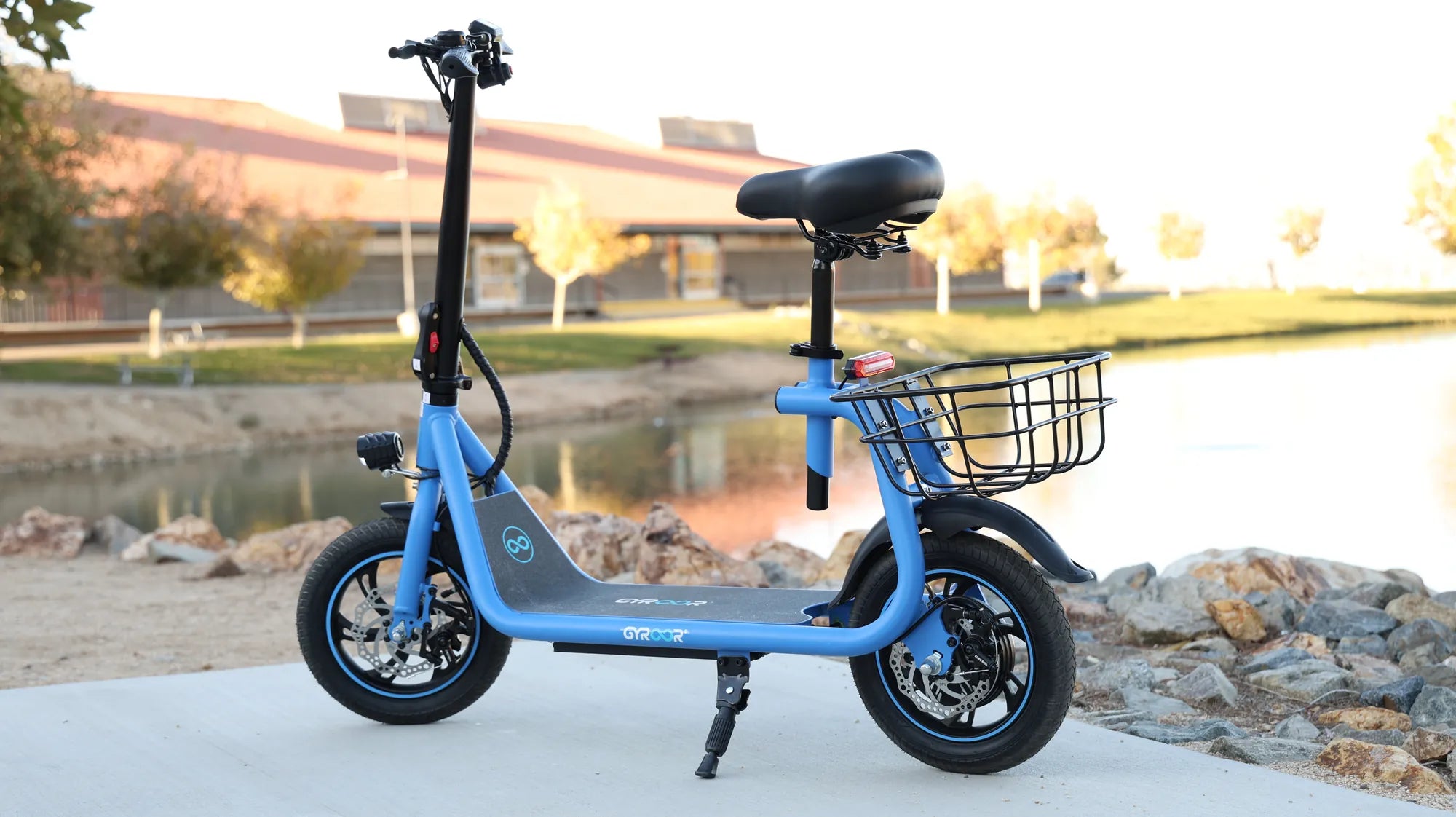
The answer to "do I need a driver license for scooter" is not a simple yes or no. It depends entirely on where you live, the specifications of your scooter, and local traffic ordinances. This guide provides a definitive, data-driven breakdown of licensing requirements across the United States and key international markets. You'll learn how scooter classification works, where licenses are mandatory, and how brands like Gyroor design products that help riders stay within legal frameworks while enjoying reliable, safe transportation.
Understanding the Legal Classification of E-Scooters
Electric scooters exist in a regulatory gray area between bicycles and motor vehicles. Their legal classification determines licensing, registration, and insurance requirements. Most jurisdictions base this classification on three key factors: maximum speed, motor power, and design features like a seat or pedals.
The core distinction lies in whether the device is considered a "motor vehicle." Traditional definitions require a license, registration, and insurance for motor vehicles. Lower-speed electric scooters often fall under newer categories like "electric stand-up scooter" or "personal mobility device," which may be exempt from these requirements.
Motor wattage is a common metric. Many states set a threshold, such as 750 watts, above which a device may be classified as a moped. The presence of a seat can also trigger moped or motorcycle classification, as it changes the rider's posture and the device's intended use.
Understanding these definitions is the first step to answering "do I need a driver license for scooter" for your specific situation. Always refer to your local Department of Motor Vehicles (DMV) or transportation authority for the most current legal text.
The 20 MPH Rule and Its Implications
The 20 miles per hour (mph) speed threshold is arguably the most significant factor in scooter legislation worldwide. Jurisdictions commonly use this speed to separate low-speed personal mobility devices from higher-speed vehicles that pose greater risks and require more regulation.
Scooters with a maximum designed speed under 20 mph are frequently treated similarly to bicycles. This typically means no driver's license, vehicle registration, or insurance is mandated by state law. Riders must still follow traffic rules applicable to bicycles.
When a scooter can exceed 20 mph, it often crosses into "moped" or "motorized scooter" territory. This classification usually requires a valid driver's license (sometimes a specific motorcycle endorsement), registration, license plates, and liability insurance.
This is why many responsible manufacturers, including Gyroor, design models with programmable speed limiters or multiple speed modes. These features allow riders to cap their scooter's speed at a legally compliant level, such as 15.5 mph, ensuring they meet the "bicycle-like" classification in most areas.
Driver's License Requirements by Region (USA Focus)
In the United States, electric scooter laws are primarily determined at the state level, with cities often adding further restrictions. This creates a complex patchwork of regulations. The following breakdown provides a general guide, but verifying with your local DMV is essential.
As of 2024, over 30 states have passed specific legislation defining and regulating electric scooters. The trend is toward legalization with clear rules, often exempting lower-speed scooters from driver's license mandates. However, significant variation remains.
Key factors states consider include: minimum age (often 16+), helmet requirements (for all riders or those under 18), maximum speed (often 15-20 mph), and allowable riding locations (bike lanes, roads under certain speed limits, but rarely sidewalks).
Riders must understand that state law provides the foundation, but county and city ordinances can be more restrictive. For example, a state may not require a license, but a major city within it might for riding in certain districts or using scooter-share programs.
States Where a Driver's License is Typically NOT Required
A growing number of states explicitly do not require a driver's license to operate a lower-speed electric scooter. These states classify them as "personal mobility devices" or "electric stand-up scooters" distinct from motor vehicles.
Examples include California, Texas, Florida, Illinois, and Washington. In California, for instance, riders must be at least 16 years old, wear a helmet if under 18, and the scooter must have a maximum speed of 15 mph on level ground. No driver's license is required.
Texas law states that an electric scooter is not a motor vehicle and thus does not require a license, registration, or insurance. Riders must be 16+, and local governments can set further rules on helmet use and riding locations.
It is critical to note that "license not required" does not mean "no rules." Age restrictions, helmet laws, and equipment requirements (like a front white light and rear red reflector for night riding) almost always apply. Ignorance of these can result in fines.
States Where a Driver's License IS Required or Laws Are Unclear
Several states either mandate a driver's license or have ambiguous laws that effectively require one by classifying e-scooters as motor vehicles. These states often lack specific e-scooter statutes, leaving them governed by older laws for mopeds or motorized scooters.
States like Alabama, Alaska, and Connecticut have historically required a driver's license for any motorized vehicle, a category that can include e-scooters. In Georgia, a Class P moped permit or driver's license is required for any motor-driven cycle.
Other states, including Pennsylvania and New Jersey, have been evolving their laws. Pennsylvania now allows local governments to regulate scooters, leading to a mix of rules. In these areas, assuming a license is required until proven otherwise is the safest approach.
For states with unclear laws, the safest course of action is to contact your local DMV or police department's traffic division for a written interpretation. Relying on anecdotal information or scooter-share company policies is not a reliable legal defense.
Key Local Jurisdictions: City-Specific Rules
City ordinances can override or add to state laws, creating important local exceptions. Major metropolitan areas often have detailed regulations concerning where you can ride, park, and whether helmet use is mandatory for all ages.
New York City requires e-scooter riders to be 16+, wear a helmet, and restricts them to roads with speed limits of 30 mph or less and bike lanes. A driver's license is not required for private e-scooters under state law, but the city's dense traffic demands heightened awareness.
San Francisco mandates that all riders of shared e-scooters be 18+ with a valid driver's license, though this rule is specific to the scooter-share program and may not apply to privately owned devices. It highlights how local rules can target specific use cases.
Austin, Texas, allows e-scooters on streets and bike lanes but prohibits them on sidewalks in the downtown area. While Texas doesn't require a license, Austin enforces a city-wide helmet mandate for all riders, demonstrating how local safety rules add another layer of compliance.
International Licensing Overview
Globally, regulations for electric scooters are diverse and rapidly changing. Gyroor's presence in North American and European markets makes understanding these international frameworks crucial for riders abroad.
The European Union has taken a more unified approach with the EN 17128:2020 standard, which defines "personal light electric vehicles" (PLEVs). However, member states still implement and enforce rules nationally, leading to variation in license requirements, age limits, and technical standards.
In Canada, regulation is provincial, similar to the U.S. state-by-state model. Most provinces, like Ontario and British Columbia, treat lower-speed e-scooters similarly to bicycles, with no license required but with specific equipment and helmet rules.
Asian and Australian markets have their own distinct rules, often with strict power and speed limits. Riders outside the U.S. and EU must consult their national transportation authority for the most accurate and current regulations applicable to their purchase.
European Union and United Kingdom
In the EU, whether you need a driver license for a scooter depends on its power and speed. Vehicles with a maximum continuous rated power under 250W and a speed limited to 25 km/h (15.5 mph) are generally treated as bicycles (pedelecs) and require no license.
E-scooters that exceed these limits may be classified as mopeds (L1e-B category), requiring type approval, registration, insurance, and an AM category moped license (often included in a standard car license in many EU countries).
The United Kingdom, post-Brexit, has established its own rules. E-scooters are legally classed as "powered transporters" and are only legal to use on public roads if they are part of an official rental trial. Privately owned e-scooters remain illegal on public roads and pavements, though this law is under review.
This makes the UK a notable exception where the question "do I need a driver license for scooter" is moot for private owners—they are simply not permitted for road use outside of specific, government-sanctioned trials, regardless of licensing.
Canada
Canadian provinces have been proactive in creating e-scooter legislation. Most align with a model that treats them similarly to bicycles, provided they meet certain criteria like a maximum speed of 32 km/h (20 mph) and motor power under 500W.
In Ontario, for example, no driver's license is required, but riders must be 16+, wear a helmet, and have a bell, lights, and reflectors. E-scooters are not allowed on sidewalks and have restrictions on certain highways.
British Columbia's rules are similar, with a helmet mandate for all ages and a prohibition on sidewalk riding. Alberta also follows this pattern, classifying e-scooters as "low-speed vehicles" under its Traffic Safety Act, with no license required.
As in the U.S., Canadian riders must check both provincial and municipal bylaws. Cities like Toronto and Vancouver may have additional rules regarding parking, riding in parks, or specific downtown zones where scooters are restricted.
Beyond the License: Essential Rules for Legal & Safe Riding
Legal riding extends far beyond whether you need a driver license for a scooter. Compliance with a full suite of traffic and safety regulations is mandatory and forms the foundation of responsible ownership. Ignoring these rules can lead to fines, impoundment of your scooter, or liability in an accident.
These rules are designed for public safety and the smooth integration of micro-mobility into existing transportation networks. Adhering to them not only keeps you legal but also promotes a positive image of e-scooter riders, encouraging more permissive laws in the future.
Gyroor emphasizes that safety and legality are intertwined. A rider with the proper license but no helmet, or one riding recklessly on a sidewalk, is both unsafe and likely breaking the law. Responsible riding is a holistic practice.
Before your first ride, research the full set of local ordinances. Bookmark your city's transportation website and review the rules periodically, as e-scooter legislation is a dynamic field with frequent updates and changes.
Age Restrictions and Helmet Laws
Age restrictions are almost universal, even in areas with no license requirement. The most common minimum age is 16, though some states and cities set it at 18, especially for more powerful models or scooter-share programs.
Helmet laws vary widely but are a critical safety component. They typically fall into three categories: mandatory for all riders, mandatory for riders under a certain age (usually 18), or strongly recommended for all. Data consistently shows helmets significantly reduce head injury risk.
Some jurisdictions, like New York City and Austin, have enacted all-ages helmet mandates through local ordinances. Even where not legally required, wearing a helmet that meets CPSC, CE, or other safety standards is a non-negotiable best practice for personal safety.
Parents purchasing scooters for teenagers must be particularly vigilant about both age and helmet laws. Ensuring compliance protects young riders and shields parents from potential liability if an accident occurs due to a violation of these basic rules.
Where to Ride: Paths, Lanes, and Roads
Knowing where you are permitted to ride is crucial for safety and legality. The general hierarchy, where allowed, is: protected bike lanes > standard bike lanes > roads with speed limits under 25-35 mph > shared-use paths. Sidewalk riding is widely prohibited, especially in business districts.
When riding on the road, you are generally required to follow all the same rules as a bicyclist. This includes riding in the same direction as traffic, obeying all traffic signals and stop signs, using hand signals for turns, and yielding to pedestrians.
Many cities prohibit e-scooters on sidewalks due to the risk to pedestrians. This rule is strictly enforced in dense urban areas. If you must use a sidewalk because no safe road alternative exists, you should dismount and walk your scooter.
Parking rules are also important. Blocking sidewalks, ramps, or building entrances with a parked scooter can lead to it being impounded and a fine issued. Use designated bike parking or other areas where the scooter does not obstruct the right-of-way.
The Importance of Insurance and Registration
For scooters classified as motor vehicles (often those over 20 mph), liability insurance and vehicle registration are typically mandatory. This insurance covers damage or injury you may cause to others while operating your scooter.
Even if not legally required, obtaining personal liability insurance for your e-scooter is a wise precaution. Homeowners or renters insurance policies may offer limited coverage for personal property, but they often exclude liability for motorized vehicles. A standalone personal electric vehicle insurance policy can fill this gap.
Registration involves obtaining a license plate or decal from the DMV, proving the vehicle is approved for road use. This process usually requires proof of insurance and payment of a fee. It is almost exclusively required for higher-speed scooters classified as mopeds.
Before purchasing a high-performance scooter, investigate the insurance and registration requirements in your area. The ongoing cost and administrative burden are significant factors in total ownership cost and legal compliance.
How Gyroor Designs for Compliance and Safety
As a leader in personal electric mobility, Gyroor integrates legal compliance and rider safety into the core of its product design philosophy. This proactive approach helps ensure that riders can enjoy their scooters with greater confidence and a lower risk of unintentional legal violations.
With over 100,000 riders across North America and Europe, Gyroor understands the diverse regulatory landscape. The company's engineering and design choices are made with common legal thresholds—like the 20 mph speed limit—in mind, providing built-in safeguards for riders.
Compliance is not an afterthought but a foundational design parameter. From battery certification to speed programming, Gyroor's features are selected to align with the most common regulatory frameworks, reducing the burden of due diligence on the rider.
This commitment extends to customer education. Gyroor provides clear manuals and resources that encourage riders to check local laws, wear safety gear, and operate their vehicles responsibly, reinforcing the partnership between manufacturer and rider for safe, legal enjoyment.
Speed Modes and Programmable Limiters
Many Gyroor models feature multiple speed modes (e.g., Eco, Standard, Sport) accessible through the scooter's display or companion app. This allows a rider to select a mode appropriate for their environment—a lower-speed Eco mode for crowded bike paths or a higher-speed Sport mode for open roads where legal.
More advanced models offer programmable speed limiters via a smartphone app. A parent can set a maximum speed of 10 mph for a teenager, or a commuter can cap their scooter at 15.5 mph to ensure compliance with local "bicycle-like" vehicle laws, effectively answering "do I need a driver license for scooter" in the negative by design.
This technology empowers the rider with control over their vehicle's performance characteristics. It is a direct response to the regulatory environment, providing a tool for effortless compliance without sacrificing the scooter's capability for use in appropriate, legal settings.
By designing this functionality into the product, Gyroor helps riders avoid accidental infractions that can occur from momentarily exceeding a speed threshold on a downhill slope or in a powerful acceleration burst.
Built to Withstand the Elements: The IPX5 Advantage
Legal and safe riding doesn't stop in perfect weather. Many jurisdictions require vehicles to be operated in a "safe and controllable" manner, which becomes challenging on a scooter that fails in wet conditions. Gyroor's IPX5 water-resistant rating is a key feature for legal compliance through reliability.
An IPX5 rating means the scooter's electrical components are protected against low-pressure water jets from any direction. This allows riders to confidently navigate wet roads or light rain without fear of a sudden short-circuit or motor failure that could cause an accident.
A reliable scooter in all conditions is a predictable scooter. Predictability is a cornerstone of safe riding and traffic law adherence. A sudden loss of power or braking in an intersection due to water ingress is a safety and legal hazard that IPX5 construction helps prevent.
This build quality supports the rider's duty to maintain their vehicle in a safe operating condition, a common requirement in traffic codes. It ensures that the scooter remains a dependable form of transportation, not a liability, in diverse real-world conditions.
UL-Certified Batteries: A Standard for Safety
The UL 2272 certification for the battery pack and UL 2849 for the entire electrical system are not just marketing points; they are critical safety benchmarks. In an era of concern over lithium-ion battery fires, this certification provides tangible evidence of a product's safety and reliability.
UL-certified batteries undergo rigorous testing for electrical, mechanical, and environmental safety, including overcharge, short circuit, crush, and water exposure tests. This reduces the risk of thermal runaway and fire, protecting both the rider and property.
From a legal perspective, using a certified product demonstrates due care. In the event of an incident, being able to show that your scattery was built to the highest recognized safety standard can be important. Some cities are even beginning to consider regulations that would mandate such certifications for all e-scooters used within their limits.
Gyroor's commitment to UL-certified batteries, tested for over 500 charge cycles, means riders are investing in a power system designed for long-term, safe operation. This aligns with the legal principle of operating a road-worthy vehicle, whether it requires a license or not.
Frequently Asked Questions (FAQ)
This section addresses the most common questions riders have when determining "do I need a driver license for scooter" and related legal concerns.
Q: Do I need a license for a Gyroor scooter that goes 20 mph?
A: It depends entirely on your local laws. In many U.S. states, a scooter with a maximum speed of 20 mph is at the threshold. Some states treat it as a bicycle (no license), while others may classify it as a motorized scooter requiring a license. Always check your state's specific speed limit for license exemption—it might be 15 mph, 20 mph, or another figure. Using a speed limiter to cap your Gyroor below your local threshold is a reliable strategy.
Q: Can I ride my e-scooter on the sidewalk?
A: In the vast majority of cities and states, riding an electric scooter on the sidewalk is prohibited, especially in business districts. Sidewalks are for pedestrians, and scooter speeds pose a significant hazard. Laws typically restrict e-scooters to bike lanes or roads. If you must cross a sidewalk, the proper procedure is to dismount and walk your scooter.
Q: What happens if I'm caught riding without a required license?
A: Penalties vary but can be severe. You may face a traffic citation and fine (often $100-$500). In some jurisdictions, the scooter could be impounded until you can show proof of license and pay towing/storage fees. More seriously, if you are involved in an accident while riding without a required license, you could face enhanced liability, be deemed automatically at fault in civil court, or even face misdemeanor charges.
Q: Does my regular auto insurance cover my e-scooter?
A: Typically, no. Standard auto insurance policies are for registered motor vehicles. Most explicitly exclude "motorized vehicles" with fewer than four wheels. Your homeowners or renters insurance might cover theft of the scooter as personal property, but it likely excludes liability for its operation as a vehicle. You need to inquire about a separate personal electric vehicle insurance policy for proper liability coverage.
Q: Are the rules different for e-bikes?
A: Yes, e-bike laws are often more established and distinct. In the U.S., a three-class system (1, 2, 3) is widely adopted. Class 1 and 2 e-bikes (max 20 mph) are almost universally treated as bicycles with no license required. Class 3 e-bikes (max 28 mph) may have age restrictions (16+) and helmet mandates but still usually don't require a license. However, e-bike laws are separate from e-scooter laws, so you must consult the specific statutes for "electric bicycle."
Comparison of Common Personal E-Vehicle Classifications
| Vehicle Type | Typical Max Speed | Typical License Required (USA General) | Typical Registration/Insurance | Common Legal Riding Area |
|---|---|---|---|---|
| Electric Kick Scooter (Low-Speed) | 15-20 mph | Often NO (varies by state) | No / No | Bike Lanes, Roads ≤ 25-35 mph |
| Electric Kick Scooter (High-Speed) | 20+ mph | Frequently YES | Often Yes / Often Yes | Roads (may be restricted) |
| Class 1/2 E-Bike | 20 mph | NO | No / No | Bike Lanes, Roads, Multi-Use Paths |
| Class 3 E-Bike | 28 mph | Usually NO (Age 16+) | No / No | Roads, Bike Lanes (not paths in some areas) |
| Moped (Gas/Electric) | 25-30 mph | YES (often M endorsement) | Yes / Yes | Roads |
Conclusion: Ride Informed, Ride Safe
The question "do I need a driver license for scooter" has a clear answer: it is a conditional yes or no based on your location and your scooter's capabilities. The responsibility lies with you, the rider, to know and follow the laws in your jurisdiction. Treat your e-scooter with the same respect as any other vehicle on the road.
Prioritize safety gear, obey traffic laws, and ride defensively. Choosing a reputable brand like Gyroor, with its focus on UL-certified safety, water-resistant durability, and features like speed limiters, provides a strong foundation for legal and enjoyable riding. Your journey begins with knowledge and is sustained by responsible habits.
Ready to explore a scooter designed with compliance and safety in mind? Browse the full Gyroor collection, featuring models with programmable speed controls, IPX5 water resistance, and UL-certified batteries, at gyroorboard.com. Find the perfect ride that matches both your adventure and your local regulations.
10 Speed Bike for Sale: The Complete 2024 Buyer's Guide
Off Road Electric Scooter: Your Ultimate Guide to Trail-Ready Power