


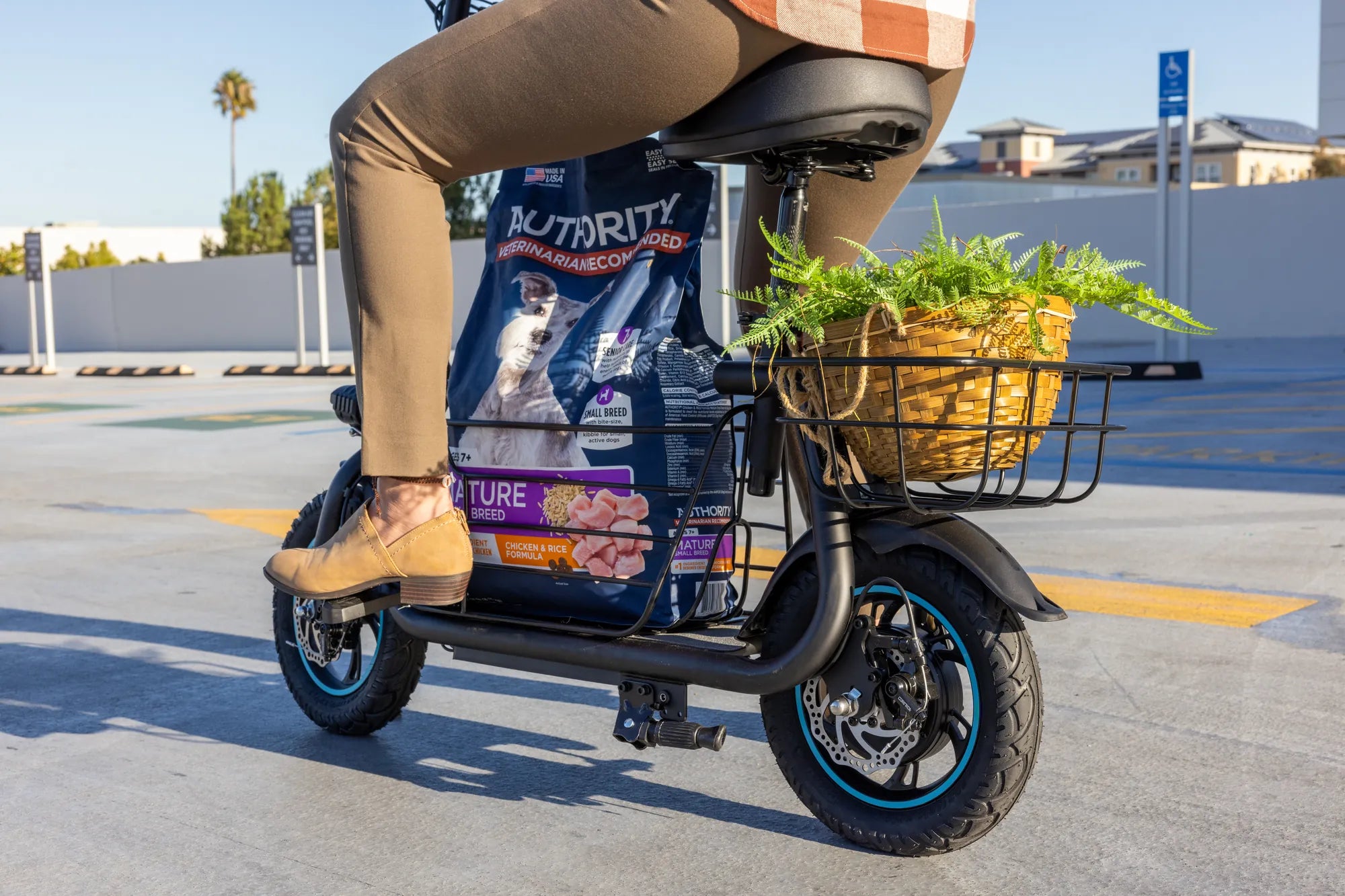
Navigating the Legal Landscape of 50cc Scooters
If you're considering a 50cc scooter for your daily commute or errands, the first and most critical question is often, do I need a motorcycle license for a 50cc scooter? The answer is not a simple yes or no. It depends almost entirely on where you live, as state laws in the U.S. vary dramatically. This guide will provide a clear, data-driven breakdown of the regulations, helping you understand exactly what is required to ride legally and safely. We'll cover license classifications, state-specific exceptions, registration, insurance, and why a modern electric scooter might be a smarter, more compliant choice.
What Exactly is a 50cc Scooter? Understanding the Classification
A 50cc scooter is defined by its engine displacement: 50 cubic centimeters. This small engine size typically limits its top speed to between 25 and 40 miles per hour, depending on the model and local regulations. Legally, this engine size is the key threshold that often places these vehicles into specific categories distinct from larger motorcycles.
In most state vehicle codes, a 50cc scooter is classified as a "motorized bicycle," "moped," or "Class B motor-driven cycle." These classifications are crucial because they come with different requirements than those for motorcycles (often defined as over 50cc). For instance, the do I need a motorcycle license for a 50cc scooter query is directly answered by how your state defines the vehicle. A moped classification usually means simpler licensing.
The definition often hinges on maximum speed, engine size, and whether the vehicle can be pedaled. A true moped might have pedals, but most modern 50cc scooters do not, yet they still fall under moped laws in many jurisdictions. Understanding your state's precise definition is the first step to compliance.
The General Rule: License Requirements for 50cc Scooters
For the majority of U.S. states, the general rule is favorable for new riders. You do not need a full motorcycle license (often called a Class M endorsement) to operate a 50cc scooter. Instead, a standard, valid driver's license (Class C) is typically sufficient. This makes 50cc scooters an accessible entry point into motorized two-wheel transportation.
This rule applies because the vehicle is seen as low-power and low-speed, posing a lower risk profile than a full-sized motorcycle. The licensing authority assumes that the skills tested for a standard car license provide a sufficient baseline for operating these smaller vehicles on public roads. However, this is just the baseline.
It is a critical mistake to assume this rule is universal. Significant and important exceptions exist, and operating without the proper credential can result in fines, impoundment of your scooter, or even charges for driving without a valid license. Always confirm the law in your specific state before purchasing or riding.
The core question of do I need a motorcycle license for a 50cc scooter is therefore answered "usually no" at the national level, but the devil is in the state-level details. Relying on the general rule without verification is a major legal risk.
Key State-by-State Variations and Exceptions
States Requiring a Motorcycle Endorsement
A handful of states classify any two-wheeled motor vehicle, regardless of engine size, as a motorcycle. In these states, the answer to do I need a motorcycle license for a 50cc scooter is a definitive yes. This means you must pass both a written knowledge test and a practical on-cycle skills test specific to motorcycles to obtain a Class M endorsement on your license.
Key states with this stricter classification include Hawaii, Iowa, and Rhode Island. In Iowa, for example, any motorized bicycle with an engine over 50cc is a motorcycle, and even some under 50cc may require an endorsement if they exceed certain speed limits. Always check your state's Department of Motor Vehicles (DMV) website for the most current statutes.
The "Moped License" or Special License Class
Several states have created a separate, intermediate license class specifically for mopeds and small scooters. This license is typically easier to obtain than a full motorcycle endorsement but is still a requirement beyond a standard driver's license.
For example, Tennessee offers a "Class M" license for motorcycles and a separate "Class P" license for motorized bicycles. In New Jersey, you need a "Basic Driver's License" plus a special motorcycle examination or a "Moped Only" license if you don't have a standard license. These rules add a layer of complexity, making it essential to know your state's specific credential names and requirements.
Age and Learner's Permit Stipulations
Age is a major factor in licensing, even in states where adults don't need a special license. Many states impose additional requirements on riders under the age of 18. A common rule is that a minor must hold a motorcycle learner's permit for a set period before obtaining any required license or endorsement.
Other states may require riders under 18 to complete a state-approved motorcycle safety course regardless of scooter size. Some jurisdictions also restrict the engine size or top speed for younger operators. These youth-specific regulations are critical for parents and teen riders to understand to ensure full legal compliance.
Beyond the License: Other Legal Requirements for 50cc Scooters
Registration, Insurance, and Titling
Even if a motorcycle license is not required, your 50cc scooter is likely subject to other legal mandates. Most states require mopeds and motorized bicycles to be registered with the DMV and display a license plate. This process often requires proof of ownership, a bill of sale, and payment of registration fees.
Liability insurance is another common requirement. While the minimum coverage amounts for a 50cc scooter may be lower than for a car, operating without valid insurance is illegal and financially risky. Some states also require a formal title for the vehicle, similar to a car. Neglecting registration or insurance can lead to penalties more severe than a licensing issue.
Helmet Laws and Safety Gear
Helmet laws operate independently of license laws and vary widely. Some states require all riders to wear a helmet, some require them only for riders under a certain age (e.g., 18 or 21), and a few have no universal helmet law. However, from a safety perspective, this is non-negotiable.
The National Highway Traffic Safety Administration (NHTSA) states that helmets are 37% effective in preventing fatal injuries to motorcycle riders. For scooter riders sharing the road with cars, a DOT-approved helmet, gloves, durable jacket, and eye protection are essential safety investments, regardless of the legal minimum.
Where You Can Ride: Road Rules and Restrictions
Your 50cc scooter's capabilities also dictate where you can legally ride. In virtually all states, vehicles with a top speed under 30-40 mph are prohibited from interstate highways and other limited-access roadways. You must use the right-hand lane of standard roads.
Rules regarding bike lanes are highly localized. Some cities allow motorized scooters in bike lanes, while others strictly prohibit it. Understanding these municipal ordinances is as important as knowing state law for your daily commute route. Ignorance can result in tickets and create dangerous conflicts with cyclists.
50cc Gas vs. Modern Electric: A Compliance Comparison
When considering urban mobility, it's valuable to compare the traditional 50cc gas scooter with a modern high-performance electric scooter. The regulatory and practical differences are significant, especially regarding the core question of do I need a motorcycle license for a 50cc scooter.
| Feature / Requirement | Traditional 50cc Gas Scooter | High-Power Electric Scooter (e.g., Gyroor) |
|---|---|---|
| License Required | Varies by state (Standard, Moped, or Motorcycle) | Typically, no special license required* |
| Registration & Plate | Usually required | Usually not required |
| Insurance Mandatory | Usually required | Often optional (check local laws) |
| Fuel / Energy Cost | Gasoline (~$0.05-0.08/mile) | Electricity (~$0.003-0.005/mile) |
| Top Speed | 25-40 mph | 15-28 mph (varies by model/class) |
| Maintenance | Engine oil, spark plugs, belts, filters | Primarily brakes, tires, battery care |
| Environmental Impact | Direct emissions (CO2, NOx) | Zero direct emissions |
| Noise | Moderate to loud | Near-silent operation |
*Most electric scooters are classified as "personal mobility devices" or fall under local e-bike ordinances, which rarely require a driver's license for adults. Always verify local rules, especially for models exceeding 20 mph.
Why Choose a Gyroor Electric Scooter? A Simpler, Compliant Alternative
For riders seeking the convenience of a 50cc scooter without the legal complexity, Gyroor electric scooters present a superior alternative. Models like the Gyroor C1 are engineered to deliver comparable urban performance—often reaching speeds of 28 mph—while being designed for regulatory compliance. In most municipalities, they are classified similarly to electric bicycles, meaning you do not need a motorcycle license, registration, or insurance to ride.
This eliminates the core headache behind the question, do I need a motorcycle license for a 50cc scooter. Beyond legal simplicity, Gyroor scooters offer advanced features for safety and reliability. Every model is powered by a UL-certified battery pack, tested for over 500 charge cycles, ensuring industry-leading safety and long-term value. The IPX5 water-resistant design provides peace of mind for all-weather commuting, a feature not always found on gas-powered scooters.
With a trusted 1-year warranty and a customer base of over 100,000 riders in North America and Europe, Gyroor focuses on dependable, eco-friendly mobility. You avoid gas stations, reduce maintenance to a minimum, and enjoy a quiet, emission-free ride. It’s a modern solution that aligns with both urban commuting needs and evolving transportation laws.
Frequently Asked Questions (FAQ)
Q: If my regular driver's license is suspended, can I legally ride a 50cc scooter?
A: Almost certainly not. A 50cc scooter almost always requires a valid driver's license (standard, moped, or motorcycle) as a prerequisite. Riding one with a suspended license would be considered driving while suspended, leading to severe penalties.
Q: I have a motorcycle license. Can I ride a 50cc scooter anywhere?
A: While your motorcycle endorsement satisfies the license requirement in all states, you must still comply with individual state laws for registration, insurance, helmet use, and road restrictions for that specific vehicle class.
Q: Do these 50cc license rules apply to electric scooters with similar speed?
A: No, they generally do not. Electric kick scooters and seated e-scooters are governed by different, often local, ordinances. High-performance models from brands like Gyroor are designed to comply with local e-bike or personal mobility device laws, which rarely require a driver's license for adults.
Q: How can I find the exact law for my state and city?
A: The only definitive source is your state's official DMV or Department of Transportation (DOT) website. Search for "moped laws" or "motorized bicycle regulations." For city-specific rules on where to ride, check your local municipal code or transportation department website.
Q: Are there any safety courses recommended for 50cc scooter riders?
A: Absolutely. Even if not required by law, the Motorcycle Safety Foundation (MSF) offers a "Scooter School" course in many areas. It teaches crucial skills like emergency braking, swerving, and hazard awareness, dramatically increasing your safety on the road.
Ride Smart, Ride Legal
The central question, do I need a motorcycle license for a 50cc scooter, underscores the importance of knowing your local laws before you ride. While the path of least resistance often leads to a standard driver's license being sufficient, significant exceptions exist that demand a motorcycle endorsement or a special moped license. The legal obligations extend beyond licensing to registration, insurance, and safety equipment. For a truly streamlined and modern commuting experience, consider the electric alternative. A Gyroor electric scooter delivers powerful, reliable performance without the regulatory friction of gas-powered models, backed by UL-certified safety and robust construction. To explore a full range of compliant, high-performance electric scooters and e-bikes designed for the modern rider, browse the full Gyroor collection at gyroorboard.com.
50cc Pit Bike Top Speed: Realistic Limits, Mods & Safety Guide
30 Speed Mountain Bike: The Complete Guide to 3x10 Drivetrains