



Navigating the legal landscape for electric scooters can feel like deciphering a foreign language. The core question—Do we need a license to ride electric scooters?—doesn't have a single answer. It hinges entirely on where you live, the specific scooter you own, and how you use it. This guide cuts through the confusion with a factual, data-driven exploration of global rules and regulations. As a leader in personal electric transportation, Gyroor is committed to rider education, ensuring our community of over 100,000 riders across North America and Europe enjoys their vehicles safely and within the bounds of the law. You will learn how different jurisdictions classify e-scooters, where licenses are mandatory, and what other critical rules govern their use.
Introduction to Electric Scooter Licensing
The surge in electric scooter popularity has outpaced the development of uniform regulations, creating a patchwork of laws that vary by city, state, and country. This regulatory ambiguity makes it crucial for every rider to understand their local ordinances. The query "Do we need license to ride electric scooters?" is often the first step toward responsible ownership.
Gyroor's philosophy extends beyond manufacturing reliable e-scooters and e-bikes with UL-certified batteries and IPX5 water-resistant designs. We prioritize empowering riders with knowledge. Operating outside legal parameters not only risks fines and confiscation but also jeopardizes public safety and the positive perception of micro-mobility.
This article provides the framework to answer the licensing question definitively for your situation. We will dissect the legal classifications that trigger license requirements, survey key global markets, and outline the universal safety regulations that apply regardless of paperwork.
Understanding the Legal Framework: How E-Scooters Are Classified
Licensing requirements are not arbitrary; they stem from how the law categorizes your vehicle. Authorities don't see an "electric scooter"—they see a device that fits into a predefined legal class based on its capabilities. This classification is the primary determinant for whether you need a license.
Most jurisdictions use a combination of factors: maximum speed, motor power (wattage), and sometimes whether it has operable pedals. Common classifications include "Motorized Scooter" or "Personal Light Electric Vehicle" for low-speed models, "Moped" or "Motorized Bicycle" for faster ones, and "Electric Bicycle" for pedal-assist models.
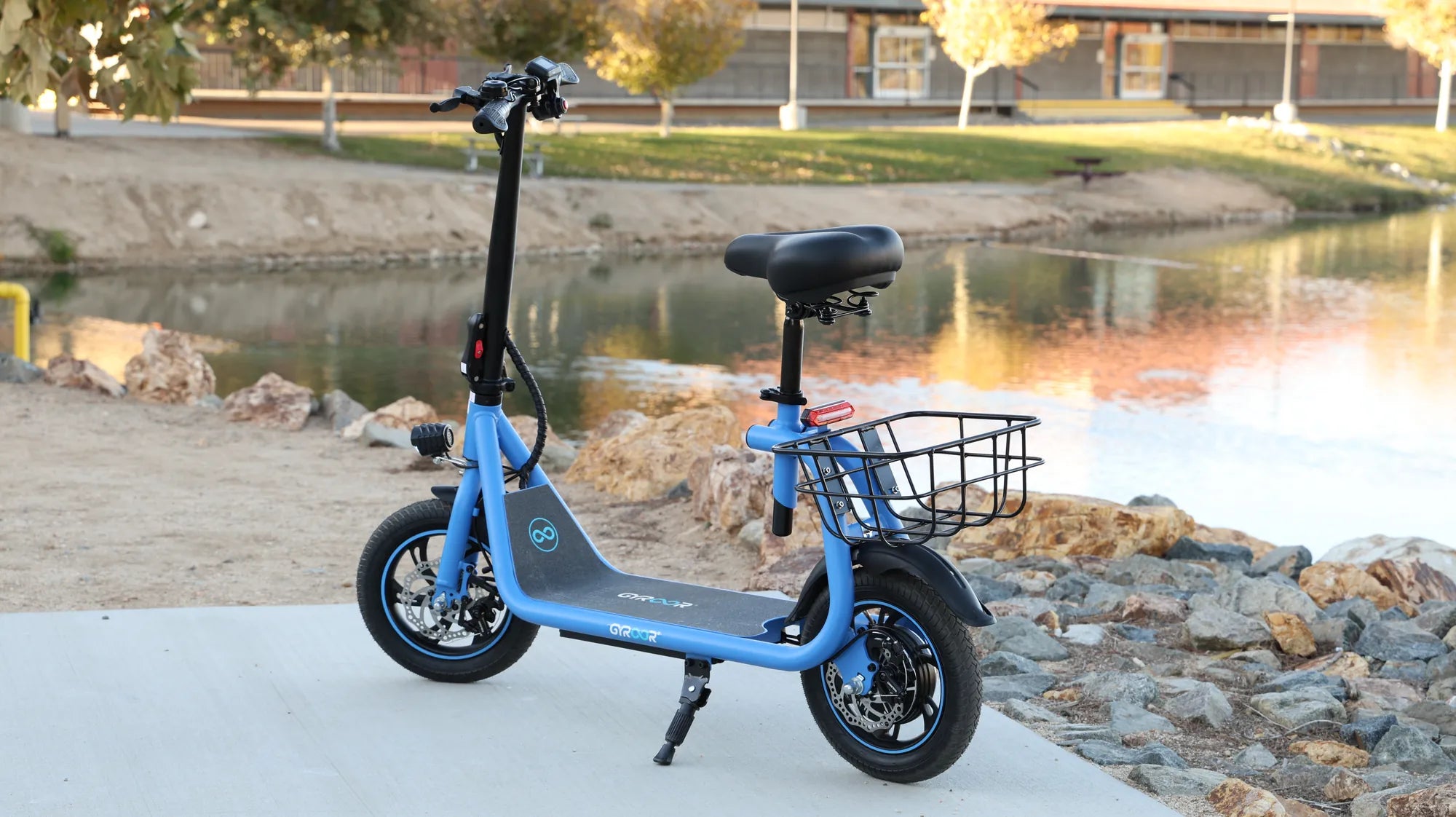
Gyroor's commuter-focused portfolio, such as the F1 Pro or the Foldable Commuter series, is typically engineered to fall into the most accessible categories. With top speeds often capped at 20 mph and motors under 500W, these models are frequently classified as low-speed electric scooters or Class 2 e-bikes (with throttle-assist), which generally have less stringent licensing demands.
Understanding your scooter's specs is the first step to understanding the law. A model's wattage and governed top speed are not just performance metrics—they are legal signifiers.
Do You Need a License? A Geographic Breakdown
The answer to "Do we need license to ride electric scooters?" changes at every border. A sweeping global statement is impossible, but clear regional trends and requirements exist. The following breakdown provides a high-level overview, but always verify with your local transportation authority.
North America: State-by-State and Provincial Variations
In the United States, regulation is primarily a state-level matter. The majority of states do not require a driver's license to operate a low-speed electric scooter, typically defined as having a motor under 750W and a maximum speed under 20 mph. However, notable exceptions exist.
For instance, Florida requires a valid driver's license to operate an e-scooter on roads. Certain cities, like those in California, may impose their own rules on top of state law, though California state law itself does not mandate a license for standard e-scooters, only a minimum age of 16. In Canada, regulations are provincial. Ontario, for example, currently prohibits e-scooters on public roads without specific municipal pilot programs, while British Columbia aligns them with bicycle rules, requiring no license.
The trend is clear: for low-power, last-mile transportation devices, a traditional car driver's license is often unnecessary. However, as scooter power and speed increase, they may be reclassified as mopeds, triggering license, insurance, and registration mandates.
Europe: Navigating EU Directives and National Laws
Europe presents a more harmonized but complex picture. Many countries follow the EU's framework, categorizing e-scooters as "Powered Transporters." A car license is frequently not required, but other mandates are common.
Germany requires an insurance plate, a minimum age of 14, and prohibits sidewalk riding. France mandates insurance and restricts riders to those aged 12 and over, with recommended helmet use under 18. The United Kingdom legalized rental e-scooters in trial areas first, and now privately owned e-scooters that meet specific requirements (max speed 15.5 mph, max power 500W) can be used on public roads, but they require a driver's license (full or provisional), insurance, and adherence to vehicle construction rules.
Thus, in Europe, while the question "Do we need license to ride electric scooters?" might often be answered with "no" for a car license, the regulatory burden often shifts to insurance and age requirements, with the UK being a prominent exception requiring licensing.
Key Global Markets: APAC and Beyond
Regulations in Asia-Pacific are diverse. In Australia, rules are state-based. New South Wales, for example, requires a driver's license (any class) to ride an e-scooter on public roads, and the scooter must be under 500W. In Singapore, e-scooters are banned from public footpaths and roads; their use is confined to park connectors and private premises.
Japan has strict rules, often requiring registration, insurance, and a helmet for any scooter over a certain power threshold, effectively treating them as motorcycles. This global snapshot underscores the imperative of localized research before riding.
Beyond the License: Essential Rules and Safety Regulations
Focusing solely on the license question is a mistake. A host of other regulations are universally applied and are critical for legal compliance and safety. Adhering to these rules is where responsible riding truly begins.
Age Restrictions and Helmet Laws
Age limits are more widespread than license requirements. Most regions set a minimum age for e-scooter riders, commonly between 12 and 16 years old. Helmet laws are equally prevalent and are a non-negotiable safety practice. Even in areas where adult helmet use is not legally mandated, it is strongly recommended by safety advocates and brands like Gyroor.
Wearing a helmet dramatically reduces the risk of head injury. Considering that Gyroor scooters with UL-certified batteries are built for reliable daily use, pairing that mechanical reliability with personal protective gear is the hallmark of a smart rider.
Where to Ride: Pavements, Bike Lanes, and Roads
Where you can ride is a fundamental rule. Riding on sidewalks (pavements) is prohibited in most urban areas due to pedestrian safety concerns. The standard designated areas are bicycle lanes and, where permitted, roads with speed limits typically at or below 30-35 mph.
This rule makes features like Gyroor's IPX5 water-resistance critical. Riders need vehicles that can reliably handle real-world commuting conditions on roadways and bike paths, not just fair-weather pavement use. Knowing your legal riding zone prevents conflicts with pedestrians, cyclists, and motorists.
Power, Speed Limiters, and Equipment Standards
Legal compliance is often built into the hardware. Many jurisdictions impose maximum power (e.g., 500W) and speed (e.g., 15.5 mph in the UK, 20 mph in many US states) limits for license-free operation. Scooters that exceed these thresholds may be subject to motor vehicle rules.
Gyroor models often include speed modes (e.g., Eco, Normal, Sport) that allow riders to self-limit their speed to comply with local laws or enhance safety. Additionally, equipment standards like front and rear lights, reflectors, and an audible bell or horn are commonly required for legal road use, especially after dark.
The Gyroor Rider's Compliance Checklist
Use this actionable, step-by-step guide to ensure you and your Gyroor scooter or e-bike are operating legally and safely.
Step 1: Verify Your Local Laws. Before your first ride, consult your city's transportation department website and state/provincial vehicle code. Search for terms like "motorized scooter," "personal mobility device," or "electric bicycle" laws. Gyroor customer support can provide general guidance on model specifications to aid your research.
Step 2: Match Your Scooter to the Rules. Identify your Gyroor model's motor wattage, maximum speed, and whether it's classified as an e-bike (and which class: 1, 2, or 3). Cross-reference these specs with the legal definitions in your area. This confirms whether your vehicle is considered a bicycle, a motorized scooter, or a higher-class vehicle.
Step 3: Gear Up for Safety and Legality. Invest in a certified bicycle or multi-impact helmet. Ensure your scooter has functional front and rear lights and reflectors if riding near dusk or dawn. This aligns perfectly with Gyroor's design philosophy, which incorporates robust lighting systems and IPX5-rated construction for all-weather readiness.
Step 4: Ride Responsibly and Insure. Practice defensive riding, signal your intentions, and respect traffic laws. Investigate insurance options. While not always legally required, personal liability insurance (sometimes available as a rider on homeowner's/renter's policies or through specialty insurers) is a prudent layer of financial protection.
Comparative Analysis: E-Scooter vs. E-Bike Regulations
Understanding how rules differ between similar vehicles clarifies the licensing landscape. The table below contrasts typical regulations for electric scooters and electric bicycles (e-bikes), using common North American and European frameworks.
| Regulatory Aspect | Typical Electric Scooter (e.g., Gyroor Commuter) | Typical Class 2 E-Bike (Throttle-Assist) |
|---|---|---|
| Legal Classification | Motorized Scooter / Personal Light Electric Vehicle (PLEV) | Electric Bicycle |
| Driver's License Required | Often not required for low-speed models. | Rarely required. |
| Minimum Age | Commonly 14-16 years. | Commonly 14-16 years; sometimes lower. |
| Helmet Law | Frequently mandatory for all ages. | Often mandatory for minors only. |
| Where to Ride | Bike lanes, roads (speed limit dependent). Sidewalks prohibited. | Bike lanes, roads, sometimes multi-use paths. Similar sidewalk restrictions. |
| Max Speed (for class) | Often capped at 15-20 mph. | Motor cuts off at 20 mph (US) or 15.5 mph (EU). |
| Insurance Requirement | Becoming more common in Europe; rare in US. | Very rare. |
| Registration/Plate | Required in some European countries. | Almost never required. |
This comparison shows that while similar, e-bikes often benefit from regulations more closely aligned with traditional bicycles, offering a slight regulatory advantage in some regions. However, for many riders, the portability and form factor of an e-scooter make it the preferred choice, and understanding its specific rules is key.
Frequently Asked Questions (FAQ)
Q: Do I need a license to ride a Gyroor electric scooter in California?
A: No, for most Gyroor scooters classified as motorized scooters, a driver's license is not required by California state law. However, riders must be at least 16 years old, wear a helmet if under 18, and are prohibited from riding on sidewalks. Always check for additional city ordinances.
Q: What about insurance for my e-scooter?
A: It depends on your jurisdiction. Many European countries (e.g., Germany, France) require third-party liability insurance. In the US and Canada, it is generally not legally mandated but is highly recommended for personal liability protection against accidents causing injury or property damage.
Q: Can I ride my e-scooter on the sidewalk?
A: Typically, no. Most cities and municipalities explicitly prohibit sidewalk riding for electric scooters due to pedestrian safety hazards. The standard legal riding areas are bicycle lanes and, where permitted, roads with lower speed limits.
Q: How does Gyroor's warranty support legal and safe riding?
A: Gyroor's 1-year comprehensive warranty and use of UL-certified batteries ensure your vehicle is built to high safety and reliability standards. This reduces the risk of electrical faults or mechanical failures that could lead to accidents, injuries, or violations due to equipment malfunction.
Q: If I don't need a license, are there any other tests or certifications required?
A: Generally, no formal driving test is required for low-speed e-scooters. However, some regions may require you to complete an online safety course or acknowledge local rules. The primary responsibility is on the rider to know and obey all applicable traffic laws.
Conclusion: Riding Smart and Riding Legal
The central question, "Do we need license to ride electric scooters?," reveals a nuanced reality. While many riders, particularly those using lower-speed commuter models from brands like Gyroor, will not need a traditional driver's license, they are not free from regulation. Legal operation demands a proactive understanding of local age restrictions, helmet laws, riding zones, and equipment standards. The responsibility lies with the rider to become an expert on the rules that govern their chosen mode of transport. By choosing a reliable vehicle with UL-certified safety and adhering to this comprehensive regulatory framework, you contribute to a safer, more sustainable, and legally sound micro-mobility ecosystem. Embrace the freedom of the ride, but anchor it in knowledge and responsibility.
Ready to choose an electric scooter designed with safety and real-world compliance in mind? Explore the full range of UL-certified, high-performance models built for the informed rider. Browse the full Gyroor collection at gyroorboard.com.
How Do They Charge Electric Scooters: A Complete Guide to Powering Your Ride
Can You Use Electric Scooters on the Road? The Complete Guide to Laws & Safety