



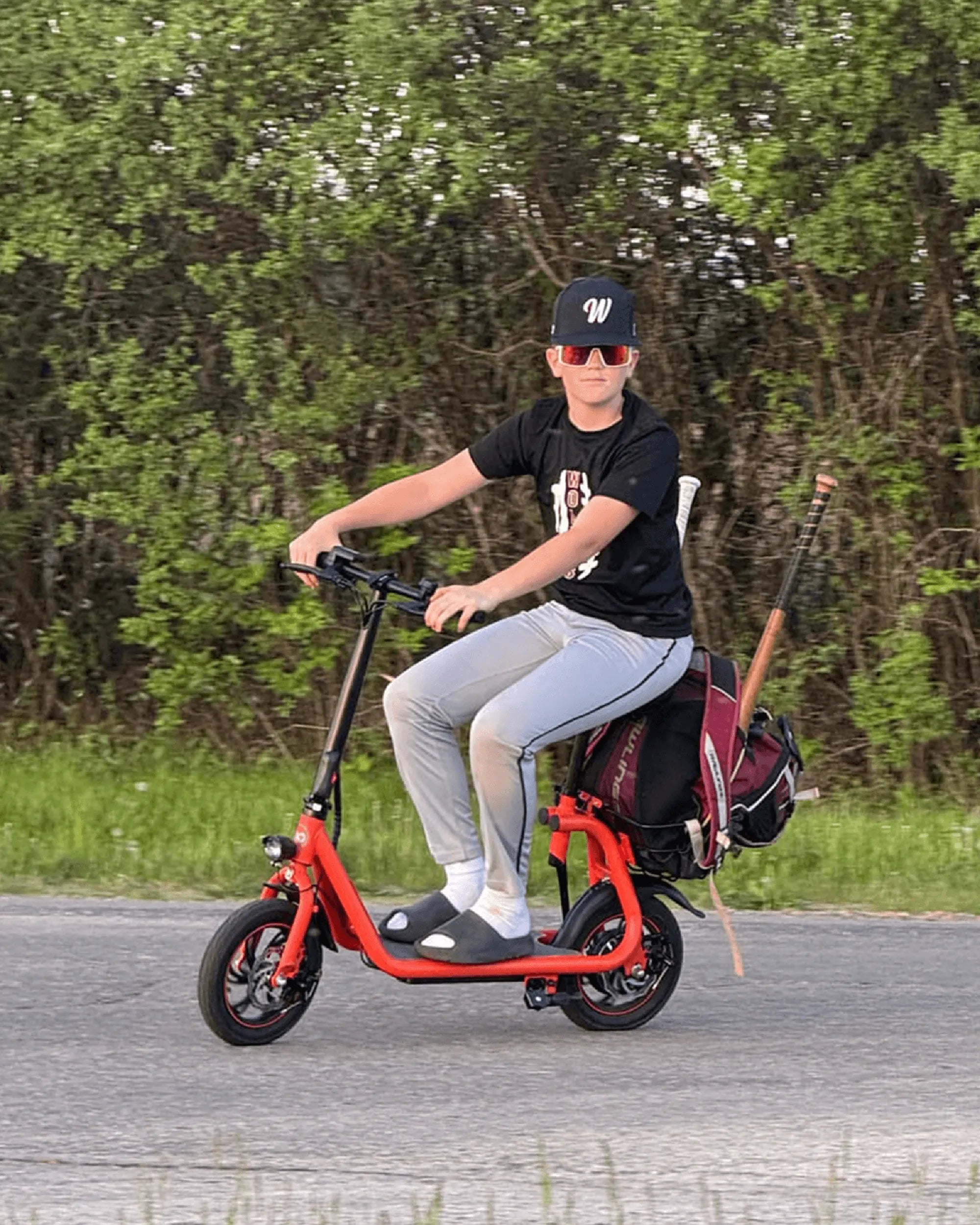
You're considering the freedom and efficiency of a motor scooter, but a critical question stops you: do you need a license for a motor scooter? The answer is not a simple yes or no. It's a nuanced "it depends" based on your scooter's technical specifications and the specific laws of your state, county, and city. This guide will cut through the confusion, providing a data-driven, step-by-step framework to help you understand the legal landscape. We'll define vehicle classes, outline typical requirements, and show you exactly how to verify your local rules, ensuring your journey begins on the right side of the law.
Defining the Vehicle: What Legally Qualifies as a "Motor Scooter"?
Before asking do you need a license for a motor scooter, you must first know what the law considers a "motor scooter." Legal definitions are not universal; they vary significantly by jurisdiction and are primarily based on three factors: engine displacement (for gas), motor wattage (for electric), and maximum speed capability. These criteria place vehicles into distinct legal categories, each with its own set of rules.
For gas-powered models, the engine size in cubic centimeters (cc) is the primary determinant. Small engines, typically under 50cc, often fall into a "moped" or "motorized bicycle" class. Larger engines, from 50cc up to 150cc or more, are usually classified as motorcycles. For electric scooters, the motor's power output in watts (W) and the scooter's governed top speed are the key metrics. A low-power electric scooter with a 250W motor might be treated as a "low-speed electric bicycle," while a 1000W model capable of 30+ mph may be classified as a motorcycle.
Understanding these classifications is crucial. For instance, many Gyroor electric scooters feature motors like 500W or 800W, with governed speeds that help place them into specific, clearer legal categories. This engineering consideration aids rider compliance from the outset. The takeaway is clear: you cannot determine licensing needs without first knowing your scooter's exact specifications as defined by law.
License Requirements by Vehicle Class: A State-by-State Framework
Licensing requirements in the U.S. follow a general framework based on vehicle class, though exceptions abound. The core question—do you need a license for a motor scooter—has three common answers corresponding to three common vehicle tiers. Always remember that your state's Department of Motor Vehicles (DMV) or equivalent transportation authority has the final, definitive word.
Tier 1: Low-Speed Electric Bicycles & Low-Power Scooters. For vehicles with motors under 750W (or sometimes 1000W) and a maximum assisted speed under 20 mph, many states require no driver's license, registration, or insurance. These are often treated similarly to traditional bicycles. However, some cities have specific ordinances, and helmet laws may still apply, especially for minors.
Tier 2: Mopeds & Motorized Bicycles. This class typically includes gas scooters under 50cc and some electric scooters with higher wattages but speeds capped around 25-30 mph. Most states require a standard Class C driver's license (your regular car license) to operate these. You do not need a separate motorcycle license, but you must have a valid driver's license.
Tier 3: Motorcycles. Any gas scooter over 50cc or electric scooter with sufficient power and speed to be classified as a motorcycle will require a motorcycle endorsement (M endorsement) on your driver's license or a separate motorcycle license. Obtaining this requires passing both a written knowledge test and a practical on-cycle skills test.
Beyond the License: Registration, Insurance, and Safety Gear
Licensing is just one pillar of legal compliance. Once you've answered do you need a license for a motor scooter, you must address registration, insurance, and equipment mandates. These requirements are intrinsically linked to your scooter's classification and are non-negotiable for lawful operation.
Registration & Plates: If your scooter requires a driver's license (Tier 2 or 3), it will almost always require registration with your state DMV and the display of a license plate. This process involves providing proof of ownership, paying a fee, and receiving a registration card and plate. Unregistered vehicles can be impounded.
Insurance: Liability insurance is universally mandatory for any registered motor vehicle, including scooters in Tiers 2 and 3. This protects you financially if you are at fault in an accident causing injury or property damage. Some states also require personal injury protection (PIP) or uninsured motorist coverage. Riding without insurance can result in severe fines and license suspension.
Safety Gear Laws: Helmet laws are the most common and vary widely. Many states have universal helmet laws for all motorcycle/moped riders. More commonly, laws mandate helmets for riders under a certain age (often 18 or 21). Even if not legally required, a DOT-approved helmet is essential. Additional laws may require eye protection, working turn signals, a rearview mirror, and specific lighting for night riding.
How to Check Your Local Laws: A 4-Step Action Plan
Given the variability, personal due diligence is essential. Follow this systematic action plan to get a definitive answer for your situation.
Step 1: Know Your Scooter's Specs. Locate the owner's manual or manufacturer's website. Note the exact motor wattage (e.g., 500W), maximum speed, and, for gas models, engine displacement (cc). This data is the foundation for all further research.
Step 2: Consult Your State DMV Website. Visit your state's official DMV site. Use the search function for terms like "moped laws," "motorized bicycle," "electric scooter regulations," or "low-speed vehicle." Look for official publications or statute summaries that define classes and list requirements.
Step 3: Investigate City and County Ordinances. Local laws can be stricter. Search your city's municipal code or transportation department website for rules on where you can ride (bike lanes vs. roads), parking, and any additional equipment or helmet mandates.
Step 4: When in Doubt, Call for Clarification. If online information is unclear, call your local DMV office or non-emergency police line. Have your scooter's specifications ready to ask specific questions. This proactive step can prevent costly mistakes.
Comparison of Common Scooter Classifications and Requirements
The table below provides a generalized overview of how different scooter types are commonly treated under state laws. This is a starting point; you must verify with your local authorities.
| Vehicle Type | Typical Specs | Common Legal Class | License Typically Needed? | Registration & Plate? | Insurance Typically Required? |
|---|---|---|---|---|---|
| Low-Speed E-Scooter | <750W, max speed <20 mph | Electric Bicycle | No | No | No |
| Commuter E-Scooter | 500W-1000W, speed 20-30 mph | Moped / Motorized Bicycle | Standard Driver's License | Often Yes | Often Yes |
| Gas-Powered Scooter (Small) | ≤50cc, automatic transmission | Moped | Standard Driver's License | Yes | Yes |
| Gas/Electric Scooter (Larger) | >50cc or >1000W, speed >30 mph | Motorcycle | Motorcycle Endorsement (M) | Yes | Yes |
The Gyroor Advantage: Engineered for Clarity and Compliant Performance
Navigating the question do you need a license for a motor scooter is easier when you start with a vehicle from a brand that prioritizes transparency and safety. Gyroor designs its electric scooters and e-bikes with clear specifications that help riders understand their potential legal classification. Models are engineered with governed speeds and declared wattages to align with common regulatory frameworks.
Beyond specifications, Gyroor builds a foundation for safe and responsible riding. Every model uses a UL-certified battery pack, tested for over 500 charge cycles, mitigating the fire risks associated with uncertified power cells. IPX5 water-resistant designs ensure reliability in various weather conditions, while robust construction from a brand trusted by over 100,000 riders in North America and Europe provides peace of mind. The reliable 1-year warranty and US-based customer support offer a resource for owners, underscoring a commitment to the rider's entire experience, from purchase to daily commuting.
Frequently Asked Questions (FAQ)
Do you need a license for a 50cc scooter?
In the vast majority of states, yes. A 50cc gas scooter is almost always classified as a moped, which requires at least a standard Class C driver's license (your regular car license). You do not need a motorcycle license, but you cannot operate it with just a learner's permit or no license at all.
What about electric scooters like Bird or Lime?
Shared micro-mobility scooters from companies like Bird and Lime often operate under special pilot program agreements with cities. These agreements may waive certain requirements like helmets or licenses for users, but these are exceptions. The rules for privately owned electric scooters of similar power are almost always different and typically stricter. Do not assume the rules for rental scooters apply to your own.
Can I ride my motor scooter on the sidewalk or bike path?
Almost universally, the answer is no for motorized vehicles classified as mopeds or motorcycles. They are required to operate on the roadway, obeying all traffic laws. Some states explicitly allow lower-power electric scooters (e.g., under 750W) in bike lanes, but sidewalk riding is typically prohibited for safety reasons. Always check local ordinances.
What happens if I ride without the proper license or registration?
The penalties can be severe. You may face substantial fines, your scooter may be impounded (requiring expensive fees to retrieve), and you could be charged with driving without a license or with an unregistered vehicle. In an accident, you would be personally liable for all damages and may face difficulty with insurance claims.
If my scooter doesn't need a license, do I need insurance?
For vehicles that do not require registration (like many low-speed electric scooters), liability insurance is not legally mandated. However, it is highly recommended to check with your homeowner's or renter's insurance policy to see if it covers liability for such vehicles. If not, a personal umbrella policy may be a wise investment to protect your assets.
Ride Smart, Ride Legal, Ride Confidently
The freedom of scooter ownership is best enjoyed with the confidence that comes from full legal compliance. The central question—do you need a license for a motor scooter—is answered through careful research of your specific vehicle and jurisdiction. Treat this due diligence as the essential first step in your riding journey. By understanding and adhering to licensing, registration, insurance, and safety gear laws, you protect yourself, your investment, and everyone sharing the road. Choosing a reliable partner like Gyroor, with its commitment to certified safety, clear specifications, and robust support, provides the ideal platform for a worry-free and exhilarating ride. Ready to find a scooter that matches your commute and clarity needs? Browse the full Gyroor collection at gyroorboard.com.
Power Scooter for Elderly: The Ultimate Guide to Safe Senior Mobility
V8 Mobility Scooter: The Ultimate Guide to Power, Range & Reliability