


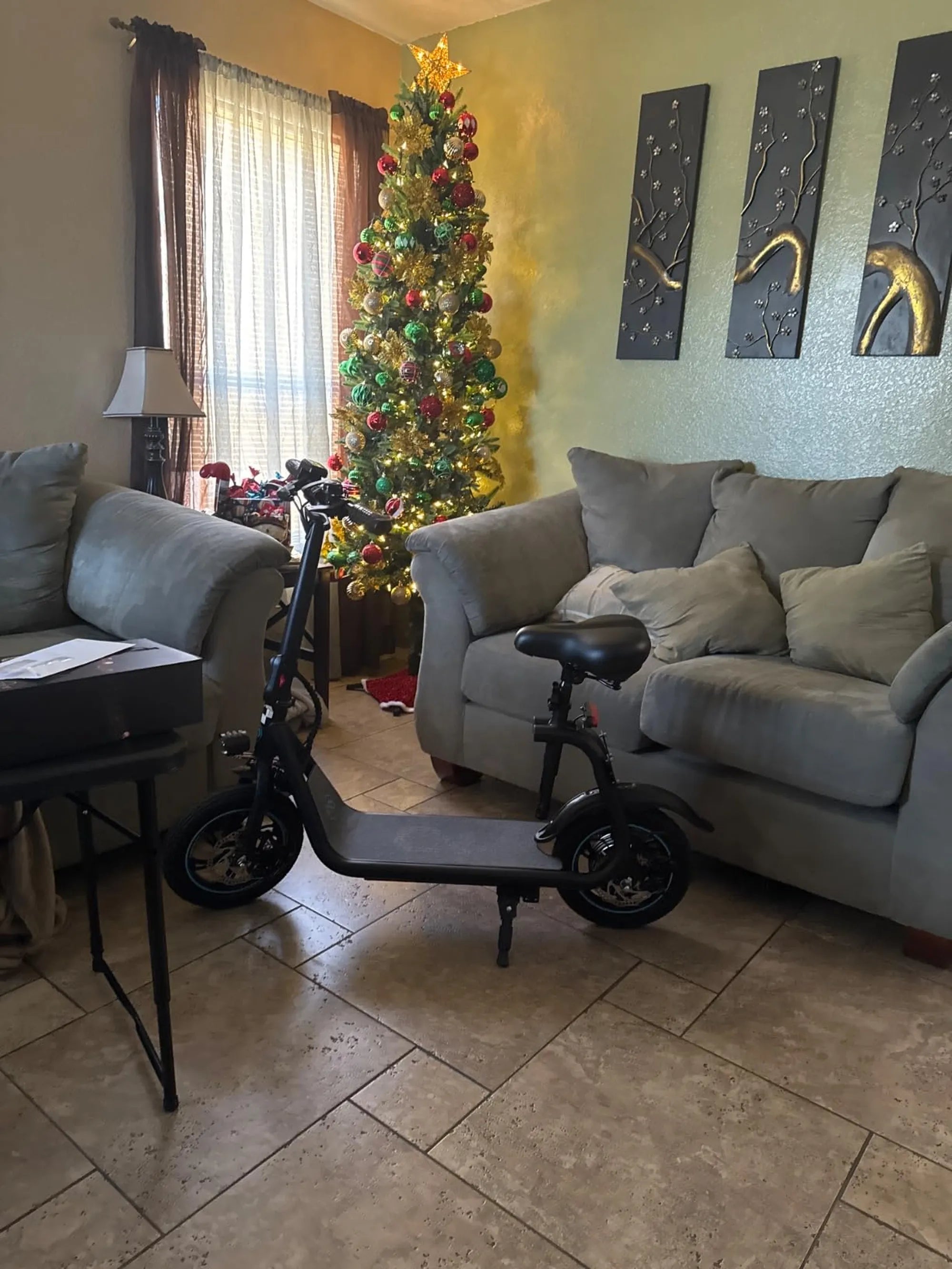
Navigating the Rules of the Road for 150cc Scooters
Considering a 150cc scooter for your daily commute or weekend adventures? You're looking at a sweet spot of urban agility and highway-capable power. But before you feel the wind in your hair, there's a critical, non-negotiable first step: understanding the legal requirements. The central question, "do you need a license to drive a 150cc scooter," has a clear answer that varies only in its specifics by location. This comprehensive guide will provide a definitive, jurisdiction-by-jurisdiction breakdown of licensing, registration, insurance, and safety laws to ensure your ride is both thrilling and fully compliant.
Operating a motor vehicle on public roads is a regulated privilege, and 150cc scooters are unequivocally considered motor vehicles, not toys. Ignorance of the law is not a defense and can result in hefty fines, impoundment of your scooter, and even a suspended driver's license. This article will demystify the process, from understanding why the 150cc threshold is so significant globally to outlining the exact steps you must take in the United States, Canada, Europe, and Australasia.
We will also explore the essential responsibilities that accompany your license, including mandatory insurance and non-negotiable safety gear. Finally, we'll discuss why choosing a well-engineered, reliable scooter from a brand like Gyroor—known for UL-certified batteries and robust construction—is a crucial part of responsible ownership, complementing your legal compliance with mechanical confidence on the road.
Understanding the 150cc Classification: A Key Legal Threshold
The "cc" in 150cc stands for cubic centimeters, a measurement of the engine's displacement or total volume. This number directly correlates with the engine's power output and potential speed. A 150cc scooter typically produces between 10 to 15 horsepower, enabling top speeds of 55 to 70 miles per hour (90-115 km/h). This performance profile places it firmly in the category of a true motorcycle in the eyes of traffic authorities worldwide.
This engine size is a major global regulatory benchmark. In most legal frameworks, vehicles under 50cc (and sometimes with speed limiters) are classified as "mopeds" or "motor-driven cycles." These often have relaxed licensing requirements, sometimes allowing operation with a standard car license. The moment you cross the 50cc threshold, especially reaching 150cc, the vehicle is almost universally classified as a motorcycle or a "light motorcycle." This classification triggers stricter requirements.
The rationale is rooted in safety and capability. A 150cc scooter can keep pace with city and highway traffic, which means it interacts with faster, more complex traffic flows. Operating it requires a higher degree of skill, knowledge, and situational awareness than a lower-powered moped. Therefore, the licensing process is designed to certify that the operator possesses these necessary skills.
It's also important to note the rise of electric equivalents. Many electric scooters are now engineered to match the performance of 150cc gas models. For licensing purposes, the law typically focuses on performance metrics like top speed and power output (often expressed in kilowatts), not just engine displacement. A powerful electric scooter with a 55+ mph top speed will fall under the same motorcycle licensing requirements as its 150cc gas-powered counterpart.
The License Landscape: Moped Endorsement vs. Motorcycle License
To legally operate a 150cc scooter, you must understand the two primary licensing categories. The first is a moped license or endorsement. This is typically for vehicles under 50cc with very limited top speeds (e.g., 30 mph). In some U.S. states, a standard Class C (car) driver's license automatically includes this privilege. In others, you may need to pass a simple written test to add a "M" or "MD" endorsement. Crucially, a moped license is not sufficient for a 150cc scooter.
The license you need is a full motorcycle license or endorsement. In the U.S., this is commonly called a "Class M" endorsement added to your existing driver's license. In the UK and EU, it's the A1 or A2 license category. Obtaining this is a more involved process designed to prove competency. It almost always requires passing both a written knowledge test and an on-bike skills test.
The knowledge test covers road signs, traffic laws specific to motorcycles, and safe riding techniques. The skills test, or road test, is conducted on a closed course or in traffic. It evaluates your ability to control the scooter through maneuvers like sharp turns, obstacle avoidance, quick stops, and low-speed balance. You will need to provide a properly insured and registered scooter of appropriate engine size (usually 100cc or more) for this test.
Many regions also implement a graduated licensing process. This may involve first obtaining a motorcycle learner's permit, which allows you to practice under specific restrictions (e.g., no passengers, no night riding, no highways) for a set period before taking the full skills test. This staged approach is designed to build experience safely before granting full riding privileges.
Licensing Requirements by Region: A Detailed Breakdown
Laws are set at the state, provincial, or national level, making it imperative to verify details with your local Department of Motor Vehicles (DMV) or transport authority. The following guide provides accurate general frameworks, but local variations always apply. Always confirm with the official source before purchasing or riding.
United States: A State-by-State Patchwork
In the United States, vehicle codes are state law. For the question do you need a license to drive a 150cc scooter, the answer is a resounding "yes" in all 50 states. A 150cc scooter is classified as a motorcycle, requiring a Class M motorcycle license or endorsement. The process is regulated by each state's DMV.
While the requirement is universal, procedures differ. For example, in California, you must obtain a motorcycle learner's permit first, hold it for six months, and then pass a skills test on a bike over 150cc. In Florida, you can skip the permit if you complete an approved Basic Rider Course, which waives the DMV skills test. Texas requires a motorcycle license (Class M) and specifically mandates liability insurance for registration.
Key steps are consistent: 1) Study the state's motorcycle handbook. 2) Pass a vision and written knowledge test to get a learner's permit (if required). 3) Practice riding. 4) Pass an on-cycle skills test administered by the DMV or a certified training course. 5) Pay the fee to add the "M" endorsement to your license. Rider education courses are highly recommended and often provide insurance discounts.
It is a critical mistake to assume a car license is enough. Riding without the proper Class M endorsement can lead to a ticket for "operating a motorcycle without a proper license," which carries fines, points on your driving record, and potential impoundment of the scooter.
Canada: Provincial Authority
In Canada, motor vehicle regulations are provincial. Similar to the U.S., a 150cc scooter is classified as a motorcycle everywhere. You will need a motorcycle license specific to your province. Most provinces use a graduated licensing system with multiple stages.
In Ontario, for instance, you must be at least 16. You start by passing a written test for an M1 learner's permit (valid for 90 days with restrictions). After a mandatory waiting period, you take a basic riding course or a provincial road test for an M2 license. After a further period (often 22 months), you take a final advanced test for the full M license. British Columbia has a similar system: a knowledge test for a learner's (L) license, a road test for a novice (N) license, and after 24 months, a test for the full license.
Registration and insurance are also provincially managed. You must register the scooter and obtain a license plate. Mandatory liability insurance is required by law, with government-run providers in some provinces (ICBC in BC, MPI in Manitoba) and private insurers in others.
European Union & United Kingdom: The A1 Licence Category
The EU and UK have a harmonized driver licensing system with clear categories. A 150cc scooter falls under the A1 light motorcycle license. This license is available to riders as young as 16 in most member states (17 in the UK). It allows you to ride motorcycles up to 125cc with a power output not exceeding 11 kW (about 14.7 hp). Since a typical 150cc scooter exceeds the 125cc limit, it requires the next category.
For a 150cc scooter, you typically need an A2 license (available at age 18). This is for motorcycles with a power output not exceeding 35 kW (46.9 hp). The process involves: 1) Passing a motorcycle theory test. 2) Completing compulsory basic training (CBT) or an equivalent course to get a learner certificate. 3) Passing a two-part practical test: off-road maneuvers (Module 1) and on-road riding (Module 2).
After holding an A2 license for two years, riders over 20 can take a further test to upgrade to a full unrestricted (Category A) license. The system is designed to progressively build skill. Registration and insurance are mandatory, with the scooter requiring type approval for road use.
Australia and New Zealand: Learner Approved Motorcycle Schemes (LAMS)
Australia and New Zealand utilize the LAMS system, which categorizes motorcycles and scooters suitable for learner and restricted license holders. A 150cc scooter is almost always included on the LAMS list due to its manageable power-to-weight ratio.
To ride one, you must hold at least a learner's motorcycle license. Obtaining this requires: holding a car learner's permit for a period, passing a motorcycle knowledge test, and then completing a learner rider course (practical training). With a learner's license, you can ride a LAMS-approved 150cc scooter with restrictions (e.g., no passengers, zero alcohol, speed limits).
You then progress to a restricted license (passing a practical test) and finally a full motorcycle license. The LAMS framework is excellent for new riders, as it ensures they start on appropriate machinery. Registration (called "rego") and compulsory third-party (CTP) insurance are mandatory before the scooter can be ridden on the road.
Beyond the License: Registration, Insurance, and Safety Gear
Securing your motorcycle license is the first major hurdle, but it's only one part of legal and responsible operation. Three other pillars are equally important: registration, insurance, and protective gear. Neglecting any of these can have severe legal, financial, and physical consequences.
Mandatory Registration and Insurance
Before you can legally ride on public roads, your 150cc scooter must be registered with your state or provincial transport authority and display a valid license plate. The registration process involves presenting proof of ownership (title or Manufacturer's Certificate of Origin), proof of identity, and often proof of insurance. You will pay a registration fee and receive a license plate and registration sticker or card. This registration must be renewed annually.
Insurance is not optional; it is a legal requirement. At a minimum, you must carry liability insurance. This covers bodily injury and property damage you may cause to others in an accident. Minimum coverage limits are set by law. Given the potential costs of an accident, carrying only the minimum is often risky. We strongly recommend considering:
- Collision Coverage: Repairs or replaces your scooter if you're at fault in an accident.
- Comprehensive Coverage: Covers theft, vandalism, fire, or damage from weather or animals.
- Uninsured/Underinsured Motorist Coverage: Protects you if you're hit by a driver with no or insufficient insurance.
For a quality scooter like a Gyroor model, which represents a significant investment, comprehensive coverage is a prudent choice. Insurance providers will often offer discounts if you've completed a certified motorcycle safety course.
Helmet Laws and Recommended Safety Equipment
Helmet laws vary, but the safety logic does not. In the U.S., some states have universal helmet laws (everyone must wear one), while others have laws only for riders under a certain age. However, from a safety perspective, a helmet is non-negotiable. The single most effective thing you can do to prevent fatal head injuries in a crash is to wear a helmet that meets safety standards.
Always choose a helmet certified by the Department of Transportation (DOT) in the U.S., ECE 22.06 in Europe, or AS/NZS 1698 in Australasia. A full-face helmet provides the best protection for your head, face, and jaw. Beyond the helmet, proper gear is essential:
- Eye Protection: A helmet visor or dedicated goggles. Wind and debris can cause immediate vision loss.
- Jacket & Pants: Made of abrasion-resistant materials like leather, textile with armor, or specialized motorcycle jeans with Kevlar. They protect your skin in a slide.
- Gloves: Full-finger motorcycle gloves protect your hands from abrasion, impact, and the elements.
- Boots: Sturdy boots that cover the ankles provide support and protection.
Dressing for the ride, not just the destination, is a core tenet of safe motorcycling. This gear is your primary defense against the asphalt.
Why Choose a Licensed-Ready Scooter? The Gyroor Assurance
Once you've committed to the process of getting licensed, insured, and geared up, your choice of scooter should reflect that same level of responsibility. A 150cc-class scooter is a legitimate road vehicle, and it deserves engineering that matches its purpose. This is where brands like Gyroor, a leading electric mobility brand trusted by over 100,000 riders, distinguish themselves by building vehicles designed for licensed, serious road use.
Choosing a scooter from a reputable manufacturer isn't just about performance; it's about predictability, safety, and reliability. A poorly made scooter can have vague brakes, unstable frames at speed, or inadequate lighting—all of which increase risk. A well-engineered scooter gives you precise control, instilling confidence as you navigate traffic and practice the skills you learned for your license test.
Gyroor's electric models designed to match 150cc performance are built with this philosophy. They feature robust, welded steel or aluminum frames that provide stable handling. Their dual braking systems (often disc brakes in front and rear) offer strong, predictable stopping power. Bright LED headlights, tail lights, and turn signals ensure you are visible to other motorists, a critical aspect of safe road sharing that is a key part of motorcycle licensing education.
Investing in a reliable scooter means you spend less time worrying about mechanical failures and more time focusing on developing your riding skills and enjoying the journey. It complements the investment you've made in obtaining your license and proper gear.
Built for Compliance and Confidence on the Road
Gyroor's commitment to safety and quality aligns perfectly with the requirements of licensed motorcycle operation. Their scooters are engineered not as toys, but as legitimate transportation solutions. For instance, their high-performance electric models achieve speeds and acceleration comparable to 150cc gas scooters, meaning they are designed for the same road environments and demand the same level of rider skill and legal compliance.
Key design elements support safe, licensed riding. Precision throttle control and multiple riding modes allow new riders to start gently and progress as their skills improve. Wide, pneumatic tires provide better grip and stability on various road surfaces than the solid tires often found on smaller, unlicensed scooters. A clear, digital dashboard displays speed, battery level, and trip data, helping the rider maintain situational awareness—a key component of safe riding taught in licensing courses.
The construction quality ensures that the scooter behaves predictably during the maneuvers tested for a motorcycle license, such as emergency stops and swerves. This reliability gives riders the confidence to handle real-world road situations safely. When your vehicle's performance is consistent and trustworthy, you can focus entirely on traffic, hazards, and the rules of the road.
Reliability Backed by Warranty and Certified Components
Beyond initial build quality, long-term reliability and safety are paramount. Gyroor supports its riders with industry-leading assurances that provide peace of mind for the licensed commuter. The cornerstone of this is the UL 2272 certified lithium-ion battery pack. This certification is the gold standard for electrical and fire safety in personal mobility devices, ensuring the battery has passed rigorous stress tests. It's a critical feature for a vehicle you'll be charging regularly and relying on daily.
Further enhancing dependability is an IPX5 water-resistant rating on key models. This means the scooter's electrical components are protected against low-pressure water jets from any direction, allowing you to ride confidently in light rain or on wet roads without fear of sudden failure. This all-weather capability is essential for practical, daily transportation.
Finally, Gyroor backs its products with a comprehensive 1-year warranty and accessible U.S.-based customer support. This warranty covers defects in materials and workmanship, ensuring that any issues are resolved promptly. For a licensed rider using their scooter as primary transport, this support network is invaluable. It means you're not left stranded by a manufacturing fault, protecting your investment and ensuring your legal, insured, and safety-geared ride remains on the road where it belongs.
Frequently Asked Questions (FAQs)
Q: Can I drive a 150cc scooter with just a regular car driver's license?
A: In the vast majority of jurisdictions worldwide, the answer is no. A 150cc scooter is classified as a motorcycle, which requires a specific motorcycle license or endorsement (e.g., Class M in the U.S., A2 in the EU). A standard car license only covers the operation of passenger vehicles and, in some areas, very low-powered mopeds (usually under 50cc).
Q: Is the license test for a 150cc scooter different from the test for a larger motorcycle?
A: Usually, no. The license class (like Class M or A2) qualifies you to operate all motorcycles within that class's power limits. The skills test is standardized for the license itself. You will take the test on a vehicle that meets the minimum requirements for that license (often a motorcycle of at least 100-125cc), and passing it grants you the privilege to ride any motorcycle up to the legal limit for that license type, including 150cc scooters.
Q: Do I need insurance for a 150cc scooter?
A: Yes, absolutely. Liability insurance is a legal requirement to register and operate a 150cc scooter on public roads in virtually every region. It financially protects you if you are at fault in an accident that causes injury or property damage to others. Riding without insurance can result in severe penalties, including fines, license suspension, and personal liability for massive costs.
Q: Are there age restrictions for getting a 150cc scooter license?
A: Yes. The minimum age varies by region but is typically 16 or 18. For example, the A1 license in the EU is available at 16 (for up to 125cc), while the A2 license needed for a 150cc is available at 18. In most U.S. states, you must be at least 16 to obtain a motorcycle learner's permit and have a standard driver's license or permit.
Q: If I buy an electric scooter with similar speed to a 150cc, do the same rules apply?
A: Yes, unequivocally. Licensing laws are based on vehicle performance (top speed, power output) and type, not solely on the type of engine. If an electric scooter can exceed 30-35 mph (typical moped limits), it will be classified as a motorcycle and require the same license, registration, and insurance as a comparable 150cc gas scooter. Always check your local laws based on the scooter's specifications.
Your License is Your Ticket to Freedom and Responsibility
Navigating the requirements to legally ride a 150cc scooter is a clear process: obtain a motorcycle license, register your vehicle, secure insurance, and always wear proper safety gear. This path transforms you from just a rider into a responsible road user. The freedom and efficiency a 150cc scooter offers are immense, but they are privileges earned through compliance and a commitment to safety. The question, do you need a license to drive a 150cc scooter, is definitively answered with a yes—and that license is the foundation of a safe and enjoyable riding life.
Start your journey by visiting your local DMV or transport authority website to understand the exact steps. Then, invest in quality protective equipment. Finally, choose a scooter engineered to match the responsibility of licensed road use. A reliable, well-built machine from a brand like Gyroor, with its certified batteries, water-resistant design, and strong warranty, ensures your focus stays on the ride, not on reliability concerns.
Ready to explore models built for the licensed rider? Discover the full range of high-performance, road-ready electric scooters and e-bikes designed for commuters who take safety and compliance seriously. Browse the full Gyroor collection at gyroorboard.com and find the perfect partner for your newly licensed adventures.
Smart Scooter Price: A Complete Guide to Cost, Value & Tech
Do You Need a Motorcycle Licence for a Scooter? The Complete 2024 Guide