


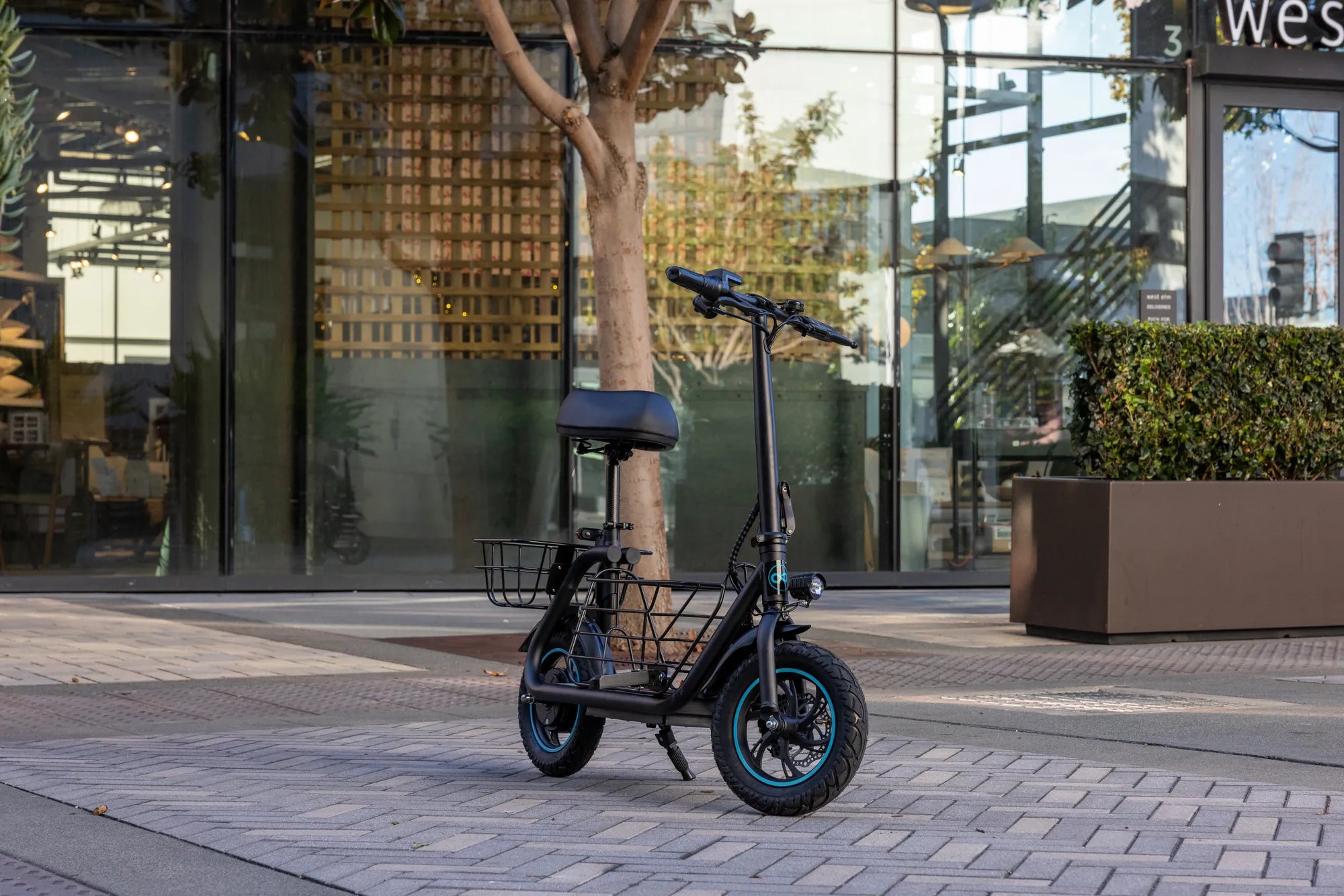
Introduction to E-Bike Licensing: Navigating the Rules of the Road
The question "do you need a license to ride an e bike" is one of the first and most important hurdles for new riders. The answer is not a simple yes or no, but a nuanced "it depends." This uncertainty stems from a patchwork of regulations that vary by jurisdiction and hinge on the specific type of e-bike you own. For over 100,000 riders across North America and Europe, understanding these rules is the key to unlocking safe, legal, and worry-free electric mobility.
This guide will provide a comprehensive, data-driven breakdown of e-bike licensing laws. You will learn how e-bikes are classified, where licenses are (and are not) required, and what other legal responsibilities you must know. We'll clarify the often-confusing landscape so you can ride with confidence, whether you're commuting or cruising for fun. Choosing a compliant e-bike from a trusted brand like Gyroor, known for UL-certified batteries and reliable engineering, is the first step toward simplifying this legal journey.
Understanding the Three-Tier E-Bike Classification System
The cornerstone of modern e-bike regulation in the United States and many other regions is the three-class system. Developed by PeopleForBikes and adopted by over 40 states, this framework categorizes e-bikes by their top assisted speed and method of operation. This classification directly determines where you can ride and what rules, including licensing, apply.
Class 1 E-Bikes are pedal-assist only, meaning the motor provides power only when you are pedaling. The motor assistance ceases when the bike reaches 20 mph. These are typically treated like traditional bicycles, allowed on bike paths, trails, and roads where bicycles are permitted.
Class 2 E-Bikes are equipped with a throttle that can propel the bike without pedaling. Like Class 1, the motor stops providing assistance at 20 mph. The presence of a throttle is the key differentiator, but their speed cap often keeps them in the same legal category as Class 1 for licensing purposes.
Class 3 E-Bikes are also pedal-assist only, but they offer a higher top assisted speed of 28 mph. Due to this increased speed, they are subject to more restrictions. They are often prohibited on natural surface trails and some bike paths, and they may trigger specific age, helmet, and licensing requirements in certain states.
Class 1, 2, and 3 E-Bikes: A Quick Comparison Chart
| Class | Max Assisted Speed | Throttle? | Typical Licensing Required? | Common Riding Locations |
|---|---|---|---|---|
| Class 1 | 20 mph | No | No | Bike paths, trails, roads |
| Class 2 | 20 mph | Yes | No | Bike paths, trails, roads |
| Class 3 | 28 mph | No* | Sometimes (varies by state/age) | Roads, designated bike lanes |
*Some local laws may have variations. This chart reflects the predominant model legislation.
Do You Need a License? A State-by-State and Country Guide
For the vast majority of riders in the United States using standard Class 1 or Class 2 e-bikes, a driver's license is not required. These models are legally defined as bicycles, not motor vehicles, in states that have adopted the three-class system. However, the moment you step into Class 3 territory or venture outside the U.S., the rules become more complex and geographically dependent.
In the U.S., licensing questions most commonly arise with Class 3 e-bikes. A handful of states, such as Alabama, have historically required a driver's license to operate any motorized bicycle. However, most states adopting the three-class system explicitly exempt all three classes from licensing. The more common restriction for Class 3 is a minimum age requirement (often 16) rather than a license mandate. It is absolutely critical to check your specific state's vehicle code.
Internationally, regulations differ significantly. In the European Union, standard e-bikes (EPACs) are limited to 25 km/h (15.5 mph) pedal-assist and require no license, registration, or insurance. However, faster "Speed Pedelecs" that assist up to 45 km/h (28 mph) are classified as mopeds, requiring a license (often AM category), registration, insurance, and helmet use.
In the United Kingdom, e-bikes meeting specific power (250W) and speed (15.5 mph) limits are treated as regular bicycles. In Canada, federal law defines a "power-assisted bicycle" with specific criteria (500W max, 32 km/h or 20 mph); these do not require a license, but provinces can add restrictions. Australia has state-based rules, generally requiring no license for pedalecs limited to 25 km/h, but requiring registration and a license for more powerful models.
Special Cases: Moped, Scooter, and High-Power E-Bike Laws
A critical gray area exists for vehicles that exceed the standard e-bike definitions. If an e-bike has a motor exceeding 750 watts or can propel the rider over 28 mph without pedaling, it may no longer be classified as an e-bike in many jurisdictions. Instead, it could be classified as a moped, motorized scooter, or even a motorcycle.
This reclassification triggers a host of new legal requirements. Operating such a vehicle will likely require a valid driver's license (sometimes a motorcycle endorsement), vehicle registration, license plates, and mandatory insurance. These models are also typically banned from bicycle infrastructure and must be ridden on the road.
This is a key reason to purchase from a reputable brand like Gyroor. Their e-bikes are engineered to comply with standard class definitions, featuring clear speed limiters and UL-certified 500W or 750W motors that keep you within the legal e-bike framework. Choosing a compliant model from the start avoids the legal headache of a vehicle that might be considered a motor vehicle.
Beyond Licensing: Essential E-Bike Laws Every Rider Must Know
While the question "do you need a license to ride an e bike" is paramount, other legal responsibilities are often more immediately relevant for daily riding. Ignorance of these rules can lead to fines and compromise safety.
Helmet Laws are perhaps the most common regulation. For Class 1 and 2 e-bikes, helmet requirements often mirror those for traditional bicycles, typically applying only to riders under a certain age (e.g., 16 or 18). For Class 3 e-bikes, all-age helmet mandates are far more common. Some cities and states have universal helmet laws regardless of e-bike class.
Age Minimums are frequently tied to e-bike class. While Class 1 and 2 often have no minimum age (though local bicycle age rules may apply), many states set a minimum age of 16 for operating a Class 3 e-bike. Some states prohibit anyone under 16 from being a passenger on any e-bike.
Where You Can Ride is governed by local ordinances. Generally, e-bikes are allowed wherever bicycles are allowed, but important exceptions exist. Many states prohibit Class 3 e-bikes on natural surface or multi-use trails. Riding on sidewalks is frequently banned in business districts or entirely in many municipalities. Always default to bike lanes or the road when in doubt.
Equipment Requirements are non-negotiable for safety and legality. Most states require a front white light and a rear red reflector or light when riding at night. A bell or audible signaling device is also commonly required. Ensuring your e-bike, like those from Gyroor with their integrated lighting systems and IPX5 water-resistant designs, meets these requirements is part of responsible ownership.
Why Choosing a Compliant E-Bike (Like Gyroor) Simplifies Everything
Navigating the legal landscape is infinitely easier when you start with a vehicle designed for compliance. Brands that prioritize regulatory adherence build their products to fit within established class definitions, providing clear documentation and settings that keep riders on the right side of the law.
Gyroor's lineup of e-bikes and electric scooters is engineered with these regulations in mind. Models are configured as clear Class 1, 2, or 3 vehicles, with speed limiters that are not easily user-modified. This commitment extends to core safety features, such as the use of UL-certified battery packs tested for over 500 charge cycles, which not only ensures longevity but also reduces fire risk—a growing concern for municipalities.
The benefit of choosing a trusted brand with a 1-year warranty and a track record of serving over 100,000 riders is peace of mind. You can be confident that your e-bike's motor power (commonly 500W or 750W) and top speed are calibrated for legal operation on public roads and paths in North America and Europe. This allows you to focus on the joy of riding, not on potential legal liabilities.
Compliance is a feature, not an afterthought. It protects your investment and ensures access to the infrastructure you want to use. Before purchasing any e-bike, verify its class specification and ensure it aligns with your local laws. A reputable seller will provide this information transparently.
Frequently Asked Questions on E-Bike Licensing
Q: Do you need a license for a 750W e-bike?
A: Wattage alone does not determine licensing. A 750W e-bike is common for Class 3 models. If it is speed-limited to 28 mph (pedal-assist) and otherwise complies with your local e-bike definition, a license is usually not required. If it can exceed 28 mph or has a throttle at that power, it may be classified as a moped, requiring a license.
Q: Can I ride an e-bike without a license at 16 years old?
A: In most U.S. states that follow the three-class system, a 16-year-old can operate a Class 1 or 2 e-bike without a driver's license. For Class 3 e-bikes, many states set the minimum operator age at 16, but still do not require a license. Always check your specific state law for age and licensing rules.
Q: Do I need insurance for my e-bike?
A: For standard Class 1, 2, and 3 e-bikes, insurance is not typically required by law. However, it is highly recommended. Homeowners or renters insurance may offer limited coverage, but specialized e-bike insurance can protect against theft, damage, and liability if you are found at fault in an accident.
Q: What happens if I modify my e-bike to go faster?
A: Modifying an e-bike to exceed its class speed limit (often called "derestricting" or "tuning") almost always voids the warranty and reclassifies the vehicle. It may become an unregistered, uninsured motor vehicle, making it illegal to operate on public roads or paths. This can result in fines, impoundment, and invalidate any insurance claims.
Q: Where is the best place to find my local e-bike laws?
A> Start with your state's Department of Motor Vehicles (DMV) or Department of Transportation website. Search for "electric bicycle" or "low-speed electric bike" statutes. Next, check your city or county's municipal code for local ordinances regarding helmet use, sidewalk riding, and trail access. The PeopleForBikes website also maintains a useful state law tracker.
Conclusion: Empower Your Ride with Knowledge
The freedom of e-biking comes with the responsibility to understand and follow the rules. For the majority of riders on class-compliant e-bikes, the answer to "do you need a license to ride an e bike" is a reassuring no. However, your specific e-bike class, your age, and your geographic location form the trifecta that determines your legal requirements. By prioritizing a compliant e-bike from a reputable manufacturer, familiarizing yourself with local helmet and traffic laws, and riding defensively, you ensure that every journey is both exhilarating and lawful.
Ready to choose an e-bike designed for performance, safety, and regulatory peace of mind? Explore the full range of UL-certified, class-compliant models engineered for real-world riding. Browse the full Gyroor collection at gyroorboard.com and join a community of over 100,000 satisfied riders.
Scooter with Seat for 5 Year Old: The Ultimate Guide to Safe First Rides
Scooter with Seat for 5 Year Old: The Ultimate Guide to Safe First Rides