

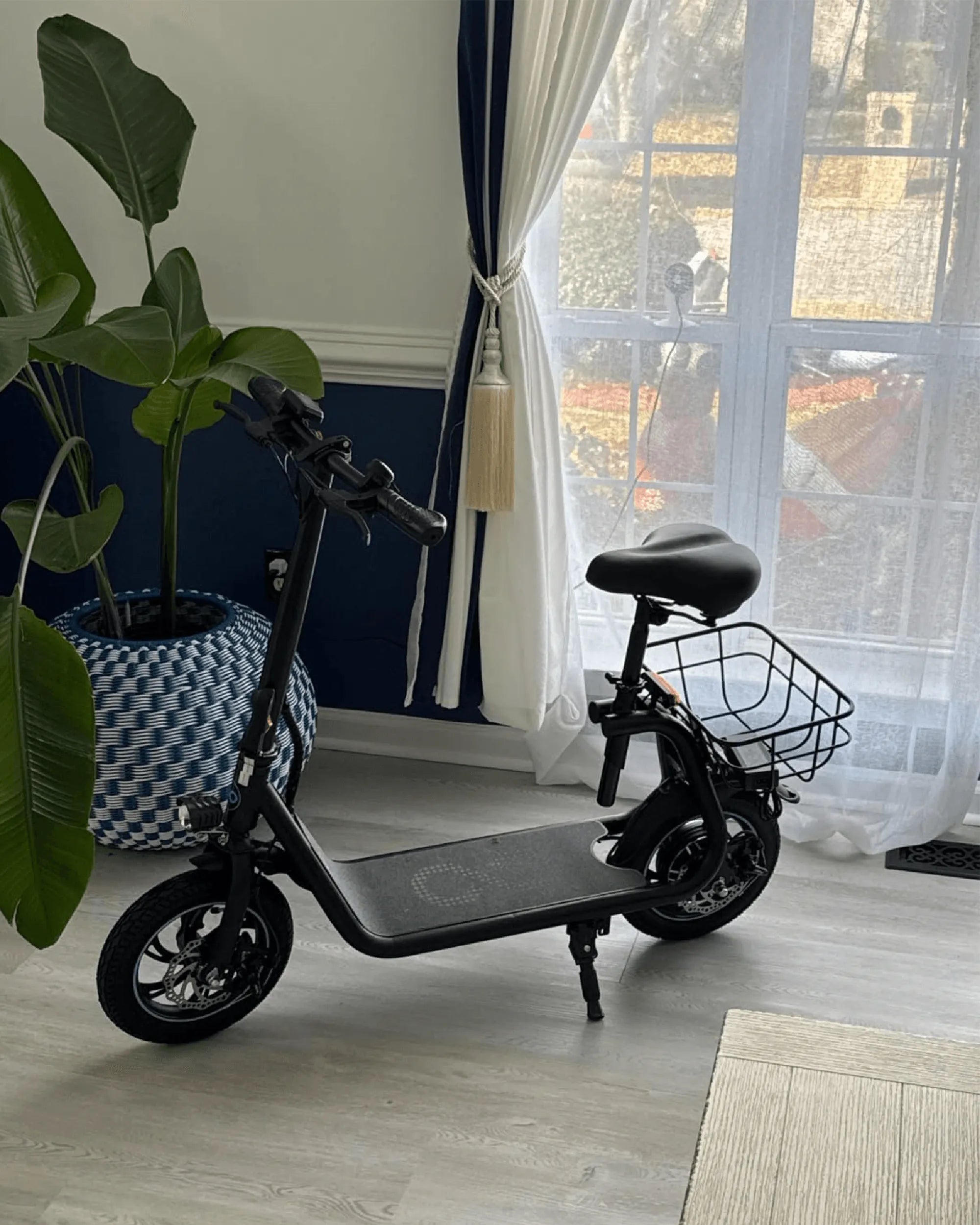
Introduction to Licensing for Electric Scooters
The question, "Do you need a motorcycle license to ride a scooter?" is one of the most common and crucial for new riders. The answer is not a simple yes or no; it's a complex puzzle shaped by your specific type of scooter, its technical capabilities, and, most importantly, the laws in your exact city and state. Getting it wrong can lead to fines, impounded vehicles, and legal liability.
This guide provides a comprehensive, data-driven framework to navigate these regulations confidently. We will dissect the legal distinctions between vehicle categories, provide actionable steps for researching your local laws, and connect these requirements to practical product choices. As a leading electric scooter and e-bike brand trusted by over 100,000 riders across North America and Europe, Gyroor is committed to empowering riders with the knowledge needed for safe, compliant, and enjoyable mobility.
Understanding the Different Types of "Scooters"
Legally, not all scooters are created equal. The term "scooter" can refer to three distinct vehicle classes with vastly different licensing implications. Misidentifying your ride is the fastest way to run afoul of the law.
Electric Kick Scooters (E-Scooters)
These are stand-up, personal light electric vehicles (PLEVs) like those in the Gyroor lineup. They are typically defined by a motor under 750W (1,000W in some areas) and a maximum speed under 20-28 mph when used on public roads. Critically, in most U.S. jurisdictions, these are not classified as motor vehicles in the same way as cars or motorcycles.
Instead, they often fall under a new category like "electric scooter" or "motorized scooter" in state vehicle codes. This classification is key because it usually means a standard driver's license (Class C) is sufficient for public road use, while a specialized motorcycle endorsement (Class M) is not required, provided the scooter meets local speed and power caps.
Motor Scooters and Mopeds
This category includes seated scooters with larger engines, both gas and electric. The licensing threshold here is almost always determined by engine displacement (for gas) or equivalent power and speed (for electric).
Mopeds are typically defined as having an engine under 50cc and a maximum speed under 30 mph. Many states require a standard driver's license plus a moped endorsement or registration, but not a full motorcycle license. Motor Scooters with engines over 50cc or capable of speeds exceeding 30-35 mph are almost universally classified as motorcycles. Operating these legally absolutely requires a motorcycle license (M-class endorsement), registration, and insurance.
E-Bikes (A Related Mobility Option)
While not scooters, e-bikes are a relevant comparison. Governed by a three-class system (1, 2, and 3) based on top assisted speed and whether they have a throttle, e-bikes are generally treated as bicycles in most states. This means no driver's license, registration, or motorcycle license is required for Class 1 and 2 e-bikes. Class 3 e-bikes (assist up to 28 mph) may have age restrictions but still do not require a motorcycle license.
State-by-State & Local Law Breakdown (U.S. Focus)
While federal guidelines influence design, enforcement is hyper-local. Navigating this patchwork requires understanding general trends and knowing where to look for your specific rules.
The General Rule for Electric Kick Scooters
For a stand-up electric scooter like a Gyroor model, the prevailing rule across most U.S. states is: a valid driver's license is required for public road use, but a motorcycle license is not. For example, California Vehicle Code §21220.5 explicitly states an e-scooter operator must have a valid driver's license but does not require a motorcycle endorsement. This pattern holds in states like Texas, Florida, and Illinois, where e-scooters are legally distinct from motorcycles.
The core reason is that these devices are seen as low-speed, limited-power alternatives for short trips, not vehicles for highway travel. Their legal status is closer to a bicycle than a motorcycle, albeit with the added requirement of a basic driver's license to ensure knowledge of traffic laws.
Key Factors That Change the Rule
Several variables can trigger a motorcycle license requirement or alter the basic rule:
- Maximum Speed: If an e-scooter can exceed 30 mph (sometimes 28 mph), it may be reclassified as a motor-driven cycle or motorcycle in some jurisdictions.
- Motor Power: Jurisdictions with wattage limits (e.g., 750W) may treat higher-powered scooters as mopeds.
- Local City Ordinances: Cities can impose stricter rules. Some may ban e-scooters from streets entirely, restrict them to bike lanes, or require specific permits for shared scooters.
- Rider Age: Many states set a minimum age of 16 for e-scooter operation, independent of licensing class.
- Intentional Modification: Illegally modifying a scooter to go faster than its manufactured limit can instantly void its compliant classification and create a motorcycle license requirement.
How to Research Your Local Laws
Follow this four-step process to get definitive answers:
- State DMV Website: Search for "electric scooter" or "motorized scooter" in your state's vehicle code or DMV operational guidelines.
- City Municipal Code: Check your city's official website for transportation or public works ordinances. Look for chapters on "micromobility" or "motorized devices."
- Identify Key Thresholds: Note the specific numbers for legal maximum speed, motor wattage, minimum age, and helmet requirements.
- Contact Local Authorities: If codes are unclear, a call to your local police department's non-emergency line or city traffic engineering office can provide clarity.
Comparative Table: Scooter Types and License Requirements
| Vehicle Type | Typical Definition | Driver's License Required? | Motorcycle License Required? | Registration/Insurance |
|---|---|---|---|---|
| Electric Kick Scooter (e.g., Gyroor Commuter) | Stand-up, <750W, max speed <20 mph | Usually Yes | Almost Always No | No / No (but insurance recommended) |
| High-Speed E-Scooter | Stand-up, >1000W, max speed >30 mph | Yes | Possibly, depending on state | Possibly / Recommended |
| Moped (Gas/Electric) | Seated, <50cc or equivalent, <30 mph | Yes, often with moped endorsement | No | Often Yes / Often Yes |
| Motor Scooter (Gas/Electric) | Seated, >50cc or >30 mph | Yes | Yes (M-class endorsement) | Yes / Mandatory |
| E-Bike (Class 1, 2, 3) | Pedal-assist/throttle, up to 28 mph | No | No | No / No |
The Gyroor Advantage: Built for Compliance and Peace of Mind
Gyroor designs its electric scooters with regulatory compliance as a core engineering principle, providing a foundation for legal riding.
UL-Certified Batteries and Defined Power Output
Every Gyroor scooter uses a UL 2271 or UL 2849 certified battery pack, tested for over 500 charge cycles. This certification is more than a safety benchmark; it signals to authorities that the scooter is a professionally manufactured, compliant personal electric vehicle, not a modified or uncertified device that could be subject to stricter classification. Furthermore, Gyroor clearly states motor wattage (e.g., 350W, 500W) and maximum speed, allowing riders to compare these specs directly against their local legal thresholds.
Speed Modes and Responsible Riding
Many Gyroor models feature multiple speed modes (Eco, Normal, Sport). This allows riders to self-limit their speed to comply with local low-speed zones or ordinances. For instance, if your city prohibits e-scooters capable of over 15 mph on bike paths, using the Eco mode ensures compliant operation. This rider-controlled flexibility is a key tool for adapting to varied local rules.
1-Year Warranty and Accessible U.S. Support
Gyroor's reliable 1-year warranty and dedicated North American customer support provide more than just product peace of mind. Our support team is knowledgeable about general e-scooter regulations and can direct riders to the appropriate resources, helping them understand how to operate their specific Gyroor model within the legal framework of their area.
Safety, Insurance, and Best Practices Beyond the License
Legal operation is the baseline; safe and responsible riding is the ultimate goal. These considerations apply regardless of licensing requirements.
Helmet and Gear Laws
Helmet laws are frequently separate from licensing and are often mandatory for all riders under 18, and for all riders regardless of age on certain vehicle types. Even if not legally required, wearing a CPSC-certified bicycle helmet or a full-face helmet for higher speeds is non-negotiable for safety. Reflective clothing and gloves are also highly recommended.
Insurance Considerations
While rarely legally mandated for low-speed e-scooters, personal liability insurance is critical. If you cause an accident, you could be held personally liable for injuries and property damage. This coverage is often available through a renter's or homeowner's insurance policy rider. In stark contrast, registered mopeds and motor scooters almost always require state-minimum liability insurance, similar to a car.
Where and How to Ride Legally
Always follow traffic laws as you would in a car: stop at signs and lights, signal turns, and ride with traffic, not against it. Use bike lanes where available and permitted. Avoid sidewalks unless local law explicitly allows e-scooters on them, as this is a common source of citations and conflicts with pedestrians. Always use integrated front and rear lights at night or in low-light conditions.
Frequently Asked Questions (FAQ)
Do you need a motorcycle license to ride a Gyroor scooter?
For public road and street use, a standard driver's license is typically required. A motorcycle license (M-class endorsement) is generally not needed for Gyroor's stand-up electric scooter models when they are operated within their designed speed and power specifications, which are built to align with common state definitions for personal electric vehicles.
What happens if I ride an e-scooter without the required license?
You could be cited for operating an unlicensed motor vehicle or for not having a proper license. Penalties include fines (often $100-$500), the scooter being impounded, and points on your driving record. In an accident, riding illegally could also establish negligence, increasing your personal liability.
Does the answer differ for teenagers?
Yes. Most states that require a driver's license for e-scooter operation also set a minimum age, commonly 16. Some states may allow operation with a learner's permit or have different rules for private property. Minors are also more likely to have universal helmet requirements.
Can I ride my scooter on the sidewalk if I don't have a license?
No. Licensing and sidewalk legality are separate issues. Most cities prohibit motorized vehicles, including e-scooters, on sidewalks for pedestrian safety. Riding on the sidewalk to avoid licensing requirements is illegal and dangerous.
Are laws different in Europe and Canada?
Yes, significantly. In the EU, e-scooter regulations are often based on type-approval with strict power (250W continuous) and speed (25 km/h or 15.5 mph) limits for road use without a license. Canadian laws are provincial; for example, Ontario requires a driver's license (any class), helmet, and sets a 24 km/h speed limit, while British Columbia has its own specific rules. Always verify with local authorities.
Conclusion: Empower Your Ride with Knowledge and the Right Equipment
Navigating the question, "Do you need a motorcycle license to ride a scooter?" requires a methodical approach: identify your scooter type, understand its specifications, and meticulously research your local ordinances. The key takeaway is that for modern, compliant electric kick scooters, the barrier is typically a standard driver's license, not a motorcycle endorsement.
Choosing a scooter from a reputable brand like Gyroor, with its UL-certified safety features, transparent specifications, and compliance-focused design, provides a solid foundation for legal and enjoyable urban mobility. By combining the right vehicle with informed riding practices, you unlock a convenient, efficient, and sustainable way to travel.
Ready to find a scooter designed for compliance and performance? Browse the full Gyroor collection, featuring models with clear speed and power ratings, integrated safety features, and IPX5 water-resistant designs, at gyroorboard.com.
Scooter Wheel Lock: Your Essential Guide to Immobilization Security
E Bike vs Bus Commute: The Ultimate Urban Mobility Showdown