



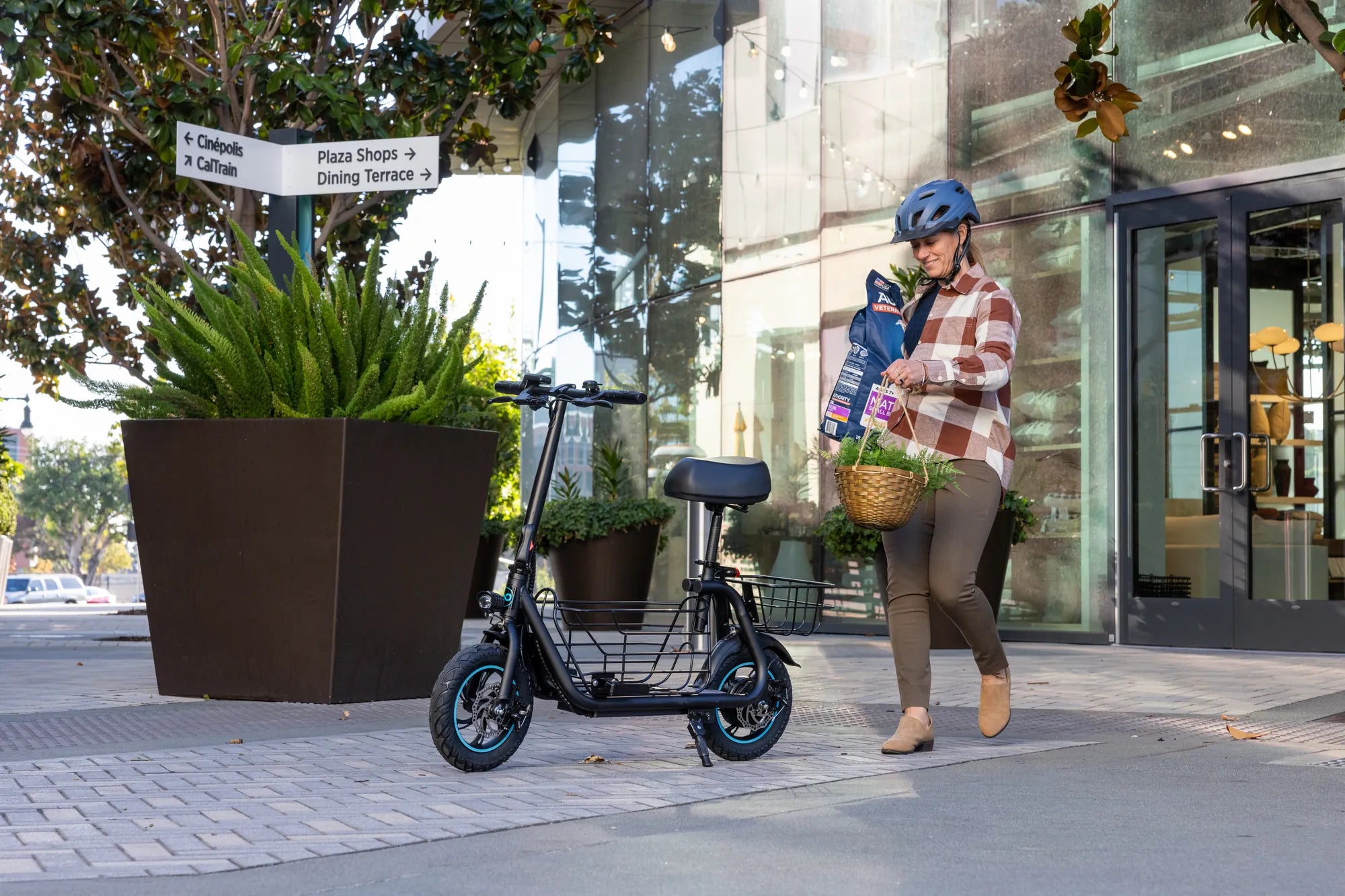
Navigating the legal requirements for your electric scooter can feel like a maze. One of the most common and confusing questions riders face is: Do you need to register electric scooters? The answer is not universal; it depends entirely on where you live and the specifications of your scooter. This complete guide will demystify the registration process, providing a clear, state-by-state and city-by-city framework to help you understand helmet laws, speed limits, and the critical component of road legality: registration. Our goal is to equip you with the knowledge to ride confidently and responsibly, ensuring your e-scooter experience is both enjoyable and compliant.
Understanding the Legal Landscape: Why Registration Exists
Electric scooter registration laws exist for several core public policy reasons. Primarily, they are tools for public safety and accountability. Registering a vehicle links it to an owner, which can aid in theft recovery, accident reporting, and ensuring riders are aware of local traffic laws.
Secondly, registration can generate revenue for municipal infrastructure. Fees collected may be directed toward maintaining bike lanes, creating shared micro-mobility parking zones, or funding safety education programs. Finally, registration formalizes the scooter's integration into the existing traffic ecosystem, providing clarity for both riders and law enforcement.
It's crucial to distinguish between registration and licensing. Registration identifies the vehicle itself with a state or city authority, often resulting in a decal, sticker, or small license plate. Licensing, typically requiring a driver's license, certifies the rider's ability to operate the vehicle. Many e-scooter laws require a driver's license but do not require the scooter itself to be registered.
The Role of Vehicle Classification
The single biggest factor determining registration necessity is how the law classifies your electric scooter. This classification is almost always based on technical specifications.
- Low-Speed Electric Bicycle (Class 2): Often defined as having fully operable pedals, a motor under 750 watts, and a maximum speed of 20 mph. These are rarely subject to registration.
- Motorized Scooter or EPAMD: Typically defined as a two-wheeled device with a floorboard, handlebars, and an electric motor. Key thresholds are usually max speed (often 15-20 mph) and motor wattage (often 750W-1000W+). Scooters exceeding certain thresholds may be classified as motor vehicles, triggering registration.
- Moped or Motor Vehicle: If a scooter can exceed 20-30 mph (varies by state), it may be classified as a moped or even a motorcycle, requiring full registration, insurance, and a special license.
State-by-State & City-by-City Registration Guide
Laws are a patchwork. While state law sets a baseline, local city ordinances frequently override or add specific requirements. Always check your city's transportation department website for the most authoritative information.
States Where Registration is Typically Required
Few states mandate DMV registration for standard, personal electric scooters. However, some have laws that can be interpreted to require it for higher-powered models.
- Hawaii: Has strict laws where electric scooters can be classified as "mopeds," requiring registration, insurance, and a license.
- California (Specific Cases): While most stand-up e-scooters under 15 mph are exempt, motorized scooters exceeding certain power or speed limits may need a DMV registration as a motor-driven cycle. Local rules in cities like Los Angeles or San Francisco for personal scooters are generally permissive but complex.
The process in these areas usually involves visiting the DMV with proof of ownership (your Gyroor receipt), the scooter's specifications, paying a fee, and affixing a provided plate or sticker.
States and Cities Where Registration is Explicitly Not Required
Many states have passed laws specifically exempting low-speed electric scooters from registration.
- New York State: Legalized e-scooters in 2020, with no registration requirement for devices under 20 mph. However, New York City has its own local rules regarding where they can be ridden.
- Florida: State law defines electric scooters and exempts them from registration, licensing, and insurance. Local helmet laws still apply.
- Texas: State law does not require registration for electric scooters, though cities like Austin have detailed ordinances governing their use on streets and trails.
Even in these states, checking your specific city or county website is a non-negotiable step for responsible ridership.
The "Gray Area" and Local Ordinances
This is the most common scenario. State law is silent or simply allows cities to make their own rules. Consequently, registration-like systems often appear at the municipal level.
Cities like Denver, CO, and Chicago, IL, have implemented permit systems or regulations primarily targeting commercial scooter-share companies. However, these rules can sometimes extend to or set a precedent for private riders. For example, a city may require a permit sticker for any scooter used on public rights-of-way, which functions similarly to registration.
Always search for "[Your City] electric scooter ordinance" or "[Your City] transportation department micro-mobility" to find the official rules.
How Gyroor's Design Supports Compliant Riding
Choosing an electric scooter from a reputable brand with transparent specifications is the first step toward easy compliance. Gyroor, a leading electric scooter and e-bike brand trusted by over 100,000 riders across North America and Europe, designs its products with clarity and safety in mind, directly supporting your ability to navigate local laws.
Every Gyroor scooter's manual and product page clearly states its maximum motor wattage and top speed. This allows you to instantly perform the crucial first step of legal classification. For instance, knowing your scooter is a 350W model with a max speed of 18 mph immediately places it in a common "low-speed motorized scooter" category that is exempt from registration in most jurisdictions.
UL-Certified Batteries and Safety Standards
Beyond performance specs, compliance is also about demonstrating a commitment to safety standards. Gyroor uses UL-certified battery packs in all its models, tested for 500+ charge cycles.
While not a direct registration requirement, UL certification is a globally recognized safety benchmark. It shows authorities that the scooter's most critical component meets rigorous manufacturing standards. In cities considering stricter regulations, proof of certified batteries may become a prerequisite for legal operation, and Gyroor riders are already ahead of the curve.
IPX5 Water Resistance and Durability for Documented Rides
Legal riding happens in all weather conditions. Gyroor's IPX5 water-resistant designs ensure reliable performance in light rain, protecting the scooter's electrical systems.
This durability is practical for compliance. If your locality requires a physical registration decal or you simply need your scooter's model and serial number to remain legible for identification, a water-resistant build helps preserve those details. A reliable scooter that withstands the elements supports long-term, documented ridership.
Comparison of Common E-Scooter Classifications & Implications
| Classification | Typical Specs (Motor/Speed) | Registration Typically Required? | License Typically Required? | Common Use Case |
|---|---|---|---|---|
| Low-Speed E-Bike (Class 2) | < 750W, ≤ 20 mph (with pedals) | No | No | Leisure, commuting with pedal assist |
| Electric Kick Scooter (Standard) | 250W - 500W, ≤ 18 mph | No (in vast majority of areas) | Often Yes (standard driver's license) | Last-mile commute, urban errands |
| Performance E-Scooter | 500W - 1000W+, 20 - 30+ mph | Maybe (Check State/City Laws) | Yes | Longer commutes, riders seeking higher speed |
| Moped-Class Vehicle | 1000W+, > 30 mph | Yes | Yes (often moped/motorcycle license) | High-speed personal transportation |
Practical Steps: How to Check and Complete Registration
Follow this actionable three-step plan to determine and fulfill your registration obligations.
Step 1: Identify Your Scooter's Specifications
Locate your owner's manual or visit the Gyroor website. Write down the motor wattage (e.g., 350W) and the maximum speed (e.g., 18 mph). Also, note the model name and find the serial number, usually on the frame or deck. This is your foundational data.
Step 2: Consult Official Local Resources
Do not rely on forums or anecdotal advice. Go directly to the source.
- Search: "[Your State] DMV electric scooter laws."
- Search: "[Your City] municipal code electric scooter."
- Visit your city's official website and look for "Transportation" or "Public Works" departments.
Call the non-emergency number for your local police department's traffic division for clarification if online resources are unclear.
Step 3: The Registration Process (If Required)
If you determine registration is needed, the general process is straightforward.
- Gather Documents: Your driver's license, proof of residence, the scooter's specifications, and your proof of purchase (keep your Gyroor receipt safe).
- Visit the Agency: This is usually the DMV or the city clerk's office.
- Pay Fees: Registration fees are typically modest, ranging from $10 to $50.
- Affix Identification: You will receive a decal, sticker, or small plate to permanently attach to your scooter as instructed.
Frequently Asked Questions (FAQ) on E-Scooter Registration
Q: Do you need insurance for your electric scooter?
A: Legally mandated insurance for privately-owned e-scooters is extremely rare in the US. However, it is a highly recommended layer of personal financial protection. Your homeowner's or renter's insurance policy may offer some coverage, but you should contact your provider to confirm. Registration and insurance are separate legal concepts.
Q: What happens if I ride an unregistered scooter where it's required?
A: You risk receiving a citation and a fine, similar to driving an unregistered car. In some jurisdictions, police could impound your scooter until you provide proof of registration and pay associated fines. Compliance is the simplest form of risk mitigation.
Q: Does registration differ for shared scooters (Lime, Bird) vs. personal scooters?
A: Yes, significantly. Shared scooter companies typically operate under a separate, company-wide permit or license agreement with the city. This permit allows them to deploy their fleet. As a personal owner, you are responsible for complying with laws pertaining to privately-owned vehicles, which are often different or less burdensome.
Q: I'm visiting another city with my scooter. Do I need to register it there?
A: This is a complex area. Generally, if your scooter is legally registered in your home jurisdiction (if required), that may suffice for short visits. However, you are always subject to the local laws of the place you are riding. It is best to research the destination city's rules beforehand, as they may have unique restrictions or helmet requirements that differ from your home.
Q: Does Gyroor assist with the registration process?
A: Gyroor provides all the necessary technical specifications and documentation (via your proof of purchase) that you will need to complete registration. The actual registration process, however, is administered by your local or state government authorities. For any questions about your scooter's technical details, Gyroor's US-based customer support and comprehensive 1-year warranty are there to assist.
Ride Informed and Ride Responsibly
The question of whether you need to register your electric scooter has a definitive answer: it depends, and the responsibility to verify is yours. By following the three-step plan—identify your specs, consult official local resources, and complete the process if needed—you transform from a confused rider into an informed citizen of the micro-mobility community. Legal compliance is the foundation of safe, sustainable, and enjoyable electric scooter use. It protects you, your investment, and paves the way for better infrastructure for all riders. Choose a reliable partner for your journey; explore the full range of specification-transparent, UL-certified, and durable electric scooters designed for confident, compliant riding.
Browse the full Gyroor collection, featuring detailed specifications for every model, at gyroorboard.com.
New Launches Electric Scooters: The Future of Urban Mobility
NYC Electric Bikes and Scooters: The Future of Urban Mobility