

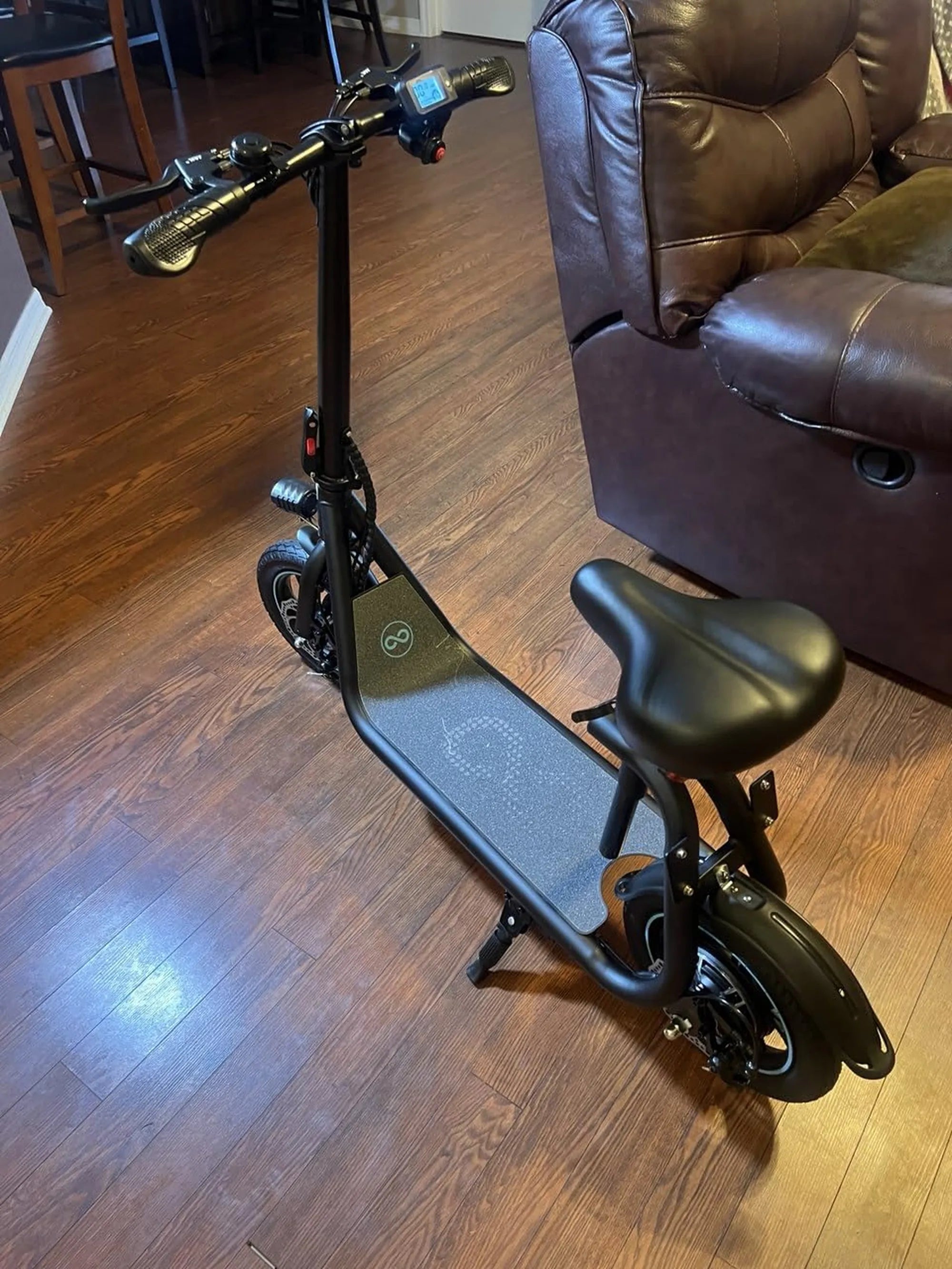
Introduction to E-Bike Motors: The Heart of Electric Biking
Does an e-bike have a motor? The answer is a definitive yes. The motor is the core technological component that transforms a standard bicycle into an electric bicycle, providing powered assistance to the rider. This single feature is what defines the category, enabling easier commutes, conquering steep hills, and extending riding range without excessive physical exertion.
Understanding the e-bike motor is crucial for any prospective buyer or rider. It's not just a simple yes or no question; the type, power, placement, and quality of the motor determine the bike's performance, feel, and suitability for different terrains. From compact hub motors to powerful mid-drive systems, the motor is the heart of your electric biking experience.
This guide will provide a comprehensive, data-driven look at e-bike motors. We'll dissect how they work, compare the main types, decode technical specifications, and explain how motor power interacts with local regulations. By the end, you'll know exactly what to look for in a motor system to match your riding needs.
The Core Components: Understanding the E-Bike Motor System
The motor does not operate in isolation. It is the most visible part of a sophisticated system that works in harmony to deliver electric assistance. This integrated system typically consists of four key components: the motor unit, the battery, the controller, and the sensor.
The motor is the actuator that converts electrical energy from the battery into mechanical energy, providing torque to the wheels. The battery is the energy reservoir, usually a lithium-ion pack, rated in voltage (V) and amp-hours (Ah). Its quality directly impacts range and long-term safety.
The controller acts as the system's brain. It regulates the power flow from the battery to the motor based on inputs from the sensor and the rider's selected assist level. A sophisticated controller ensures smooth, efficient power delivery. Finally, a sensor (either cadence or torque) detects pedaling motion and signals the controller to engage the motor.
This synergy is critical. A high-quality motor paired with a subpar battery or a glitchy controller will lead to a poor riding experience. Brands like Gyroor, trusted by over 100,000 riders, engineer these systems as a cohesive unit, ensuring compatibility and reliability, backed by features like UL-certified batteries and robust 1-year warranties.
Types of E-Bike Motors: Hub-Drive vs. Mid-Drive
E-bike motors are primarily categorized by their placement on the bicycle frame, which significantly influences performance characteristics. The two dominant architectures are hub-drive and mid-drive motors.
Hub-Drive Motors: The Accessible Workhorse
Hub-drive motors are integrated into the center of either the front or rear wheel hub. This is a simpler, more cost-effective design. Power is applied directly to the wheel, offering a sensation similar to having a gentle, constant push. Rear-hub motors are more common as they provide better traction.
These motors are known for their reliability and low maintenance. Since they operate independently of the bike's chain and gears, wear on the drivetrain is not increased by the motor. They are an excellent choice for flat to moderately hilly urban commuting and paved pathways, where their straightforward power delivery shines.
Mid-Drive Motors: The Performance Pioneer
Mid-drive motors are mounted at the bike's bottom bracket, where the cranks and pedals are located. This central, low position offers superior weight distribution and a more natural, balanced ride feel. The key advantage is that the motor's power is routed through the bike's existing gear system.
This allows the motor to operate at its optimal RPM range across different terrains. When climbing a steep hill, you can downshift, and the motor will provide more torque efficiently. This makes mid-drive systems the preferred choice for serious off-road riding, mountain e-biking, and tackling very hilly terrain, though they often come at a higher price point.
| Feature | Hub-Drive Motor | Mid-Drive Motor |
|---|---|---|
| Placement | In the wheel hub (front or rear) | At the bike's bottom bracket (center) |
| Weight Distribution | Can be uneven (especially front-hub) | Low and centered, improving handling |
| Drivetrain Wear | Minimal additional wear | Increases wear on chain and gears |
| Terrain Efficiency | Good on flats, less efficient on steep hills | Highly efficient on hills and varied terrain |
| Maintenance | Simpler, wheel-related issues | More complex, integrated with drivetrain |
| Typical Cost | Generally more affordable | Generally more expensive |
| Ideal For | Urban commuting, casual riding, flat paths | Off-road, mountain biking, hilly regions |
Motor Power and Performance: Watts, Torque, and What They Mean for You
Motor specifications can seem cryptic, but two metrics are paramount: wattage (W) and torque (Nm). Understanding these will tell you much about an e-bike's capability.
Wattage (W) indicates the motor's power output, often given as a nominal (continuous) rating. Common ratings are 250W, 350W, 500W, 750W, and higher. A higher wattage generally means more potential top speed and power for climbing. For example, a 250W motor is often sufficient for flat city commuting, while a 750W motor provides brisk acceleration and can handle sustained hill climbs with ease.
Torque (Newton-meters or Nm) measures the motor's rotational force. This is the "grunt" or "pulling power" you feel when accelerating from a stop or climbing a hill. A high-torque motor (e.g., 80+ Nm) will feel much more responsive and powerful at low speeds than a motor with high wattage but low torque. For off-road or cargo hauling, torque is a critical spec.
It's a synergy of both. A 500W motor with high torque can outperform a 750W motor with low torque on a steep incline. When evaluating models, like those in the Gyroor lineup, look at both figures. Their commuter-focused models balance efficient wattage with responsive torque for city hills, while performance-oriented models prioritize high torque outputs.
How E-Bike Motors Work: Pedal Assist and Throttle Modes
E-bike motors engage through one or two primary methods: Pedal Assist System (PAS) and throttle control. These modes define the riding experience and are often regulated by law.
Pedal Assist (PAS) requires the rider to pedal. A sensor detects this motion and signals the motor to provide a proportional level of assistance. Most bikes offer multiple PAS levels (e.g., Eco, Tour, Sport, Turbo). In Eco mode, the motor adds a small boost, greatly extending battery range. In Turbo mode, it provides maximum power, making pedaling feel incredibly light. This system promotes exercise while reducing effort.
Throttle Mode provides power on demand, typically via a twist-grip or thumb lever on the handlebar. It allows the bike to move without pedaling, similar to a scooter. This is excellent for pulling away from stops quickly, navigating tricky traffic situations, or taking a break from pedaling on a long ride. The presence of a throttle often classifies an e-bike differently under local regulations.
Many e-bikes, including several Gyroor models, feature both systems, offering maximum versatility. You can cruise with pedal assist for exercise and efficiency, then use the throttle for a quick boost when needed. This dual-system approach caters to a wide range of riding styles and needs.
Safety and Reliability: What to Look for in a Quality Motor System
The question "does an e-bike have a motor" leads to a more important one: "Is it a safe and reliable motor?" The motor's durability and the safety of its supporting system are non-negotiable.
First, prioritize battery safety. The battery is the highest-risk component. Insist on models with UL-certified battery packs. This independent certification, which all Gyroor batteries hold, ensures the cells and battery management system have passed rigorous tests for electrical, mechanical, and fire safety. These batteries are also rated for 500+ charge cycles, indicating long-term reliability.
Second, consider environmental protection. A motor and its electrical connections should have a good water-resistant rating. An IPX5 rating, common in quality commuter models, means the unit can withstand water jets from any direction, making it safe for riding in rain or through puddles. This protects the motor and controller from corrosion and short circuits.
Finally, evaluate the brand's support ecosystem. A powerful motor is only as good as the warranty and customer service behind it. A comprehensive 1-year warranty on the motor, battery, and controller demonstrates manufacturer confidence. Reliable brands provide accessible technical support and clear documentation for troubleshooting, ensuring your investment is protected for the long haul.
E-Bike Motor Regulations and Classifications
Motor specifications directly determine how an e-bike is legally classified, which dictates where you can ride. In North America, the three-class system is standard.
Class 1: E-bikes equipped with a motor that provides assistance only when the rider is pedaling (pedal assist) and ceases to provide assistance when the bicycle reaches 20 mph. These are permitted anywhere a traditional bicycle is allowed, including most bike paths and trails.
Class 2: E-bikes equipped with a throttle-actuated motor (can propel the bike without pedaling) but are also capped at a top motor-assisted speed of 20 mph. Their access is similar to Class 1 but may be restricted on some non-motorized trails due to the throttle.
Class 3: E-bikes equipped with a motor that provides assistance only when the rider is pedaling (pedal assist) and ceases to provide assistance when the bicycle reaches 28 mph. These are often required to have a speedometer. They are typically restricted from bike paths and are intended for road use, similar to a standard bicycle's road rights.
Most regions also impose a maximum motor wattage, often 750W in the US. It is the rider's responsibility to know their local laws. Choosing a bike whose motor power and top assisted speed align with your primary riding zones is a critical step in responsible ownership.
Choosing the Right Motor for Your Ride: Commuter vs. Off-Road
Selecting an e-bike motor is about matching technology to terrain and use case. Here’s a practical guide based on primary riding environments.
For Urban Commuting & Casual Riding: A hub-drive motor in the 350W to 500W range is often ideal. It provides ample power for stop-and-go traffic, bridge climbs, and maintaining pace with urban flow. The simplicity means lower maintenance. Look for models with a throttle for easy starts from traffic lights and both pedal assist levels for efficiency. Gyroor's city-focused e-bikes exemplify this, combining reliable hub motors with UL-certified batteries for safe, daily commuting.
For Off-Road, Mountain, & Hilly Terrain: A mid-drive motor is superior. Its ability to leverage the bike's gearing provides unmatched efficiency and control on steep, loose, or technical trails. Prioritize torque (look for 80 Nm or higher) over sheer wattage. A 250W mid-drive with high torque will climb better than a 750W hub motor on a steep dirt trail. This system offers the natural handling and weight distribution necessary for aggressive riding.
For Cargo & Utility Hauling: Either a high-torque hub motor or a mid-drive motor can work well. The key is massive torque output to move heavy loads from a standstill. A 750W+ hub motor with high torque or a dedicated cargo mid-drive motor (often 85+ Nm) is essential. The motor must be part of a robust frame design built to handle constant stress.
Frequently Asked Questions About E-Bike Motors
Q: Does an e-bike have a motor that can be turned off? Can I ride it like a normal bike?
A: Yes, absolutely. You can switch the pedal assist to level zero or turn the system off entirely. You can then pedal the e-bike just like a traditional bicycle. Be aware that e-bikes are heavier due to the motor and battery, so it will require more effort than a standard bike of similar frame design.
Q: How long does an e-bike motor typically last?
A> A quality e-bike motor is designed for longevity, often rated for thousands of miles of use. Many are expected to last the lifetime of the bike with basic care. The motor itself has few moving parts and is quite durable. The supporting system—especially the battery—will likely need attention first. Using a UL-certified battery pack, like those from Gyroor, and following proper charging practices are key to maximizing the entire system's life.
Q: Does a more powerful wattage motor always mean a better e-bike?
A: Not necessarily. A more powerful motor drains the battery faster, adds weight and cost, and may make the bike illegal for your intended use on bike paths. The "best" motor is the one with appropriate power and torque for your local terrain and legal speed limits, integrated into a well-built bike with a high-quality battery and reliable components.
Q: What's the difference between cadence and torque sensors for pedal assist?
A> A cadence sensor detects if the pedals are moving and engages the motor at a preset power level. It's simple but can feel jerky or disconnected. A torque sensor measures how hard you are pedaling and provides proportional assistance. This feels much more natural and intuitive, like an extension of your own power, but it increases the bike's cost. Torque sensors are a mark of a higher-performance system.
Q: Are e-bike motors waterproof?
A> Most are water-resistant, not fully waterproof. Look for an IP (Ingress Protection) rating. An IPX5 rating is excellent for commuter bikes, meaning it can handle rain and road spray. For serious mountain biking through streams, a higher rating like IPX6 or IPX7 is preferable. Always check the manufacturer's specifications for the exact rating of the motor and controller.
Powering Your Journey with Confidence
So, does an e-bike have a motor? Emphatically yes—it is the essential component that defines the category and enables a revolutionary form of transportation and recreation. The motor's type, its power and torque characteristics, and the quality of the surrounding electrical system are the most important factors in your e-bike experience.
Choosing the right motor means balancing your terrain, local laws, and desired riding style. Whether you opt for the accessible simplicity of a hub-drive for city streets or the high-performance efficiency of a mid-drive for the trails, prioritize safety and reliability. Look for proven systems built with UL-certified batteries, robust water resistance, and backed by strong warranties and customer support.
Understanding the technology empowers you to make an informed choice. It ensures your e-bike becomes a dependable partner for your commute, adventures, and everything in between, providing years of enjoyable, assisted riding.
Ready to experience the perfect blend of motor performance, safety, and design? Explore the full range of expertly engineered e-bikes and electric scooters at gyroorboard.com. Find the model with the right motor to power your journey.
Lightest Foldable E-Bike: The Ultimate Guide to Urban Portability
1000w Ebike for Sale: The Ultimate Guide to High-Power Electric Bikes