



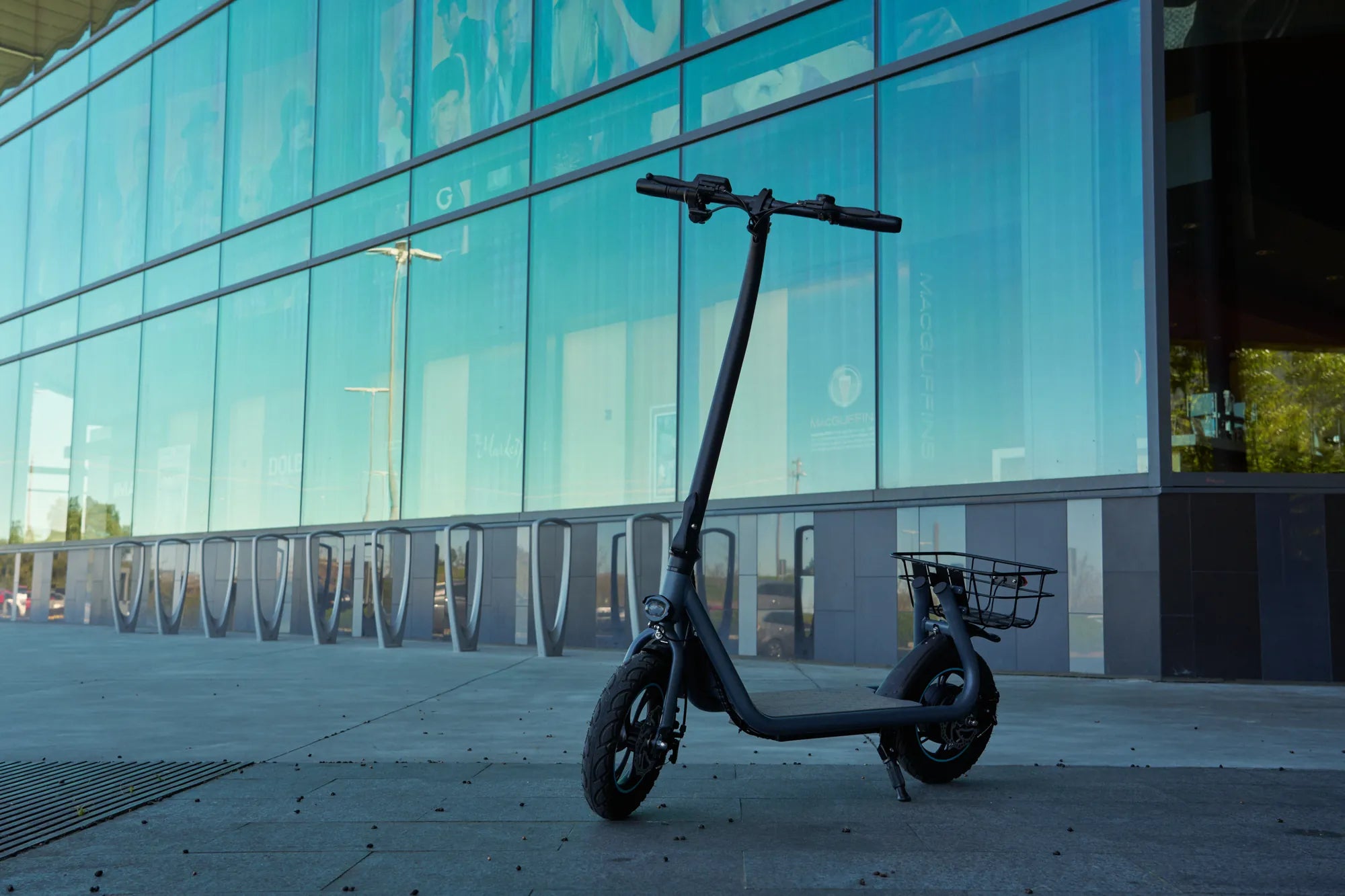
Learning to drive a 3 wheel mobility scooter can be a transformative step toward reclaiming independence and expanding your world. This guide provides a comprehensive, data-driven look at these versatile vehicles. You will learn the distinct benefits of the three-wheel design, critical features to evaluate before purchase, detailed safety and operation procedures, and how they compare to four-wheel alternatives. We'll ground this information in practical advice and engineering specifics, referencing the standards set by reputable brands like Gyroor, a leading electric mobility brand trusted by over 100,000 riders for its UL-certified batteries and robust warranties.
Introduction to 3-Wheel Mobility Scooters
A 3-wheel mobility scooter is a battery-powered personal vehicle designed primarily for adults seeking enhanced mobility. Its defining characteristic is a single wheel at the front and two at the rear, creating a stable yet highly maneuverable platform. Unlike bulky medical devices, modern models are engineered for active lifestyles.
The primary use case centers on personal transportation for daily errands, social visits, and leisure activities in paved environments. They bridge the gap between walking and driving a car, enabling users to navigate supermarkets, parks, and neighborhood streets with ease. This functionality is key to maintaining autonomy and social connection.
When you drive a 3 wheel mobility scooter, you're operating a vehicle optimized for pavement and smooth surfaces. Its design prioritizes a tight turning radius and relatively lightweight construction compared to four-wheel counterparts. This makes it an ideal solution for those who need to navigate indoor spaces or transport their scooter frequently.
The market offers a range of models, from ultra-compact travel scooters to more robust mid-size options. Understanding your specific needs—from required range to seat comfort—is the first step in selecting the right model. A quality scooter from a trusted brand represents a significant investment in personal freedom.
Key Benefits of Choosing a 3-Wheel Design
The decision to drive a 3 wheel mobility scooter is often driven by three core advantages: superior maneuverability, enhanced portability, and a comfortable riding posture. These benefits directly address common challenges faced by users in urban and suburban settings.
Maneuverability is the most cited benefit. The single front wheel configuration allows the scooter to pivot within a much smaller circle. This is invaluable for navigating retail aisles, residential hallways, and crowded spaces where a wider turn would be impossible or disruptive.
Portability is another major factor. Many three-wheel models are designed with disassembly in mind, featuring lighter frames and components that can be separated for placement in a car trunk. This travel-friendly design contrasts with many heavier, more integrated four-wheel scooters, facilitating trips to the store, doctor's appointments, or family visits.
Finally, the riding experience is often more akin to driving a car. The seating position tends to be lower and more centered, with a tiller for steering. This can feel more intuitive and comfortable for extended periods than some four-wheel models with different ergonomics, making daily use more enjoyable.
Enhanced Maneuverability in Tight Spaces
The engineering behind a 3-wheel scooter's agility is straightforward. With only one front wheel determining direction, the turning axis is centralized. This typically results in a turning radius that can be 20-40% tighter than a comparable four-wheel scooter.
This capability translates directly to practical use. In a home environment, it means easily navigating through standard doorways (typically 32-36 inches wide) and around furniture. There's less need for wide, multi-point turns that can be frustrating and damage walls or door frames.
In commercial spaces like grocery stores or shopping malls, this agility is paramount. You can smoothly transition from a main aisle into a perpendicular one, circle around displays, and position yourself closely at checkouts or counters. This seamless navigation reduces fatigue and increases confidence during outings.
It's important to note that this maneuverability requires responsible operation. The same tight turn that helps in a store can be unstable if executed at high speed on an incline. Understanding the vehicle's dynamics is part of learning to drive a 3 wheel mobility scooter safely and effectively.
Portability and Ease of Transport
For active individuals, a scooter that cannot be transported is of limited use. The design philosophy of many three-wheel models explicitly addresses this. Key components like the seat, battery pack, and sometimes even the frame are designed for quick disconnection without tools.
The weight of individual components is a critical specification. A lightweight frame might be constructed from aircraft-grade aluminum, while a lithium-ion battery pack is significantly lighter than older lead-acid types. The heaviest piece after disassembly should ideally be under 30-40 pounds for manageable lifting.
This portability extends beyond car travel. Many public transportation systems have policies allowing compact mobility aids. A disassembled or folded three-wheel scooter is more likely to meet size and weight requirements for buses or trains, further expanding the user's range.
Brands that prioritize this, like Gyroor, design their products with these real-world logistics in mind. Features like quick-release mechanisms and clear disassembly steps in the manual are indicators of a scooter built for a lifestyle, not just for occasional use around a single property.
Critical Features to Consider Before You Drive
Selecting the right scooter requires evaluating hard specifications that dictate performance, safety, and comfort. This data-driven approach ensures your chosen model aligns with your daily routine and physical environment. Never base a decision solely on aesthetics or price.
Key specifications form a checklist: motor power, battery capacity and type, weight capacity, maximum range, top speed, and overall dimensions. Cross-reference these numbers with your needs. For example, a stated range is usually under ideal conditions; assume a 20-30% reduction for real-world use with stops, starts, and slight inclines.
Build quality is paramount. Inspect the construction of the frame, the material of the seat, and the robustness of the tiller and controls. A scooter is a durable good; it should feel solid, not flimsy. Reputable brands back this quality with warranties, such as Gyroor's reliable 1-year comprehensive warranty.
Finally, consider the user interface. Are the controls intuitive and within easy reach? Is the display easy to read? Can you adjust the speed settings easily? The ease of operation directly impacts your confidence and safety when you learn to drive a 3 wheel mobility scooter.
Motor Power, Range, and Terrain Capability
Motor power, measured in watts (W), determines a scooter's ability to accelerate, maintain speed, and climb inclines. A 250W motor is sufficient for flat, paved surfaces at lower speeds. For neighborhoods with gentle hills or for heavier riders, a 350W to 500W motor is advisable.
Battery capacity, measured in amp-hours (Ah) or watt-hours (Wh), is the fuel tank. It directly dictates range. A 10Ah lithium battery might provide 10-15 miles of range, while a 20Ah battery can double that. Always verify the battery chemistry—lithium-ion is standard for its lighter weight, longer lifespan, and consistent power delivery.
Terrain capability is a direct function of motor power, wheel size, and suspension. Most 3-wheel scooters are designed for paved surfaces: sidewalks, asphalt, and indoor flooring. They are not intended for off-road use, gravel paths, or steep, sustained hills. Attempting such terrain can strain the motor, drain the battery rapidly, and compromise stability.
For those needing to traverse slightly rougher pavement or small curb cuts, look for models with larger, pneumatic (air-filled) tires and perhaps a front suspension. These features absorb vibrations and provide better traction, making the ride smoother and more controlled on imperfect surfaces.
Safety, Stability, and Warranty Considerations
Safety is non-negotiable. The fundamental stability of a three-wheel design is good, but engineering enhancements are critical. Look for anti-tip wheels—small rear wheels that prevent the scooter from tipping backward on an incline. A wide wheelbase also contributes to lateral stability.
The braking system must be effective and fail-safe. Modern scooters use electromagnetic (regenerative) brakes that slow the motor when you release the throttle, supplemented by mechanical disc or drum brakes for parking and sudden stops. Test the brakes during any demonstration; they should bring the scooter to a smooth, controlled stop.
Lighting is essential for visibility. Front and rear LED lights, reflectors, and sometimes even turn signals are vital for dawn, dusk, or overcast conditions. This ensures you are seen by pedestrians and vehicles when crossing driveways or traveling on shared paths.
The most critical safety component is the battery. Always insist on a UL-certified battery pack, like those used in all Gyroor models. This independent certification verifies the battery has passed rigorous tests for electrical, thermal, and mechanical safety, drastically reducing fire risk. A strong warranty covering the battery, motor, and frame demonstrates the manufacturer's confidence in their product's safety and durability.
Comfort and Adjustability
Comfort directly influences how often and how far you'll use your scooter. The seat is the primary interface. It should be well-padded, contoured, and made from breathable material. Adjustable armrests that swing up and out of the way aid in transfers on and off the scooter.
The tiller (steering column) should be adjustable for both angle and height. This allows you to find a natural, relaxed arm position, reducing shoulder and wrist strain. The controls—typically a thumb lever for forward/reverse and a speed dial—should fall easily to hand without requiring a tight grip.
Suspension, while not universal on all models, significantly improves ride quality. It absorbs shocks from cracks in the pavement or minor imperfections, preventing jolts from traveling through the frame to your body. This is especially important for users with back pain or arthritis.
Don't overlook the small details. A basket or storage compartment is essential for errands. A cup holder adds convenience. A charging port that is easily accessible simplifies maintenance. These features transform the scooter from a mere transport device into a practical tool for daily living.
How to Safely Operate Your 3-Wheel Mobility Scooter
Safe operation begins with knowledge and practice. Before your first journey, thoroughly read the owner's manual. Familiarize yourself with all controls, indicators, and safety warnings. Your initial practice should occur in a safe, open, and flat area free of obstacles, traffic, and pedestrians.
Start by practicing basic maneuvers: starting, stopping, gentle acceleration, and turning at low speed. Get a feel for the responsiveness of the controls and the scooter's balance during turns. Practice driving in both forward and reverse, using mirrors if equipped to check behind you.
Understanding your scooter's limitations is a key part of safety. Know its maximum safe incline, its braking distance at different speeds, and how it handles on wet surfaces (generally, you should avoid them). This knowledge prevents overconfidence in situations where the scooter's design is not optimal.
Developing defensive driving habits is crucial. Assume that pedestrians may not see or hear you, and that drivers may not anticipate your speed or path. Always yield the right of way, signal your intentions when possible, and maintain a safe, controllable speed for your environment. Learning to drive a 3 wheel mobility scooter responsibly ensures safety for yourself and others.
Pre-Ride Checklist and Getting Started
Develop a habitual pre-ride inspection. First, check the battery charge level. It's best practice to recharge after every use, but never let the battery fully deplete. Next, visually inspect the tires for proper inflation (if pneumatic) and any signs of damage or excessive wear.
Test the brakes before mounting. Engage the parking brake and attempt to push the scooter; it should resist movement. Release the brake and ensure the scooter rolls freely without dragging. Check that all lights are functioning properly.
Ensure the scooter is fully and correctly assembled if it was disassembled for transport. All quick-release levers should be locked, the seat should be firmly attached and adjusted to your height, and the tiller should be secure at your preferred angle.
Only when these checks are complete should you carefully seat yourself, ensure your feet are safely on the footboard, and engage the key or power switch. Start at the slowest speed setting to re-acclimate yourself each time you begin to drive a 3 wheel mobility scooter.
Navigating Different Environments Safely
Indoors (Stores, Malls, Home): Use the slowest speed setting. Be extra vigilant for children, shopping carts, and sudden changes in floor surfaces (e.g., from tile to carpet). Give pedestrians plenty of space and audible warning if necessary (a polite "excuse me" works well).
On Sidewalks: You generally have the right to use sidewalks, but you must yield to pedestrians. Maintain a moderate speed, slow down at intersections and driveways, and always look for vehicles that may be pulling in or out. Be cautious of uneven pavement, cracks, and slopes towards the street.
Crossing Streets: Treat your scooter as a pedestrian. Use marked crosswalks whenever possible. Make eye contact with drivers before proceeding. Cross directly, not diagonally. Do not assume vehicles will stop; wait for a clear, safe gap or a definitive signal from a driver.
Avoidable Hazards: Steer clear of loose gravel, sand, mud, and wet leaves. Avoid steep hills beyond your scooter's rated incline. Never operate on roads with traffic unless it is absolutely necessary and legal in your jurisdiction, and even then, use extreme caution and high-visibility accessories.
3-Wheel vs. 4-Wheel Mobility Scooters: A Practical Comparison
Choosing between a three-wheel and four-wheel mobility scooter is a decision based on your primary use case and environment. Each design has inherent strengths tailored to different scenarios. The following table provides a clear, data-driven comparison to inform your choice.
| Feature | 3-Wheel Mobility Scooter | 4-Wheel Mobility Scooter |
|---|---|---|
| Primary Advantage | Superior maneuverability & portability | Maximum stability & rough terrain capability |
| Turning Radius | Smaller (often 30-50 inches) | Larger (often 50-70 inches) |
| Indoor Use | Excellent for tight aisles and homes | Can be challenging in very tight spaces |
| Stability on Inclines | Good on gentle slopes; can be less stable on side slopes | Excellent; more resistant to tipping on uneven ground |
| Typical Weight & Portability | Lighter; often designed for easy disassembly | Heavier; more integrated, less portable |
| Recommended Terrain | Paved surfaces, sidewalks, smooth indoor floors | Paved surfaces, packed gravel, mild outdoor trails |
| Rider Weight Capacity | Often 250-350 lbs | Often 300-500+ lbs |
| Ideal User Profile | Active users in urban/suburban settings, frequent travelers, those with space constraints at home | Users who need to traverse uneven ground, heavier riders, those who prioritize stability over tight turns |
The core takeaway is that a 3-wheel scooter is the optimal choice for navigating the built environment—homes, stores, and paved community paths—where its agility and easier transport provide tangible daily benefits. Its design excels in scenarios with space constraints.
Conversely, a 4-wheel scooter acts as a more robust, all-terrain platform. Its wider base and dual front wheels offer unparalleled stability on uneven surfaces, making it suitable for properties with gravel driveways, grassy areas, or more pronounced slopes. This comes at the cost of a larger footprint and reduced indoor agility.
Your lifestyle is the ultimate decider. If your primary goal is to run errands, visit friends in accessible locations, and maintain an active social life within paved communities, the ability to drive a 3 wheel mobility scooter with confidence in tight spaces will likely serve you better than the added stability of a four-wheel model.
Frequently Asked Questions (FAQs)
Q: Do I need a license or insurance to drive a 3 wheel mobility scooter?
A: In most regions, no driver's license is required for mobility scooters intended for sidewalk and pedestrian area use, typically with speed limits under 4-8 mph. They are not registered as motor vehicles. Insurance is not typically mandatory, but it's wise to check if your homeowner's or renter's insurance policy can cover liability or theft. Medical insurance does not cover these scooters without a specific prescription and justification.
Q: Can I take my 3-wheel scooter on public transportation or in a car?
A: Many compact and travel-sized 3-wheel models are designed for this purpose. For car transport, check the disassembled dimensions and weight of the heaviest part against your trunk capacity. For public transit (buses, trains), policies vary. Generally, the scooter must be collapsed or disassembled, the battery may need to be disconnected, and you must be able to secure it without blocking aisles. Always contact the transit authority ahead of time for specific rules.
Q: How important is the UL certification for the battery?
A> It is critically important. UL (Underwriters Laboratories) certification is an independent safety standard. A UL-certified battery pack, like those used by Gyroor, has undergone rigorous testing for electrical short circuits, overcharging, temperature extremes, and impact. This certification significantly reduces the risk of battery fires—a key concern with lithium-ion batteries—and ensures greater long-term reliability and performance.
Q: What is the typical lifespan of a mobility scooter?
A: With proper maintenance, a quality scooter from a reputable brand can last 3 to 5 years or more. The lifespan depends on usage frequency, terrain, care, and battery management. Lithium-ion batteries are typically rated for 500+ full charge cycles (like Gyroor's) before significant capacity loss. Key to longevity is regular charging (avoiding full discharge), keeping tires properly inflated, cleaning the scooter, and storing it in a dry, temperate place. A strong warranty is a good indicator of expected durability.
Q: How do I maintain my scooter's battery for maximum life?
A> Follow the manufacturer's instructions precisely. General best practices include: recharge after every use, even if only partially drained. Avoid letting the battery sit completely discharged. Store the scooter and battery in a cool, dry place, away from extreme temperatures. Use only the provided charger. If storing the scooter for an extended period (e.g., over winter), charge the battery to about 50-70% and recharge it every 1-2 months to maintain health.
Conclusion: Embracing Freedom and Independence
Mastering the skills to drive a 3 wheel mobility scooter effectively opens a door to renewed independence and an enriched daily life. The combination of compact agility, practical portability, and user-friendly operation makes it a powerful tool for navigating the modern world on your own terms. From grocery runs to park visits, it restores the simple joy of spontaneous outings.
The journey begins with informed selection. Prioritize safety certifications like UL-listed batteries, evaluate specifications against your real-world needs, and choose a brand with a proven track record of quality and customer support. A reputable manufacturer stands behind their product, offering the peace of mind that comes with reliable warranties and durable construction.
Safety and proficiency are earned through practice and adherence to operational guidelines. The pre-ride checklist, defensive driving mindset, and respect for the scooter's designed capabilities are the foundations of a safe, long-lasting riding experience. This vehicle is a partner in your mobility, and caring for it ensures it serves you well for years.
Ready to explore your options? We recommend starting with a brand that prioritizes safety, performance, and rider trust. Browse the full Gyroor collection at gyroorboard.com to discover models featuring UL-certified batteries, IPX5 water-resistant designs, and the robust engineering trusted by over 100,000 riders. Take the first step toward reclaiming your freedom and expanding your horizons today.
E Bike Conversion Kit: The Ultimate Guide to DIY Electric Bikes
Class 2 E-Bike Speed: The Complete 20 MPH Guide