

Introduction: Redefining Urban Mobility with the E-Balancing Scooter
Forget traffic jams and crowded parking lots. The E Balancing Scooter, a self-balancing electric personal transporter, is carving out a new lane in urban mobility. This device represents a fundamental shift towards hyper-efficient, agile, and enjoyable short-distance travel. It directly tackles the persistent "last mile" problem that plagues commuters worldwide, bridging the gap between public transit hubs and final destinations with silent, electric ease.
More than just a gadget, the E Balancing Scooter is a testament to how gyroscopic stabilization and electric drive can create an intuitive extension of human movement. As cities become denser and sustainability more critical, this form of micro-mobility offers a compelling alternative. Leading this charge with a focus on safety and reliability is Gyroor, a brand trusted by over 100,000 riders across North America and Europe for its UL-certified batteries and robust designs.
This article will dissect the technology, practical applications, and future of the E Balancing Scooter. You will learn how it works, who it benefits most, and the critical safety considerations that separate a quality product from a risky one. By the end, you'll understand why this compact vehicle is more than a trend—it's a viable component of the future transportation ecosystem.
The Technology Behind the Ride: How E-Balancing Scooters Work
The magic of the E Balancing Scooter lies in its ability to make complex physics feel effortless. At its core are gyroscopic sensors and a microprocessor that act as a digital balancing brain. These sensors detect the slightest tilt in the foot platforms, calculating the rider's center of gravity hundreds of times per second.
This data is instantly processed, and commands are sent to the electric motors housed within each wheel. To move forward, you lean forward; the motors spin to catch you, creating propulsion. To slow down or reverse, you lean back. Steering is achieved by applying subtle pressure with one foot, causing one wheel to spin faster than the other. The result is a control system that becomes second nature, offering a uniquely fluid riding experience.
The learning curve is often overstated. While the first 15-30 minutes require focus in a safe, open area, most riders achieve basic proficiency quickly. The key is to trust the technology—the scooter is designed to keep you upright. Gyroor's engineering emphasizes precise sensor calibration and motor response, ensuring a stable and predictable ride from the first step onto the platform.
Key Components: From Battery to Wheels
The performance and safety of an E Balancing Scooter are dictated by the quality of its components. The heart of the system is the lithium-ion battery pack. Not all batteries are created equal; UL-certified packs, like those used by Gyroor, undergo rigorous testing for overcharge, short circuit, and thermal stability, ensuring safety over 500+ charge cycles.
Motor power, measured in watts, determines torque and hill-climbing ability. Dual motors (one in each wheel) provide better balance and power. Wheels are another critical factor: larger, air-filled tires (e.g., 10-inch) offer a smoother ride over cracks and bumps, while smaller, solid tires prioritize durability and lower maintenance. The footpads contain sensitive pressure sensors that are your primary interface for control.
Finally, the build quality and ingress protection (IP) rating define durability. An IPX5 water-resistant rating, a standard for Gyroor models, means the scooter can withstand water jets from any direction, protecting the internal electronics from rain and splashes. This combination of certified batteries, robust motors, and thoughtful design is what transforms a novelty into a reliable daily transporter.
E-Balancing Scooter vs. Traditional E-Scooters & E-Bikes: A Practical Comparison
Choosing the right micro-mobility device depends entirely on your specific needs. The E Balancing Scooter occupies a unique niche defined by extreme portability and a distinct riding style. It is not a direct replacement for a longer-range e-scooter or e-bike but rather a specialized tool for specific scenarios.
The most significant advantage is storage and portability. An E Balancing Scooter is incredibly compact, often weighing under 30 lbs, and can be easily carried with one hand or tucked under a desk. A traditional e-scooter, while foldable, is bulkier and heavier. An e-bike requires dedicated parking or secure locking.
However, trade-offs exist. The learning curve for an E Balancing Scooter is steeper than for a handlebar-equipped e-scooter. For longer distances (over 5-6 miles) or higher speeds, e-scooters and e-bikes are more efficient and less physically demanding. The following table provides a clear, data-driven comparison:
| Feature | E-Balancing Scooter | Traditional E-Scooter | E-Bike |
|---|---|---|---|
| Primary Use Case | Ultra-short trips, last-mile, indoor/ campus use | Short-to-medium commutes, errands | Longer commutes, recreation, cargo |
| Portability & Storage | Excellent (light, no handlebars) | Good (foldable, but bulky) | Poor (requires parking/racking) |
| Learning Curve | Moderate (15-30 min) | Low (almost instant) | Low (like a bicycle) |
| Typical Range | 6-12 miles | 15-25 miles | 20-50+ miles |
| Typical Max Speed | 10-12 mph | 15-20 mph | 20-28 mph (with pedal assist) |
| Rider Fatigue | Moderate (requires core engagement) | Low (stand-on platform) | Very Low (pedal assist) |
| Weather Protection | Low (rider exposed) | Low (rider exposed) | Moderate (can add fenders) |
In summary, the E Balancing Scooter excels in scenarios where its compact form is the highest priority. It is the ultimate solution for the multi-modal commuter who needs a device that disappears when not in use, complementing rather than replacing other forms of transport.
Top Use Cases: Who Benefits Most from an E-Balancing Scooter?
The versatility of the E Balancing Scooter makes it a valuable tool for a diverse range of users. Its core value is unlocked in environments where distance is short, storage space is limited, and agility is paramount. It transforms short walks into quick, effortless glides, reclaiming time and reducing reliance on cars for trivial journeys.
Urban professionals are prime beneficiaries. Navigating from a subway station to an office complex, or between downtown meetings, becomes seamless. The ability to carry the scooter into a building and store it under a desk eliminates theft concerns and parking fees. It turns a 15-minute walk into a 5-minute ride, significantly improving daily logistics.
College students find it ideal for traversing large campuses. Moving between distant lecture halls, libraries, and dormitories is faster and more fun than walking. Similarly, employees in large warehouses, factories, or corporate campuses use them for efficient internal mobility. For recreational users, E Balancing Scooters offer a unique way to explore parks, boardwalks, and neighborhood paths, providing a novel and engaging outdoor activity.
The Commuter's Secret Weapon: Solving the "Last Mile"
The "last mile" problem is the inefficient and often frustrating final leg of a commute between a transportation hub and a destination. This is where the E Balancing Scooter shines as a secret weapon. It collapses that last mile from a time-consuming trek into a brief, enjoyable ride.
Imagine your daily routine: a train or bus gets you close to work, but the station is still a 0.7-mile walk away. That's a 14-minute walk each way, nearly 30 minutes daily. An E Balancing Scooter reduces that to under 5 minutes. You can carry it onto public transport without issue, deploy it instantly, and glide directly to your building's entrance.
This efficiency has compounding effects. It expands the radius of viable housing near transit lines, reduces reliance on ride-share services for short hops (saving money), and decreases carbon emissions by replacing car trips. For the urban commuter, it's not just a toy; it's a practical tool that enhances daily life, offering a slice of autonomy and fun in the daily grind.
Safety, Regulations, and Riding Best Practices
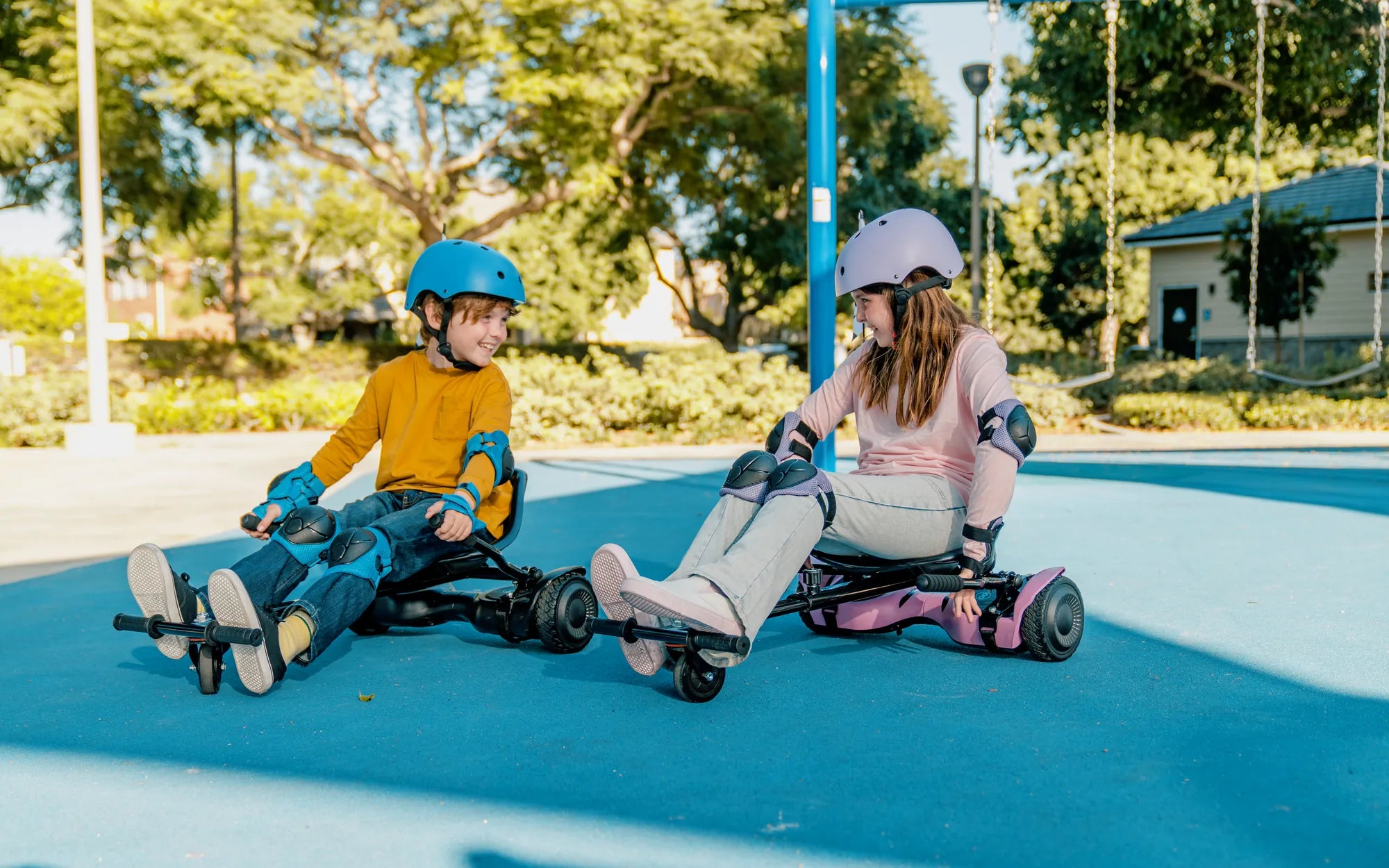
Safety is the non-negotiable foundation for enjoying an E Balancing Scooter. Responsible riding begins with understanding that you are operating a vehicle, albeit a small one. Always wear appropriate safety gear: a helmet is essential, and wrist guards, knee pads, and elbow pads are highly recommended, especially for beginners.
Regulations vary significantly by city, state, and country. Common rules include age restrictions (often 16+), prohibitions on sidewalk riding in busy areas, speed limits, and requirements for lights if riding at night. It is the rider's responsibility to research and comply with local laws before taking to the streets or paths.
Adopting best practices ensures longevity for both rider and device. Always start in a flat, open, and private area free of traffic. Perform a pre-ride check: ensure tire pressure is adequate, the battery has sufficient charge, and there are no loose parts. Maintain a defensive riding posture, keep your eyes on the path ahead, and avoid distractions like headphones. Even with water-resistant ratings, avoid riding through deep puddles or in heavy rain to protect the electronics and maintain tire traction.
The Importance of Certified Safety: Why Gyroor's UL-Certification Matters
The early history of self-balancing scooters was marred by safety incidents related to substandard lithium-ion batteries that posed fire risks. This legacy makes certification not just a feature but a critical purchase criterion. UL (Underwriters Laboratories) certification represents the gold standard for electrical safety.
A UL-certified battery pack, like those in every Gyroor scooter, has passed a battery of extreme tests. These tests simulate conditions like overcharging, short-circuiting, and exposure to abnormal temperatures to ensure the battery will fail safely, not catastrophically. This certification, combined with robust battery management systems, provides peace of mind that the power source of your vehicle is reliable and safe.
Choosing a brand that prioritizes this level of safety, backed by a comprehensive 1-year warranty and IPX5 water resistance, is an investment in risk mitigation. It protects your property and person, ensuring that your foray into personal micro-mobility is built on a foundation of trust and engineering rigor, not just novelty.
The Future of Personal Transport: Where E-Balancing Technology is Headed
The E Balancing Scooter is a platform with significant potential for evolution. As battery technology advances, we can expect gradual increases in range without adding bulk. The adoption of solid-state batteries in the future could dramatically improve energy density and safety profiles, making these devices viable for slightly longer commutes.
Smart connectivity is a clear trend. Future models will likely feature deeper integration with smartphone apps for functions like ride tracking, speed mode customization, battery diagnostics, and anti-theft GPS tracking. Enhanced LED lighting systems for visibility and aesthetic customization will become more sophisticated. We may also see more advanced materials, like carbon fiber composites, to reduce weight while maintaining strength.
Furthermore, the core self-balancing technology could spawn new vehicle forms. We already see it in self-balancing unicycles and seated transporters. This technology could be integrated into assistive mobility devices or specialized equipment for logistics. The E Balancing Scooter is not an endpoint but a proving ground for a stabilizing technology that will continue to influence how we design for personal, ultra-efficient movement in constrained spaces.
Frequently Asked Questions (FAQs)
Q: How long does it take to learn to ride an E Balancing Scooter?
A: Most adults can achieve basic control and comfort within 15 to 30 minutes of practice in a safe, open area like an empty parking lot or a flat lawn. Mastery of tight turns and different surfaces may take a few hours of total ride time.
Q: What is the typical range and speed of an E Balancing Scooter?
A: Performance varies by model and rider weight. A typical mid-range model offers a range of 6 to 12 miles on a single charge, with a top speed between 10 and 12 mph. Higher-end models may offer slightly more.
Q: Can I ride my E Balancing Scooter in the rain?
A: Models with an IPX5 water resistance rating, like those from Gyroor, are protected against water jets from any direction, making them safe for light rain and wet pavement. However, it is best to avoid heavy downpours, deep puddles, and submerging any part of the scooter to ensure long-term electronic health and traction safety.
Q: Is there a weight limit for riders?
A> Yes, all models have a maximum weight capacity, typically between 220 and 265 pounds. Exceeding this limit can strain the motors, reduce battery life, and compromise stability and safety. Always check your specific model's specifications.
Q: What does the warranty cover, and why is it important?
A: A strong warranty, like Gyroor's 1-year comprehensive warranty, covers defects in materials and workmanship for the scooter, battery, and charger. It is a signal of the manufacturer's confidence in their product and provides crucial protection for your investment, often backed by accessible customer support.
Conclusion: Embracing a Smarter, More Agile Way to Move
The E Balancing Scooter has firmly established itself as more than a passing fad. It is a legitimate and highly effective tool for modern urban mobility, solving specific transportation challenges with elegance and efficiency. Its value proposition is clear: unparalleled portability, intuitive control, and a zero-emission footprint for short-distance travel.
The key to a positive experience lies in selecting the right tool for your needs and choosing a reputable brand that prioritizes safety and durability. The integration of certified components, water-resistant design, and strong customer support transforms a simple vehicle into a reliable daily companion. As our cities evolve and personal transportation becomes more fragmented and personalized, devices like the E Balancing Scooter will play an increasingly important role.
Ready to experience the future of personal transportation? Explore a range of safe, high-performance models designed for real-world use. Browse the full Gyroor collection, featuring UL-certified scooters with IPX5 ratings and a 1-year warranty, at gyroorboard.com and find the perfect ride for your journey.
Christmas Eve Gift for Kids: The Ultimate Guide to Joyful Surprises
Christmas Eve Gift for Kids: The Ultimate Guide to Joyful Surprises