



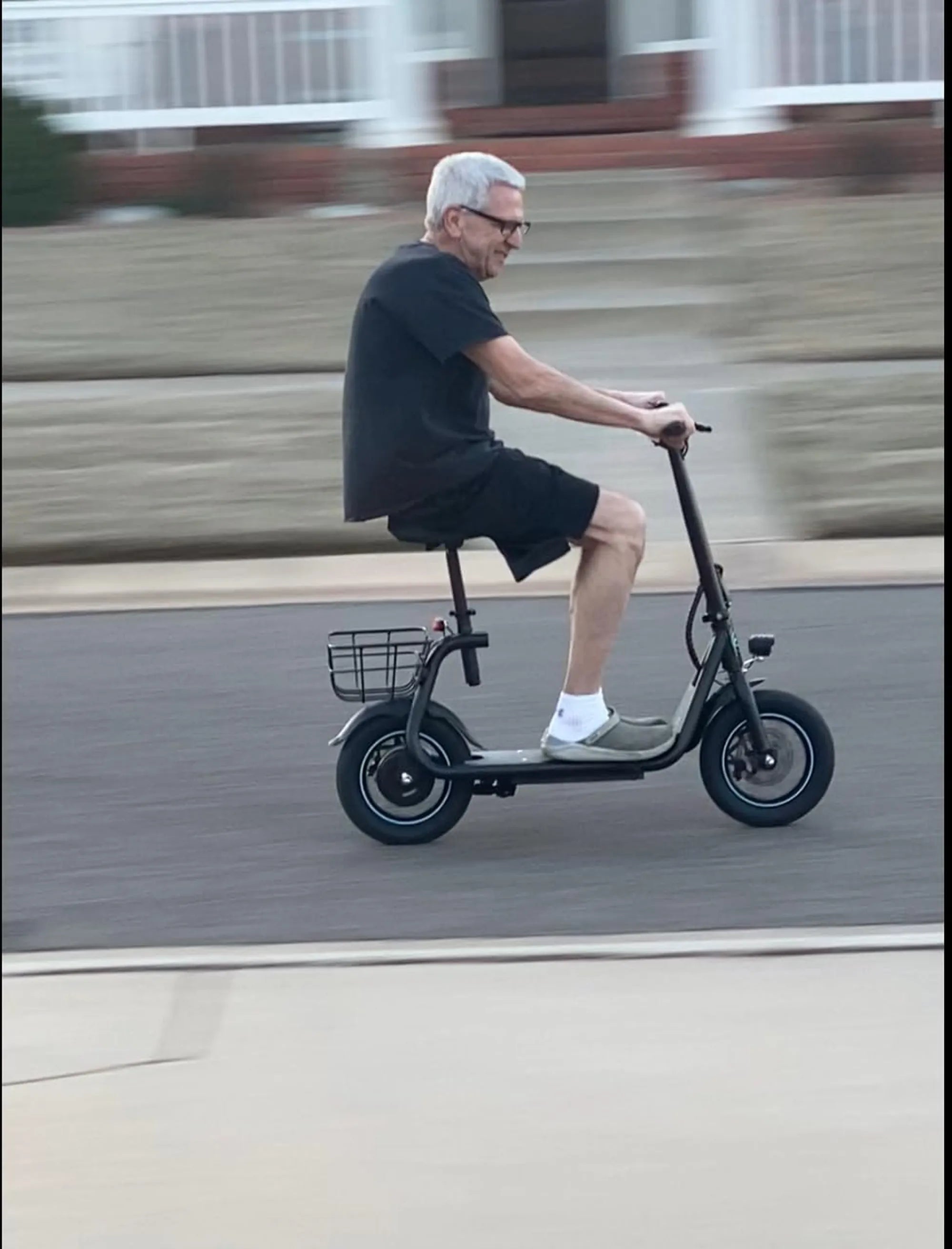
Searching for an e bike 100 dollars is a common quest for budget-conscious shoppers, but it often leads to confusion and potential danger. This article provides a factual, data-driven analysis of the electric bicycle market to explain why a legitimate, safe e-bike cannot exist at this price. You will learn where the true costs lie in e-bike manufacturing, the severe safety compromises of ultra-cheap models, and discover practical, value-oriented alternatives that prioritize your safety and long-term satisfaction without breaking the bank. Understanding this landscape is crucial, as an e-bike is a vehicle, not a disposable toy.
The Allure and Reality of the $100 E-Bike
The promise of an e bike 100 dollars is undeniably attractive. For many, it represents an affordable entry into the world of electric mobility, commuting, and recreation. Online marketplaces are flooded with listings advertising electric bicycles at shockingly low prices, often accompanied by glossy images and vague promises of performance.
However, this price point is a significant red flag in the personal electric vehicle industry. A functional, safe electric bicycle requires a robust frame, a reliable motor, a sophisticated battery management system, and quality brakes. The combined cost of these components from reputable suppliers alone far exceeds a $100 budget for the manufacturer.
Products marketed at this level typically fall into one of two categories: dangerously substandard e-bikes or outright scams. The former poses direct risks to rider safety, while the latter results in financial loss and disappointment. Brands committed to quality, like Gyroor, invest in UL-certified batteries, durable IPX5 water-resistant designs, and comprehensive warranties—investments that define a safe and reliable riding experience but also establish a realistic minimum price for entry.
This initial section sets the stage for a deeper exploration of why the e bike 100 dollars dream is economically and technically unfeasible for a product meant to carry a person at speed. The following sections will dissect the costs, risks, and smarter paths to affordable electric biking.
Deconstructing E-Bike Costs: Where Does the Money Go?
To understand why an e bike 100 dollars is unrealistic, one must examine the core components and their associated costs. A quality electric bicycle is an integration of mechanical engineering and electrical systems, each contributing to the total price.
The heart of any e-bike is its lithium-ion battery pack. A safe, durable battery with adequate capacity (typically 36V or 48V) requires high-quality cells, a protective casing, and a sophisticated Battery Management System (BMS) to prevent overcharging, overheating, and short circuits. This component alone represents a significant portion of an e-bike's manufacturing cost.
The motor, whether hub-driven or mid-drive, is another major cost center. A reliable motor that provides meaningful assistance (250W to 750W is common) must be engineered for efficiency, heat dissipation, and longevity. Pair this with a controller that manages power delivery, and the electrical drivetrain's expense becomes clear.
Beyond the electrics, the bicycle itself must be sound. This includes a sturdy frame (aluminum or steel), functional brakes (disc or rim), a drivetrain, wheels, and tires. Sourcing these components to a basic but safe standard incurs costs that quickly accumulate, pushing the base manufacturing price well above the $100 retail point before any brand markup, shipping, or warranty costs are considered.
The Critical Role of the Battery and Certification
The battery is the most critical—and potentially dangerous—component in an e-bike. Ultra-cheap models almost universally use uncertified, low-quality lithium-ion cells with no proper BMS.
These batteries are prone to thermal runaway, a condition where one cell overheats and causes a chain reaction leading to fire or explosion. This risk is exacerbated by poor charging circuits and flimsy construction. In contrast, reputable brands invest in safety.
Gyroor, for example, uses UL-certified battery packs in its e-bikes and electric scooters. This certification means the battery design has been rigorously tested by Underwriters Laboratories for electrical, mechanical, and fire safety. This testing, along with designs rated for 500+ charge cycles, adds cost but is non-negotiable for rider safety and product longevity.
Choosing an e-bike without a certified battery to save money is a gamble with severe consequences. The few dozen dollars saved upfront pale in comparison to the risk of property damage, personal injury, or the total failure of the battery within a few months.
Compromised Build Quality and Rider Safety
At a $100 price point, every component is a target for cost-cutting. The results directly impact safety and durability. Frames may be made from inferior, brittle metals that can crack under stress. Welds are often poor, creating structural weak points.
Braking systems are frequently inadequate—using low-grade brake pads, weak calipers, or cheap cables that fail to provide consistent stopping power for a motor-assisted vehicle. Electrical wiring is often exposed or poorly insulated, creating short-circuit risks, especially in wet conditions.
Brands that build for reliability, like Gyroor, incorporate features like IPX5 water resistance into their designs. This rating means the core electrical components can withstand low-pressure water jets from any direction, protecting against rain and road spray. This level of engineering requires better seals, connectors, and design integration, which adds cost but ensures the vehicle can handle real-world conditions.
Ultimately, an e bike 100 dollars forces manufacturers to make dangerous compromises. The resulting product is not just unreliable; it can be a direct threat to the rider's well-being.
The Real-World Price Spectrum of Electric Bikes
The market for electric bicycles is segmented by price, which correlates strongly with quality, performance, and safety. Understanding this spectrum is key to setting realistic expectations.
At the very bottom are products in the $100 to $300 range. These are typically toy-grade or scam listings. They may resemble e-bikes but lack the power, range, and durability for actual transportation. Their safety certifications are non-existent, and they are not built to any recognized bicycle or vehicle standard.
The entry-level commuter segment begins around $500 to $900. Here, you find basic but functional e-bikes from established brands. They feature simpler hub motors, smaller but certified batteries, and adequate mechanical components. This is the minimum threshold for a new, safe electric bicycle suitable for short trips on paved surfaces.
The mid-range performance category, where brands like Gyroor compete, spans from approximately $1,000 to $2,500. This tier offers the best value for most riders, featuring more powerful motors, larger capacity batteries for longer range, higher-quality frames and components, integrated lighting, and comprehensive warranties. These e-bikes are built for daily commuting and recreational use with proven reliability.
Premium e-bikes ($2,500+) offer cutting-edge technology, lightweight carbon frames, sophisticated mid-drive motor systems, and premium componentry from brands like Shimano or SRAM. The following table illustrates this market segmentation clearly.
| Price Tier | Category Description | Typical Features & Safety | Best For |
|---|---|---|---|
| $100 - $300 | Toy-Grade / High-Risk | Uncertified battery, very poor build, no meaningful warranty, significant safety hazards. | Not recommended for transportation. |
| $500 - $900 | Entry-Level Commuter | Basic certified battery, simple hub motor, entry-level components, limited warranty. | Short, infrequent trips on flat terrain. |
| $1,000 - $2,500 | Mid-Range Performance (Value Leader) | UL-certified battery (e.g., Gyroor), reliable motor, durable IPX-rated design, 1-year+ warranty, good range. | Daily commuting, recreation, and reliable everyday use. |
| $2,500+ | Premium / High-Performance | Advanced motor systems, premium materials, longest range, extensive feature sets. | Enthusiasts, demanding terrain, and maximum performance. |
As the table shows, the search for an e bike 100 dollars places you firmly in the highest-risk category. Investing in a mid-range model is an investment in safety, reliability, and long-term value.
Smart Alternatives to the $100 E-Bike
For shoppers with a limited budget, there are far smarter and safer strategies than chasing the impossible e bike 100 dollars. These alternatives provide real value and protect your investment.
First, consider a quality traditional bicycle. For a budget of $200-$400, you can purchase a very reliable, new, non-electric bike from a reputable manufacturer. It provides excellent exercise, requires minimal maintenance, and has zero risk of battery-related failure. It is a vastly superior and safer transportation tool than a dangerous ultra-cheap e-bike.
If electric assistance is a firm requirement, explore the certified pre-owned (CPO) market or previous season's models. Reputable brands and dealers sometimes offer CPO e-bikes that have been inspected, serviced, and come with a limited warranty. Similarly, last year's model from a company like Gyroor is often sold at a discount to clear inventory, offering the same core quality, safety, and warranty support as the new version but at a lower price point.
Another key strategy is to prioritize essential features over flashy extras. Focus your budget on the fundamentals: a reputable brand with a strong track record (like Gyroor, trusted by over 100,000 riders), a UL-certified battery, an adequate motor for your terrain, and a solid warranty. Forego non-essential accessories initially; these can be added later. This approach ensures your money is spent on safety and durability first.
The Importance of Warranty and Customer Support
A legitimate warranty is a hallmark of a reputable brand and is completely absent from e bike 100 dollars offerings. A warranty represents the manufacturer's confidence in its product and provides crucial protection for the consumer.
Gyroor, for instance, backs its e-bikes with a comprehensive 1-year warranty covering the frame, motor, battery, and controller. This support is provided through a US-based customer service team. This means if an issue arises, you have a direct path to resolution, whether it's technical advice, a replacement part, or a repair.
In contrast, a no-name e-bike purchased from a third-party online marketplace offers no such protection. If the battery fails or the motor stops working after a week, the seller often disappears, leaving you with a worthless and potentially hazardous piece of equipment. The cost of out-of-warranty repairs on an e-bike can easily exceed the original purchase price of a cheap model.
Therefore, the effective cost of an ultra-cheap e-bike is not just $100. It is $100 plus the high probability of a total loss and the assumption of all risk. The slightly higher initial investment in a branded product includes the invaluable peace of mind that comes with guaranteed support.
FAQs: Navigating the E-Bike Market on a Budget
Q: Are there any real, safe e-bikes for around $100?
A: No. There are no new, safe, and reliable electric bicycles from legitimate manufacturers at a $100 price point. Products advertised at this price are constructed from the lowest-quality materials, lack critical safety certifications (especially for the battery), and are not built to withstand the demands of daily riding. They represent a significant safety hazard and a poor financial investment.
Q: What is the cheapest I should expect to pay for a safe, new e-bike?
A: For a basic but safe and functional new e-bike from a known brand, a realistic entry point is between $500 and $700. At this price, you can find models with certified batteries, basic but adequate components, and some form of warranty. For a better balance of performance, features, and long-term reliability—like those offered by Gyroor—the $1,000 to $1,500 range is where the best value is typically found.
Q: Why is a brand like Gyroor a better value than a no-name $100 e-bike?
A: The value proposition is rooted in safety, durability, and support. Gyroor e-bikes use UL-certified battery packs, feature IPX5 water-resistant designs for all-weather durability, and come with a 1-year comprehensive warranty backed by US-based service. With a proven track record of over 100,000 riders, you are investing in a product designed for long-term satisfaction, not a disposable, high-risk item.
Q: Can I convert my regular bike to an e-bike for under $100?
A: While conversion kits exist, a safe and reliable kit cannot be purchased for under $100. A quality hub motor conversion kit with a certified battery, controller, and necessary hardware typically starts at $300-$500. Cheaper kits suffer from the same safety and reliability issues as complete ultra-cheap e-bikes, and improper installation can damage your bicycle or create riding hazards.
Q: What are the biggest hidden costs of a $100 e-bike?
A: The hidden costs are substantial: 1) Safety Cost: Risk of battery fire or structural failure leading to injury. 2) Replacement Cost: The battery or motor will likely fail within months, and replacements are costly or impossible to find. 3) Opportunity Cost: The money spent is completely lost when the product fails, whereas investing in a quality e-bike preserves value. 4) Support Cost: Total lack of customer service or warranty claims process.
Making an Informed Decision for Your Mobility
Choosing an electric bicycle is a decision that impacts your daily commute, your wallet, and most importantly, your personal safety. The data is clear: the economics of manufacturing a safe electric bicycle are incompatible with a $100 retail price.
Informed consumers recognize that value is measured over the lifetime of a product. A quality e-bike from a reputable brand may have a higher initial cost but delivers thousands of miles of reliable, safe service. It reduces transportation costs, provides enjoyment, and retains functional value for years.
When evaluating options, scrutinize the specifications. Look for explicit mentions of battery certifications (UL, CE), water resistance ratings (IPX5 or higher), warranty length, and the reputation of the brand. These are the tangible indicators of a company's commitment to quality and customer safety.
By shifting the focus from the impossible dream of an e bike 100 dollars to the achievable goal of finding the best value within a realistic budget, you empower yourself to make a choice you can trust for the long haul.
Investing in Your Ride and Your Safety
The journey for an e bike 100 dollars ends with a critical understanding: true affordability in electric mobility is not about the lowest possible price tag. It is about maximizing value, safety, and longevity for every dollar spent. Compromising on core safety components to save money is a false economy that puts you at risk.
Brands that have earned trust, like Gyroor, build their products to rigorous standards because they understand an e-bike is a vehicle that shares the road with cars and pedestrians. The investment in a UL-certified battery, a robust frame, and a comprehensive warranty is an investment in your peace of mind.
Your electric bicycle should be a source of freedom and joy, not anxiety. By choosing a reliable model from a reputable manufacturer, you secure not just a mode of transport, but a dependable partner for your daily adventures. The slightly higher initial cost is quickly offset by years of dependable service and the invaluable assurance of safety.
Ready to explore electric bikes that offer real value, proven safety, and lasting performance? Browse the full collection of UL-certified, durable e-bikes and scooters designed for real riders at gyroorboard.com. Find the right model for your needs and invest in a ride you can trust.
e bike conversion kit with battery 72v: The Ultimate High-Voltage DIY Guide
Lightest Class 3 Ebike: The Ultimate Guide to High-Speed, Agile Electric Bikes