



E Bike Design: More Than Meets the Eye
E bike design represents a sophisticated fusion of mechanical engineering, electrical systems, and human-centered ergonomics. Unlike traditional bicycles, electric bicycles must harmonize power delivery with structural integrity, battery management with aesthetic appeal, and advanced components with everyday usability.
The design process directly determines how an e-bike rides, feels, and lasts. It's the critical factor that separates a reliable, enjoyable machine from a cumbersome or unsafe one. Every line, material choice, and component placement serves a specific purpose in the overall system.
This deep dive into e bike design will unpack the core principles, material innovations, and functional considerations that define modern electric bicycles. We'll explore how form follows distinct functions for different riding purposes and examine the trends shaping the future of personal electric mobility.
Understanding these design fundamentals empowers you to make an informed choice, selecting an e-bike whose architecture aligns perfectly with your lifestyle and riding needs.
The Core Pillars of Modern E Bike Design
Exceptional e bike design balances several interconnected pillars. Maximizing one at the expense of others creates a compromised product. The best designs achieve synergy between frame, motor, battery, and components.
This holistic approach ensures the bike performs as a cohesive unit. The weight distribution, power application, and handling characteristics are all results of deliberate design choices made during development.
Let's break down these fundamental pillars. Each contributes to the riding experience, safety profile, and long-term durability of the electric bicycle.
Frame Geometry & Material Innovation
The frame is the foundational element of e bike design. Geometry dictates riding posture and handling. A steep head tube angle creates quick, responsive steering for urban agility, while a slacker angle provides stability at speed for off-road use.
Step-through or low-step frames are a key design feature for accessibility, ease of mounting, and commuter practicality. Traditional diamond frames offer high stiffness and power transfer, often preferred for performance-oriented e-bikes.
Material choice is equally critical. Aluminum alloys dominate for their excellent strength-to-weight ratio and corrosion resistance, making them ideal for most consumer e-bikes. Steel offers superior vibration damping and durability, often seen in cargo or touring models.
Carbon fiber represents the premium tier, offering immense stiffness and weight savings while allowing for complex, aerodynamic shapes. However, its cost and repair complexity place it in higher-end performance e-bikes.
Motor Integration & Placement
Motor placement is a defining aspect of e bike design. Hub motors, located in the center of the front or rear wheel, offer a simple, often more affordable design. They provide direct power to the wheel but can affect unsprung weight and handling, particularly in front-hub configurations.
Mid-drive motors, mounted at the bike's crank and bottom bracket, are the current standard for high-performance e bike design. They leverage the bicycle's existing gears, making them highly efficient, especially on hills.
This central placement also creates a low, centered weight distribution that mirrors traditional bicycle dynamics. The design challenge involves seamlessly integrating the motor into the frame while managing heat dissipation and protecting it from impacts.
The choice between hub and mid-drive fundamentally shapes the bike's character, efficiency, and intended use, making it one of the most significant decisions in the e bike design process.
Battery Design & Integration
Battery design extends far beyond capacity. Modern e bike design prioritizes seamless integration, typically into the downtube. This placement protects the battery, lowers the center of gravity for stable handling, and results in a sleek, bicycle-like aesthetic.
Form factors vary from rectangular packs to curved units that follow the tube's contour. The design must balance capacity (Wh), weight, and physical dimensions. A key safety consideration is the use of high-quality, UL-certified battery packs.
Brands like Gyroor build their e bike design philosophy around such certified batteries, ensuring rigorous testing for over 500 charge cycles and incorporating advanced Battery Management Systems (BMS) for protection against overcharging, overheating, and short circuits.
Easy removal for charging is another crucial design feature, often involving a locking mechanism that secures the battery to the frame while allowing tool-free access for the user.
Component Synergy: The Complete System
An e-bike's components must be designed or selected to handle the increased stresses of electric assist. Brakes are paramount. Hydraulic disc brakes are the design standard for their consistent, powerful stopping performance in all conditions, essential for heavier, faster e-bikes.
Suspension design varies by purpose. Urban e-bikes may use simple fork suspension or wider tires for comfort, while mountain e-bikes require sophisticated full-suspension designs with ample travel to manage rough terrain at higher speeds.
Drivetrain components, like chains and cassettes, endure more torque from motor assist. Durable, often specifically reinforced parts are a necessary design consideration. Tires are wider and more robust, with puncture-resistant layers being a common feature.
This component synergy ensures that every part of the e bike design works in concert, providing a safe, reliable, and enjoyable ride that doesn't compromise on performance or longevity.
Design for Purpose: How Form Follows Function
The most successful e bike design clearly communicates its intended use. A one-size-fits-all approach fails; instead, design diverges sharply based on whether the bike is meant for city streets, mountain trails, or hauling cargo.
This purpose-driven philosophy ensures that every design element, from frame geometry to accessory mounts, serves a specific real-world need. The rider's daily experience is the ultimate benchmark for functional design.
By examining distinct categories, we see how e bike design principles are applied to solve unique challenges and optimize for different environments and tasks.
Urban Commuter & City E-Bikes
Urban e bike design prioritizes practicality, comfort, and low-maintenance operation. Frames are often step-through for easy mounting in street clothes. Geometry is upright, placing the rider in a position for good visibility in traffic and comfort over moderate distances.
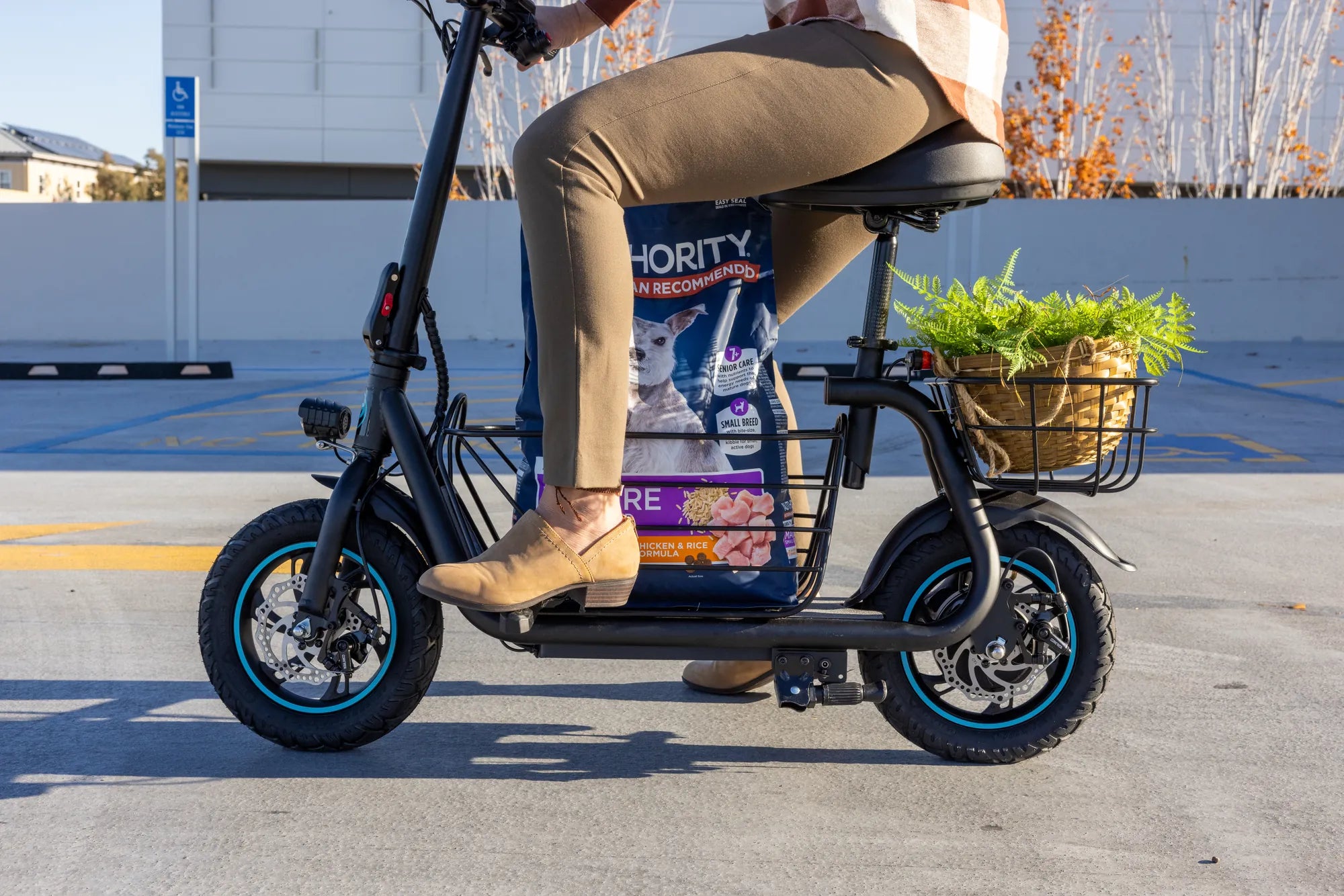
Integrated design features are key: built-in lights powered by the main battery, full-length fenders to protect from road spray, and chain guards to keep clothing clean. Robust rear racks or integrated front baskets are common for carrying daily essentials.
Security is a major design consideration. Many models feature built-in mounting points for frame locks and designs that allow the battery to be easily removed as a theft deterrent. The overall aesthetic leans towards clean, minimalist lines with hidden cables and seamless battery integration.
This holistic approach to commuter e bike design creates a vehicle that is not just for recreation, but a reliable, everyday tool for urban transportation.
Off-Road & Mountain E-Bikes (eMTBs)
E-bike design for mountain biking is driven by durability, performance, and control. Frames feature aggressive, trail-oriented geometry with slack head angles and steep seat angles for confident descending and efficient climbing. Full-suspension layouts are standard, with designs carefully tuned to work with the motor's power delivery.
Mid-drive motors are almost universal in this category due to their superior weight distribution and ability to leverage gearing for steep, technical climbs. Motors are high-torque and often feature specialized off-road power profiles.
Componentry is heavy-duty: wide, knobby tires with aggressive tread, powerful four-piston hydraulic disc brakes, and reinforced wheelsets. The design includes ample protection for the motor, battery, and frame underside from rock strikes and debris.
Battery capacity is maximized within the constraints of weight and packaging, as trail rides can cover significant distance and elevation. This category represents the most performance-intensive application of e bike design principles.
Cargo & Utility E-Bike Design
Cargo e bike design is fundamentally about stability and capacity. The core architectural change is an elongated wheelbase, which dramatically increases stability when carrying heavy or bulky loads, whether on a rear rack, a front-loading box, or a low-slung central cargo bed.
Frames are heavily reinforced, often using steel for its strength and fatigue resistance. The design must account for significant static and dynamic loads far beyond a standard bicycle. Motors are high-torque, and gearing is optimized for starting under heavy load, not for high speed.
Braking systems are paramount, often using dual-potency hydraulic discs or even motorcycle-style hydraulic brakes to safely stop the increased mass. Many designs incorporate a low step-through or step-over height for easy dismounting while the bike is loaded.
Accessory integration is central to the design, with numerous standardized mounting points for child seats, panniers, and commercial containers. This category demonstrates how e bike design can create a viable replacement for car trips in urban logistics and family transportation.
The User Experience (UX) Design Imperative
Beyond mechanical and electrical systems, great e bike design must master the human interface. User Experience (UX) design encompasses every interaction between the rider and the machine, determining intuitive operation and daily satisfaction.
This includes the clarity of information, the ease of use while in motion, and the consideration for real-world ownership tasks like charging and maintenance. Poor UX design can render a technically competent e-bike frustrating to live with.
Focusing on the rider's needs leads to thoughtful details that enhance safety, convenience, and enjoyment, turning a collection of components into a cohesive and friendly product.
Intuitive Control Interface & Displays
The handlebar control unit is the primary touchpoint. Its design must allow for operation without looking down for extended periods. Buttons should be tactile, distinct, and logically placed—for example, a prominent thumb throttle or a large assist-level toggle.
The display should be highly readable in direct sunlight and at night. Essential data—speed, assist level, and battery charge—must be presented clearly and instantly. More advanced designs integrate navigation, ride metrics, and connectivity features without cluttering the interface.
Some systems simplify further, using color-coded LEDs instead of a full display for a minimalist, distraction-free approach. The best e bike design tailors the interface complexity to the bike's purpose, ensuring it informs without overwhelming.
This focus on intuitive controls is a hallmark of user-centric e bike design, reducing cognitive load and increasing riding safety.
Ergonomic Integration: Saddles, Handlebars, and Pedals
Contact points are critical for comfort. Saddles on commuter e-bikes are often wider and more padded for upright riding. Performance e-bikes use narrower, firmer saddles suited for a forward-leaning posture. Many feature integrated damping systems or specific cutouts for pressure relief.
Handlebar shape and width are chosen to match the riding position and control needs. Swept-back bars promote a relaxed urban posture, while flat or riser bars offer more control for off-road use. Grips should absorb vibration and provide a secure hold, even in wet conditions.
Pedals are a frequently overlooked element of e bike design. Larger platforms provide better foot stability, especially important when the motor provides sudden acceleration. Quality bearings and sealed mechanisms ensure longevity despite exposure to the elements.
These ergonomic details are not afterthoughts; they are essential components of a design that respects the rider's body during extended use.
Practical Design Features: Maintenance & Security
Real-world e bike design acknowledges that bikes need care and protection. Internal cable routing is now standard on quality models, protecting brake and shift lines from the elements and snags while creating a clean aesthetic.
Designing for easy maintenance includes considerations like using standard thread types, providing access ports for internal batteries, and ensuring common wear parts (tires, brake pads) are easy to replace. Modular designs, where the motor or display can be swapped without major disassembly, are emerging.
Security design is crucial. Beyond removable batteries, frames may include locking points for heavy-duty chain locks within the main triangle. Some advanced designs integrate frame locks or even GPS trackers into the structure itself.
These practical considerations demonstrate a mature approach to e bike design, one that supports the product throughout its entire lifecycle of ownership.
The Gyroor Design Philosophy: Engineering for Confidence
Examining a specific brand illustrates how core e bike design principles are implemented for real riders. Gyroor's philosophy centers on engineering reliable, accessible electric mobility, a focus reflected in over 100,000 riders across North America and Europe trusting their products.
This approach prioritizes foundational safety and durability, ensuring the design inspires confidence from the first ride to the thousandth. It's a commitment that manifests in specific, critical design choices.
By dissecting these choices, we see how a brand translates the abstract pillars of good e bike design into tangible features that benefit the end-user directly.
A cornerstone of their e bike design is the commitment to UL-certified battery systems. This isn't just a component specification; it influences the entire electrical architecture. The battery housing, management system, and thermal design are all engineered to meet rigorous safety standards, offering peace of mind through hundreds of charge cycles.
Weather resistance is designed in, not added on. Achieving an IPX5 rating requires deliberate choices: sealed gaskets at every junction, protected charging ports, and strategic placement of electrical components to shield them from water ingress. This design focus ensures reliability when riding in rain or through puddles, a key requirement for practical daily transportation.
The confidence derived from this thoughtful engineering is backed by a robust 1-year comprehensive warranty. This warranty is a direct result of a design philosophy centered on durability, quality component selection, and rigorous pre-production testing. It's a promise that the e bike design has been validated for real-world use.
Future-Forward: Emerging Trends in E Bike Design
The evolution of e bike design is accelerating, driven by technology and shifting user expectations. The next generation of electric bicycles will be smarter, lighter, and more adaptable, pushing the boundaries of what these machines can do.
These trends are not mere speculation; they are active areas of research and development within the industry. They promise to solve current limitations and open up new possibilities for personal mobility.
From connectivity to new materials, the future of e bike design is focused on deeper integration and greater personalization, enhancing both performance and the overall riding experience.
Connectivity & Smart System Integration
The future e bike is a connected device. Design challenges include seamlessly integrating GPS, cellular connectivity, and Bluetooth modules into the frame without compromising weather sealing or aesthetics. Anti-theft systems will become more sophisticated, with design features allowing remote immobilization and location tracking.
Displays will evolve into smart hubs, interfacing with smartphones to provide navigation, fitness tracking, and system diagnostics. Over-the-air updates will allow performance profiles, motor tuning, and safety features to be updated remotely, a significant shift in the product lifecycle design.
This connectivity layer adds a new dimension to e bike design, transforming it from a simple vehicle into an intelligent mobility platform.
Lightweighting & Advanced Materials
The pursuit of lighter e-bikes continues. Beyond carbon fiber, designers are exploring advanced aluminum alloys, titanium, and even magnesium. The goal is to reduce weight without sacrificing the strength needed to handle motor torque and battery mass.
Motor and battery design is also central to lightweighting. Next-generation mid-drive motors are becoming more power-dense—delivering equal or greater torque from smaller, lighter packages. Solid-state battery technology, though still emerging, promises significantly higher energy density in a safer, potentially lighter form factor.
This focus on lightweighting in e bike design directly improves range, handling, and the ease of carrying the bike upstairs or onto public transport.
Modular & Customizable Design
Modularity is a growing trend, allowing a single frame design to serve multiple purposes. Imagine user-swappable battery packs for different range needs, or interchangeable rear ends to convert a commuter bike into a cargo carrier.
Software customization is another frontier. Riders may be able to adjust power delivery curves, regenerative braking strength, and assist characteristics via an app to perfectly match their riding style or terrain. Handlebar stems, saddles, and displays may offer tool-free adjustment or quick-release mechanisms.
This trend toward customizable e bike design empowers the rider, making the machine more personal and adaptable to changing needs over time.
E-Bike Design Comparison: Key Categories
| Design Feature | Urban Commuter | Mountain (eMTB) | Cargo/Utility |
|---|---|---|---|
| Primary Frame Geometry | Upright, often step-through | Aggressive, slack head angle | Long wheelbase, low center of gravity |
| Typical Motor Placement | Hub or Mid-Drive | Mid-Drive (almost exclusively) | High-Torque Mid-Drive or Hub |
| Battery Integration | Fully integrated, sleek, removable | Integrated into downtube, protected | Integrated, often high-capacity |
| Suspension Design | Front fork or rigid + comfort tires | Full-suspension, long travel | Front fork, often with load-rated springs |
| Key Component Focus | Fenders, lights, racks, chain guard | Robust brakes, knobby tires, dropper post | Reinforced frame, powerful brakes, accessory mounts |
| Design Priority | Practicality, comfort, low maintenance | Durability, control, performance | Stability, load capacity, utility |
FAQ: E-Bike Design Demystified
Q: Is a mid-drive motor always better than a hub motor?
No, it's a design choice for purpose. Mid-drives excel in hill climbing, offer better weight distribution, and leverage the bike's gears for efficiency, making them ideal for eMTBs and performance-oriented bikes. Hub motors are simpler, often quieter and more affordable, and can be a perfect, low-maintenance solution for flat urban commutes on a well-designed city e-bike.
Q: Why does battery integration matter so much in e bike design?
Integrated batteries are crucial for three reasons. First, they lower the center of gravity (often in the downtube), dramatically improving handling stability. Second, they protect the expensive battery pack from impacts, weather, and theft. Third, they enable a sleek, minimalist aesthetic that looks less like a retrofit and more like a purpose-built machine.
Q: How important is the IP rating for an e-bike's design?
Extremely important. A good water- and dust-resistance rating (like IPX5 or higher) is a critical design feature for all-weather practicality. It indicates sealed electrical connections, protected ports, and thoughtful component placement. This design focus protects the motor, battery, and display from rain, puddles, and road spray, directly determining long-term reliability and reducing maintenance issues.
Q: What should I look for in a commuter e-bike's frame design?
Prioritize a step-through or low-step frame for easy mounting in any attire. Look for built-in mounting points (braze-ons) for fenders and a rear rack—essential for practicality. Internal cable routing keeps the bike looking clean and protects the cables. Finally, ensure the geometry promotes a comfortable, upright riding posture for better visibility in traffic and reduced strain on your back and wrists.
Q: Can I judge e bike design quality by weight alone?
Not reliably. While lighter weight generally aids handling and range, a very light e-bike may compromise on battery capacity, motor power, or frame durability. A slightly heavier bike with a robust frame, high-capacity UL-certified battery, and a powerful motor might be a better-designed product for your needs. Focus on the balance of features, intended use, and quality of construction rather than weight in isolation.
Choosing Your Perfect Ride
Selecting an electric bicycle is an exercise in understanding e bike design. It requires looking beyond basic specifications like wattage and amp-hours to comprehend how the frame, motor, battery, and components work together as a system designed for a specific purpose.
Your ideal e-bike is the one whose design intent aligns perfectly with your primary use case. The urban commuter's need for practicality differs vastly from the mountain biker's demand for performance or the parent's requirement for stable cargo capacity.
Prioritize designs that incorporate proven safety standards, thoughtful ergonomics, and durable construction. Look for the hallmarks of mature engineering: integrated systems, weather resistance, and a focus on the overall user experience. These elements contribute to the confidence you feel on every ride.
Ready to explore e-bikes built with this thoughtful design philosophy? Browse the full Gyroor collection at gyroorboard.com to see how safety, reliability, and rider-focused design come together in a range of electric scooters and e-bikes trusted by a global community of riders.
Best 450cc Dirt Bike: The Ultimate Guide to the Premier Performance Class
Best 450cc Dirt Bike: The Ultimate Guide to the Premier Performance Class