



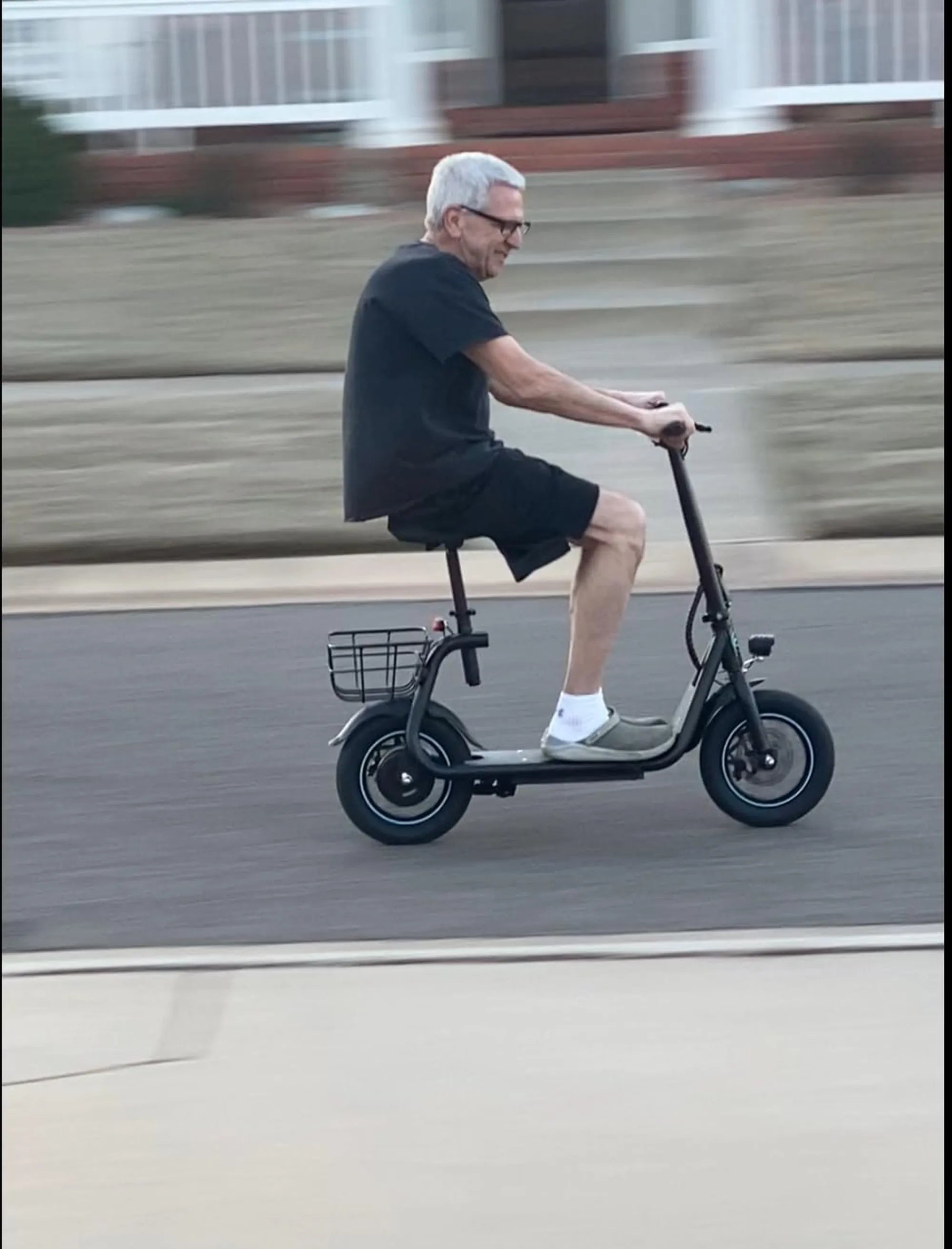
Finding a reliable e bike for 300 dollars is a common goal for budget-conscious commuters. This guide cuts through the noise to show you what's genuinely achievable at this price point. You'll learn the realistic specifications, critical safety features to demand, and how to identify value-packed options that prioritize durability over flashy gimmicks. We'll navigate the landscape of compact electric scooters and basic e-bike kits that define this segment, using data and clear comparisons to empower your purchase decision.
Understanding the $300 Electric Personal Transport Market
The search for an e bike for 300 dollars often leads to two primary product categories: seated electric scooters and basic e-bike conversion kits. A full-sized, traditional-frame electric bicycle from an established brand with quality components typically starts at a higher investment. The $300 segment is defined by essential, commuter-focused micro-mobility.
Key trade-offs at this price include motor power, battery range, and material quality. You can expect hub motors in the 250W to 350W range, sufficient for flat to moderate urban terrain. Battery capacity usually supports 15 to 25 miles per charge, depending on rider weight and conditions. Frames are commonly aluminum alloy, balancing strength and affordability.
This market segment prioritizes function over luxury. Features like advanced digital displays, full suspension, or hydraulic disc brakes are rare. Instead, the focus is on core reliability for daily short-to-medium commutes. The value proposition lies in efficient design that delivers the fundamental benefit of electric assistance without unnecessary complexity.
Brands that succeed here, like Gyroor, do so by optimizing manufacturing and supply chains while refusing to compromise on foundational safety elements. They prove that an affordable price does not have to mean accepting significant risk or planned obsolescence.
What to Realistically Expect: Core Features and Specifications
Setting accurate expectations is crucial when evaluating any e bike for 300 dollars. Performance and specifications will be tailored for practical, everyday use rather than high-speed or off-road adventures. Understanding these parameters helps you match a product to your specific commuting needs.
Real-world range is the most frequently misrepresented spec. A 36V, 7.8Ah lithium-ion battery, common in this tier, may claim 20+ miles, but actual range depends heavily on factors like rider weight, hills, wind, and assist level. Expect 12-18 miles as a reliable average for consistent commuting planning.
Build quality focuses on durability for paved surfaces. Look for welded aluminum frames, pneumatic tires for better shock absorption, and reliable mechanical disc or drum brakes. While the components are entry-level, their proper assembly and integration are what separate a trustworthy product from a problematic one.
The user interface will be simple: a basic LED display showing battery level and speed, a thumb throttle or pedal-assist sensor, and straightforward controls. This simplicity enhances reliability and reduces points of failure, which is a benefit for a daily commuter vehicle.
The Critical Importance of Battery Safety and Certification
This is the non-negotiable priority. The battery is the heart, most expensive component, and greatest potential hazard of any electric vehicle. At the $300 price point, rigorous certification is your primary safeguard.
Always insist on a UL-certified battery pack. Underwriters Laboratories (UL) certification involves exhaustive testing for electrical safety, thermal stability, and failure containment. Batteries without this certification carry a significantly higher risk of fire, especially during charging or under stress.
Gyroor builds all its models, including its most affordable commuter scooters, with UL-certified battery packs tested for over 500 charge cycles. This commitment ensures long-term performance and fundamental safety, a standard that should be demanded industry-wide. The peace of mind from a certified battery far outweighs any minor cost saving from an uncertified alternative.
Proper battery management systems (BMS) are also essential. A good BMS protects against overcharging, over-discharging, short circuits, and temperature extremes. When researching an e bike for 300 dollars, verify that the product description explicitly mentions both UL certification and an integrated BMS.
Motor Performance and Hill Climbing Capability
Motor power in this segment is adequate for its intended use. A 350W continuous-rated hub motor provides enough torque for a 180-pound rider to maintain 15-18 mph on flat ground and tackle moderate inclines up to 10-12% grade.
It's vital to distinguish between peak power and continuous power. Some marketers advertise a high peak wattage (e.g., 500W) for a motor with a much lower continuous rating. The continuous rating determines sustained performance, especially on hills. For reliable commuting, the continuous power rating is the key metric.
Geared hub motors are common as they offer a good balance of torque and efficiency in a compact size. They provide enough assistance to transform a sweaty commute into a comfortable, efficient ride without requiring the rider to be completely passive.
For context, Gyroor's entry-level commuter scooters utilize efficient 350W motors precisely calibrated for urban environments. This power level aligns with many local regulations for e-bikes and scooters, often capping assisted speeds at 20 mph, ensuring your vehicle is street-legal.
Durability and Weather Resistance: Protecting Your Investment
A e bike for 300 dollars is an investment in daily mobility. Protecting that investment requires a build that can handle real-world conditions. Durability hinges on frame integrity, component quality, and environmental protection.
The IP (Ingress Protection) rating is a crucial, often overlooked spec. An IPX5 rating, like that found on Gyroor scooters, means the electrical components are protected against water jets from any direction. This allows you to ride confidently in light rain or on wet roads without worrying about immediate water damage.
Frame construction should use reinforced aluminum, with critical weld points inspected for consistency. The folding mechanism, if present, should feel solid and secure with a reliable locking pin. Weight capacity is another key indicator; a robust frame will support riders up to 265 lbs, whereas flimsier constructions may list a lower limit.
Regular maintenance preserves durability. Keeping tires properly inflated, checking brake pad wear, and ensuring bolts are tight will extend the life of your vehicle significantly. A product designed with serviceable components, like standard brake calipers and tire sizes, makes long-term ownership practical and affordable.
Comparing Your Options: A Data-Driven Perspective
To make an informed choice, compare key specifications side-by-side. The table below outlines typical expectations for a $300-class electric scooter, which is the most viable and reliable form factor at this price point for new, certified vehicles.
| Feature | Typical $300 Segment Spec | Why It Matters |
|---|---|---|
| Motor (Continuous) | 250W - 350W | Determines hill-climbing ability and sustained speed. Sufficient for urban flats and moderate inclines. |
| Battery | 36V, 7.8Ah - 10Ah Lithium-ion | Capacity dictates range. Must be UL-certified for safety. Expect 15-22 mile claimed range. |
| Max Speed | 15 - 20 mph | Balances commute efficiency with regulatory compliance and safety. |
| Range (Real-World) | 12 - 18 miles | The practical distance per charge, varying with weight, terrain, and assist level. |
| Weight Capacity | 220 - 265 lbs | Indicates frame strength and durability. Higher capacity suggests a more robust build. |
| Water Resistance | IPX4 - IPX5 | Protection against rain and splashes. IPX5 is a significant advantage for all-weather commuting. |
| Brakes | Mechanical Disc / Drum | Provides reliable stopping power in dry and wet conditions. Essential for safety. |
| Warranty | 6 Months - 1 Year | A longer warranty signals manufacturer confidence. 1-year coverage is a strong value indicator. |
This comparison shows that the best value isn't about finding the highest number in one column, but about a balanced package where safety (certified battery), durability (IP rating, weight capacity), and support (warranty) are not compromised.
The Gyroor Advantage: Trust and Value in Entry-Level Mobility
Gyroor stands out in the entry-level segment by applying the safety and quality principles of higher-end models to its affordable commuter options. With over 100,000 riders globally, their approach is built on proven reliability and customer trust.
The cornerstone is safety-first engineering. Every Gyroor scooter features a UL-certified battery and an IPX5 water-resistant rating as standard, even on competitively priced models. These are not optional upgrades but foundational requirements. This commitment directly addresses the two biggest concerns for budget-conscious buyers: long-term safety and product longevity.
Support is another differentiator. Gyroor backs its products with a 1-year warranty and maintains U.S.-based customer service. For a e bike for 300 dollars, this comprehensive support network is exceptional. It dramatically reduces the risk of your purchase becoming disposable if an issue arises, providing a tangible safety net.
The value is clear: you invest in a commute-ready vehicle with verified safety certifications, practical weather protection, and accessible support. This holistic package delivers more sustainable value than a slightly cheaper product that cuts corners on these critical, non-negotiable aspects.
Smart Shopping: A Checklist for Your $300 E-Bike Purchase
Arm yourself with this checklist to vet potential purchases effectively. Due diligence is your best tool for finding a genuine value that won't disappoint or endanger.
- Battery Certification: Confirm UL (or equivalent CE) certification is explicitly stated in the product specifications or manual.
- Warranty Terms: Read the warranty details. Look for 1-year coverage on the frame, motor, and battery. Note where service centers are located.
- Water Resistance Rating: Seek an IPX4 rating as a minimum, with IPX5 being ideal for true all-weather capability.
- Verified Reviews: Read customer reviews focusing on real-world range, durability after several months, and the responsiveness of customer service.
- Seller Reputation: Purchase from the manufacturer's official site or authorized retailers to ensure warranty validity and genuine parts.
- Local Laws: Check your city's regulations for e-bikes/e-scooters regarding speed limits, helmet laws, and where they can be ridden.
If a deal seems too good to be true, it almost always is. Extreme discounts often come from sacrificing battery quality, using substandard materials, or offering no meaningful customer support. The true cost of such a purchase can be much higher in the long run.
Maximizing Your Experience: Maintenance and Safety Tips
Proper care ensures your vehicle remains reliable, safe, and enjoyable for years. These practices are especially important for maximizing the lifespan of an affordably priced model.
Battery care is paramount. Avoid completely draining the battery; recharge when it reaches 20-30%. Store the vehicle in a cool, dry place, and avoid leaving it at full charge for extended periods if not in use. Use only the provided, manufacturer-approved charger.
Perform regular pre-ride checks: tire pressure, brake function, light operation, and ensuring all folding mechanisms and quick-releases are securely locked. A monthly inspection of bolt tightness, especially on stem, handlebar, and brake fittings, can prevent failures.
Ride defensively and assume you are not seen by drivers. Use lights day and night, signal your intentions, and wear a helmet. Your electric vehicle increases your speed and range, so investing in your own safety with proper gear is non-negotiable.
Your $300 E-Bike Questions, Answered
Q: Can I actually get a real, full-sized e-bike for $300?
A: A new, full-sized electric bicycle from a reputable brand with quality components typically starts above this price. However, the term "e bike for 300 dollars" accurately describes a robust, seated electric scooter or a very basic e-bike conversion kit. These offer exceptional car-replacing value for short urban commutes, which is the core intent of most buyers in this segment.
Q: Why is a UL-certified battery an absolute requirement?
A: It is the single most important safety feature. UL certification involves rigorous independent testing for electrical, mechanical, and fire safety. Non-certified lithium-ion batteries are a leading cause of fires in micro-mobility devices. This certification is not a luxury; it is a fundamental necessity for safe operation in your home or workplace.
Q: What's the most important feature to prioritize?
A> After battery certification, a comprehensive warranty is the best indicator of value. A 1-year warranty, like Gyroor's, demonstrates the manufacturer's confidence in their product's durability and provides you with direct financial protection. It transforms a purchase from a gamble into a secure investment.
Q: How can Gyroor offer such features at a competitive price?
A> Through vertical integration, efficient direct-to-consumer sales models, and a high-volume, focused product strategy. By standardizing core safety features like UL batteries and IPX5 rating across their lineup, they achieve scale and reliability. The warranty is an investment in customer trust, reducing long-term support costs by building products that last.
Q: What is the realistic lifespan of a $300 electric scooter?
A> With proper care and maintenance, including responsible battery charging, you can expect 2-4 years of regular commuter use. The battery, rated for 500+ charge cycles, will be the first component to see reduced capacity. A durable frame, quality tires, and reliable brakes will often outlast the battery's optimal lifespan.
Investing in Reliable Mobility, Not Just a Low Price
The journey to find a trustworthy e bike for 300 dollars concludes with a focus on fundamentals. The right choice empowers your daily commute with freedom and efficiency, while the wrong one can lead to frustration and risk. True value at this price is defined by verified safety through certifications, practical durability for all-weather use, and reliable support from a trusted brand.
Gyroor exemplifies this philosophy, proving that affordability does not require compromising on the core pillars of safe, reliable electric mobility. By choosing a vehicle built with these principles, you're not just spending $300; you're making a smart, sustainable investment in transforming how you move through your city.
Ready to explore commuter-ready electric scooters that deliver certified safety and real value? Browse the full Gyroor collection at gyroorboard.com and discover models designed to make your first—or next—electric ride both empowering and secure.
125cc Dirt Bike Weight - Complete Guide to Performance & Specs
48 Volt 20ah Ebike Battery: The Complete Guide to Power & Range