

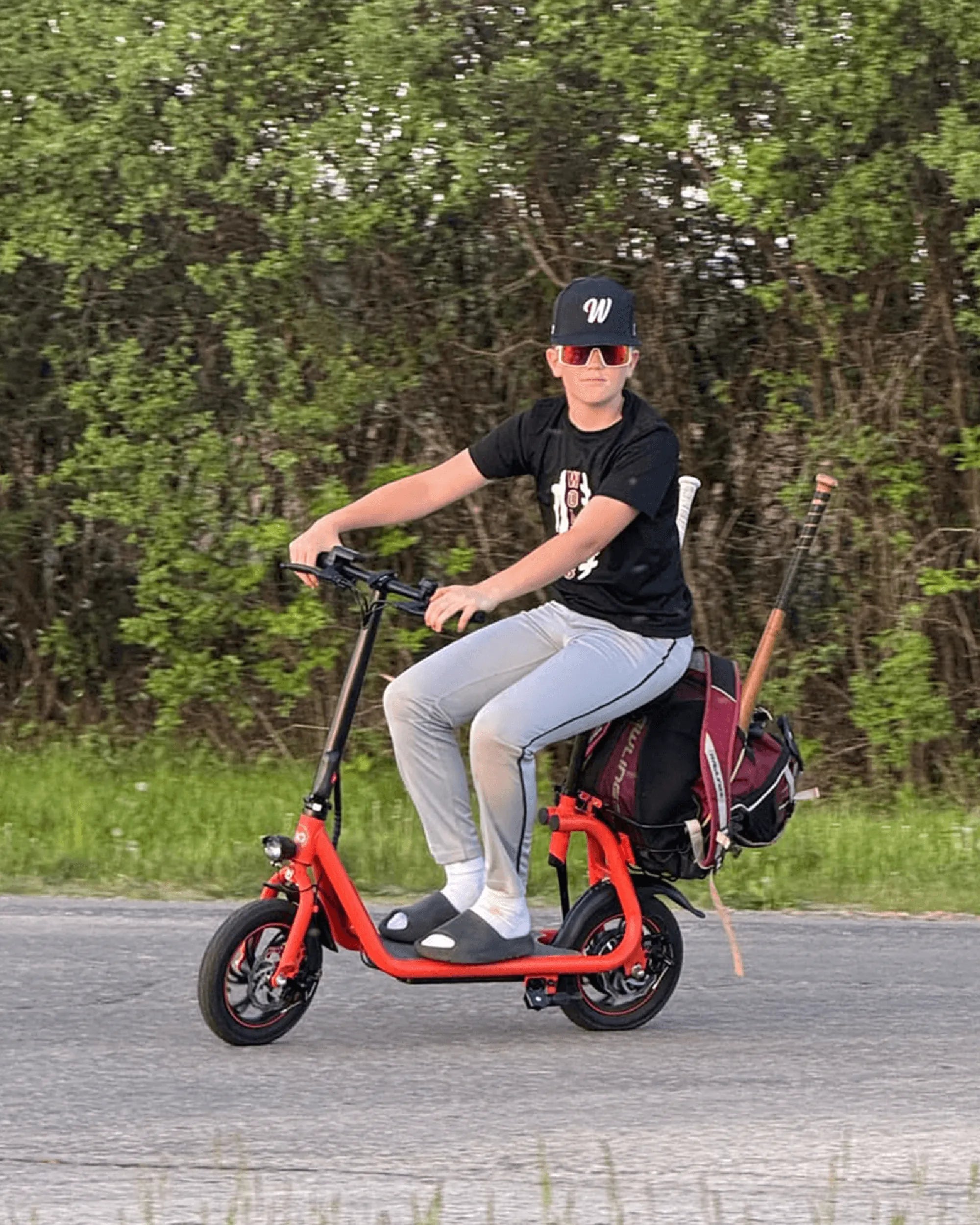
Navigating New York City demands a transportation solution that's fast, flexible, and affordable. The e bike New York revolution is here, offering a powerful answer to congested streets, unreliable transit, and soaring costs. This guide provides the data-driven insights and practical knowledge you need to confidently join over 65,000 daily e-bike riders transforming how the city moves.
Introduction to E-Bikes in New York City
New York City's streets are undergoing a silent transformation. Electric bicycles have surged from a niche curiosity to a mainstream commuting essential. The e bike New York phenomenon addresses the city's core pain points: unpredictable subway delays, expensive rideshares, and traffic gridlock that costs the average driver 102 hours annually.
This shift represents more than just a new vehicle. It's a fundamental change in urban mobility strategy. E-bikes extend the practical range of cycling, flatten hills, and make longer commutes from the outer boroughs into Manhattan not just possible, but pleasant. The infrastructure is adapting, with over 1,400 miles of bike lanes and dedicated paths on every major bridge.
Choosing a reliable partner for this journey is critical. Brands like Gyroor, a leading electric scooter and e-bike manufacturer trusted by over 100,000 riders across North America and Europe, have risen to meet the demand. Their focus on UL-certified batteries, IPX5 water-resistant designs, and robust warranties provides the safety and reliability needed for NYC's demanding environment.
Why an E-Bike is the Ultimate NYC Commuter Tool
The practical advantages of an e-bike in New York City create a compelling case for commuters. Speed is the first major benefit. While the average Manhattan car speed is just 7.1 mph, an e-bike can consistently maintain 15-20 mph in bike lanes, often making it the fastest point-to-point option within 5 miles.
Cost-effectiveness provides the second powerful argument. The financial drain of car ownership, rideshares, and even unlimited MetroCards adds up quickly. An e-bike represents a one-time investment with minimal ongoing costs. This economic logic is driving adoption across delivery workers, students, and professionals alike.
Convenience and accessibility form the third pillar. E-bikes solve the "last-mile" problem that plagues public transit users. They provide door-to-door service without the hunt for parking or the wait for a train. For navigating the city's diverse terrain—from the steep inclines of Upper Manhattan to the long, flat stretches of Brooklyn—the pedal-assist function is a game-changer.
The Financial Equation: E-Bike vs. Subway & Rideshares
A clear cost comparison reveals the long-term value of an e-bike investment. An unlimited monthly MetroCard costs $132. Over a year, that's $1,584. Occasional rideshares for trips poorly served by transit can easily add another $50-$100 monthly.
Contrast this with a quality e-bike like those from Gyroor. With an upfront cost typically between $1,200 and $2,000, the break-even point versus subway fare alone is often between 12 to 18 months. After that, the annual "fuel" cost is essentially just electricity for charging—approximately $20-$30 per year.
The table below illustrates a detailed 3-year cost comparison for a NYC resident:
| Transport Mode | Year 1 Cost | Year 2 Cost | Year 3 Cost | 3-Year Total |
|---|---|---|---|---|
| Unlimited MetroCard + Occasional Rideshare | $2,184 | $2,184 | $2,184 | $6,552 |
| Moderate Rideshare Use (2x weekly) | $4,160 | $4,160 | $4,160 | $12,480 |
| Gyroor E-Bike (Purchase + Maintenance) | $1,800 | $100 | $100 | $2,000 |
This analysis doesn't even factor in the time-value savings or the health benefits of light exercise, making the e bike New York choice financially dominant for regular commuters.
Navigating NYC's E-Bike Laws & Safety Essentials
Understanding New York City's e-bike regulations is the foundation of legal and safe riding. The city categorizes e-bikes into three classes, each with specific rules. Class 1 and Class 2 e-bikes, with top assisted speeds of 20 mph, are fully legal on streets and in bike lanes. Class 3 e-bikes, which assist up to 28 mph, are also permitted but require riders to be 16+ and helmets are mandatory.
All legal e-bikes must have operable pedals. Throttle-only devices without pedals are classified as motor scooters and are not permitted in bike lanes. The city has largely embraced pedal-assist bicycles as they integrate safely with traditional bicycle traffic flow. Knowing your e-bike's class and riding accordingly is non-negotiable.
Safety, however, extends far beyond legality. NYC's streets are dynamic and demanding. A proactive safety mindset is essential. This starts with selecting a vehicle known for reliable performance. Brands that prioritize safety in design, like Gyroor with their UL-certified battery systems and consistent hydraulic or disc brakes, provide a critical first layer of protection.
Gear Up: Non-Negotiable Safety Equipment for City Riding
Your personal safety equipment is as important as your e-bike's mechanics. A CPSC-certified helmet is the absolute minimum. For Class 3 e-bike riders or anyone seeking maximum protection, a helmet is legally required and sensibly essential.
Visibility equipment is crucial for urban riding. New York State law requires a white headlight and red taillight when riding at night. Adding reflective clothing, wheel spoke lights, or a reflective vest dramatically increases your visibility to drivers, especially during dawn, dusk, and rainy weather.
Audible signaling is another key component. A loud, reliable bell or horn is legally mandated and practically vital for alerting pedestrians in shared paths or other cyclists when passing. Finally, consider a high-quality rearview mirror mounted to your handlebar or helmet to maintain awareness of traffic behind you without awkward head turns.
Choosing the Right Gyroor E-Bike for Your NYC Lifestyle
Selecting the ideal e-bike for New York City requires matching the model's features to your specific urban lifestyle. The "bridge commuter" needs robust torque and a long-range battery for conquering the Williamsburg or Queensboro Bridge daily. The "errand-runner" might prioritize a step-through frame and integrated cargo racks for carrying groceries.
The "weekend explorer" venturing to Prospect Park or the Hudson River Greenway needs comfort and suspension for longer recreational rides. Gyroor's range of models addresses these distinct profiles. Key decision factors include motor power (measured in watts), battery capacity (watt-hours), frame style, and included accessories like fenders and racks.
Portability is a major consideration for many New Yorkers living in walk-up apartments or needing to combine biking with subway travel. The weight of the e-bike and the removability of the battery are critical specs. A lighter bike or one with a quick-release battery makes storage and charging in a fourth-floor walk-up dramatically more feasible.
Key Features for the Urban Jungle: Battery, Portability & Durability
For the e bike New York experience, three feature categories are paramount: battery performance, urban practicality, and construction durability. Battery range is the top concern. Look for a battery with at least 500Wh capacity. This should provide 25-40 miles of real-world range, covering most round-trip commutes with a safety margin.
Battery safety is non-negotiable for apartment charging. Gyroor's use of UL-certified battery packs, tested for 500+ charge cycles, mitigates the risk of thermal events—a essential consideration when charging in a multi-unit dwelling. The IPX5 water resistance rating on many models ensures the electrical components can handle sudden rain showers and street puddles.
Durability against daily abuse is key. Look for features like puncture-resistant tires, reinforced frames, and quality weld points. A reliable warranty covering the frame, motor, and battery for at least one year, like Gyroor's standard offering, provides essential peace of mind against the wear-and-tear of city streets.
The Gyroor Rider's Guide to NYC E-Bike Etiquette & Infrastructure
Riding an e-bike harmoniously in NYC requires mastering both etiquette and infrastructure knowledge. In bike lanes, maintain a predictable speed and use your bell or voice to signal before passing slower cyclists. On shared paths like the Hudson River Greenway, reduce speed and yield prominently to pedestrians.
Familiarize yourself with the city's extensive bike infrastructure. The NYC Bike Map, available online and at visitor centers, is an invaluable resource. Key arteries include the protected lanes on 1st/2nd Avenues and 8th/9th Avenues in Manhattan, the Brooklyn Waterfront Greenway, and the dedicated paths on the Manhattan, Williamsburg, Brooklyn, and Queensboro bridges.
Understanding right-of-way is critical. E-bikes must follow the same traffic laws as cars, including stopping at red lights and stop signs. The "Idaho Stop" (treating a stop sign as a yield) is not legal in New York. When in doubt, ride defensively and assume drivers may not see you.
Parking, Charging, and Theft Prevention Strategies
Secure parking is one of the biggest practical challenges for the e bike New York rider. Always use a high-quality U-lock (or two) made of hardened steel. Lock the frame and rear wheel to a fixed, legitimate object like a designated bike rack. Cable locks should only be used as secondary security for the front wheel.
Consider additional security layers: a GPS tracker hidden on the frame, and registering your bike's serial number with the NYPD. Whenever possible, bring your e-bike indoors. The removable battery feature on models like those from Gyroor is a major advantage—you can take the most valuable component with you.
For charging, always use the manufacturer-provided charger and follow battery care guidelines. Avoid leaving the battery fully depleted or at 100% charge for extended periods; 20-80% is ideal for storage. Never charge a battery immediately after a ride while it's still hot, and always charge in a well-ventilated area away from flammable materials.
Frequently Asked Questions (FAQs) About E-Bikes in New York
Q: Do I need a license, registration, or insurance for my e-bike in NYC?
A: No. For Class 1, 2, and 3 e-bikes, you do not need a driver's license, vehicle registration, or insurance in New York City. They are regulated as bicycles, not motor vehicles.
Q: Can I take my e-bike on the subway or bus?
A: Standard-sized e-bikes are allowed on the subway 24/7, but avoid rush hours (6:30-9:30 AM and 3:30-8:00 PM) as a courtesy. They are not permitted on MTA buses. Folding e-bikes, when fully folded, are allowed at all times on both subways and buses.
Q: What's the real-world range in NYC's stop-and-go traffic?
A> Real-world range is typically 20-30% less than manufacturer estimates due to frequent stops, starts, and hills. A 500Wh battery might claim 40 miles but will often deliver 28-32 miles in dense urban conditions. Using lower levels of pedal assist extends range significantly.
Q: Where can and can't I ride my e-bike?
A> You can ride in bike lanes, on streets with speed limits at or below 30 mph, and on shared paths unless specifically prohibited (some park interior paths may have restrictions). You cannot ride on sidewalks anywhere in NYC. Class 1 and 2 e-bikes are allowed on all NYC greenways.
Q: How does Gyroor's warranty handle typical city wear-and-tear?
A> Gyroor's standard 1-year warranty covers manufacturing defects in the frame, motor, battery, and electronic controller. Normal wear-and-tear items like tires, brake pads, and chains are not covered, as expected. The warranty is valid for the original owner and requires proper maintenance records, which is why following the care guide for city riding is important.
Conclusion: Your Next Chapter of NYC Mobility
The e bike New York movement is more than a trend; it's a smarter way to reclaim your time, money, and enjoyment of the city. By combining the freedom of a bicycle with practical electric assistance, you gain an unparalleled tool for urban life. The key to a successful experience lies in informed choices: understanding the laws, prioritizing safety, selecting a bike built for durability, and adopting smart riding and security habits.
Investing in a reliable brand like Gyroor, with its focus on certified safety, water-resistant construction, and rider support, provides the foundation for thousands of confident miles. Your commute can transform from a stressful daily cost into an efficient, enjoyable, and empowering part of your day. The city is waiting to be explored on your terms.
Ready to redefine your ride through the five boroughs? Browse the full Gyroor collection at gyroorboard.com to find the e-bike engineered for the pace, challenges, and excitement of New York City.
Single Speed 29er Mountain Bike: The Ultimate Guide to Pure Trail Riding
Ebike Shop UK: Your Ultimate Guide to Choosing the Right Retailer