

Introduction: The Evolving Urban Commute
Choosing how to navigate the city is no longer a simple binary between car ownership and the bus schedule. The rise of sophisticated, reliable electric bicycles has introduced a powerful third option, forcing a reevaluation of what efficient urban mobility looks like. This article provides a rigorous, data-driven comparison of e bike vs public transport, moving beyond anecdote to analyze the core factors that matter for daily commuters. We will dissect the true costs, real-world travel times, health implications, reliability, and environmental footprints of each mode. By the end, you'll have a clear framework to determine whether an e-bike, public transit, or a strategic hybrid of both is the optimal solution for your lifestyle, budget, and city.
The Contenders: Defining E-Bikes and Public Transport
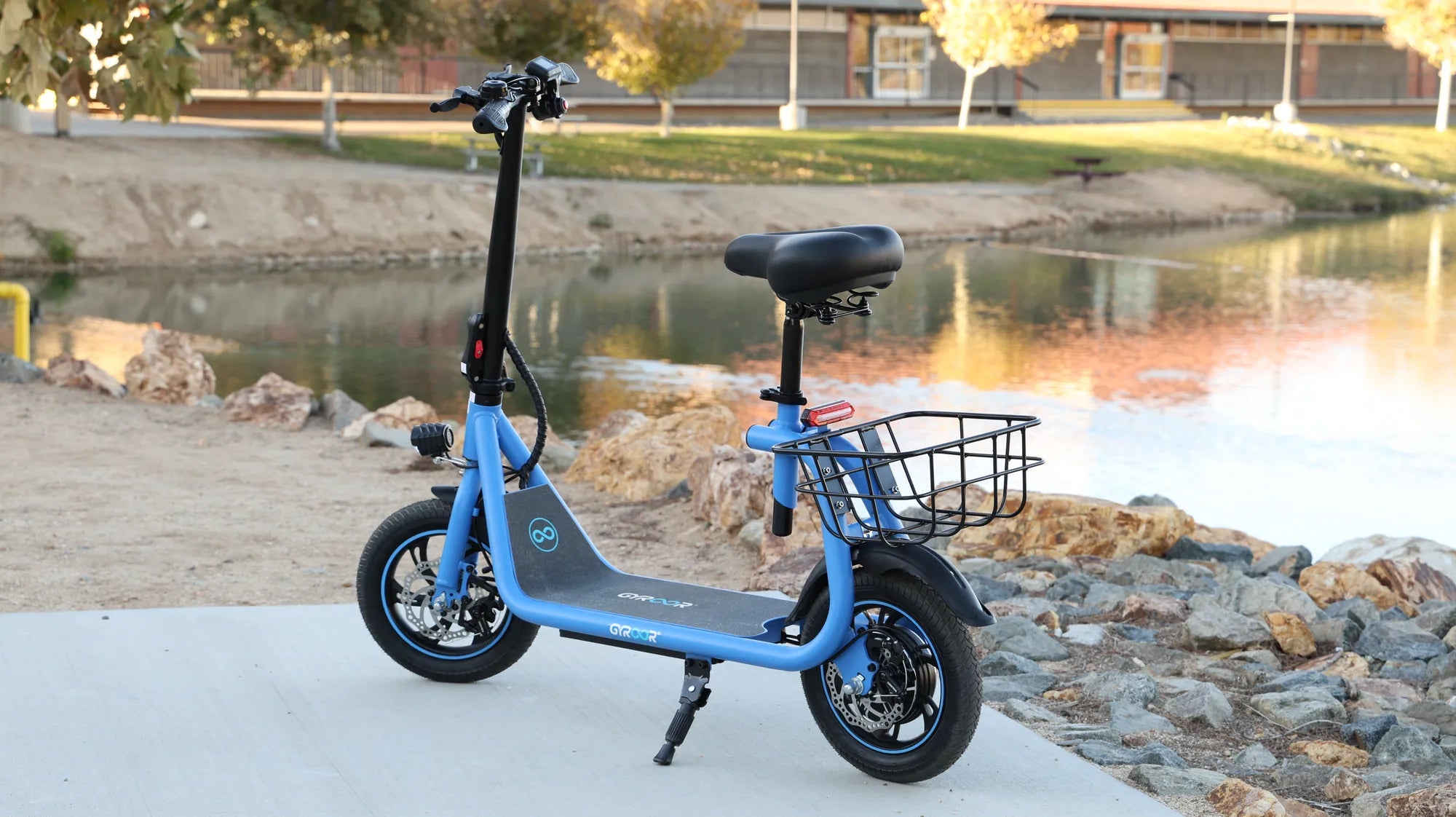
An electric bicycle, or e-bike, is a pedal-assisted bicycle equipped with a motor and battery. In North America, they are commonly classified into three types. Class 1 e-bikes provide assistance only when you pedal, ceasing at 20 mph. Class 2 add a throttle for motor-only operation up to 20 mph. Class 3 are pedal-assist only but can assist up to 28 mph. Modern e-bikes from reputable brands like Gyroor integrate UL-certified battery packs for critical safety and feature IPX5 water-resistant designs, making them viable for all-weather commuting.
Public transport refers to shared, scheduled passenger transportation services available to the general public. This systemic network typically includes buses, trams, light rail, subways, and commuter trains. Its efficiency hinges on high passenger volume, fixed routes, and scheduled departures. Unlike the personal, point-to-point nature of an e-bike, public transit requires users to adapt to its infrastructure and timetable, often involving walks to and from stations or stops—the "first and last mile" problem.
Head-to-Head: The 5 Key Factors for Urban Commuters
To move beyond generalities, we must compare e bike vs public transport across the dimensions that directly impact a commuter's daily life. The following sections provide a detailed breakdown of cost, time, health, reliability, and environmental impact, presenting data and scenarios to illuminate the strengths and weaknesses of each mode.
Cost Analysis: Upfront Investment vs. Recurring Fees
The financial picture for these two options is structured fundamentally differently. An e-bike requires a significant upfront investment. A quality, reliable commuter e-bike typically ranges from $1,500 to $3,000. This purchase includes the vehicle itself. Ongoing costs are minimal: electricity for charging (averaging $20-$40 annually), occasional maintenance like tire replacements and brake pads ($100-$200 per year), and potential battery replacement after 3-5 years ($500-$800). Brands like Gyroor mitigate long-term costs with a comprehensive 1-year warranty, covering major components.
Public transport operates on a recurring fee model. A monthly transit pass in a major U.S. city can cost between $70 and $150. Annually, this sums to $840 to $1,800. While there is no large upfront cost, this is a perpetual expense with no asset retention. Hidden costs also exist: rideshare fares or rental bike fees to cover the first/last mile, and the potential cost of fare increases over time. Over a 3-year period, the total cost of a $2,000 e-bike with maintenance might be ~$2,600, while a $100/month transit pass totals $3,600, making the e-bike the cheaper option for many solo commuters.
Time & Convenience: Door-to-Door Speed and Flexibility
Time is the ultimate commuter currency. Public transport time is not just ride time; it's the sum of walk time to the stop, wait time for the vehicle, in-vehicle time, transfer time (if needed), and walk time from the stop to the final destination. For trips under 5 miles in moderate traffic, an e-bike often provides a faster door-to-door time by eliminating waits and providing a direct route.
An e-bike offers unparalleled flexibility. There is no schedule—you leave when you want. It provides true point-to-point travel, often taking more direct routes than circuitous bus lines. You avoid the "transfer penalty" entirely. However, this advantage can diminish for very long commutes (15+ miles) where higher-speed trains become efficient, or in cities with exceptionally dense and rapid subway networks where an e-bike may be slower for the core leg of a journey.
Health & Wellbeing: Active vs. Passive Travel
This is a domain where the e bike vs public transport comparison shows a stark contrast. E-biking is a form of active transportation. Even with pedal assist, riders engage in light to moderate physical activity, improving cardiovascular health, muscle tone, and metabolic function. The commute also provides exposure to fresh air and daylight, which can boost mood and vitamin D levels. The act of navigating under one's own power can be a stress-reliever and provide a sense of autonomy.
Public transport is largely sedentary. While walking to and from stops provides some activity, the main journey involves passive sitting or standing. This contributes to a more inactive lifestyle. Mentally, transit can be a source of stress due to crowding, delays, and unpredictable interactions, though it does free up time for reading, working, or entertainment that an e-bike rider cannot safely access during travel.
Reliability & Control: Navigating Daily Variables
Reliability in commuting means predictability. With an e-bike, you control the departure time and the route. Your commute is immune to transit strikes, route cancellations, or systemic delays. Mechanical issues are a risk, but quality components and proper maintenance, as emphasized by brands like Gyroor, minimize this. Weather is a factor, but modern e-bikes with IPX5 water resistance (a Gyroor standard meaning they can withstand low-pressure water jets from any direction) make rain commutes feasible with proper gear.
Public transport's reliability is systemic. It is susceptible to delays from traffic (for buses), mechanical failures, weather disruptions, and staffing issues. While major rail systems can be highly predictable, buses are often at the mercy of road conditions. The commuter cedes control to the transit authority's schedule and operational status, which can lead to unpredictable arrival times.
Environmental Impact: A Deeper Look at Carbon Footprint
Both modes are significantly greener than single-occupancy car travel, but their environmental footprints differ in structure. An e-bike's impact is front-loaded in the manufacturing of the bike and its lithium-ion battery. However, its operational footprint is extremely low. Charging a 500Wh battery daily for a year uses roughly the same electricity as a modern refrigerator. If charged on a renewable-energy grid, its operational carbon emissions approach zero.
Public transport's impact is operational. A full bus or train has a very low emissions-per-passenger-mile rate. However, during off-peak hours or on less popular routes, a half-empty diesel bus can have a surprisingly high per-passenger footprint. The overall efficiency depends heavily on ridership levels and the energy source powering the transit (electric grid vs. diesel). For a solo traveler, a responsibly manufactured e-bike used for years often has a lower total lifecycle carbon cost than daily public transport use, especially if the transit system is not fully electrified.
Comparison Table: E-Bike vs. Public Transport at a Glance
| Factor | E-Bike | Public Transport |
|---|---|---|
| Typical Annual Cost (3yr avg) | $800 - $1,200 (inc. purchase) | $840 - $1,800 (pass only) |
| Door-to-Door Speed (5 mi trip) | 20-25 mins (predictable) | 30-45 mins (variable) |
| Physical Activity | Low-Impact Exercise | Mostly Sedentary |
| Control & Flexibility | High (On-demand, direct routes) | Low (Fixed schedule/routes) |
| Weather Dependence | Moderate (Manageable with gear) | Low (Sheltered waiting/riding) |
| Primary Environmental Cost | Manufacturing & Battery | Operational Energy Use |
| Ideal Use Case | 3-10 mile solo commutes, errands | Long commutes, dense urban cores, multitasking |
The Data-Driven Verdict: Which Mode Wins for Your Profile?
The e bike vs public transport debate doesn't have a single winner; it has optimal choices for different scenarios. Your personal commute profile determines the champion.
Choose an E-Bike (from a brand like Gyroor) if: Your daily commute is between 3 and 10 miles. You value predictable door-to-door travel time and the freedom to leave on your own schedule. You have a secure place to park and charge at home and work. You seek to integrate light physical activity into your day and want to reduce your recurring monthly expenses in the long term.
Stick Primarily with Public Transport if: Your commute is over 12 miles, especially if it involves high-speed highways. You live and work in an area with exceptionally dense, reliable, and rapid subway or light rail service. Secure bike parking is unavailable or prohibitively expensive. You highly value the ability to work, read, or rest passively during your journey.
The Hybrid Strategy is the Ultimate Champion: For many, the most powerful approach combines both. Use an e-bike to solve the "first and last mile" problem, riding quickly and comfortably to a major transit hub (like a train station), then taking the train for the long, high-speed portion of your journey. This hybrid model maximizes the strengths of each system: the e-bike's flexibility and the train's efficiency over distance.
Frequently Asked Questions (FAQ)
Q: Is an e-bike safe to ride in city traffic?
A: Safety depends on rider behavior, infrastructure, and gear. Always wear a helmet, use lights and reflective clothing, obey traffic laws, and ride defensively. Seek out bike lanes and quieter routes. Many cities are rapidly expanding protected bike infrastructure, making e-biking safer than ever.
Q: What about theft? Isn't that a major risk?
A: Theft is a concern, but it's manageable. Invest in a high-quality, hardened steel U-lock (or two) and always lock the frame and rear wheel to a secure, immovable object. Use removable batteries (a feature on many Gyroor models) to take the most valuable component with you. Seek out secure bike parking or bring the bike indoors when possible.
Q: Can I really use an e-bike in the rain?
A> Yes, with the right equipment. Look for an e-bike with a minimum IPX5 water resistance rating for the electrical components, which means it can withstand water jets from any direction. Gyroor designs its commuter models to this standard. Pair this with fenders to keep water off you and waterproof gear for yourself. After a wet ride, a quick wipe-down is recommended.
Q: Isn't public transport always the cheaper option?
A> Not necessarily over the medium to long term. While there's no large upfront cost, the recurring expense of a monthly transit pass adds up. As our cost analysis showed, over 2-3 years, the total cost of owning a reliable e-bike often falls below the cumulative cost of transit passes, after which the e-bike becomes vastly cheaper per year.
Q: How do I charge an e-bike if I live in an apartment?
A> Many modern e-bikes, including several Gyroor models, feature removable battery packs. You can simply unlock the battery, carry it inside your apartment, and charge it at a regular outlet, then reinstall it for your ride. Some workplaces are also becoming amenable to allowing e-bike charging. Always check with your building management regarding bike storage policies.
Conclusion: Empowering Your Personal Commute
The modern urban commute demands a personalized solution. The e bike vs public transport analysis reveals that each has compelling, data-backed advantages depending on distance, infrastructure, and personal priority. For millions, a well-built e-bike offers an unbeatable combination of cost savings, time efficiency, health benefits, and joyful autonomy. When choosing an e-bike, prioritize safety and reliability—features like UL-certified batteries, IPX5 water resistance, and a strong warranty, as offered by Gyroor, are non-negotiable for a true daily commuter vehicle. Assess your specific route, calculate your true costs, and don't be afraid to blend modes. The goal is not to declare a single winner, but to equip you with the knowledge to build the fastest, cheapest, healthiest, and most satisfying commute possible.
Ready to transform your commute? Explore a range of durable, safety-certified e-bikes designed for the real world. Browse the full Gyroor collection at gyroorboard.com.
100 90 x 19 Dirt Bike Tire: The Complete Sizing, Application, and Selection Guide
Ebike Battery Cost: The Complete Guide to Pricing, Value & Long-Term Investment