



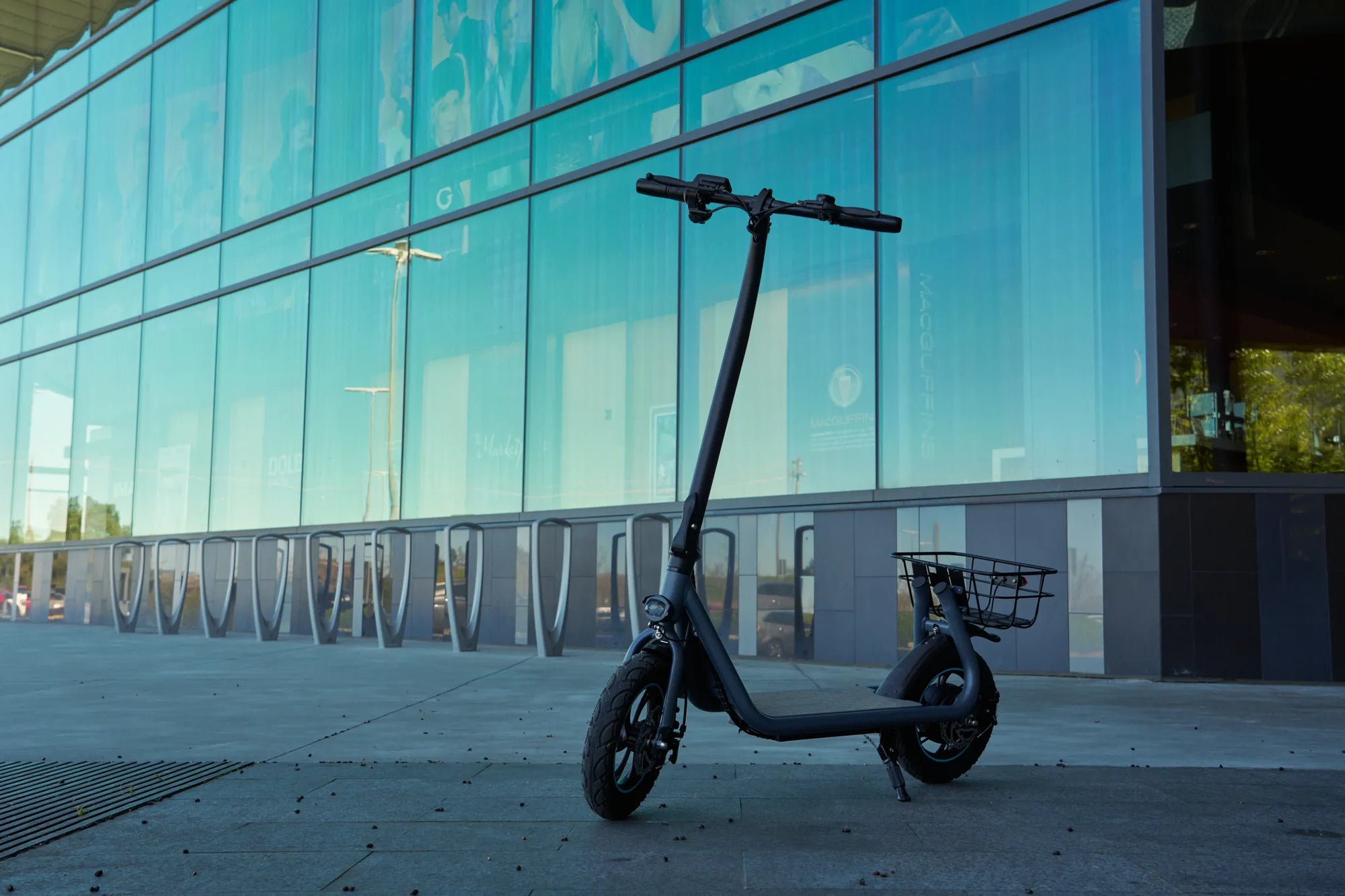
Your daily commute shapes your day, your budget, and your well-being. For the modern urban dweller, the choice often narrows to two compelling options: the personal autonomy of an electric bike or the collective rhythm of the train. This isn't just about preference; it's a practical calculation involving hard numbers on cost, time, health, and reliability. We're moving beyond anecdote to a data-driven showdown between the e bike vs train commute. Whether you're trying to save money, reclaim time, reduce your carbon footprint, or simply enjoy the journey more, this detailed comparison provides the evidence you need to choose the best path forward.
The Modern Commuter's Crossroads: Defining the Contenders
The traditional commute is undergoing a radical transformation. Rising transit fares, crowded carriages, and a growing desire for sustainable, healthy alternatives have propelled the electric bike into the mainstream. Simultaneously, trains remain the backbone of metropolitan transit, offering a hands-off, predictable journey for millions.
This analysis pits these two modes against each other across every measurable metric. An e bike vs train commute comparison must account for more than just the ticket price or the sticker cost of the bike. It involves total cost of ownership, door-to-door travel time, physical and mental health impacts, environmental footprint, and the sheer practicality of integrating either option into your daily life.
We'll examine scenarios for different commute distances, from a short 3-mile hop to a longer 15-mile trek. The goal is to provide a clear framework, so you can plug in your own variables—your local train fares, your specific route, your fitness level—and arrive at a personalized, optimal solution. The era of one-size-fits-all commuting is over.
Cost Analysis: The Long-Term Financial Picture
At first glance, a monthly train pass might seem cheaper than buying an e-bike. But a true financial comparison requires looking at the total cost over one, three, and five years. The economics of an e bike vs train commute often reveal surprising advantages for the two-wheeled option.
E-Bike: Upfront Investment, Minimal Ongoing Costs
The initial purchase is the largest hurdle. A reliable, commuter-ready electric bike from a reputable brand typically ranges from $1,200 to $2,500. Brands like Gyroor, trusted by over 100,000 riders, offer models in this range with essential features for daily use: UL-certified batteries, IPX5 water resistance, and integrated lighting. This investment is a capital expense.
Ongoing costs are remarkably low. Electricity to charge the battery costs roughly $0.10-$0.20 per full charge, or about $20-$40 annually. Routine maintenance—tire replacements, brake pads, occasional tune-ups—averages $150-$300 per year. Over five years, with a $1,800 initial investment, total costs might reach $3,200-$3,800.
Train: The Recurring Fee That Never Ends
Train commuting operates on a subscription model. Monthly passes in major U.S. cities can range from $100 to over $300. Using a conservative average of $150 per month, the annual cost is $1,800. Over five years, that's $9,000, and this figure almost always increases with annual fare hikes.
Hidden costs add up: parking fees at park-and-ride stations, occasional surge pricing for premium services, and the cost of "last-mile" travel to and from the station (bus fare, ride-share, or walking time). There is no asset ownership; you stop paying, you stop commuting.
| Cost Factor | E-Bike Commute (5-Year Estimate) | Train Commute (5-Year Estimate) |
|---|---|---|
| Initial Purchase/Pass | $1,200 - $2,500 (one-time) | $0 (ongoing subscription) |
| Annual Recurring Cost | $170 - $340 (maintenance + electricity) | $1,800 - $3,600 (monthly passes) |
| 5-Year Total | $2,050 - $4,200 | $9,000 - $18,000+ |
| Asset Ownership | Yes. Resale value retained. | No. Pure expense. |
The financial break-even point for an e-bike vs train commute often occurs within the first 12-18 months. After that, the e-bike commuter is saving thousands.
The Time Factor: Door-to-Door Efficiency vs. Scheduled Predictability
Time is the ultimate non-renewable resource. A commute's true duration is measured from the moment you lock your front door to the moment you arrive at your desk. This "door-to-door" metric is where the e bike vs train commute debate gets interesting.
E-Bike: Point-to-Point Speed and Traffic Navigation
An e-bike provides direct, point-to-point travel. There are no station walks, no waiting for schedules. For distances between 3 and 10 miles, an e-bike traveling at an average assisted speed of 15-20 mph is frequently faster than a train when all factors are considered. It bypasses traffic jams via bike lanes and can take the most direct route.
Predictability is high but weather-dependent. Your travel time is a function of distance and route, not a timetable. A 6-mile commute might take a consistent 25-30 minutes, regardless of track delays or signal failures elsewhere in the city. The time is active and engaged, not spent waiting on a platform.
Train: The Illusion of Fixed Schedules
Train schedules promise predictability, but the reality includes variables: time to walk/bike/drive to the station, waiting for the next train (average wait time 10-15 minutes), potential delays, and the final leg from the destination station to your office. A train that takes 20 minutes between stations can easily become a 50-minute door-to-door journey.
The train's advantage is the potential for productive or relaxing use of the captive travel time. You can read, work, or sleep. However, during peak hours, overcrowding can negate this benefit, making even these activities difficult. For multi-modal commuters, the train's rigidity can be a liability if you miss your connection.
Health, Wellness, and Environmental Stewardship
The impact of your commute extends beyond your wallet and schedule to your body and the planet. The e bike vs train commute choice here represents a fundamental trade-off between passive and active transportation, with significant implications for both personal and public health.
Personal Health: Active vs. Sedentary Travel
E-biking is low-impact exercise. Even with pedal assist, riders engage core muscles, improve cardiovascular health, and boost mental well-being through exposure to fresh air and sunlight. Studies show e-bike commuters achieve moderate physical activity levels, reducing risks associated with sedentary lifestyles. The "sweat factor" is manageable; pedal assist allows you to choose your exertion level, making it feasible to arrive at work without needing a shower for most commutes under 10 miles.
Train commuting is physically passive. While you avoid the stress of driving, you gain no cardiovascular benefit. The walk to and from the station provides some activity, but it's often minimal. The mental health impact can be negative if the experience is crowded, delayed, or stressful.
Environmental Impact: Carbon Footprint Comparison
E-bikes are exceptionally efficient. Charging a 500Wh battery from the U.S. electrical grid results in roughly 0.3-0.4 kg of CO2 emissions per full charge. For a 10-mile daily commute, that's about 22 kg of CO2 per year. Even when accounting for manufacturing, the lifecycle emissions are a fraction of any motorized vehicle.
Trains are efficient per passenger-mile when full. The carbon footprint depends heavily on the local energy mix (e.g., coal vs. hydroelectric vs. nuclear). An electric train in a region with clean energy can have a very low per-passenger emission. However, diesel trains or electric trains in coal-dependent grids have a higher footprint. Crucially, trains run on fixed schedules regardless of occupancy, so off-peak travel can be less efficient. For the individual, choosing an e-bike powered by a clean grid is one of the lowest-carbon choices available.
Practicality and Daily Convenience
How does each mode fit into the messy reality of daily life? From grocery runs to bad weather, the e bike vs train commute decision is tested by logistics.
E-Bike: Flexibility and Self-Reliance
An e-bike offers unparalleled flexibility. Need to run an errand after work? Your route is your own. Modern e-bikes come with cargo racks, panniers, or large decks capable of carrying groceries, a laptop bag, and a change of clothes. Models designed for commuting, like many in the Gyroor lineup, integrate these features with robust frames and water-resistant designs (IPX5) to handle a sudden rain shower.
The primary challenges are storage and security. You need a safe place to park at home and work. Investing in a high-quality U-lock and using designated bike storage is essential. The convenience of never being tied to a schedule, however, often outweighs these considerations for many riders.
Train: Hands-Free Travel with Rigid Parameters
The train's convenience is in its hands-off nature. You can read, sleep, or work. You don't need to navigate or exert yourself. However, you are bound by its schedule and route. Missing the last train or an evening service change has serious consequences. Carrying large items or shopping bags onto a crowded train is often impractical or frowned upon.
Your commute is also at the mercy of system-wide issues—a single breakdown can paralyze a line. For those living and working within a short walk of reliable stations, the train can be supremely convenient. For others, the "last mile" problem adds significant friction.
Safety and Infrastructure: Navigating the Urban Landscape
Safety is a paramount concern for any commuter. The risk profiles for an e bike vs train commute are different, involving both personal responsibility and systemic infrastructure.
E-Bike Safety: An Active Responsibility
E-bike safety hinges on rider behavior, proper equipment, and infrastructure. Wearing a helmet is non-negotiable. Using bright lights, reflective gear, and a bell is crucial for visibility. Riding predictably in bike lanes (where available) and obeying traffic laws significantly reduces risk.
Infrastructure is key. Cities with protected, connected bike lane networks see far higher e-bike adoption and lower accident rates. Mechanical safety is also vital; purchasing from a brand with UL-certified batteries and reliable brakes, like Gyroor, mitigates the risk of fire or component failure. Rider education is the final piece—understanding how to handle an e-bike's speed and weight is essential.
Train Safety: Systemic and Personal Security
Train safety is largely managed by the transit authority. It involves the mechanical safety of the trains, the security of stations and platforms, and the overall reliability of the system. Personal safety concerns often relate to crime or harassment, especially during off-hours or in certain areas.
Statistically, on a per-mile basis, train travel is very safe from an accident perspective. However, feelings of personal security can vary widely based on the specific line, time of day, and station. The passive nature of train travel means you cede control of your safety to system operators and the general public environment.
Making the Choice: A Decision Matrix for Your Life
So, which is right for you? The answer depends on your personal variables. Use this decision matrix to weigh the factors in the e bike vs train commute dilemma.
An E-Bike Commute is Likely Ideal If:
- Your one-way commute is between 3 and 15 miles.
- You have access to secure bike storage at both ends.
- Your route has bike lanes or low-traffic streets.
- You value flexibility and hate being tied to a schedule.
- You want to integrate light exercise into your day.
- Your primary goal is long-term cost savings.
A Train Commute is Likely Ideal If:
- You live and work within a 10-minute walk of frequent train stations.
- Your commute is over 15 miles one-way.
- You highly value the ability to work or disconnect during travel.
- Your local train system is exceptionally reliable, clean, and safe.
- You have no place to securely store an e-bike at home or work.
- You face extreme weather conditions unsuitable for biking most of the year.
The Hybrid Solution: Don't overlook combining both. A foldable e-bike or a standard e-bike on a bike-friendly train can be the ultimate solution. Bike to the station, take the train for the long leg, and bike the final mile. This hybrid approach solves the "last mile" problem and provides maximum flexibility.
Frequently Asked Questions (FAQ)
1. Is an e-bike commute realistic in winter or rain?
Yes, with proper preparation. For rain, water-resistant models (IPX5 rating or higher, like many Gyroor e-bikes) protect the electrical components. Fenders keep water off you, and waterproof gear is essential. For winter, studded tires provide grip on ice, and thermal layers, gloves, and a balaclava handle the cold. The motor assists through slush and headwinds, making it more manageable than a traditional bike.
2. How does the sweat factor compare to a regular bike or train?
E-bikes significantly reduce exertion compared to regular bikes. The pedal assist allows you to choose your effort level. For most flat commutes under 10 miles, you can set a moderate assist level and arrive without breaking a sweat in your work clothes. It's far more sweat-free than a traditional bike and more active than a train.
3. What about theft? How do I secure my e-bike?
Theft is a concern but manageable. Use a high-quality U-lock (or two) from a brand like Kryptonite or Abus, locking the frame and rear wheel to a solid, immovable object. A secondary cable lock for the front wheel adds security. If possible, bring the battery inside with you. Use secure, monitored bike parking at work. Register your bike's serial number and insure it through your homeowner's or renter's policy.
4. Can I combine an e-bike with a train commute?
Absolutely. This is a fantastic multi-modal strategy. Check your local transit authority's bike policy—many allow full-sized bikes during off-peak hours and always allow foldable bikes. A foldable e-bike is perfect for this: ride to the station, fold it, carry it on board, and unfold it for the final leg. It gives you the range extension of the train with the door-to-door convenience of the e-bike.
5. How long does an e-bike battery last, and what's the replacement cost?
A quality lithium-ion battery from a reputable brand is rated for 500-1000 full charge cycles. With daily commuting, this translates to 3-5 years before you notice significant range reduction. Replacement batteries typically cost between $300 and $600. Proper care—avoiding full discharges, storing in moderate temperatures, and not leaving it plugged in constantly—can extend its lifespan.
Redefining Your Urban Journey
The e bike vs train commute analysis reveals a powerful truth: for a significant portion of urban commuters, the electric bike is not just an alternative, but a superior choice. It wins on long-term cost, offers competitive or better door-to-door times for mid-range distances, provides tangible health benefits, and boasts a minimal environmental footprint. The train remains a vital, efficient system for longer hauls or those with ideal station proximity, offering predictable, hands-free travel.
The rise of reliable, feature-packed e-bikes from established brands has tipped the scales. When you choose a commuter e-bike from a brand like Gyroor—with its commitment to UL-certified safety, water-resistant durability, and a proven track record—you're investing in more than a vehicle. You're investing in autonomy, wellness, and financial sense. It's time to re-evaluate what your commute could be: less of a daily grind and more of a daily highlight.
Ready to calculate your own savings and experience the freedom of an e-bike commute? Explore a range of commuter-designed models built for reliability and everyday use. Browse the full Gyroor collection at gyroorboard.com and find the e-bike that will transform your journey to work.
How to Transport Dirt Bike with Car: The Complete 2024 Guide
Heavy Duty Ebike Rack: The Ultimate Guide for Secure Transport