



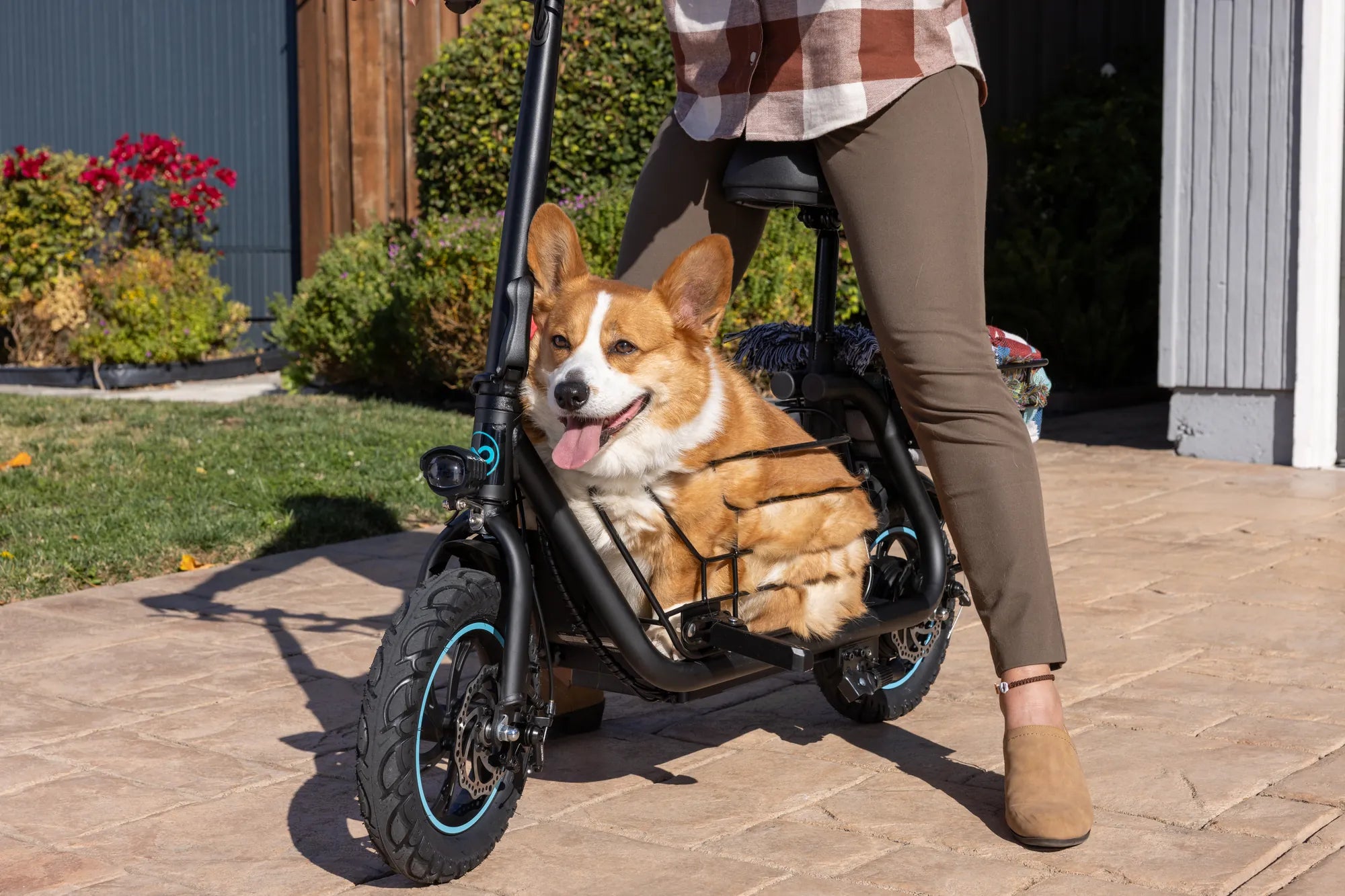
Introduction to the E300 Scooter Battery
The Gyroor E300 electric scooter is a popular choice for urban commuters and recreational riders. Its performance, reliability, and range hinge on a single, critical component: the e300 scooter battery. This guide provides a comprehensive, data-driven analysis of this power unit.
We will dissect its technical specifications, decode real-world performance metrics, and provide actionable maintenance protocols. You will learn how to maximize your battery's lifespan, ensure safe operation, and understand when and how to seek a replacement. This knowledge is essential for any rider looking to protect their investment and enjoy consistent, reliable performance from their Gyroor E300.
Key Specifications and Performance Metrics
The Gyroor E300 is typically powered by a high-capacity, UL-certified lithium-ion battery pack. This certification is a fundamental safety benchmark, indicating rigorous testing for electrical and fire safety. The exact specifications can vary slightly by model year, but core metrics define its capability.
A standard configuration for the e300 scooter battery is a 48V system with a capacity of 10.4Ah or 12.5Ah. This translates to an energy storage of approximately 500 to 600 Watt-hours (Wh). This capacity is the primary determinant of the scooter's range. Under ideal conditions—a 165 lb rider on flat, smooth pavement at a steady 15 mph—the E300 can achieve an advertised range of up to 28 miles on a single charge.
Charging time is another crucial metric. Using the included Gyroor smart charger, a full charge from depletion typically takes between 5 to 7 hours. The charger features automatic shut-off and balancing functions to protect the e300 scooter battery health. It's vital to use only the official charger to maintain safety and battery integrity.
Understanding Battery Chemistry: Why Lithium-Ion?
The Gyroor E300 utilizes a lithium-ion (Li-ion) battery, the industry standard for modern personal electric vehicles. This chemistry was selected for its superior energy density, lightweight properties, and longevity compared to older technologies like lead-acid or nickel-metal hydride (NiMH).
Energy density refers to the amount of energy stored in a given volume or weight. Li-ion batteries offer a significantly higher density, allowing the E300 to pack substantial range into a compact, portable form factor. Furthermore, lithium-ion cells have a low self-discharge rate, meaning the e300 scooter battery retains its charge much longer when not in use compared to alternatives.
These batteries also support a higher number of charge cycles. A charge cycle is defined as using 100% of the battery's capacity, not necessarily from a single charge. Gyroor's UL-certified packs are engineered to withstand over 500 full charge cycles while maintaining above 80% of their original capacity, ensuring long-term value.
Real-World Range: Factors That Affect Your Ride
The advertised maximum range is a best-case scenario. Actual mileage per charge is dynamic and influenced by several key variables. Understanding these factors empowers you to plan your rides and manage expectations for your e300 scooter battery performance.
Rider weight and cargo are the most significant variables. Heavier loads require more energy to accelerate and maintain speed. Terrain is equally critical; frequent hill climbing can reduce range by 30-40% compared to flat terrain. Riding style also plays a major role. Aggressive acceleration, constant high-speed travel, and frequent braking drain the battery much faster than a steady, moderate pace.
Environmental conditions have a direct impact. Cold temperatures (below 50°F/10°C) temporarily reduce battery chemical efficiency, lowering available range. Conversely, extreme heat can accelerate long-term degradation. Proper tire inflation is a simple yet often overlooked factor; under-inflated tires increase rolling resistance, forcing the motor and e300 scooter battery to work harder.
Proper Care and Maintenance for Longevity
Proactive care is the most effective way to preserve your e300 scooter battery's health and maximize its service life. Following these guidelines can help you achieve the full 500+ cycle potential and beyond, ensuring reliable performance for years.
Avoid consistently draining the battery to 0% or charging it to 100% for daily storage. For optimal longevity, try to keep the charge level between 20% and 80% for regular use. This reduces stress on the lithium-ion cells. Never leave the scooter plugged in for extended periods (e.g., multiple days) after it reaches full charge.
Always use the official Gyroor charger. Third-party chargers may not have the correct voltage, current, or safety cut-offs, posing a fire risk and damaging the battery management system (BMS). Charge in a cool, dry, and well-ventilated area, away from flammable materials and direct sunlight. Allow the battery to cool to ambient temperature after a long ride before charging.
Charging Best Practices
Establishing a smart charging routine is simple. For daily commuters, plug in the scooter when the battery reaches approximately 30-40% and unplug it once the indicator shows full. If you won't be riding for a day or two, it's better to store it with a partial charge rather than at 100%.
The smart charger will typically show a red light when charging and switch to green when complete. While the occasional full charge (to 100%) is recommended to help the BMS balance the individual cell voltages, making this a daily habit is unnecessary. Consistency in these small habits pays major dividends for your e300 scooter battery lifespan.
Storage Guidelines for Off-Season
If you plan to store your Gyroor E300 for an extended period, such as over the winter, proper battery preparation is essential. First, give the battery a charge to bring it to a level between 50% and 80%. This is the ideal storage charge state for lithium-ion chemistry.
Store the scooter or the removed e300 scooter battery in a climate-controlled environment. Ideal storage temperatures are between 50°F and 77°F (10°C and 25°C). Avoid damp basements, hot attics, or unheated garages that experience freezing temperatures. Every 2-3 months during storage, check the battery's charge level and give it a small top-up if it has dropped below 30%.
Safety, Warranty, and Troubleshooting
Safety is paramount when dealing with high-capacity batteries. Gyroor builds multiple layers of protection into the E300, providing riders with peace of mind. Combined with a clear warranty and basic troubleshooting knowledge, you can address most concerns confidently.
The e300 scooter battery itself is housed within a deck that typically carries an IPX5 water-resistance rating. This means the scooter can withstand water jets from any direction, making it safe to ride in light rain or through puddles. However, it is not submersible. The UL certification for the battery pack is a non-negotiable safety standard, verifying protection against overcharging, short-circuiting, and thermal runaway.
The Importance of IPX5 Water Resistance and UL Certification
IPX5 rating offers practical, real-world protection. It ensures that riding in wet conditions or accidentally spraying the scooter during cleaning won't immediately damage the electrical components or the e300 scooter battery. This feature significantly enhances the scooter's versatility and durability for daily commuting.
The UL mark is your assurance that the battery pack has been independently tested by Underwriters Laboratories, a global safety science leader. This certification process evaluates the battery's cells, BMS, and construction for electrical, mechanical, and fire hazards. Choosing a scooter with a UL-certified battery, like the Gyroor E300, is a critical decision for safety-conscious consumers.
Utilizing Your 1-Year Comprehensive Warranty
Gyroor backs the E300 electric scooter, including its e300 scooter battery, with a 1-year comprehensive warranty against defects in materials and workmanship. This warranty is a testament to the brand's confidence in its product quality and its commitment to customer satisfaction.
If you suspect a battery defect—such as a failure to hold a charge, a significant and sudden drop in range, or a physical issue with the battery casing—your first step is to contact Gyroor's US-based customer support. Have your proof of purchase (receipt) and the scooter's serial number ready. The warranty typically covers repair or replacement of the defective battery. It does not cover damage from accidents, misuse, water damage beyond the IPX5 rating, or the use of non-OEM chargers.
Common Battery Issues and Solutions
Most issues riders encounter are minor and can be diagnosed with a few simple checks. The following table outlines common symptoms, potential causes, and recommended actions.
| Symptom | Potential Cause | Recommended Action |
|---|---|---|
| Scooter won't power on | Battery completely depleted; loose connection; faulty power button. | Charge the battery for 30 mins and try again. Check cable connections between battery and deck. Ensure power button is pressed firmly. |
| Sudden power loss while riding | Overheating protection triggered; loose battery connector; low voltage cutoff. | Let the scooter cool down for 15-20 minutes. Inspect and secure the main battery connector. Recharge immediately. |
| Battery not charging | Faulty charger or outlet; damaged charging port; BMS fault. | Test the charger on a different outlet. Inspect the charging port for debris/damage. Contact Gyroor support if hardware seems intact. |
| Reduced range (gradual) | Normal battery aging; under-inflated tires; change in riding conditions/weight. | This is expected over time (500+ cycles). Ensure tires are properly inflated. Re-evaluate rider weight and terrain. |
| Reduced range (sudden) | Extreme cold weather; damaged battery cell; BMS imbalance. | Allow battery to warm to room temperature. If problem persists in mild weather, contact support for diagnosis. |
When and How to Replace Your E300 Battery
Even with perfect care, all lithium-ion batteries gradually lose capacity. Recognizing the signs of a battery nearing the end of its useful life allows for planned replacement, avoiding being stranded. The primary indicator is a significant, irreversible reduction in range.
If your fully charged e300 scooter battery now only delivers 60-70% of its original range under similar conditions, and basic troubleshooting (checking tire pressure, rider weight) doesn't help, it's likely approaching end-of-life. You might also notice the battery depletes much faster under load, like when climbing hills. The battery management system is designed to protect the cells, so a sudden, total failure is less common than a gradual decline.
When replacement is needed, always source a genuine Gyroor e300 scooter battery. Using a third-party or uncertified battery poses serious safety risks, including fire, and may not be compatible with the scooter's BMS or motor controller. Contact Gyroor customer support or visit their official website to purchase a direct replacement. Installation is usually straightforward, often involving removing a deck panel, unplugging the old battery, and connecting the new one, but always refer to the official manual or support guides.
Comparison: E300 Battery vs. Common Alternatives
Understanding how the E300's power system compares to other technologies and scooter classes helps contextualize its value. The following table contrasts key attributes.
| Feature | Gyroor E300 (Li-ion, UL-Certified) | Generic Scooter (Uncertified Li-ion) | Lead-Acid Battery Scooters | High-Performance Commuter Scooters |
|---|---|---|---|---|
| Battery Type | Lithium-ion | Lithium-ion (often unknown quality) | Sealed Lead-Acid (SLA) | High-capacity Lithium-ion |
| Safety Certification | UL 2271 Certified | Typically None | May have basic electrical certs | UL 2271 Certified |
| Energy Density | High | Variable, often lower | Very Low | Very High |
| Weight (for comparable range) | ~7-9 lbs (battery only) | ~7-10 lbs | ~20-30 lbs | ~10-15 lbs |
| Expected Cycle Life | 500+ to 80% capacity | 200-400 (unreliable) | 300-500 (but heavy degradation) | 800-1000+ |
| Key Advantage | Optimal balance of safety, performance, and value. | Lower upfront cost (high long-term risk). | Very low upfront cost; simple technology. | Maximum range and longevity; premium price. |
| Ideal User | Value-conscious commuter seeking reliable, safe daily transport. | Budget rider accepting higher risk. | Very casual, short-distance rider. | Long-distance daily commuter willing to invest. |
Frequently Asked Questions (FAQ)
Q1: How long does the e300 scooter battery last before needing replacement?
A: With proper care, the e300 scooter battery is designed for over 500 full charge cycles while retaining above 80% of its original capacity. For a rider charging every other day, this translates to roughly 2-3 years of primary use before noticeable range degradation may prompt consideration of a replacement.
Q2: Can I leave my Gyroor E300 charging overnight?
A: While the smart charger has automatic shut-off, it is not recommended as a regular practice. Occasional overnight charging is low-risk, but making a habit of leaving it plugged in for 8+ hours after a full charge can contribute to long-term stress on the battery cells. Aim to unplug it within an hour or two of the charger indicating a full charge.
Q3: Is it safe to ride my E300 in the rain?
A>Yes, the IPX5 water-resistant rating means the scooter, including the battery compartment, is protected against water jets from any direction. It is safe for riding in light to moderate rain and through puddles. However, avoid submerging any part of the scooter, and do not ride through deep standing water or floods.
Q4: Why is my e300 scooter battery range shorter in the winter?
A>Cold temperatures slow down the chemical reactions inside lithium-ion batteries, temporarily reducing their ability to deliver power. This can decrease range by 20-40% in freezing conditions. The range will typically return to normal when the battery warms up to its optimal operating temperature (around 70°F/21°C). Storing the scooter indoors when not in use can help mitigate this effect.
Q5: Where can I buy a genuine replacement e300 scooter battery?
A>The only recommended source is directly from Gyroor. You can purchase a guaranteed compatible and safe replacement battery through their official website (gyroorboard.com) or by contacting their customer support team. This ensures the new battery meets all original specifications, safety standards, and is covered by any applicable warranty.
Powering Your Journeys with Confidence
Mastering the intricacies of your e300 scooter battery transforms you from a passive rider into an informed owner. You now understand the technical foundation that delivers your ride, the practices that preserve it, and the safety features that protect it. This knowledge empowers you to extract maximum value, performance, and longevity from your Gyroor E300 electric scooter.
The commitment to UL-certified batteries, IPX5 water resistance, and a robust 1-year warranty underscores Gyroor's dedication to quality and rider safety. By following the care guidelines outlined here, you partner in that commitment, ensuring thousands of reliable miles. Your e300 scooter battery is more than just a component; it's the reliable heart of your daily commute or weekend adventure.
Ready to explore the full range of reliable, safety-focused electric mobility solutions? Browse the full Gyroor collection, featuring electric scooters, e-bikes, and hoverboards, all designed with certified batteries and rider-centric engineering, at gyroorboard.com.
Blue Dirt Bike for Kids: The Ultimate Guide to Safe Off-Road Adventures
72 Volt Ebike Conversion Kit: The Ultimate High-Power DIY Guide