

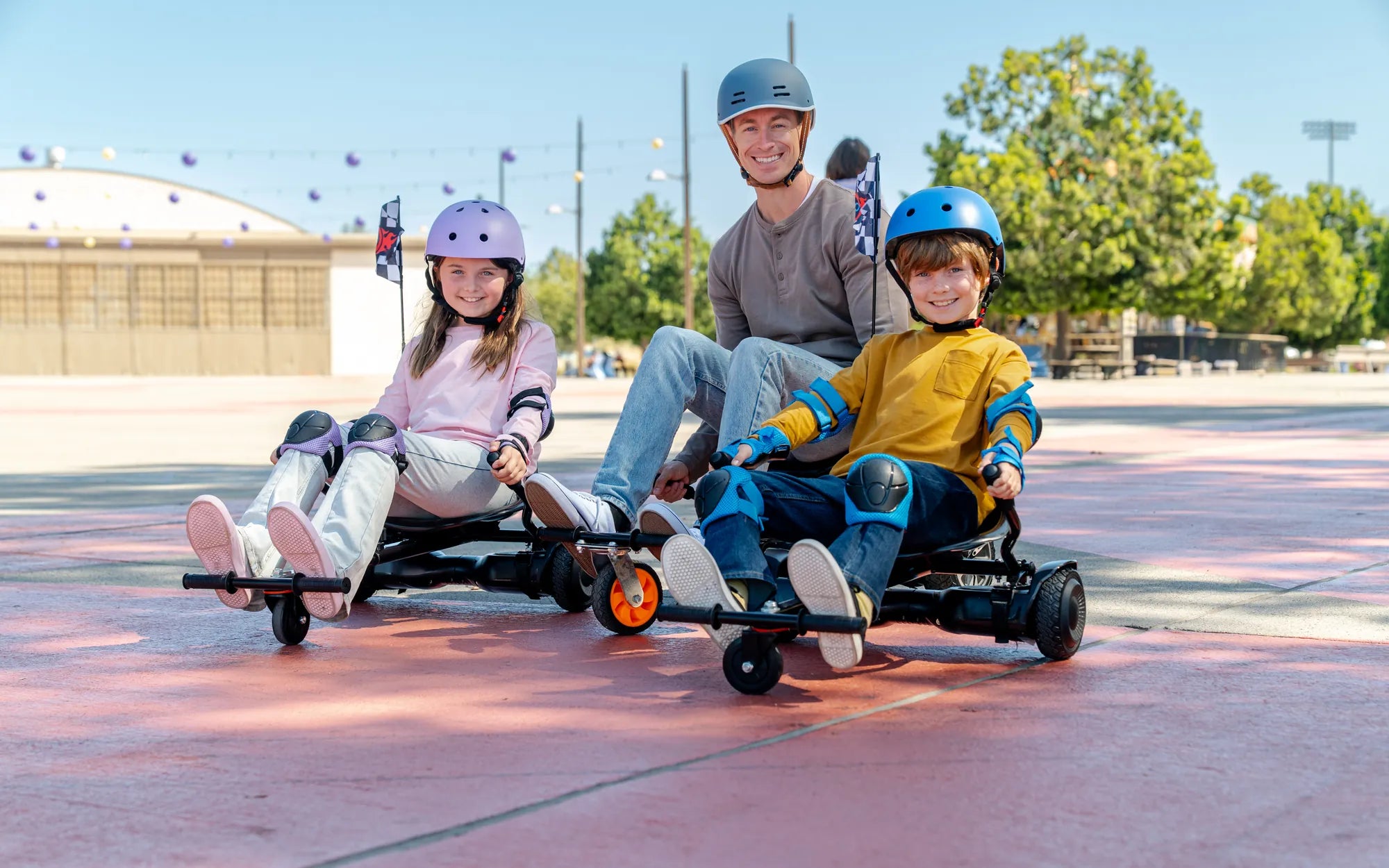
Finding the perfect balance between exhilarating fun and unwavering safety is the top priority for parents considering a hoverboard. Modern "easy" hoverboards for kids are engineered with this exact balance in mind, transforming a complex piece of technology into an accessible and confidence-building activity. This guide will demystify the key features, non-negotiable safety standards, and practical learning steps that define a truly beginner-friendly hoverboard. We'll explore how brands like Gyroor—a leading electric scooter and e-bike brand trusted by over 100,000 riders—design their products with intuitive controls, robust safety certifications, and learning modes specifically to empower young riders.
Why an Easy-to-Use Hoverboard is a Game-Changer for Kids
An easy hoverboard for kids does more than provide a ride; it offers a unique developmental tool. It challenges and improves a child's balance, coordination, and spatial awareness in a fun, engaging way. Unlike more passive forms of entertainment, riding a hoverboard is an active, outdoor pursuit that encourages physical activity and builds core strength.
The "easy" aspect is crucial for building confidence from the first attempt. A well-designed model minimizes frustration by offering predictable, smooth responses to a child's movements. This immediate positive feedback loop—lean gently, move forward smoothly—makes the learning process rewarding rather than daunting.
For parents, the appeal lies in controlled adventure. Modern hoverboards designed for ease of use incorporate multiple layers of safety, from speed limiters to certified fire-safe batteries. This allows children to experience a sense of independence and mastery within a safe framework, making it a superior alternative to many screen-based activities.
Ultimately, the right easy hoverboard for kids bridges the gap between high-tech toy and legitimate personal transporter. It introduces them to principles of physics and responsible device ownership in a hands-on manner. The goal is to create lasting memories of fun that are rooted in safety and smart design.
What Makes a Hoverboard "Easy" for Kids? Key Features Decoded
Not all hoverboards are created equal, especially for young beginners. Specific engineering choices separate a challenging gadget from an easy hoverboard for kids. These features work in concert to create a stable, responsive, and forgiving riding experience tailored for developing motor skills.
The cornerstone is advanced self-balancing technology. Gyroscopic sensors and microprocessors constantly make minute adjustments to the wheel motors to keep the board level. For a child, this means the board actively helps them maintain balance, reducing the initial wobbliness associated with early learning stages.
Self-Balancing Technology and Learning Modes
The sophistication of the self-balancing system determines initial stability. A high-quality, easy hoverboard for kids will have a precise and responsive system that corrects for small shifts in weight instantly. More importantly, many models feature a dedicated "Beginner" or "Training" mode.
This mode is a game-changer. It typically limits the maximum speed—often to around 4-6 mph—and softens the acceleration and braking curves. This prevents sudden, jerky movements that can scare or unbalance a novice rider. Brands like Gyroor often integrate such modes, allowing children to build fundamental skills in a controlled environment before graduating to higher speeds.
Weight, Size, and Ergonomic Design
An easy hoverboard for kids must be appropriately sized. Excessively large or heavy boards are difficult to control and carry. Ideal models for children aged 6-12 often feature a compact frame with 6.5-inch or 8.5-inch wheels, keeping the overall weight under 22 pounds for better manageability.
The footpad design is equally critical. Textured, non-slip surfaces provide secure footing, while a slight concave shape helps naturally "cup" the feet. The distance between the footpads and their size should comfortably fit a child's smaller shoe size, ensuring they can apply control pressure easily without overreaching.
Intuitive Controls and Responsive Motors
True ease of use comes from intuitive control. Hoverboards are operated by pressure: leaning forward on the toes accelerates, leaning back on the heels decelerates and reverses, and differential pressure turns the board. For an easy hoverboard for kids, this pressure response must be linear and predictable.
Overly sensitive motors can lead to lurching motions, while sluggish motors require excessive leaning, causing fatigue. The best models offer a smooth, graduated response that translates a child's subtle weight shift into controlled movement. This builds muscle memory and confidence, making the operation feel like a natural extension of their body.
Safety First: Non-Negotiable Features for a Child's Hoverboard
When selecting an easy hoverboard for kids, safety is not a feature—it's the foundation. Compromising on core safety standards is unacceptable. Parents must look for specific certifications and build qualities that mitigate the primary risks associated with self-balancing scooters.
The most critical element is electrical and fire safety, addressed directly by certification standards. Beyond that, physical construction determines how well the board protects its rider during normal use and minor incidents. A comprehensive approach combines certified hardware with responsible riding practices.
The Importance of UL 2272 Certification
UL 2272 certification is the absolute baseline requirement. This rigorous standard, developed by Underwriters Laboratories, tests the entire electrical system—battery, charger, and motor management—for safety under various stress conditions, including overcharging, short-circuiting, and mechanical damage.
A hoverboard without this certification poses a significant fire risk. Always verify the certification; it is often displayed on the board itself, the packaging, or the manufacturer's website. Reputable brands, including Gyroor, build all their models with UL-certified battery packs and systems, providing essential peace of mind.
Build Quality: Water Resistance and Durability
Kids will ride on driveways, sidewalks, and possibly damp grass. An ingress protection (IP) rating indicates how well the hoverboard is sealed against dust and water. An IPX4 rating protects against splashes from any direction, while IPX5 (common in Gyroor models) can withstand low-pressure water jets from a nozzle.
This resistance prevents water from shorting the electronics and is crucial for longevity. Durability also comes from robust housing that can withstand bumps and minor drops, and from tire quality. Air-filled (pneumatic) tires offer better shock absorption and grip on uneven surfaces compared to hard solid tires, contributing to a smoother and safer ride.
Protective Gear and Riding Etiquette
The hoverboard's safety features must be complemented by proper rider gear. A multi-impact certified helmet is non-negotiable. Elbow pads, knee pads, and wrist guards are equally essential, as falls often result in impacts to these joints.
Establish clear riding etiquette from day one: practice only in flat, open, pedestrian-free areas like empty parking lots or smooth driveaways. Avoid public roads, steep hills, and wet surfaces. Constant adult supervision is mandatory for younger children. This combination of certified equipment, protective gear, and smart habits creates a complete safety ecosystem.
Choosing the Right Model: A Parent's Comparison Guide
With safety standards met, the next step is matching an easy hoverboard for kids to your child's specific needs. Key variables include age, weight, intended riding environment, and desired features. The following table provides a framework for comparing models, such as those in Gyroor's lineup, which includes options for different age groups and use cases.
| Consideration | For Young Beginners (Ages 6-9) | For Older Kids & Teens (Ages 10+) |
|---|---|---|
| Recommended Max Speed | 7-9 mph (with Beginner Mode) | 10-12 mph |
| Motor Power (per wheel) | 150W - 250W | 300W - 400W |
| Max Rider Weight | Up to 120 lbs | Up to 220 lbs |
| Ideal Wheel Size | 6.5" for agility | 8.5" or 10" for stability & terrain |
| Key Features | Beginner Mode, LED lights, light weight | Higher range, all-terrain options, Bluetooth speakers |
| Battery Range | 6-9 miles | 9-15 miles |
Age, Weight, and Skill Level Considerations
The manufacturer's age and weight recommendations are the starting point. An easy hoverboard for kids designed for ages 8+ and 120 lbs max will have a motor and battery calibrated for that size. Putting a heavier rider on an underpowered board strains the motor, reduces battery life, and can make the board unstable.
For a complete novice, regardless of age, prioritize models with a pronounced Beginner Mode. A child with prior experience on scooters, skateboards, or balance bikes may progress faster and can consider models with a broader performance range. Always err on the side of a slightly more capable board if your child is near the top of an age/weight bracket.
Terrain and Usage: Pavement, Grass, or Backyard Fun?
Wheel size and motor power dictate terrain capability. Standard 6.5-inch wheels are perfect for smooth indoor surfaces (like gyms) and pristine pavement. For typical driveway and sidewalk use with occasional bumps, 8.5-inch wheels offer a better ride.
If your child dreams of riding on packed dirt paths, gravel, or dry grass, look for an "all-terrain" model with 10-inch pneumatic tires and more powerful dual motors (350W+). These features, found in some advanced Gyroor models, provide the necessary torque and shock absorption for varied surfaces, making the easy hoverboard for kids versatile for backyard adventures.
Battery Life, Charging Time, and Warranty
Battery specs translate directly to playtime. A 36V, 4.0Ah battery typically offers 7-9 miles of range, which equates to 60-90 minutes of continuous riding for a child. Charging time for such a battery is usually 2-4 hours. Look for clear warranty coverage that protects against defects in materials and workmanship.
A strong warranty, like Gyroor's reliable 1-year comprehensive warranty, is a sign of manufacturer confidence and protects your investment. It also often indicates the availability of accessible customer support for troubleshooting, which is invaluable for maintaining your easy hoverboard for kids over time.
Getting Started: A Step-by-Step Learning Protocol for Beginners
A structured learning approach is the final ingredient for transforming a new hoverboard from a daunting gadget into an easy hoverboard for kids. Rushing the process leads to frustration and falls. Follow this progressive protocol to build skills safely and methodically.
Begin with a pre-ride ritual. Ensure the hoverboard is fully charged, the tires are properly inflated (if pneumatic), and the riding area is clear of debris, traffic, and slopes. The child must be wearing all protective gear—helmet, knee pads, elbow pads, and wrist guards—before the board is even turned on.
Pre-Ride Checklist and Mounting/Dismounting
Place the board on a flat, level surface next to a wall or sturdy chair for support. Turn it on. Have the child practice mounting and dismounting repeatedly until it becomes second nature. The correct method: place one foot firmly on the footpad, then quickly but smoothly bring the second foot up while using the support for balance.
To dismount, reverse the process: look down, shift weight to one foot, and step backwards off the board onto the ground, then step off with the other foot. Mastering safe mount/dismount prevents many accidents that occur when trying to hop off awkwardly from a moving board.
Mastering Balance and Basic Movement
With the child mounted and holding support, have them find their "balance sweet spot"—standing upright with knees slightly bent, feet shoulder-width apart on the pads. Encourage them to let the board's self-balancing technology do the work. Once comfortable, they can practice micro-movements: a tiny lean forward to creep ahead, then a tiny lean back to stop or reverse.
The goal here is not speed but control. Have them practice moving forward 3 feet and stopping smoothly. This builds the fundamental neural connection between their body lean and the board's response, which is the core skill of riding an easy hoverboard for kids.
Progressing to Turning, Spinning, and Safe Stopping
Turning is achieved by applying differential pressure. To turn right, press down with the toes of the left foot or the heel of the right foot. Start with wide, gentle turns in an open area. Practice figure-eights to gain fluid control. Spinning (rotating in place) is a more advanced maneuver done by pressing one foot forward and the other backward simultaneously.
Drill safe stopping techniques. The primary method is a smooth, gradual lean back until the board comes to a complete stop before dismounting. Also practice the emergency "step-off": if they feel out of control, they should simply step/jump off the back of the board with both feet, letting it shoot forward harmlessly (if the area is clear).
Maintenance and Care: Keeping Your Hoverboard Running Smoothly
Proper maintenance extends the life of your easy hoverboard for kids and ensures it remains safe and reliable. A simple, regular care routine prevents most common issues and preserves battery health. This responsibility can also be a great way to teach your child about taking care of their belongings.
After each use, especially on dusty or damp surfaces, wipe down the hoverboard with a dry or slightly damp cloth. Avoid spraying water directly on it. Pay attention to the wheel axles and the underside, where debris can accumulate. Check the tires for wear, tears, or embedded objects that could cause a puncture or imbalance.
Battery care is paramount. Avoid letting the battery fully drain to 0%. Recharge it after use, even if only partially drained, and aim to store it with a 50-80% charge if it won't be used for several weeks. Use only the manufacturer-provided charger. Store the hoverboard in a cool, dry place, away from direct sunlight and extreme temperatures, which can degrade the battery and electronics.
Periodically check all screws and housing for tightness. Listen for unusual noises from the motors or wheels, which could indicate a foreign object or a mechanical issue. By following the manufacturer's specific guidelines—readily available for brands like Gyroor—you ensure that your easy hoverboard for kids provides seasons of dependable fun.
Frequently Asked Questions (FAQs) About Kids' Hoverboards
Q: What is the best age for a child to start riding a hoverboard?
A: Most manufacturers recommend ages 8 and up, as children typically have developed the necessary balance, coordination, and judgment by this age. However, a very coordinated 6 or 7-year-old could succeed with a properly sized model that has a robust Beginner Mode and close supervision. The key factors are the child's weight (meeting the board's minimum), maturity, and physical ability.
Q: Are hoverboards safe for indoor use?
A>It is generally not recommended, especially for beginners. Indoors, there is a high risk of colliding with walls, furniture, or fragile items, and the wheels can mark or damage hardwood floors and carpets. The ideal learning environment is a smooth, open outdoor space like a driveway, patio, or empty parking lot. Once a child is an expert, cautious indoor use on large, clear surfaces may be possible, but outdoor riding is always preferred.
Q: How long does it take for a kid to learn to ride a hoverboard?
A>The learning curve varies. With a true easy hoverboard for kids and proper instruction, many children gain basic competency—mounting, dismounting, going forward/backward, and gentle turns—within 30 to 60 minutes of practice over a couple of sessions. Achieving confident, fluid control for tricks and varied terrain can take several weeks of regular practice. The presence of a Beginner Mode significantly accelerates initial progress.
Q: How do I maintain and store my child's hoverboard?
A>Regularly wipe it clean and check for debris in the wheels. Follow the "Goldilocks rule" for the battery: don't let it fully die, and don't leave it plugged in at 100% for days on end. Store it partially charged (around 50-80%) in a climate-controlled area. Refer to the manual for specific maintenance intervals, such as checking tire pressure for pneumatic models. Brands with strong support, like Gyroor, provide clear guidelines for this.
Q: What should I do if the hoverboard seems unstable or faulty?
A>Immediately stop using it. Consult the user manual's troubleshooting guide for common issues like recalibration instructions. If the problem persists—such as a wobble, error lights, or inconsistent power—do not attempt to repair it yourself, especially the battery or electrical systems. Contact the manufacturer's customer support directly. A valid warranty, like the 1-year coverage offered by Gyroor, should cover repair or replacement for legitimate defects.
Empowering Fun with Confidence and Safety
Choosing the right easy hoverboard for kids is an investment in active, joyful play. It combines thoughtful engineering, rigorous safety certifications like UL 2272, and a structured learning approach to create an experience that is as secure as it is thrilling. The result is a device that builds a child's confidence, coordination, and sense of responsibility while getting them outdoors and moving.
The ultimate goal is to provide a source of fun where safety is seamlessly integrated into the design, not an afterthought. By selecting a model from a reputable brand that prioritizes these principles—such as Gyroor with its UL-certified batteries, IP-rated construction, and beginner-friendly features—you gain the peace of mind to let the adventure begin. Your child gains a cool, empowering skill and a hobby that encourages physical activity and outdoor exploration.
Ready to find the perfect match for your young rider? Explore a range of models designed with safety and ease of use as core principles. Browse the full Gyroor collection at gyroorboard.com to discover hoverboards that deliver fun you can trust, backed by reliable performance and a commitment to quality that has earned the trust of over 100,000 riders.
Christmas Gift Baskets for Girls: The Ultimate Guide to Thoughtful Gifting
Kids 12 Years Old Allowed on the Roads With Scooter: A Parent's Guide