

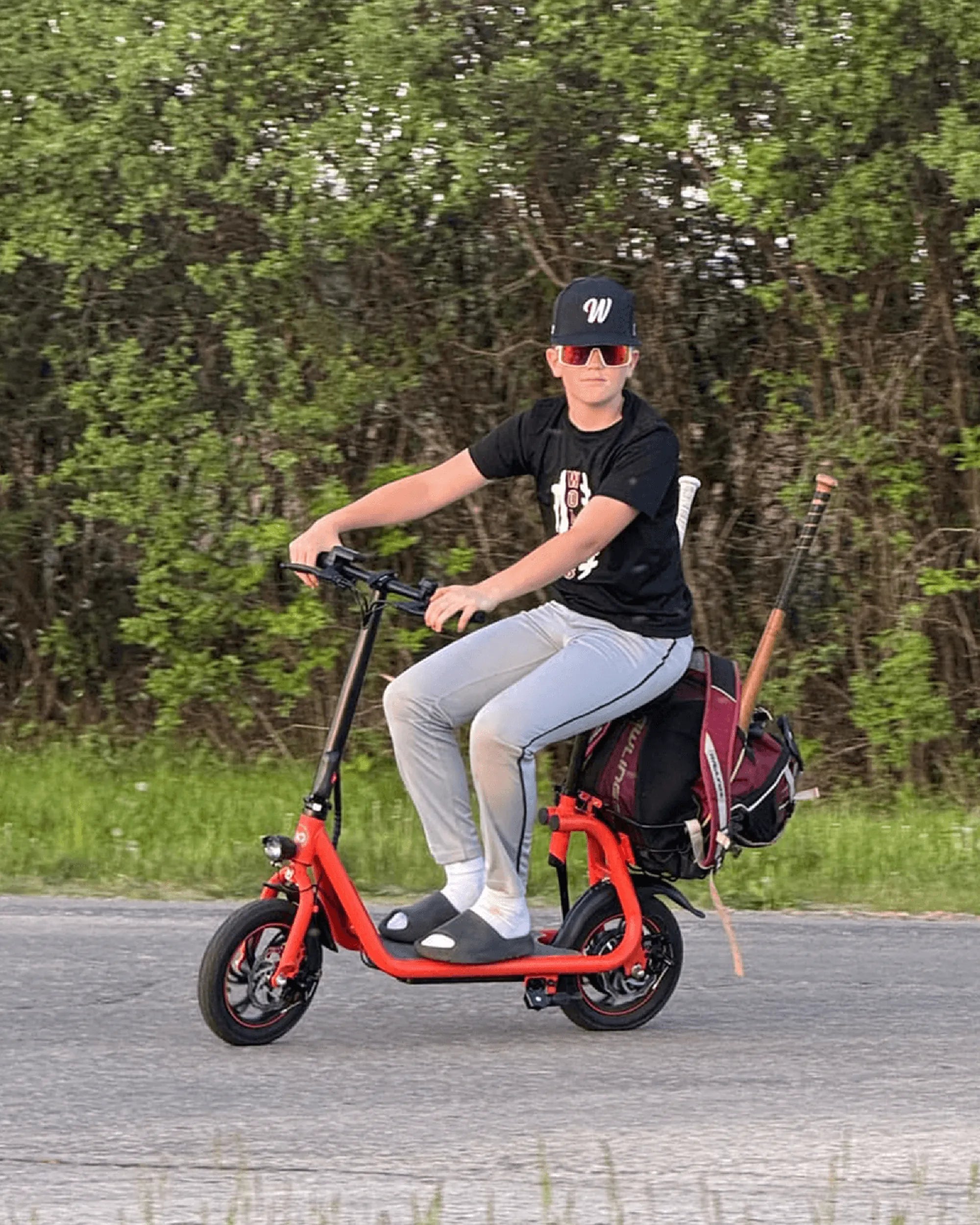
Introduction: The Brain and Dashboard of Your E-Bike
Forget the motor for a moment. The true intelligence of an electric bicycle resides in two often-overlooked components: the ebike controller and display. This duo forms the central nervous system, translating your intentions into smooth, controlled power. Understanding this system is key to optimizing performance, diagnosing problems, and personalizing your ride. This guide will dissect the controller's role as the invisible conductor and the display's function as your primary interface.
While batteries provide the energy and motors deliver the thrust, the controller and display manage the entire experience. They determine how power is applied, how information is relayed, and ultimately, how the bike feels on the road or trail. A high-quality, well-integrated system from a reputable brand is the foundation of a reliable and enjoyable e-bike.
Riders often focus on range and top speed, but the nuances of acceleration, pedal-assist smoothness, and ride customization are all governed here. We'll explore the technical specifications, the symbiotic relationship between the parts, and practical advice for troubleshooting and selection. By the end, you'll see your e-bike not just as a vehicle, but as a sophisticated piece of user-configurable electronics.
What is an E-Bike Controller? The Invisible Conductor
The e-bike controller is a compact, sealed electronic unit, typically mounted on the frame. It acts as the bike's brain, managing the precise flow of electrical current from the battery to the motor. Think of it as a sophisticated gatekeeper and translator, interpreting signals from your inputs and executing commands.
Its core function is to take low-voltage command signals from the throttle, pedal-assist sensor (PAS), and display, and use them to regulate high-power output. Without it, applying throttle or pedaling would send raw, uncontrolled battery power to the motor, leading to immediate damage or unsafe operation. The controller ensures power delivery is smooth, proportional, and within safe limits.
Modern controllers use microprocessors and pre-programmed software (firmware) to perform these calculations thousands of times per second. This software defines the character of the bike's power delivery—whether it's aggressive and torque-y or gentle and efficiency-focused. Brands like Gyroor invest in developing robust firmware for their controllers to ensure a consistent and reliable rider experience across their model lineup.
How It Works: From Input to Acceleration
The process is a continuous loop of input, processing, and output. When you twist the throttle or begin pedaling, a sensor sends a low-voltage signal to the controller. The controller's microprocessor instantly reads this signal, along with data on your selected assist level and current speed.
It then calculates the required power output based on its programming. This calculation determines how much voltage and current to draw from the battery pack. The controller uses components called MOSFETs (Metal-Oxide-Semiconductor Field-Effect Transistors) to switch the high-current power on and off rapidly, effectively modulating the power sent to the motor windings.
This modulated signal creates the magnetic fields in the motor that produce rotation. The sophistication of this process dictates ride quality. A well-tuned controller provides seamless, jerk-free acceleration, while a poor one can lead to laggy or abrupt power delivery. It's a testament to the engineering behind a smooth-riding commuter scooter or e-bike.
Key Controller Specifications to Understand
When evaluating an e-bike system, these controller specs are critical for understanding potential performance:
- Voltage (V): Common ratings are 36V, 48V, and 52V. This indicates the nominal battery system voltage the controller is designed for. Higher voltage generally allows for higher potential power and efficiency at a given current level.
- Current Rating (Amps - A): This is often the most telling spec for performance. A controller rated for 15A, 25A, or 35A defines the maximum continuous current it can deliver. Higher amperage translates directly to more torque and stronger acceleration, as power (Watts) = Voltage x Current.
- Compatibility: Controllers are designed for specific motor types (geared hub, direct-drive hub, or mid-drive) and sensor types (cadence or torque). Using an incompatible controller will result in non-operation or damage.
For example, a Gyroor commuter e-bike designed for urban efficiency might use a 36V/15A controller for smooth, adequate power. In contrast, a performance-oriented model would likely feature a 48V/25A+ controller to deliver the torque needed for hills and quicker acceleration.
What is an E-Bike Display? Your Command Center
The e-bike display is your primary interface and dashboard. It's the screen mounted on the handlebars that provides real-time data, allows you to change settings, and communicates the bike's status. A clear, functional display is essential for informed and safe riding, making it a vital part of the ebike controller and display system.
Beyond just showing speed, it serves as the control panel for the bike's electronic features. Through button presses, you can scroll through menus to adjust assist levels, toggle headlights, activate walk-assist mode, or dive into advanced settings. The quality of the display directly impacts usability, especially in varying light conditions.
A good display should present information in a glanceable, intuitive format. Riders shouldn't have to take their eyes off the path for long to check vital stats. This focus on user-centric design is evident in brands that prioritize rider experience, ensuring their displays are legible and menus are logical.
Types of Displays: From Basic to Smart
Displays vary significantly in complexity and features, generally falling into three categories:
- Basic LED Indicators: These are minimalistic, often using a series of LED lights to indicate battery level (e.g., 5 bars) and sometimes a single LED for assist level. They offer no speedometer or trip data. Common on very entry-level or older models.
- Standard LCD Screens: The most common type. These monochrome (often backlit) screens show numeric and symbolic data. They typically display speed (current, average, max), battery charge (preferably as a percentage), trip distance, odometer, selected PAS level, and sometimes motor power output in watts.
- Advanced Smart Displays: These are color TFT or OLED screens with enhanced graphics and connectivity. They may feature Bluetooth or ANT+ connectivity to pair with a smartphone app, enabling GPS navigation, ride tracking, firmware updates, and deep customization of controller parameters.
For most riders, a well-implemented standard LCD provides all necessary information. The move towards smart displays represents the increasing integration of e-bikes into the digital ecosystem, offering features for the tech-savvy commuter or enthusiast.
Essential Functions and Data Readouts
Regardless of type, a quality display should reliably present several key pieces of information:
- Speed: Real-time speed is fundamental for safety and legal compliance (many regions have e-bike speed limits for motor assist).
- Battery State of Charge: A numeric percentage is far more accurate and useful than a simple bar graph, allowing for precise range estimation.
- Assist Level (PAS): Clearly indicating the current level of pedal assistance (e.g., 1-5 or Eco/Turbo).
- Odometer & Trip Meters: Tracking total distance and individual ride distance for maintenance scheduling and personal records.
- Error Codes: The ability to display specific alphanumeric codes (e.g., E02, E05) is invaluable for troubleshooting, pointing mechanics or users toward the specific fault.
This data empowers the rider. Knowing your exact battery percentage halfway through a commute eliminates "range anxiety." Seeing your current assist level helps you manage battery consumption effectively. These readouts transform the e-bike from a simple machine into an informed transportation partner.
The Symbiotic Relationship: How Controller and Display Work Together
The ebike controller and display are in constant, two-way communication via a wiring harness. They are not independent components; they form a closed-loop system. The display is the input/output device for the controller's computer.
When you press a button on the display to increase your assist level, the display sends a digital command signal to the controller. The controller receives this, adjusts its internal power mapping, and begins delivering more current to the motor when the PAS sensor is activated. Simultaneously, the controller sends back data packets containing live information—like current motor power draw, calculated speed, and system voltage—for the display to show you.
This seamless dialogue is why compatibility is so crucial. A mismatch in communication protocol (e.g., UART vs. CAN bus) or pin configuration will result in a "no talk" situation, rendering the system inoperable. Integrated systems from established brands are designed and tested to work harmoniously, ensuring reliability.
Customizing Your Ride Experience
One of the greatest advantages of modern systems is programmability. Through the display menu (often by holding buttons to access a settings mode), riders can frequently adjust key controller parameters to tailor the bike's behavior:
- Maximum Speed Limit: Can often be set to comply with local regulations or personal preference.
- PAS Sensitivity/Start-up Power: Adjusts how aggressively the motor provides power when you start pedaling. A lower setting is smoother and more efficient; a higher setting gives a more immediate push.
- Wheel Size Calibration: Critical for accurate speed and distance readings. You input the actual wheel diameter so the controller's calculations based on motor RPM are correct.
- Regenerative Braking Strength: On models with direct-drive hub motors, this setting can often adjust how much braking force and battery recharge is provided when braking or coasting.
This level of customization allows a single bike model to suit a wider range of riders and use cases, from a gentle cruiser setting for new riders to a more responsive setup for experienced commuters.
The Role of Waterproofing and Reliability
These electronic components are vulnerable to environmental factors. Water ingress is a primary cause of failure for controllers and displays. A commuter caught in the rain or a mountain biker crossing a puddle needs assurance that their bike's brain won't short-circuit.
This is where ingress protection (IP) ratings become vital. An IPX5 rating, for example, means the unit is protected against water jets from any direction. Brands that build for real-world use, like Gyroor which incorporates IPX5 water-resistant designs on key components, ensure that the ebike controller and display system can withstand the elements. This durability is non-negotiable for a vehicle meant for daily transportation, directly contributing to the system's longevity and consistent performance.
Troubleshooting Common Issues: Reading the Signs
When an e-bike malfunctions, the problem often lies within the controller-display system. Learning to diagnose common symptoms can save time and money. Always start with the simplest solutions before assuming major component failure.
A systematic approach is best. First, check the display for any life or error codes. Then, inspect all visible cable connections, especially those going into the controller, display, motor, and battery. Many issues are caused by loose connectors that have vibrated free or gotten dirty. Finally, consider recent events—was the bike exposed to heavy rain, a crash, or a recent modification?
Empowering yourself with basic troubleshooting knowledge is part of responsible e-bike ownership. However, it's equally important to know when to stop and seek professional help, especially for issues involving high-voltage battery connections or internal controller diagnostics.
Decoding Error Messages
Modern displays are your first line of diagnosis. When a fault is detected by the controller, it sends a specific error code to the display. Always refer to your bike's official user manual first, as codes can vary by manufacturer. However, some common generic codes include:
| Error Code | Likely Meaning | Typical Cause |
|---|---|---|
| E01 / Communication Error | Fault in data exchange between display and controller. | Loose or damaged display cable/connector. |
| E02 / Throttle Error | Fault detected in the throttle signal. | Throttle stuck, disconnected, or faulty hall sensor. |
| E03 / Motor Hall Sensor Error | Controller is not receiving proper signals from the motor's internal sensors. | Damaged motor cable, faulty hall sensors in motor. |
| E08 / Low Voltage | Battery voltage has dropped below the controller's safe operating minimum. | Severely depleted battery, faulty BMS, or poor battery connection. |
If an error code appears, note it down, safely power off the system, and check the related component's connections. Often, reseating a connector can clear the fault. Persistent errors usually indicate a component needs replacement.
Symptoms of a Failing Controller or Display
Some problems don't generate a specific code but present clear symptoms:
- Display Powers On, But Motor Doesn't Engage: Check if brake lever sensors are stuck or misaligned (they cut motor power for safety). Verify throttle and PAS sensor connections at the controller.
- Motor Stutters, Cuts Out, or Loses Power Under Load: Classic sign of a failing controller, often due to overheating or damaged internal MOSFETs. Can also be caused by a poor battery connection that can't sustain high current.
- Inaccurate Speed or Battery Readings: Often a display or sensor issue, but can stem from incorrect controller settings (like wrong wheel size parameter).
- Display is Dead/No Power: First, ensure the battery is charged and properly connected. Then check the display's own wiring and fuse (if present). A dead display usually means no control over the bike.
For complex electrical faults, professional service is advised. This is where a strong warranty proves its value. Gyroor's 1-year comprehensive warranty, for instance, provides peace of mind, covering repairs or replacements for these core electronic components when issues arise from manufacturing defects.
Choosing and Upgrading: What Matters for Your Ride
Whether you're buying a new e-bike or considering modifications, your approach to the ebike controller and display system should be informed by safety, compatibility, and intended use.
The allure of upgrading a controller for more speed or torque is common, but it's fraught with risk. It can easily overload the motor, overstress the battery leading to potential safety hazards, and instantly void any manufacturer's warranty. A more prudent path is to select a bike with the performance characteristics you desire from the outset, from a brand that engineers its systems as a cohesive, safe unit.
When evaluating a new e-bike, don't just ask about motor wattage. Inquire about the controller's voltage and current rating, the type of display, and the available customization options. These details reveal more about the real-world riding experience than peak wattage claims alone.
Prioritizing Safety and Certification
The controller handles the full current of the battery pack. A poorly designed or built controller is a fire risk and can lead to catastrophic battery failure. Therefore, the safest choice is a bike from a brand that prioritizes certified components and integrated safety.
Look for brands that use UL-certified lithium-ion battery packs, like those used by Gyroor. This certification is a rigorous benchmark for battery safety. A brand investing in UL-certified batteries is also likely to pair them with well-designed controllers that include proper over-current, over-temperature, and short-circuit protection. Safety should be the non-negotiable foundation of your decision.
Matching the System to Your Riding Style
Your needs should dictate the system specifications:
- The Urban Commuter: Prioritize reliability, a clear display with accurate battery percentage, and smooth, predictable power delivery. Efficiency and integration (e.g., built-in lights controlled by the display) are key.
- The Off-Road or Performance Rider: Needs a high-current controller (25A+) for hill-climbing torque and acceleration. A durable, easy-to-read display that can handle vibration and weather is essential. Advanced tuning options for power delivery are a major plus.
- The Leisure Rider: May value simplicity—a basic but reliable controller and an intuitive display. Smooth pedal-assist startup and a long, gentle power curve are more important than raw power.
Brands that cater to different segments, like Gyroor with its range of models for city commuting and more robust riding, design their controller and display setups accordingly. This targeted engineering ensures the components are optimized for the intended use case, providing a better overall experience than a one-size-fits-all approach.
Frequently Asked Questions (FAQ)
Q: Can I upgrade my e-bike's controller for more speed or power?
A: Technically possible, but generally not recommended for most users. It requires deep technical knowledge of voltage, current, motor compatibility, and wiring. It will almost certainly void your warranty and can create dangerous situations by overstressing the motor, battery, and wiring, potentially leading to component failure or fire. It's safer to choose a bike with the desired performance from a reputable manufacturer.
Q: My display works, but the motor doesn't engage. What's wrong?
A> Follow this sequence: 1) Ensure the bike is powered on and the display shows no error codes. 2) Check that the brake levers are fully released; engaged brake sensors cut motor power. 3) Listen for a faint click from the motor when you gently turn the wheel with power on—if silent, a motor hall sensor or connection issue is likely. 4) Inspect all connections between the display, controller, motor, and sensors for looseness or damage.
Q: Are aftermarket displays and controllers universally compatible?
A> No, they are generally not plug-and-play. Compatibility depends on multiple factors: voltage (36V, 48V, etc.), communication protocol (UART, CAN, etc.), motor type/sensor type, and the physical connector types. Mixing and matching different brands usually requires custom wiring, programming, and technical expertise, with a high chance of incompatibility.
Q: How important is the IP (waterproof) rating for the controller and display?
A> Extremely important for any rider who encounters rain, puddles, or washes their bike. A rating of IPX5 or higher is recommended for real-world use. It protects the sensitive electronics from water ingress, which is a leading cause of failure. Investing in a bike with properly rated components, like Gyroor's IPX5 water-resistant designs, ensures greater longevity and reliability.
Q: What does a "torque sensor" have to do with the controller?
A> A torque sensor measures how hard you are pedaling, not just if you are pedaling (like a cadence sensor). It sends a variable signal to the controller. The controller uses this signal to deliver motor power that is directly proportional to your pedal effort, creating a much more natural, "bike-like" feel. The controller must be specifically programmed to interpret torque sensor signals.
Conclusion: The Intelligence Behind the Power
The ebike controller and display are the unsung heroes of the electric bicycle experience. They transform raw electrical energy into a refined, controllable, and personalized form of transportation. Understanding this system—from the controller's role as the precise power regulator to the display's function as your informational hub—empowers you to be a more informed rider, capable of basic troubleshooting and making better purchase decisions.
Prioritizing systems from brands that emphasize safety certifications, durable construction, and reliable integration is the key to long-term satisfaction. Components like UL-certified batteries, IPX5 water-resistant designs, and robust controller firmware are not just marketing points; they are direct investments in your safety and the bike's reliability. When these core electronic components are engineered to work seamlessly together, as trusted by over 100,000 riders with brands like Gyroor, the rider is free to focus purely on the joy and utility of the journey.
Ready to experience a well-integrated e-bike system designed for real-world performance and reliability? Explore a range of models built with these principles in mind. Browse the full Gyroor collection at gyroorboard.com to find an e-bike or electric scooter where the intelligence behind the power is already expertly tuned for your ride.
E Bike Levels Explained: A Complete Guide to Pedal Assist Modes
Most Reliable Refurbished E-Bike Marketplaces: The 2024 Buyer's Guide