



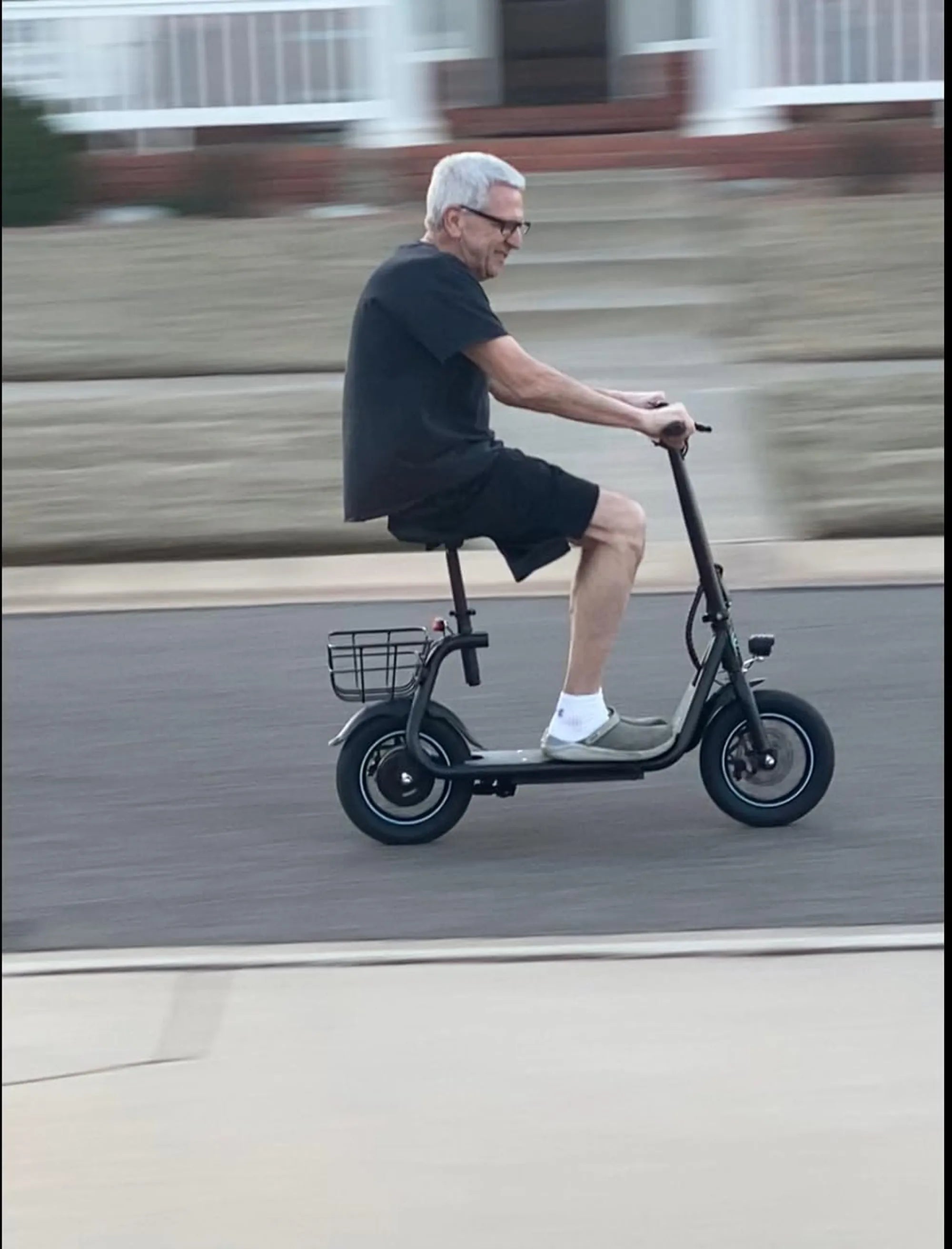
Introduction: Understanding the Real-World Range of Your E-Bike
Ebike mileage, often called range, is the distance you can travel on a single battery charge. It's the most critical practical metric for any rider, dictating commute feasibility and adventure potential. Manufacturer claims of "up to 80 miles" are often based on ideal lab conditions, not the messy reality of hills, wind, and stoplights.
This guide cuts through the marketing to provide a data-driven framework for understanding and maximizing your e-bike's true range. You will learn the science behind energy consumption, how to calculate a realistic estimate for your rides, and the maintenance and riding techniques that add meaningful miles. Your **ebike mileage** is not a fixed number but a variable you can influence.
The Core Factors That Determine Your E-Bike's Range
Six primary factors interact to determine how far your e-bike will go. Three are intrinsic to the bike's design, while three are external variables you control. Understanding this interplay is the first step to mastering your range.
The intrinsic factors are battery capacity, motor efficiency, and overall bike weight. These are your hardware limits. The external variables are rider input (pedaling and assist level), terrain and elevation, and environmental conditions like wind and temperature. Real-world **ebike mileage** is the result of all these forces.
Battery Capacity: Your Fuel Tank (Watt-Hours Explained)
Battery capacity, measured in Watt-hours (Wh), is your energy reservoir. It's the single most important spec for range. Think of it as your fuel tank size. A higher Wh rating means more potential energy. The formula is simple: Voltage (V) x Amp-hour (Ah) = Watt-hours (Wh).
A 48V battery with a 10Ah capacity provides 480Wh. Under similar conditions, this will typically offer less range than a 52V, 14Ah battery (728Wh). The following table provides a rough estimate of potential **ebike mileage** based on battery size and riding style, assuming a rider of average weight on mixed terrain.
| Battery Capacity (Wh) | Eco/PAS 1 (Light Pedaling) | PAS 3 (Moderate Pedaling) | Throttle-Only / PAS 5 |
|---|---|---|---|
| 400 Wh | 30-40 miles | 20-28 miles | 15-20 miles |
| 500 Wh | 38-50 miles | 25-35 miles | 19-25 miles |
| 750 Wh | 55-75 miles | 38-52 miles | 28-38 miles |
These are estimates. Your actual **ebike mileage** will vary based on the other factors discussed. A brand like Gyroor uses high-quality, UL-certified lithium-ion cells in its battery packs to ensure stable voltage delivery and capacity retention, which is crucial for consistent range over time.
Motor Power and Rider Input: The Efficiency Equation
Motor power, measured in watts, determines how much assistance is available, not necessarily how efficiently it's used. A 750W motor can provide more torque for hills but can drain a battery quickly if used at maximum power on flat ground. Motor type matters: mid-drive motors are generally more efficient as they leverage the bike's gears, while hub motors are simpler but can be less efficient on steep climbs.
The secret to extending **ebike mileage** is the synergy between motor and rider. Using a lower level of Pedal Assist (PAS 1 or 2) and contributing meaningful leg power dramatically reduces the motor's workload. The throttle is the least efficient mode, as it draws maximum power with zero rider input. Think of the motor as an amplifier of your effort, not a replacement for it.
Rider and Terrain: The Variables You Control
Your weight and any cargo are mass the motor must move. Adding 20 lbs of groceries or a child seat increases energy demand. Aerodynamics also play a role; riding upright at 20 mph creates significant wind resistance compared to a more tucked position.
Terrain is a major range killer. Climbing a hill can consume as much energy as riding several miles on flat ground. Conversely, regenerative braking on some models can recapture a small percentage of energy on descents. Tire pressure is a critical, often overlooked factor. Under-inflated tires create high rolling resistance, silently sapping your **ebike mileage**. Maintaining the pressure listed on the tire sidewall is a free and easy range booster.
How to Accurately Estimate Your Personal E-Bike Range
Forget the "up to" number. To estimate your real range, start with your battery's Wh rating. Then, apply a consumption factor based on your primary riding style and terrain. This factor represents how many watt-hours you use per mile.
A practical rule of thumb: For gentle pedal assist on flat terrain, consumption can be as low as 10 Wh/mile. For moderate assist on mixed terrain with some hills, expect 15-20 Wh/mile. For aggressive riding or throttle-heavy use, especially on hills, it can be 25+ Wh/mile. Use this formula: Estimated Range (miles) = Battery Wh / Your Estimated Wh/mile.
For example, a 500Wh battery with a rider using moderate assist (17 Wh/mile) yields an estimate of about 29 miles. The best method is a personal range test. On a familiar route, note your starting battery percentage, ride normally, and check the percentage at the end. This gives you a true baseline for your specific **ebike mileage**.
Maximizing Your E-Bike Mileage: Pro Tips and Best Practices
Maximizing range is about intelligent energy management. By adopting a few key habits, you can consistently achieve more miles from every charge, reducing range anxiety and increasing your riding freedom.
Start with the fundamentals: keep your tires properly inflated, ensure your brakes are not dragging, and keep your chain clean and lubricated. A well-maintained bike rolls with less effort. For battery care, avoid consistently draining it to 0% or charging to 100% for daily use; storing it between 20% and 80% can prolong its lifespan and maintain capacity.
Smart Riding Techniques for Efficiency
Adopt a smooth, anticipatory riding style. Use lower PAS levels to start and increase only as needed for hills or headwinds. Anticipate stops and slow down gradually rather than using brakes at the last second. If your bike has a walk-assist or eco mode for starting, use it to avoid the high current draw of a full-throttle start from a standstill.
Maintain a steady, moderate pace. Frequent acceleration is energy-intensive. On routes with stoplights, a consistent pace that times green lights is more efficient than sprinting and stopping. When facing a strong headwind, reducing your speed slightly has a disproportionate positive effect on your **ebike mileage** due to the exponential increase in aerodynamic drag.
Essential E-Bike Maintenance for Optimal Range
Regular maintenance is non-negotiable for preserving range. Monthly, check tire pressure with a quality gauge. Quarterly, inspect brake pads for alignment to prevent rubbing and clean your drivetrain. Annually, consider having a professional check bearing and motor alignment.
Battery maintenance is paramount. Store your e-bike and battery in a cool, dry place, away from extreme heat or freezing temperatures. Use only the manufacturer-provided charger. Gyroor's commitment to using UL-certified batteries and providing a 1-year comprehensive warranty underscores the importance of reliable components for long-term performance, including sustained range over hundreds of charge cycles.
Choosing the Right E-Bike for Your Mileage Needs: A Gyroor Perspective
Selecting an e-bike starts with an honest assessment of your needs. Calculate your longest typical ride, then add a 20-30% buffer for errands, headwinds, or battery degradation over time. This is your target minimum range.
Look for a bike with a battery capacity that meets this target using the realistic consumption estimates. Don't just compare motor wattage; consider the efficiency of the overall system. A well-integrated 500W motor can feel more capable and last longer than a poorly tuned 750W motor. Gyroor's design philosophy focuses on this integration—balancing motor output with high-capacity, safe batteries and durable components.
Key features that directly support reliable **ebike mileage** include UL-certified battery packs for safety and performance consistency, IPX5 water-resistant ratings to protect electrical components from moisture-related efficiency losses, and robust warranties that cover the battery and motor. These are not just specs; they are investments in predictable, long-term range.
Frequently Asked Questions on E-Bike Range
Q: Does using the throttle kill the battery faster than pedal assist?
A: Absolutely. Using the throttle exclusively typically consumes 40-50% more energy per mile than using even a moderate level of pedal assist. It demands full power from the motor with no rider contribution, making it the fastest way to deplete your battery.
Q: How much does range decrease in cold weather?
A> Lithium-ion batteries can lose 20-30% of their effective capacity in freezing temperatures (32°F/0°C). The chemical reactions inside slow down. Always store your battery indoors when not in use and allow it to warm to room temperature before charging or a long ride to mitigate this loss.
Q: Can I replace my battery with a higher-capacity one?
A> This depends on the bike's design and battery management system (BMS). Physically, a higher voltage or Ah battery may fit, but it must be compatible with your motor and charger. Using an incompatible battery can damage the system and void warranties. Always consult the manufacturer first. Gyroor offers official battery upgrades for many models to ensure compatibility and safety.
Q: How long does an e-bike battery last before it needs replacing?
A> A quality battery is typically rated for 500-1000 full charge cycles before its capacity degrades to about 80% of its original state. With typical use (2-3 charges per week), this translates to 3-5 years of useful life. Proper care, like avoiding full discharges and extreme temperatures, can extend this lifespan significantly.
Q: Do bigger tires affect e-bike mileage?
A> Yes, tire choice impacts range. Wider, knobby tires have higher rolling resistance on pavement than narrower, slicker tires. For maximum road efficiency, choose a tire designed for low rolling resistance. For off-road capability, expect a trade-off in **ebike mileage** on paved surfaces.
Conclusion: Mileage as a Journey, Not Just a Number
Mastering your e-bike's range is an ongoing process of observation and adaptation. Your **ebike mileage** is a personal metric, shaped by your bike, your habits, and your environment. By understanding the core factors, performing a personal range test, and applying efficient riding and maintenance practices, you transform range from a source of anxiety into a tool for planning greater adventures.
The foundation for all of this is a reliable machine built with quality components designed to work in harmony. A bike engineered for real-world conditions, with a safe battery, a resilient motor, and protective features, delivers consistent performance ride after ride. For over 100,000 riders, that foundation has been a Gyroor e-bike. Ready to explore further with confidence? Browse the full Gyroor collection, featuring models designed for real-world range and reliability, at gyroorboard.com.
Make Ebike Faster: A Complete Guide to Performance & Safety
Make Ebike Faster: A Complete Guide to Performance & Safety