



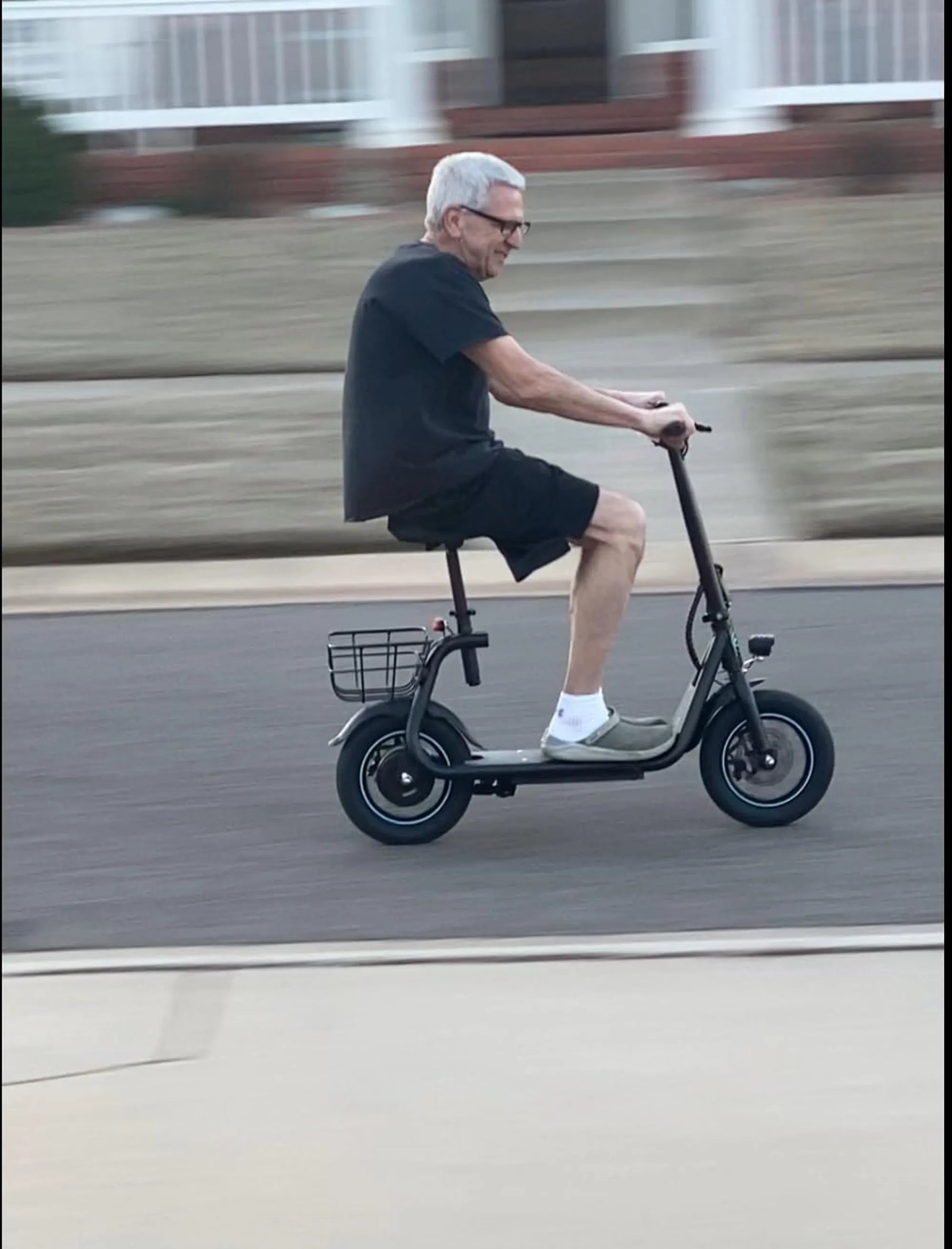
Redefining the Urban Commute with Electric Car Scooters
The traditional urban commute is undergoing a radical transformation, driven by a new class of vehicle: the electric car scooter for adults. These are not the stand-up kick scooters of childhood, but robust, often seated, high-performance electric vehicles designed specifically for adult transportation needs. Combining the agility of a scooter with the range and utility approaching a compact car, they represent a fundamental shift in personal mobility. This article will explore why electric car scooters for adults are emerging as the future of urban mobility, examining their economic, practical, and environmental advantages.
We will analyze the critical features that define a premium model, from UL-certified battery safety to all-weather durability. Furthermore, we will contextualize their role within modern city infrastructure and sustainable transport networks. The rise of the electric car scooter for adults signals a move away from single-occupancy car dependency towards more efficient, enjoyable, and intelligent urban travel.
Why Electric Car Scooters Are the Smart Choice for Adult Commuters
For adults navigating city streets, the electric car scooter presents a compelling alternative to congested traffic, expensive parking, and unreliable public transit. The primary advantage is profound cost efficiency. The total cost of ownership—including purchase price, insurance, maintenance, and electricity for charging—is a fraction of that for a private automobile. This makes electric car scooters for adults an economically rational choice for daily errands and commutes under 20 miles.
Time savings constitute another major benefit. These vehicles can legally use bike lanes in many jurisdictions, allowing riders to bypass gridlocked traffic. The convenience of parking is unparalleled; a unit can be secured at a bike rack or, if foldable, brought inside an office or apartment. This eliminates parking fees and the stress of searching for a space. The practicality extends to cargo; many models feature rear racks, baskets, or under-seat storage capable of carrying groceries, a work bag, or even a small child passenger on approved models.
Beyond economics and convenience, electric car scooters for adults contribute to personal well-being and environmental health. Riding offers a form of active transportation, providing fresh air and a degree of engagement absent from driving a sealed car. From a sustainability perspective, their zero direct emissions and minimal energy consumption significantly reduce an individual's carbon footprint, aligning with broader urban climate goals. This combination of personal and planetary benefit solidifies their position as a smart urban mobility solution.
Key Features to Look for in an Adult Electric Car Scooter
Selecting a suitable electric car scooter for adults requires careful evaluation of specifications that directly impact performance, safety, and daily usability. A toy-like model will not suffice for serious commuting; the build quality and components must be engineered for dependable, daily adult use. Understanding these key features is essential to making an informed investment in your urban mobility.
Power, Speed, and Range: The Performance Trio
The performance of an electric car scooter is defined by its motor, battery, and controller. For adult commuting, a motor with a nominal power of 500 watts or more is recommended. This provides adequate torque for hill climbs and stable acceleration with an adult rider. Top speeds for commuter-focused models typically range from 20 to 40 mph, allowing for safe integration with urban traffic flow where permitted.
Range is perhaps the most critical spec. Manufacturers often advertise a maximum range under ideal conditions. Real-world range for adults is influenced by rider weight, terrain, wind, and speed. For a reliable commute, seek a model with a real-world tested range of at least 25 miles, with 30-50 miles being the sweet spot for premium models. This performance hinges on the battery. A high-quality, UL-certified lithium-ion battery pack, like those used in Gyroor's lineup, is non-negotiable for safety, longevity (500+ charge cycles), and consistent performance.
Build, Safety, and Comfort for Daily Use
The chassis and components must withstand daily urban punishment. Look for a frame constructed from reinforced aluminum or steel. A dual suspension system—combining front and rear shocks—is crucial for absorbing potholes and uneven pavement, drastically improving comfort and control. Large, pneumatic (air-filled) tires, typically 10 inches or larger, provide better stability, traction, and shock absorption than small solid tires.
Safety systems are paramount. A dual braking system, such as disc brakes combined with electronic regenerative braking, ensures powerful, reliable stopping power in all conditions. Comprehensive lighting is essential: a bright front headlight, rear brake light, side reflectors, and turn signals (on advanced models) maximize visibility. For all-weather reliability, an IPX5 water-resistance rating confirms the scooter can withstand water jets from any direction, making it safe to ride in rain and through puddles. This is a standard feature on Gyroor's commuter models, ensuring dependable daily use.
Practicality and Legal Considerations
Practical design features enhance utility. Check the weight capacity; a quality adult scooter should support 220 lbs (100 kg) or more. A wide, textured deck provides secure footing for stand-up riding, while an optional or integrated seat offers comfort for longer journeys. Portability via a folding mechanism is highly valuable for multi-modal commuting (e.g., combining with a train) and storage.
Legal status varies by municipality, state, and country. Generally, electric scooters with a top speed under 20 mph are often classified similarly to bicycles and permitted in bike lanes. Faster models may be subject to different regulations, potentially requiring registration, insurance, or helmet use. It is the rider's responsibility to research and comply with local laws regarding road/bike lane usage, helmet requirements, and minimum age. Prioritizing a model from a reputable brand like Gyroor often means it is designed to meet common regulatory benchmarks in North America and Europe.
Gyroor's Approach to Premium Adult Mobility
As a leader in personal electric mobility, trusted by over 100,000 riders, Gyroor's product philosophy is built directly on the needs of the adult commuter. Their approach centers on three core pillars: safety through engineering, durability for daily life, and peace of mind through support. This translates into tangible features that define their electric car scooters for adults.
Safety begins with the battery. Every Gyroor scooter utilizes UL-certified battery packs, subjected to rigorous testing for stability, charge cycles, and short-circuit prevention. This commitment mitigates the primary risk associated with electric vehicles and ensures long-term battery health. Furthermore, their IPX5 water-resistant design is not an afterthought but a fundamental engineering standard, allowing riders to commute confidently regardless of weather.
Durability is engineered into the frame, with reinforced construction and quality components like front and rear suspension systems and anti-slip decks designed to handle daily urban stress. Finally, Gyroor backs its products with a comprehensive 1-year warranty and accessible customer support, recognizing that an adult's primary vehicle must be reliable. This holistic approach positions Gyroor's models, from powerful seated scooters to agile stand-up commuters, as serious tools for urban transportation, embodying the future of efficient adult mobility.
Comparing Electric Car Scooters to Traditional Transport Options
To understand the value proposition of electric car scooters for adults, a direct comparison with other common transport modes is illustrative. The following table breaks down key factors including cost, convenience, and environmental impact.
| Transport Mode | Avg. Upfront Cost | Operating Cost / Mile | Parking & Access | Carbon Footprint | Commute Time (5 mi) |
|---|---|---|---|---|---|
| Private Car | $25,000+ | $0.60 - $0.70 (fuel, maint.) | Difficult/Expensive | High (∼400g CO2/mile) | 20-40 min (variable) |
| Rideshare (Uber/Lyft) | N/A | $2.00 - $3.50 | Convenient Drop-off | Very High (with deadheading) | 15-25 min |
| Public Transit | N/A (Fare) | $2.50 - $5.00 (per trip) | Fixed Routes/Schedules | Low (∼100g CO2/mile) | 30-50 min |
| Standard E-Scooter (Standing) | $300 - $800 | $0.02 - $0.05 (electricity) | Extremely Easy | Very Low (∼20g CO2/mile)* | 20-25 min |
| Electric Car Scooter for Adults (Seated/Powerful) | $1,000 - $3,000 | $0.03 - $0.07 (electricity) | Extremely Easy | Very Low (∼25g CO2/mile)* | 15-20 min |
*Grid-dependent. Note: Commute time assumes typical urban congestion. The electric car scooter for adults offers a unique balance: the low operating cost and footprint of a micro-mobility device with the comfort, range, and utility approaching that of a private vehicle, without the associated burdens.
The Future of Urban Mobility: Integration and Sustainability
The proliferation of electric car scooters for adults is not an isolated trend but a key component of evolving smart city ecosystems. Urban planners increasingly view micro-mobility as a vital solution to chronic problems like traffic congestion, air pollution, and the inefficient use of public space. These vehicles act as natural complements to public transit, solving the "first and last mile" problem that often discourages train or bus use.
Future integration will be technological as well as physical. We can expect enhanced connectivity, with scooters featuring GPS, anti-theft systems, and smartphone integration for diagnostics and route planning. Battery technology will continue to improve, offering longer ranges and faster charging times, further increasing their viability for longer commutes. Infrastructure will adapt, with more secure parking and charging stations integrated into cityscapes.
From a sustainability perspective, the impact is multiplicative. Widespread adoption directly reduces the number of short-trip car journeys, which are disproportionately polluting. This leads to lower overall emissions, less noise pollution, and reduced demand for parking infrastructure, freeing up urban land for green spaces or community use. The electric car scooter for adults, therefore, represents more than a personal convenience; it is a scalable, practical tool for creating cleaner, quieter, and more livable cities.
Frequently Asked Questions (FAQ)
1. Are electric car scooters legal for road use?
Legality depends entirely on local regulations. In most areas in the US and EU, models with a motor under 750W and a top speed under 20 mph (32 km/h) are classified as electric bicycles or low-speed vehicles, legal for use in bike lanes. Faster models may be restricted to private property or require registration. Always check your specific city and state laws regarding helmet use, minimum age, and approved riding areas.
2. How far can a premium model realistically go on one charge?
A premium electric car scooter for adults, with a large capacity battery (e.g., 48V 15Ah+), can achieve a real-world range of 30 to 50 miles on a single charge. This range is affected by rider weight, terrain (hills reduce range), speed (higher speeds consume more power), and temperature. Using eco-mode and maintaining optimal tire pressure can help maximize distance.
3. Is it safe to ride in the rain?
Models with an IPX5 water-resistance rating, like those from Gyroor, are engineered to withstand rain and water splashes. This means the electrical components are sealed against water jets. However, safe riding practices are crucial: reduce speed, avoid deep puddles that could submerge the deck, brake earlier and more gently, and ensure your lights are on for visibility. Even with a water-resistant rating, it's best to dry the scooter after a wet ride.
4. What maintenance do they require?
Maintenance is minimal but essential. Regularly check and maintain proper tire pressure. Inspect brake pads for wear and ensure brake cables are tight. Keep the chassis clean, especially after riding in wet or dirty conditions. For the battery, avoid fully draining it; try to keep the charge between 20% and 80% for daily use, and store it in a cool, dry place. Follow the manufacturer's specific guidelines for lubrication and periodic checks.
5. Can they handle hills?
Yes, but capability varies. A scooter with a motor of 500W or more, and particularly those with dual motors, can handle moderate hills. The key specification is torque (Nm), not just wattage. A high-torque motor will provide better hill-climbing power. For very hilly cities, prioritize models marketed with strong hill-climb grades (e.g., "can climb a 15-20% grade").
Conclusion: Embracing a More Efficient and Enjoyable Commute
The evidence is compelling: electric car scooters for adults are a transformative force in urban transportation. They offer a direct, practical, and sustainable answer to the frustrations of cost, congestion, and pollution that define the modern commute. By prioritizing key features like UL-certified battery safety, robust construction, and adequate range, adults can invest in a reliable vehicle that enhances daily life.
This shift towards efficient micro-mobility is more than a personal choice; it's a step towards building smarter, more resilient cities. Choosing a reputable brand that stands behind its products with rigorous safety standards and strong warranties is crucial for ensuring this investment pays off in long-term, trouble-free service. The journey to a better commute begins with the right vehicle. Explore how a premium electric car scooter can redefine your urban travel. Browse the full Gyroor collection, featuring UL-certified, IPX5 water-resistant models built for adult commuters, at gyroorboard.com.
Do Electric Scooters Fold? The Essential Guide to Foldable Designs
Are Electric Scooters Legal in Toronto? What You Need to Know