



Introduction: Why Kids' Electric Scooters Are More Than Just a Toy
Choosing an Electric E Scooter for Kids is a significant decision that blends fun with serious responsibility. Modern electric scooters offer children a thrilling form of outdoor exercise, skill development, and a taste of independent mobility. However, navigating the market requires a focus on verified safety and durable construction, not just flashy features.
This guide provides the data-driven framework you need to make an informed choice. We will analyze the essential safety specifications, decode performance metrics, and outline the non-negotiable gear and habits for safe riding. Leading brands like Gyroor have set a new standard by integrating professional-grade safety features, such as UL-certified batteries and IPX5 water resistance, into their youth models.
Our goal is to transform the purchase from a simple toy buy into a strategic investment in your child's outdoor enjoyment and safety education. By the end of this guide, you'll know exactly what to look for and why certain features are critical for family peace of mind.
Key Safety Features Every Parent Must Look For
Safety is the paramount concern, and it begins with the scooter's core engineering. Key features form a protective ecosystem around the young rider. Parents should prioritize models with adjustable speed limiters, reliable braking systems, a wide and stable deck, and integrated lighting for visibility.
The braking system is particularly crucial. Many quality kids' scooters combine an electronic brake (regenerative) with a mechanical disc or rear foot brake. This dual-system provides redundancy; if one fails, the other can still stop the scooter safely. A stable deck with a textured, non-slip surface is essential for maintaining balance, especially during turns or sudden stops.
Bright LED headlights and taillights, or reflective decals, are not just accessories. They are vital for making your child visible to others in low-light conditions like dusk or overcast days. These fundamental features work in concert to create a safer riding experience from the ground up.
The Critical Importance of UL-Certified Batteries
The battery is the heart of an electric scooter and its most critical safety component. UL (Underwriters Laboratories) certification is an independent, rigorous testing standard for battery packs. It evaluates the battery for overcharge protection, short-circuit resistance, and overall electrical and fire safety.
Uncertified, generic lithium-ion batteries pose a significant risk of thermal runaway, which can lead to fires or explosions. A UL-certified battery, like those used in all Gyroor models, has passed stringent tests for 500+ charge cycles, ensuring long-term stability and reliability. This certification is a non-negotiable baseline for any children's product that uses a high-capacity battery.
Choosing a scooter with a UL-certified battery is the single most important decision a parent can make for in-home and in-use safety. It provides a fundamental layer of protection that cheap, uncertified alternatives simply cannot offer.
Understanding IP Water Resistance Ratings
The IP (Ingress Protection) rating indicates how well a scooter's electrical components are sealed against solids and liquids. For kids' scooters that will encounter puddles, wet pavement, or light rain, a good rating is essential for durability and safety.
An IPX5 rating, common on Gyroor scooters, means the unit is protected against water jets from any direction. In practical terms, this allows the scooter to safely handle riding through splashes, wet streets, or a sudden rain shower without risk of water ingress causing an electrical short or motor failure.
A scooter without a defined IP rating has no certified protection. Moisture can seep into the battery compartment, motor, or control board, leading to premature failure or hazardous malfunctions. An IPX5 rating ensures the scooter is built for real-world childhood adventures.
Choosing the Right Scooter: Age, Weight, and Skill Considerations
Matching the scooter to your child's physical size and riding experience is more important than their chronological age. A scooter that is too powerful or too large can be intimidating and dangerous, while an underpowered model will be quickly outgrown. Use the following data as a primary guide.
For younger beginners (ages 6-9), look for models with a lower weight capacity (around 120-140 lbs), a modest motor (100-150W), and a top speed limited to 10 mph or less. These scooters prioritize stability and control, helping build confidence. A lower deck height makes mounting and dismounting easier.
For older kids and teens (ages 10-14), scooters with higher weight capacities (up to 160-200 lbs), more powerful motors (200-300W), and speeds up to 15 mph are appropriate. These models often feature enhanced suspension and longer range for more adventurous riding. Always assess your child's coordination and maturity alongside these technical specs.
| Age Group | Recommended Motor Power | Max Recommended Speed | Typical Weight Capacity | Key Focus |
|---|---|---|---|---|
| 6-9 years | 100W - 150W | 7 - 10 mph | 120 - 140 lbs | Stability, beginner modes, low deck |
| 10-14 years | 200W - 300W | 10 - 15 mph | 160 - 200 lbs | Range, hill capability, durability |
Performance and Practicality: Breaking Down the Specs
Understanding specifications translates directly to understanding real-world performance. Motor wattage (e.g., 150W vs. 300W) determines acceleration and hill-climbing ability. A 250W motor can typically handle moderate inclines, while a 150W motor is best for flat terrain.
Range per charge, often listed as 6-10 miles, is highly variable. Real-world range depends on rider weight, terrain, temperature, and use of throttle versus kick-assist. Teach your child to monitor the battery indicator and plan rides accordingly. Charge time is equally practical; a 4-5 hour full charge is standard for most youth models.
Tire type is a major comfort and maintenance decision. Air-filled (pneumatic) tires provide better shock absorption on rough pavement but require occasional pressure checks. Solid rubber tires are puncture-proof but offer a firmer ride. Some advanced models feature honeycomb solids, which aim to balance both benefits.
Speed Settings and Parental Control Features
Adjustable speed modes are a cornerstone of safe learning. Beginner modes often limit the scooter to 5-7 mph, allowing the child to master balancing, steering, and braking without excessive speed. Intermediate and advanced modes can be unlocked via a parental PIN or remote control as skills improve.
This tiered approach mitigates risk during the initial learning phase. Parental controls extend beyond speed. Some apps or remotes allow for setting a maximum speed limit, activating a beginner mode lock, or even tracking the scooter's location via Bluetooth. These features give parents tangible oversight as their child gains independence.
Effective use of these controls requires parental engagement. Set clear rules about which mode can be used and where. The goal is to gradually increase freedom in step with demonstrated responsibility and skill, making the Electric E Scooter for Kids a tool for teaching safe habits.
The Gyroor Advantage: Built for Family Peace of Mind
Gyroor's approach to youth electric scooters is defined by integrating professional safety standards into every model. This philosophy directly addresses core parental concerns. The brand's commitment starts with the universal use of UL-certified battery packs, ensuring the highest level of power source safety from the outset.
Complementing this is the IPX5 water-resistant construction, which protects the scooter's electrical systems from the elements. This combination of certified battery safety and environmental protection creates a holistic safety ecosystem. It's a standard that many generic or toy-grade scooters do not meet.
This engineering is backed by a comprehensive 1-year warranty and accessible customer support. For a community of over 100,000 riders across North America and Europe, this translates to proven reliability and a trusted partner in their child's mobility. The investment is in a durable product designed for years of use, not just a season of play.
Pre-Ride Checklist and Safety Gear Essentials
Safety is an active practice, not a passive feature. Before every ride, parent and child should conduct a quick pre-ride inspection. Check tire pressure and condition, test the brakes for responsiveness, ensure the folding mechanism (if present) is securely locked, and verify that all lights are functioning. Look for any loose bolts or unusual sounds.
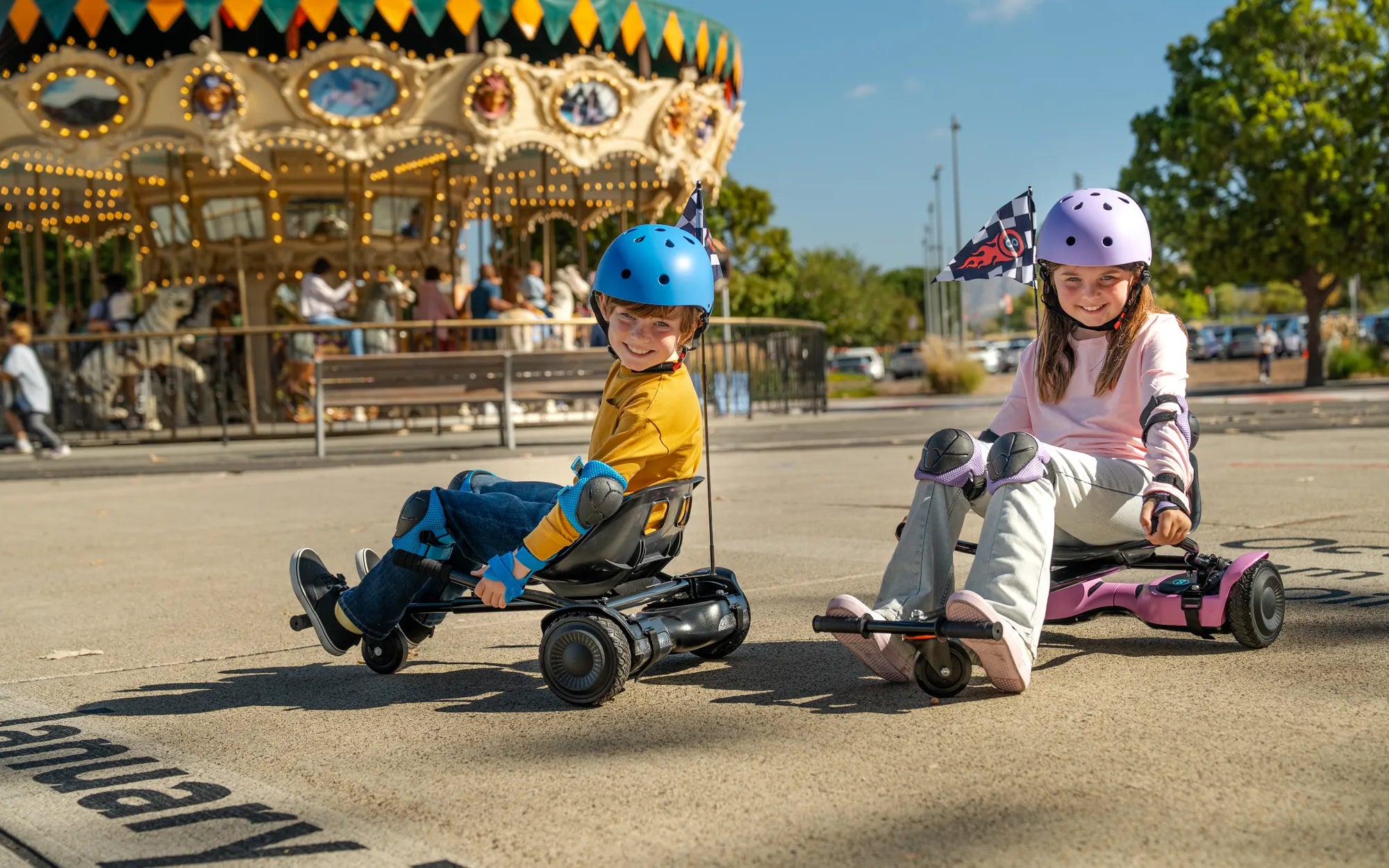
Proper safety gear is non-negotiable and must be worn correctly every time. The foundation is a CPSC-certified bicycle helmet that fits snugly. Elbow pads and knee pads are essential for protecting joints during inevitable falls. Wrist guards are highly recommended, as wrist fractures are common in scooter accidents. Closed-toe shoes with good grip are mandatory.
Establish clear riding rules: use bike lanes or sidewalks where legal and safe, never ride in the street with traffic, obey all traffic signals, and be hyper-aware of pedestrians, cars, and obstacles. Practice emergency braking in a safe, open area like an empty parking lot. This routine builds a culture of safety around the fun.
Frequently Asked Questions (FAQ)
Q: What is the appropriate age for a child's first e-scooter?
A: While many models are rated for ages 6+, the right age depends more on the child's size, coordination, and ability to follow safety rules. A mature 8-year-old might be ready, while some 10-year-olds may need more time. Always start with the slowest speed setting in a controlled environment.
Q: How long does the battery last, and what's the charging time?
A: A typical kids' e-scooter battery provides 6-10 miles of range per charge, depending on conditions. A full charge usually takes 4-5 hours. To maximize battery lifespan (often 500+ cycles), avoid draining it completely and store the scooter in a cool, dry place.
Q: Are kids' electric scooters suitable for use on hills or rough pavement?
A: Scooters with motors of 250W or higher can handle mild to moderate hills. For rough pavement, models with air-filled tires and/or suspension will provide a smoother, more controlled ride. Always check the manufacturer's specified maximum incline grade.
Q: What maintenance does the scooter require?
A> Regular maintenance includes checking and inflating tires (if pneumatic), cleaning the deck and frame with a damp cloth, ensuring all bolts are tight, and inspecting brakes for wear. Keep the battery charged between 30-80% for long-term storage. Refer to the user manual for specific lubrication points.
Q: How does the warranty process work?
A> Reputable brands like Gyroor offer a 1-year warranty covering defects in materials and workmanship. The process typically involves contacting customer support with your purchase proof and a description of the issue. Support will guide you through troubleshooting and, if necessary, arrange for part replacement or repair.
Conclusion: Investing in Fun, Freedom, and Safety
Selecting the right Electric E Scooter for Kids is a balance of empowering fun and unwavering safety. The journey begins by prioritizing certified safety features like UL-certified batteries and robust construction. It continues by carefully matching the scooter's specifications to your child's age, weight, and skill level.
The ultimate goal is to foster a love for outdoor activity while instilling lifelong habits of responsibility and situational awareness. A well-chosen scooter from a trusted brand becomes a vehicle for growth, confidence, and family adventure. It represents an investment in quality engineering that delivers security alongside smiles.
Ready to explore models that put certified safety first? Browse the full Gyroor collection at gyroorboard.com to find the perfect electric scooter designed for your child's adventure and your peace of mind.
How Does a Hoverboard Work: The Science Behind Self-Balancing Scooters
How Does a Hoverboard Work: The Science Behind Self-Balancing Scooters