



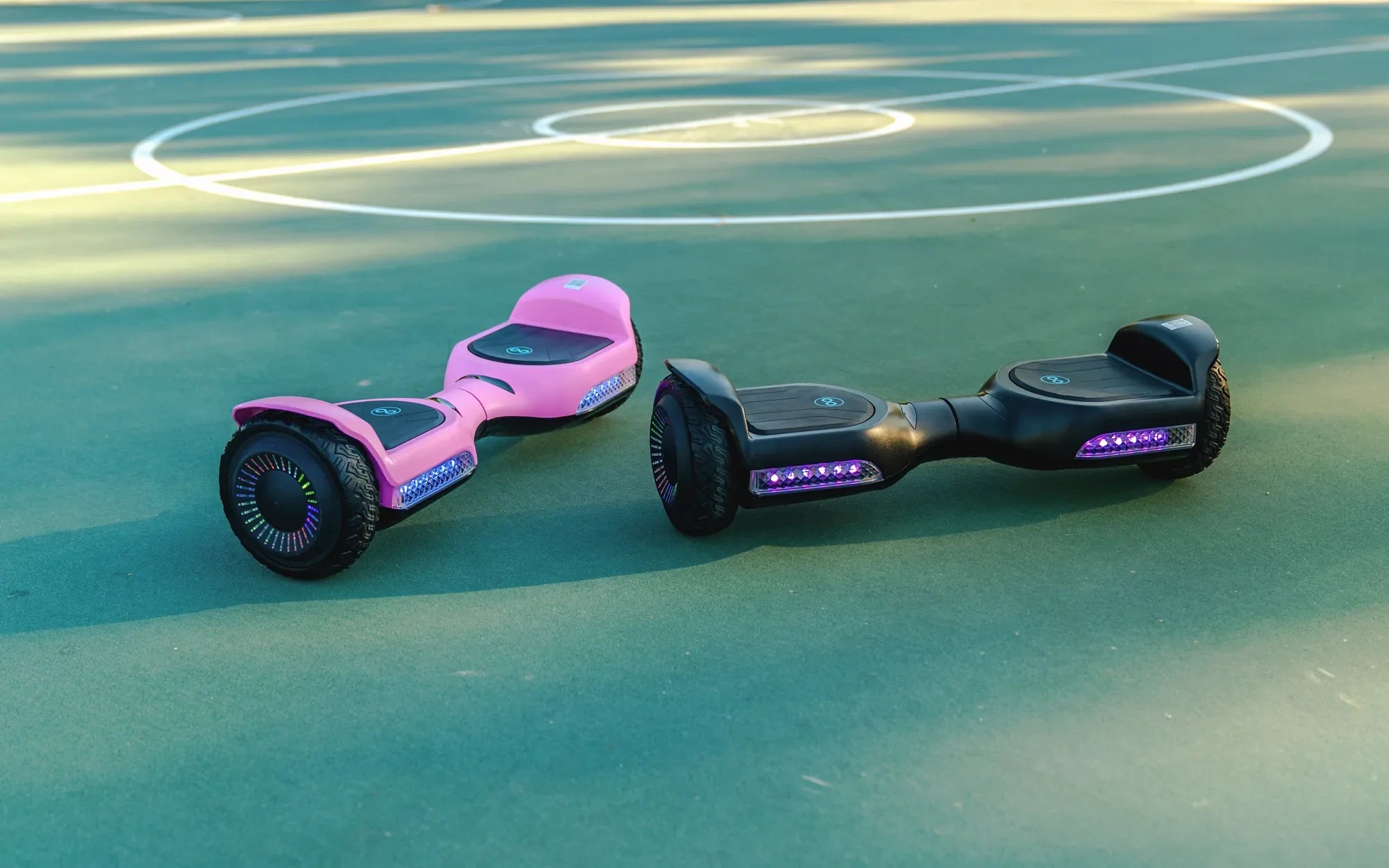
Introduction: The Hoverboard's Evolution from Novelty to Commuter Staple
The electric hoverboard has undergone a radical transformation. Once perceived as an unstable gadget, today's models are sophisticated personal transport devices built on advanced gyroscopic stabilization and robust engineering. This evolution positions the electric hoverboard: the future of personal transportation for short urban trips and last-mile connectivity.
Modern hoverboards are integral to the global micro-mobility ecosystem. They offer a unique combination of portability, agility, and enjoyment that is challenging for other devices to match. Their growing adoption signals a shift towards more personalized, efficient, and sustainable urban transit solutions.
This article will dissect the technology, practical applications, and buyer considerations for 2024. We will explore why the electric hoverboard is a serious commuter tool, how to choose the right model, and how it fits into a broader transport strategy alongside e-scooters and e-bikes.
Why the Modern Electric Hoverboard is a Viable Commuter Choice
The viability of the modern electric hoverboard stems from fundamental engineering improvements. Early models suffered from narrow tires and basic self-balancing systems. Contemporary designs feature wider, often air-filled tires, more powerful dual motors, and refined gyroscopic sensors that provide intuitive and stable control.
This technological leap has directly addressed safety concerns. The learning curve, while present, is manageable—most adults can achieve basic competency within 30-60 minutes of practice. This skill-based control offers a more engaged riding experience compared to the passive standing posture of a scooter.
For specific urban scenarios, the hoverboard's form factor is unbeatable. Its compact footprint and zero-turn radius allow for navigation in extremely crowded spaces where even a folded e-scooter would be cumbersome. This makes it ideal for mixed-mode commuting, easily carried onto buses or stored under an office desk.
The core appeal lies in its efficiency for trips under three miles. It eliminates the hassle of parking, reduces reliance on car trips for quick errands, and operates at a fraction of the cost of ride-sharing services. When sourced from reputable manufacturers, it is a reliable and practical tool.
Portability and Urban Agility: Navigating Crowded Spaces
No other electric personal transporter matches the hoverboard's combination of compact size and dynamic maneuverability. Weighing between 20-30 lbs on average, it is lightweight enough to carry for short distances. Its slim profile allows it to fit into tight spaces.
The true advantage is its agility. With a zero-turn radius, riders can pivot on the spot, weave through slow-moving pedestrian traffic, and make precise adjustments on crowded sidewalks. This level of control is impossible with handlebar-based vehicles, making the hoverboard uniquely suited for dense urban cores.
This portability extends to multi-modal journeys. A hoverboard can be seamlessly integrated with public transit—carried onto a train during peak hour without obstructing aisles, then deployed for the final half-mile to your destination. This solves the classic "last-mile" problem more elegantly than bulkier alternatives.
The Fun Factor: Blending Utility with Enjoyment
Utility alone doesn't drive adoption; enjoyment is a critical factor. The intuitive, body-leaning control of a hoverboard creates a sense of fluid movement that many riders find genuinely fun. This intrinsic enjoyment increases the likelihood of consistent use, replacing short car trips more effectively.
This fun factor has psychological benefits, turning a mundane commute into a engaging activity. The learning process itself is rewarding, building a sense of mastery. This emotional connection to the device fosters a more sustainable transportation habit, as people choose to ride because they want to, not just because they should.
Brands like Gyroor understand this balance. By engineering models with responsive motors and smooth acceleration curves, they ensure the ride is not only safe and reliable but also genuinely enjoyable, encouraging riders to make the electric hoverboard a regular part of their daily routine.
Key Features to Prioritize: A Buyer's Guide for 2024
Selecting a high-quality hoverboard requires moving beyond flashy aesthetics to core performance and safety specifications. The market includes a wide range of build qualities, making informed decision-making essential. Prioritizing features that impact durability, safety, and real-world performance is non-negotiable.
A data-driven approach focuses on motor power, battery certification, and build standards. These elements determine whether a device is a short-lived toy or a long-term transport investment. Leading brands distinguish themselves through transparency about these specifications and adherence to recognized safety standards.
For 2024, the baseline for a commuter-grade hoverboard includes dual motors of at least 300W each, a UL-certified battery pack, IPX5 water resistance, and a minimum real-world range of 8 miles. A comprehensive warranty, such as the 1-year coverage offered by Gyroor, is a strong indicator of manufacturer confidence and support.
Motor Power and Terrain Capability: From Sidewalks to Light Trails
Motor power, measured in watts (W), directly dictates performance. Standard commuter models feature dual 300W motors, providing adequate torque for sidewalks, slight inclines, and smooth surfaces. For hills or rougher terrain, 350W or 400W dual motors are recommended.
The motor configuration enables different use cases. Smooth pavement commuting requires less power, while navigating park paths, packed gravel, or grass demands higher wattage and often larger, all-terrain tires. These tires, typically 10-inch, provide better shock absorption and stability on uneven ground.
It's crucial to match the device to your primary terrain. A model with 8.5-inch solid tires is perfect for pristine urban sidewalks but will struggle on anything else. Understanding this relationship between motor power, tire type, and intended surface ensures a satisfying and capable riding experience.
Battery Safety, Range, and the UL-Certification Imperative
The battery is the most critical safety component. The non-negotiable feature is a UL 2272 certification for the entire battery pack. This standard rigorously tests for electrical, mechanical, and environmental safety, drastically reducing fire risk. Gyroor, for instance, uses exclusively UL-certified batteries tested for over 500 charge cycles.
Range is determined by battery voltage (typically 36V or 42V) and capacity (measured in Amp-hours, Ah). A 36V 4.4Ah battery may offer 6-8 miles, while a 42V 6.5Ah pack can extend to 10-12 miles under ideal conditions. Real-world range is affected by rider weight, terrain, and temperature.
Charging safety is equally important. Use only the manufacturer-provided charger and avoid leaving the device plugged in indefinitely. Proper battery care, including avoiding full discharges and not charging immediately after a hot ride, maximizes lifespan and maintains safety.
Build Quality and Warranty: Ensuring Long-Term Reliability
Build quality dictates longevity. Look for a robust shell made from high-impact ABS plastic and a solid, wobble-free footpad platform. The wheel hubs and internal frame should feel substantial, not hollow or flimsy. These are signs of durable construction meant for daily use.
Water resistance is key for practical commuting. An IPX5 rating means the device can withstand water jets from any direction, making it safe to ride through puddles or in light rain. It is not waterproof for submersion, but this rating provides essential protection against everyday wet conditions.
A strong warranty is your safety net. A reputable brand will offer at least a 1-year warranty on the core components (battery, motor, motherboard). This demonstrates confidence in their product and provides recourse should a manufacturing defect arise. Gyroor's 1-year warranty and accessible customer support exemplify this commitment to reliability.
Hoverboard vs. E-Scooter vs. E-Bike: A Practical Comparison
Choosing the right micro-mobility device depends on your specific needs, trip distance, and storage options. The electric hoverboard occupies a unique niche defined by supreme portability and agility, while e-scooters offer higher speeds and e-bikes provide greater range and comfort for longer journeys.
The following table provides a data-driven comparison across key commuter metrics. This analysis helps contextualize where the electric hoverboard: the future of personal transportation excels and where other options might be more suitable.
| Feature | Electric Hoverboard | Electric Scooter | Electric Bike |
|---|---|---|---|
| Avg. Price Point | $300 - $600 | $400 - $1,000+ | $1,000 - $3,000+ |
| Avg. Weight | 20 - 30 lbs | 30 - 45 lbs | 45 - 70 lbs |
| Top Speed | 10 - 12 mph | 15 - 20 mph | 20 - 28 mph (Class 3) |
| Typical Range | 8 - 12 miles | 15 - 25 miles | 30 - 60 miles |
| Portability | Excellent (carry, fits anywhere) | Good (folds, but can be bulky) | Poor (requires bike rack/lock) |
| Learning Curve | Moderate (30-60 min basics) | Low (almost instant) | Low (like a regular bike) |
| Primary Use Case | Last-mile (<3 mi), ultra-dense urban, multi-modal | Short-medium commutes (3-8 mi), bike lanes | Longer commutes (5-20 mi), replacing car trips |
| Storage Needs | Minimal (under desk/closet) | Moderate (needs some floor space) | Substantial (needs garage/bike room) |
As the table illustrates, the hoverboard is the champion of portability and space-constrained agility. It is the ideal choice for those who need to travel a short distance in a crowded environment and store their transport discreetly. For longer, faster trips, an e-scooter or e-bike becomes more appropriate.
Safety, Regulations, and Riding Etiquette
Safe operation is paramount for rider and public safety. Always wear protective gear: a certified bicycle or multi-impact helmet is essential, and wrist guards are highly recommended to prevent injury from falls. Knee and elbow pads add further protection, especially for beginners.
Regulations vary significantly by city, state, and country. Generally, hoverboards are treated similarly to electric scooters. They are often prohibited on public roads but may be allowed on sidewalks, bike paths, or in parks. It is the rider's responsibility to research and comply with local laws regarding speed limits, age restrictions, and permitted zones.
Responsible riding etiquette is crucial for community acceptance. On sidewalks, yield to pedestrians, maintain a walking pace in crowded areas, and use a bell or verbal cue when passing. Avoid riding at high speeds in pedestrian zones. In shared bike lanes, maintain a predictable line and be aware of faster-moving cyclists.
Regular pre-ride checks enhance safety. Inspect tires for wear and proper inflation, ensure the battery compartment is securely closed, and test the brakes and self-balancing function on a flat, safe surface before embarking on a journey. This simple routine can prevent most mechanical issues.
FAQ: Your Electric Hoverboard Questions Answered
Q: How long does it take to learn to ride an electric hoverboard?
A: Most adults can learn the basics of balancing, starting, stopping, and gentle turning within 30 to 60 minutes of practice in a safe, open area. Mastering smooth turns, backward movement, and handling slight inclines may take a few hours of total practice. Using a support wall or railing initially is highly recommended.
Q: Can hoverboards get wet? What does IPX5 mean?
A: Modern hoverboards with an IPX5 water-resistance rating are designed to withstand water jets from any direction. This means they are safe to ride through puddles and in light rain. They are NOT waterproof or submersible. Avoid deep puddles, heavy downpours, and never hose down the device directly.
Q: What is the typical weight limit for a hoverboard?
A: Standard consumer hoverboards have a maximum rider weight limit between 220 lbs (100 kg) and 265 lbs (120 kg). Higher-performance or all-terrain models may support up to 280 lbs. Always check the manufacturer's specified limit; exceeding it can damage the motors, battery, and frame, voiding the warranty and creating safety risks.
Q: How do I maintain my hoverboard for longevity?
A> Key maintenance includes: 1) Checking and maintaining proper tire pressure (for air-filled tires) monthly. 2) Wiping down the body with a damp cloth; avoid harsh chemicals. 3) Storing in a cool, dry place away from extreme temperatures. 4) Avoiding full battery discharges; charge when it drops to 20-30%. 5) Periodically checking for loose screws or parts.
Q: Are hoverboards allowed on airplanes?
A: Due to regulations surrounding lithium-ion batteries, hoverboards are almost universally banned in checked luggage and carry-on bags on commercial airlines. Their batteries often exceed the watt-hour limits set by aviation authorities (FAA, IATA). Always use ground transport for shipping or traveling with your hoverboard.
The Environmental and Economic Impact of Micro-Mobility
Adopting an electric hoverboard contributes to a reduction in urban carbon emissions. By replacing short car trips—which are often the least efficient for fuel consumption—riders directly decrease their personal transportation footprint. When charged on a standard grid, the energy cost per mile is negligible compared to gasoline.
Economically, the hoverboard presents a compelling value proposition. The upfront cost is recouped quickly when compared to recurring expenses like fuel, parking fees, and ride-sharing fares for short urban trips. With minimal maintenance costs (primarily tire replacement), it offers a low total cost of ownership over its lifespan.
This shift supports broader urban sustainability goals by reducing traffic congestion and demand for parking infrastructure. As more people opt for micro-mobility for short trips, cities can re-allocate space from parking to green areas, wider sidewalks, and dedicated bike/ micro-mobility lanes, creating a positive feedback loop for alternative transport.
Conclusion: Integrating the Hoverboard into Your Transport Mix
The modern electric hoverboard has definitively shed its toy-like image to emerge as a serious, efficient, and enjoyable tool for urban mobility. Its core strengths—unmatched portability, zero-radius agility, and a fun, engaging ride—solve specific transportation problems that other devices cannot. It is a premier solution for the last mile, crowded campuses, and quick neighborhood errands.
Success with this technology hinges on choosing a device built with safety and durability as priorities. This means insisting on UL-certified batteries, robust construction, clear water-resistance ratings, and a trustworthy warranty from a brand with proven customer support. This approach ensures your investment is safe, reliable, and built to last.
The future of urban transport is multimodal, and the electric hoverboard: the future of personal transportation secures a vital role in that ecosystem. It complements public transit, fills the gaps between other modes, and makes short trips efficient and carbon-light. By selecting a quality model and riding responsibly, you adopt not just a device, but a smarter way to move.
Ready to experience this blend of utility and innovation? Explore a range of models engineered for safety, performance, and reliability. Browse the full Gyroor collection at gyroorboard.com to find the hoverboard that fits your commute and unlocks a new dimension of urban freedom.
Hoverboard for 10 Year Old: The Ultimate Guide to Safe and Fun Riding
Hoverboard 8.5 Inch: The Ultimate Guide to Compact and Powerful Riding